Category: EU Members

European Council decided to open accession negotiations with Turkey on 17 Dec. 2004

  • Sarkozy’s Club Med Experiment Is Sure to Fail: Michael R. Sesit

    Sarkozy’s Club Med Experiment Is Sure to Fail: Michael R. Sesit

    Commentary by Michael R. Sesit

    Aug. 1 (Bloomberg)

    Beware of French presidents seeking grand projects.

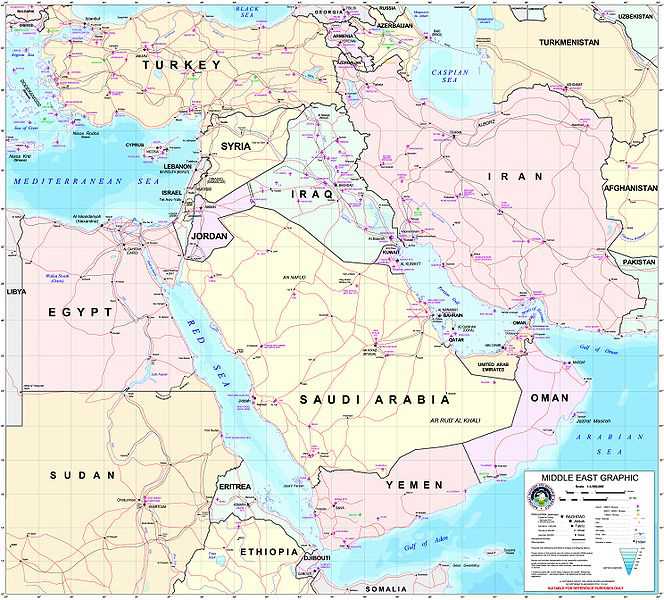
    Amid great fanfare, Nicolas Sarkozy last month unveiled the Mediterranean Union of 43 countries, consisting of the European Union’s 27 members, 14 non-EU member countries that border the Mediterranean Sea, as well as Jordan and Mauritania.

    The ostensible goal is to improve the economic lot of Europe’s poorer neighbors, curb terrorism, stem illegal immigration, clean up the polluted Mediterranean, prevent the proliferation of chemical, biological and nuclear weapons, improve maritime and land transport and promote human rights.

    The experiment — Sarkozy’s attempt to establish a legacy for his presidency — is doomed to fail, not the least because it attempts to accomplish too much, with too few resources among too disparate a group of countries. The project is also rife with hidden agendas, including the promotion of French national interests, while ignoring some of the biggest dangers in the former European colonies in the Middle East and Africa.

    The founding of the Mediterranean Union three weeks ago was accompanied by grandiose language saluting human rights, praising democratic principles and condemning terrorism. “We must surmount all the hatreds to make space for a great dream of peace and civilization,” Sarkozy said. France’s real motive, though, is to establish a French southern sphere of influence to counter Germany’s dominant position in central and eastern Europe.

    German Resistance

    The Germans caught on quick. Not wanting to see the EU divided, nor German funds used to finance contracts awarded to French companies, Chancellor Angela Merkel objected. Sarkozy retreated and agreed to include the entire EU, instead of just the countries bordering the Mediterranean Sea. It was also agreed to frame the effort somewhat as a successor to the ill-fated Barcelona process, a 1995 plan to promote economic development and conflict resolution among Mediterranean states.

    Still, even in a watered-down version, French companies are well positioned. The union’s initial projects in energy, water systems and transport all play to French industrial strengths.

    Any doubts that the Mediterranean Union isn’t a venture dedicated to the greater glory of France should be dispelled by the date chosen for its launch, July 13 — the eve of Bastille Day, France’s national holiday. That way, the assembled heads of state and other senior dignitaries could be treated to a parade that a Wall Street Journal editorial once called the most ostentatious display of military might west of Moscow.

    French Armory

    Replete with everything from a marching unit of the French Foreign Legion — which for decades was France’s instrument of repression of its North African colonies — to armored tanks and a flyover by fighter jets spewing out the tricolor in smoky trails, the celebrations seemed to be a cross between a photo opportunity and an armaments bazaar.

    At the political level, Turkey sees the union as a consolation prize for its eventual denial of EU membership. “It would send a very bad message to the world’s 1.5 billion Muslims,” Egeman Bagis, chief foreign-policy adviser to Turkish Prime Minister Recep Tayyip Erdogan, told the New York Times. Sarkozy has said that Turkey doesn’t belong in the EU.

    Meanwhile, Senegalese President Abdoulaye Wade on July 17 said that Europe wants Algerian and Libyan oil-and-gas reserves and accused the EU of deliberately choosing to isolate Africa through the new union. Libyan strongman Muammar al-Qaddafi denounced the project.

    Hodgepodge of States

    Alain Leroy, the French diplomat who was overseeing the Mediterranean effort, said today’s EU began as the European Coal and Steel Community in 1951. The comparison is a weak one. The ECSC had only six members, all European, all true democracies. None was a theocracy, nor was any infected by terrorism.

    By contrast, the Mediterranean region is a hodgepodge of European, Arab and African states consisting of democratic regimes, monarchies and dictatorships — some with a strong religious orientation — and made up of Christians, Muslims and Jews, most of whom don’t get along.

    The region is mired in strife between Israel and the Arab world generally and Israel and the Palestinians specifically. Israel and Syria remain technically at war. Syria doesn’t recognize Lebanon. At odds over the Western Sahara, Algeria and Morocco have had closed borders for more than 13 years. Cyprus remains divided; the Balkans lack stability; and Turkey and Greece have disputes that date back to the successors of Alexander the Great.

    Iran’s Ambitions

    What’s more, the experiment ignores the majority of the African continent, and the presumed debt Europe’s one-time colonial masters owe it. Although North Africa’s former French colonies seek freer access to Europe’s food markets, France, eager to protect its farmers, opposes granting it.

    By restricting itself to the countries bordering the Mediterranean Sea, the project also ignores the area’s most dangerous problem: Iran’s nuclear ambitions.

    Should Sarkozy’s efforts bring peace to the Middle East, succeed in cleaning up the Mediterranean Sea, persuade the region’s populations to abandon terrorism and help boost living standards from Algiers to Amman, he and his union will have earned their place in history.

    But don’t bet on it.

    (Michael R. Sesit is a Bloomberg News columnist. The opinions expressed are his own.)

    To contact the writer of this column: Michael R. Sesit in Paris at at [email protected]
    Last Updated: July 31, 2008 20:01 EDT

    Source: Bloomberg.com, Aug. 1, 2008
  • FELLOWSHIP- 2009 Junior Faculty Development Program (JFDP)

    FELLOWSHIP- 2009 Junior Faculty Development Program (JFDP)

    Posted by: Junior Faculty Development Program <[email protected]>

    The Government of the United States of America is pleased to announce the open competition for the Junior Faculty Development Program (JFDP) for the 2009 spring semester. The JFDP is a program of the Bureau of Educational and Cultural Affairs of the United States Department of State (ECA). American Councils for International Education:

    ACTR/ACCELS, an American non-profit, non-governmental organization, receives a grant from ECA to administer the JFDP, and oversee each participant’s successful completion of the program. The United States Congress annually appropriates funds to finance the JFDP, and authorizes the Bureau of Educational and Cultural Affairs to oversee these funds.

    If you are a citizen of Albania, Armenia, Azerbaijan, Bosnia and Herzegovina, Croatia, Georgia, Kazakhstan, Kyrgyzstan, Kosovo, Macedonia, Montenegro, Serbia, Tajikistan, or Turkmenistan, and are teaching full-time in an institution of higher education in your home country, have at least two years of university-level teaching experience, and are highly proficient in English, American Councils invites you to learn more about the program and apply.

    JFDP applications may now be downloaded as a print version or submitted online at the JFDP website. Additional information, including the 2008-2009 calendar, academic field descriptions, a list of frequently asked questions, and information about past program participants and host institutions can be found at the JFDP website:

    http:\\www.jfdp.org&Horde=4fcb6119853632a5cd4a4348e0f9d664 .

    Applications are due for applicants from Eurasia on August 29, 2008.

    Applications are due for applicants from Southeast Europe on September 5, 2008.

    Thank you very much for your help in promoting this program.

    Sincerely,

    JFDP Organizers

  • EU hails Turkish court decision not to ban ruling party

    EU hails Turkish court decision not to ban ruling party

    ELITSA VUCHEVA

    Today @ 09:27 CET

    The EU has welcomed a decision by Turkey’s Constitutional Court on Wednesday (30 July) not to ban the country’s ruling party, the AKP, while urging Ankara to now speed up needed reforms.

    “Despite everything, this is a good day for Turkey and for Europe,” EU enlargement commissioner Olli Rehn told the Reuters news agency.


    The AKP “has never been a focal point of anti-secular activities,” said Turkish Prime Minister Erdogan. (Photo: Wikipedia/Ekim Caglar)

    “There is a vast majority among the Turkish people who are in favour of European values. I’m sure this played a role,” he added.

    Cristina Gallach, spokesperson for EU foreign policy chief Javier Solana, also said that the decision was “positive.”

    “Turkey is living a tense situation and we very much hope that the decision by the court will contribute to restore political stability,” she told the press agency.

    Welcoming statements came also from certain member states, with UK foreign secretary David Miliband saying the verdict “is a cause for celebration for Turkey’s friends,” as it means that “Turkey can follow a more democratic and European path.”

    Additionally, Swedish foreign minister Carl Bildt said that “an attempt to stage a thinly disguised legal coup” against the Turkish government had failed, AFP reports.

    A serious warning

    Turkey’s constitutional court on Wednesday ruled against outlawing the country’s ruling Justice and Development Party – the AKP – which prosecutors had accused of undermining the country’s secular system and progressively transforming Turkey into an Islamic state.

    Lifting a ban on wearing Islamic headscarves in universities had raised the hackles of secularists in the country.

    The party won its reprieve by a narrow margin, however, with six judges out of 11 voting in favour of the ban – just one short of the number needed to close down the AKP.

    The judges nonetheless decided that the AKP’s budget for this year should be cut in half.

    “It is not a decision to close down the party, but it is a serious warning,” the court chairman, Hasim Kilic, was quoted as saying by Turkey’s Hurriyet.

    “I hope the party in question will evaluate this outcome very carefully and grasp the message intended,” he added.

    The AKP, which had denied the charges, welcomed the verdict.

    “The Justice and Development Party, which has never been a focal point of anti-secular activities, will continue to defend the basic principles of the republic,” Prime Minister Recep Tayyip Erdogan said.

    A call to ‘resume’ reforms

    For its part, the EU had indicated that banning the ruling party – which would also have resulted in Mr Erdogan, Turkish President Abdullah Gul, and several other AKP officials forced out of party politics for five years – could have had a negative effect on the country’s EU accession process.

    “Court cases to close political parties are not normal in EU democracies,” Mr Rehn had previously said.

    However, now that the party escaped the ban, Ankara should focus on speeding up its reform process, the commission stressed.

    “I encourage Turkey now to resume with full energy its reforms to modernise the country,” said the commissioner in a statement. “The relevant parties [should] work towards sustainable reforms based on a consensus forged through a broad-based dialogue with all sections of Turkish society.”

    “Alignment of Turkey’s rules on political parties with European standards is essential,” he added.

    “It is a step forward for parliamentary democracy in Turkey,” liberal MEP Andrew Duff, in Turkey for the verdict, said. “This implies that accession negotiations between Turkey and the EU can continue.”

    Turkey won EU candidate status in 1999 and began EU accession talks in 2005.

    Before joining the 27-nation bloc however, Ankara is expected to push ahead with reforms in several areas.

    Among other demands, Brussels wants the country to limit the power of the military, which still exercises “considerable political influence,” to effectively implement reforms on freedom of the speech and to improve protections for minority rights.

  • Kurdish Exiles in Germany Feel Pain of Protracted War at Home

    Kurdish Exiles in Germany Feel Pain of Protracted War at Home

    When twin bombings ripped through a busy square in Istanbul Sunday, some in Turkey blamed the militant Kurdish Workers’ Party (PKK) for the blasts. That renewed focus on the group doesn’t bode well for many Kurds abroad.


    Citing security sources, CNN-Turk television said that intelligence reports suggested the group was planning a bombing campaign in Turkish cities.


    Though the Firat news agency reported Monday that the PKK had denied responsibility for the blast — which killed 17 and injured more than 150, making it the worst in the city since 2003 — suspicions about Kurdish involvement still abound.


    “There are signs of links to the separatist group,” Istanbul Governor Muammer Guler told reporters.


    “Of course it’s the PKK,” Orhan Balci, a 38-year-old textile businessman from the area told Reuters news service. “This has nothing to do with politics, this is all about the PKK.”


    Prime Minister Recep Tayyip Erdogan on Monday could not be called out into naming the PKK as the culprits behind the pair of bombings saying only, “Turkey’s fight against terrorism will continue” and that “the terrorist group’s biggest aim is to make propaganda.”


    Fears of a foray to western Turkey

    Whether responsible or not, the rebel movement has been blamed for a number of events in Turkey since its inception in 1984. The most recent headline-making action before this weekend’s blast — the kidnapping and eventual release of three German climbers from the slopes of Mount Ararat — has led many to worry that the battle for an autonomous Kurdistan may spread into western Turkey.


    This fear poses a special problem for Germany, which is home to one of the largest Turkish expatriate communities and provides shelter for more than half a million Kurds. Much of the fear and hostility felt toward ethnic Kurds in Turkey as a consequence of the PKK’s actions has long simmered among the immigrant population in Germany.


    In November, demonstrations over Turkey’s foray into Kurdish territory in northern Iraq broke out in Berlin’s Neu-Koelln neighborhood and members of the Turkish nationalist “Gray Wolf” gang attacked people at a Kurdish culture center in the German capital. In February, the Berliner Zeitung reported on the bullying and harassment a 7-year-old Kurd received at school after wearing a scarf in the colors of Kurdistan.


    “We’re trying to live in peace with the Turks,” Evrim Baba, a representative of the Kurdish community in Berlin told the newspaper.


    “We want peace,” a young man named Achmed told DW-WORLD after the November attacks.


    A community divided


    That peace has proven difficult to attain. Even among members of the Kurdish community itself, there is disagreement about the PKK. Though Germany officially banned the PKK in 1993, many of the exiles here openly sympathize with the organization’s struggle to obtain an autonomous homeland in the triangular area of southern Turkey, northern Iraq, and northwest Iran.


    “The Kurds have an incredible debt toward this organization,” Mahmut Seven, who runs the only Kurdish daily newspaper Yeni Özgür Politika, told the German newsmagazine Der Spiegel. “They gave us back our pride and our identity.”


    Baktheyar Ibrahim, an Iraqi-Kurd who had to flee a well-paying government job in Saddam Hussein’s Iraq, sees things another way. As a supporter of the Patriotic Union of Kurdistan political party, he believes in the attainment of an independent Kurdistan through democratic processes. The group, which supports Iraqi President Jalal Talabani, often finds itself at odds with other organizations fighting for the same goals.


    But the PKK has made things especially difficult for Ibrahim and for other exiles like him in recent months as Germany’s instituted a major crackdown on the Kurdish population to curb PKK sympathies.


    Kurdish associations in Hannover, Kassel, Bremen, Koblenz and Berlin have all been raided by German security agencies and suspected members of the separatist movement taken into custody.


    Roj TV, the sole Kurdish television station in the country, was banned last June, followed shortly by a ban on the production company Viko, which is located in the western Germany city of Wuppertal.


    Citing political reforms in Turkey, the German government has carried out a number of asylum revocations, making the search for political refuge more difficult and angering moderate Kurds who don’t see the situation in Turkey as having improved.


    “Go back to Turkey?” asked Mostafa, a 32-year-old refugee from Istanbul who’s since become a naturalized German. “For me, that’s impossible.”  

    Courtney Tenz

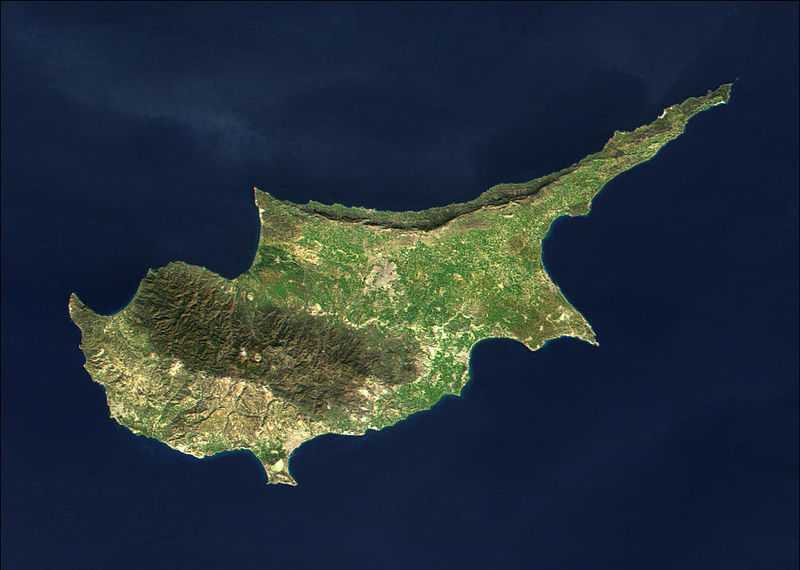
  • Cyprus – A divided island

    Cyprus – A divided island

    ”]

    1960 – Britain grants independence to Cyprus under power-sharing constitution between Turkish and Greek Cypriots. Archbishop Makarios becomes first post- independence president.

    Treaty of Guarantee allows Greece, Turkey and Britain to intervene in disputes. Britain has sovereignty of two bases on the island.

    1963 – Makarios worries Turks by proposing constitutional changes which would abolish power-sharing agreements.

    1964 – Power sharing crumbles amid fighting between paramilitary factions. United Nations sends peacekeeping force to help British troops patrolling the “Green Line” set up to divide the Turkish and Greek Cypriot sectors of Nicosia, the capital.

    1967 – Military government seizes power in Greece, relations between Makarios and the generals in Athens are increasingly strained.

    1974 – Military government in Greece backs coup against Makarious, seeking to unify Cyprus with Greece.

    Makarios flees and five days later Turkish troops land in the north to protect Turkish Cypriot community.

    The coup quickly ends and Greece’s military government collapses. Turkish forces occupy one third of the island and it effectively becomes partitioned.

    1975 – Turkish Cypriots establish independent administration with Rauf Denktash becoming president.

    1980 – UN-sponsored peace talks resume.

    1983 – Turkish Cypriots proclaim independence as Turkish republic of Northern Cyprus – but it is only recognised by Turkey.

    1985 – No agreement at talks between Denktash and Spyros Kyprianou, the Greek Cypriot president.

    1993 – Glafcos Clerides becomes Greek Cypriot president.

    1997 – UN-hosted talks between Denktask and Clerides fail.

    2002 – Kofi Annan, the UN secretary general, presents a comprehensive peace plan involving a federation of two parts, with a rotating presidency.

    2003 – Turkish and Greek Cypriots cross “Green Line” for first time in 30 years after Turkish side eases border restrictions.

    2004 – In referendums, Turkish Cypriots accept UN power-sharing plan but Greek Cypriots reject it. Cyprus joins the European Union, still partitioned.

    2006 – Greek Cypriots endorse ruling coalition in elections, reaffirming opposition to reunification.

    2006 – Turkey’s EU entry negotitations break down over Turkey’s continued resistance to opening its ports to traffic from Cyprus.

    2007 – Communist party quits Cyprus’ governing coalition.

    2008

    February – Communist party leader Demetris Christofias wins Cyprus’ presidential election and agrees to immediately reive reunification efforts.

    March – Christofias and Mehmet Ali Talat, the Turkish Cypriot leader, agree to reopen the symbolic Ledra Street crossing in Nicosia.

    April – Ledra Street is opened for first time since 1964.

    July – Christofias and Talat agree enter direct peace negotiations on September 3, with a solution to be put to simultaneous referendums.

    Source: Al Jazeera

  • Turk who saved Jews from Auschwitz remembered

    Turk who saved Jews from Auschwitz remembered

    RHODES, Greece (AFP) — Dozens of families from around the world gathered Saturday on the Greek island of Rhodes to pay tribute to the man who in 1944 saved 40 Jews from being deported to a Nazi concentration camps.

    Selahattin Ulkumen, Turkish consul general on the island in 1943, is remembered for his role in saving the Turkish Jews by persuading a German general to release them the day before they were due to be transported to Auschwitz.

    Nearly 2,500 Jews from Rhodes and the nearby island of Kos were deported on July 24, 1944. All but 150 perished in the Nazi gas chambers or concentration camps.

    However, some months later Ulkumen persuaded the German general on the island to release the 40 Turkish Jews, by reminding him of Turkey’s neutrality.

    “I was 13 years old and I can still picture the long discussions in front of us between Selahattin Ulkumen and the German general,” said Sami Modiano, one of the deportees who survived.

    Ulkumen’s 64-year-old son, Mehmet, joined the commemoration and was presented with a plaque by the president of the Central Jewish Council of Greece, Moisis Constantinis.

    Ulkumen was arrested at the end of 1944 by the Germans after Turkey sided with the Allies. The Turkish consulate on Rhodes was subsequently bombed and his wife, pregnant with Mehmet, and two employees were wounded. His wife died a week after giving birth.

    None of the Holocaust survivors ever returned to live on the island.

    An attempt to re-establish the Jewish community there in the 1950s by settling families from different Greek regions did not have much success and the island’s Jewish population currently stands at no more than 40, said secretary of the Rhodes Jewish community Carmen Levi.

    Concentration camp survivor Stella Levi said she made the journey to her birthplace from her home in New York every year.

    This tribute “is a historic moment for the Jews of Rhodes,” she said.

    Once dubbed “Little Jerusalem” Rhodes took in several hundred Jews expelled from Spain and Portugal in the 15th century who joined those already on the island.

    Between the two world wars, the Jewish population of the island reached about 6,000.

    Some 67,000 Greek Jews perished in the Holocaust, 86 percent of the country’s entire Jewish community.

    Source: AFP, 27 July 2008