With an estimated number of at least 2.1 million Turks in Germany, they form the largest ethnic minority. The vast majority are found in what used to be West Germany. Berlin, Frankfurt,Hamburg, Rhine-Ruhr (Cologne, Duisburg and Dortmund) have large Turkish communities. The state with the largest Turkish population is North Rhine-Westphalia.
An Islamic extremist wanted by Germany for allegedly calling for terrorist attacks on Europe has been arrested in Turkey and Berlin is negotiating his extradition, an official said Friday.
Austrian-born Mohamed Mahmoud, 27, was picked up Tuesday in the southeastern province of Hatay near the Syrian border, a German security official with knowledge of the talks said. The official spoke on condition of anonymity because he was not authorized to discuss the matter. He said Germany has already begun preliminary proceedings to have Mahmoud extradited.
“We are very confident we will get him to Germany,” he said.
Nina Bussek, a spokeswoman for the Vienna public prosecutor’s office, said Austria was also seeking Mahmoud’s extradition on “suspicion of forming a terrorist organization.”
Mahmoud was jailed Austria in 2007 for being a leader of the Global Islamic Media Front, which creates and distributes terrorist propaganda videos. Among the accusations, police said he threatened both Austria and Germany with attacks if they did not withdraw military personnel from Afghanistan.
Following his release in 2011, Mahmoud moved to Germany and became an imam with the ultraconservative Salafi movement, which has been growing rapidly in the country by attracting both Muslims and converts. They have been under close observation since 2010, and that was stepped up further last year after they clashed with police in Bonn last year at a rally of a far-right party.
His group, Millatu Ibrahim, was banned last June. Officials at the time said it taught followers to reject German law and follow Islamic Shariah law and that “the unbelievers are the enemy.” Mahmoud, who had already been expelled from Germany ahead of the ban, resurfaced in Egypt — where his father is from — and called on his followers to join him. German security officials say dozens of “jihad travelers” responded, traveling to Egypt and then going on to fight elsewhere — largely in Mali, Syria and Yemen.
While in Egypt, Mahmoud is also alleged to have produced online German-language videos for the Global Islamic Media Front calling for terrorist attacks in Europe.
It was not immediately clear when he left Egypt or whether he was on his way to Syria when he was arrested in Turkey.
Police officials in Ankara and Hatay province said they did not have any information on the arrest.
—————
Suzan Fraser in Ankara and George Jahn in Vienna contributed to this story.
via Turkey Arrests Extremist Wanted by Germany – ABC News.
Are Turkey, Germany, Belgium, The Netherlands and Italy Nuclear Powers?
By Prof Michel Chossudovsky
Region: Europe
Theme: Militarization and WMD, US NATO War Agenda
In-depth Report: Nuclear War
[This article was originally published by Global Research in February 2010 under the title: Europe’s Five “Undeclared Nuclear Weapons States” ]
According to a recent report, former NATO Secretary-General George Robertson confirmed that Turkey possesses 40-90 “Made in America” nuclear weapons at the Incirlik military base.(en.trend.az/)
Does this mean that Turkey is a nuclear power?
“Far from making Europe safer, and far from producing a less nuclear dependent Europe, [the policy] may well end up bringing more nuclear weapons into the European continent, and frustrating some of the attempts that are being made to get multilateral nuclear disarmament,” (Former NATO Secretary-General George Robertson quoted in Global Security, February 10, 2010)
“‘Is Italy capable of delivering a thermonuclear strike?…
Could the Belgians and the Dutch drop hydrogen bombs on enemy targets?…
Germany’s air force couldn’t possibly be training to deliver bombs 13 times more powerful than the one that destroyed Hiroshima, could it?…
Nuclear bombs are stored on air-force bases in Italy, Belgium, Germany and the Netherlands — and planes from each of those countries are capable of delivering them.” (“What to Do About Europe’s Secret Nukes.”Time Magazine, December 2, 2009)
The “Official” Nuclear Weapons States
Five countries, the US, UK, France, China and Russia are considered to be “nuclear weapons states” (NWS), “an internationally recognized status conferred by the Nuclear Non-Proliferation Treaty (NPT)”. Three other “Non NPT countries” (i.e. non-signatory states of the NPT) including India, Pakistan and North Korea, have recognized possessing nuclear weapons.
Israel: “Undeclared Nuclear State”
Israel is identified as an “undeclared nuclear state”. It produces and deploys nuclear warheads directed against military and civilian targets in the Middle East including Tehran.
Iran
There has been much hype, supported by scanty evidence, that Iran might at some future date become a nuclear weapons state. And, therefore, a pre-emptive defensive nuclear attack on Iran to annihilate its non-existent nuclear weapons program should be seriously contemplated “to make the World a safer place”. The mainstream media abounds with makeshift opinion on the Iran nuclear threat.
But what about the five European “undeclared nuclear states” including Belgium, Germany, Turkey, the Netherlands and Italy. Do they constitute a threat?
Belgium, Germany, The Netherlands, Italy and Turkey: ”Undeclared Nuclear Weapons States”
While Iran’s nuclear weapons capabilities are unconfirmed, the nuclear weapons capabilities of these five countries including delivery procedures are formally acknowledged.
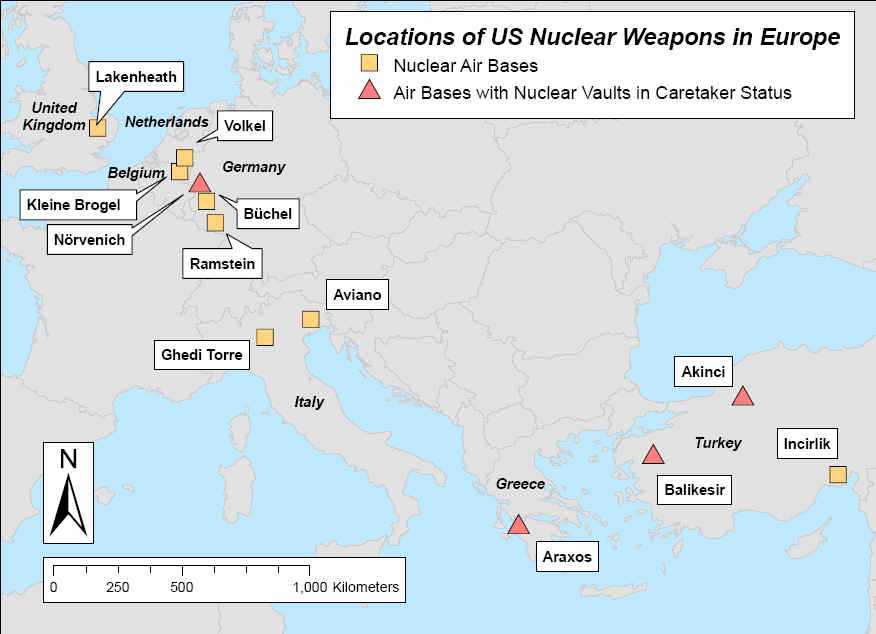
The US has supplied some 480 B61 thermonuclear bombs to five so-called “non-nuclear states”, including Belgium, Germany, Italy, the Netherlands and Turkey. Casually disregarded by the Vienna based UN Nuclear Watchdog (IAEA), the US has actively contributed to the proliferation of nuclear weapons in Western Europe.
As part of this European stockpiling, Turkey, which is a partner of the US-led coalition against Iran along with Israel, possesses some 90 thermonuclear B61 bunker buster bombs at the Incirlik nuclear air base. (National Resources Defense Council, Nuclear Weapons in Europe , February 2005)
By the recognised definition, these five countries are “undeclared nuclear weapons states”.
The stockpiling and deployment of tactical B61 in these five “non-nuclear states” are intended for targets in the Middle East. Moreover, in accordance with “NATO strike plans”, these thermonuclear B61 bunker buster bombs (stockpiled by the “non-nuclear States”) could be launched “against targets in Russia or countries in the Middle East such as Syria and Iran” ( quoted in National Resources Defense Council, Nuclear Weapons in Europe , February 2005)
Does this mean that Iran or Russia, which are potential targets of a nuclear attack originating from one or other of these five so-called non-nuclear states should contemplate defensive preemptive nuclear attacks against Germany, Italy, Belgium, the Netherlands and Turkey? The answer is no, by any stretch of the imagination.
While these “undeclared nuclear states” casually accuse Tehran of developing nuclear weapons, without documentary evidence, they themselves have capabilities of delivering nuclear warheads, which are targeted at Iran. To say that this is a clear case of “double standards” by the IAEA and the “international community” is a understatement.
Those estimates were based on private and public statements by a number of government sources and assumptions about the weapon storage capacity at each base
The stockpiled weapons are B61 thermonuclear bombs. All the weapons are gravity bombs of the B61-3, -4, and -10 types.2 .
.(National Resources Defense Council, Nuclear Weapons in Europe , February 2005)
Germany: Nuclear Weapons Producer
Among the five “undeclared nuclear states”, “Germany remains the most heavily nuclearized country with three nuclear bases (two of which are fully operational) and may store as many as 150 [B61 bunker buster ] bombs” (Ibid). In accordance with “NATO strike plans” (mentioned above) these tactical nuclear weapons are also targeted at the Middle East.
While Germany is not categorized officially as a nuclear power, it produces nuclear warheads for the French Navy. It stockpiles nuclear warheads (made in America) and it has the capabilities of delivering nuclear weapons. Moreover, The European Aeronautic Defense and Space Company – EADS , a Franco-German-Spanish joint venture, controlled by Deutsche Aerospace and the powerful Daimler Group is Europe’s second largest military producer, supplying .France’s M51 nuclear missile.
Germany imports and deploys nuclear weapons from the US. It also produces nuclear warheads which are exported to France. Yet it is classified as a non-nuclear state.
German museums and archaeologists fear that Turkey is punishing them for not repatriating contested artifacts. In a SPIEGEL interview, Turkish Culture Minister Ömer Çelik explains why Turkey is demanding both the artifacts and an apology.
A dispute is heating up between Turkey and Western countries, with ancient artifacts at stake. On one side, Ankara vehemently insists museums, including German ones, should return valuable archaeological treasures that Turkey alleges are wrongly in their possession. German archaeologists, on the other hand, refuse categorically to comply, saying the disputed items entered German collections legally, most of them over a century ago.
This battle over antiquities is affecting relations between the two countries. High-ranking officials at major museums in Berlin say the Turkish government has broken agreements concerning cooperation between the countries and is deliberately making it harder for German archaeologists to work in Turkey. The latter are worried that, in 2013, they may for the first time be denied coveted excavation permits.
Speaking with SPIEGEL last year, Hermann Parzinger, president of the Prussian Cultural Heritage Foundation, which oversees the state-owned museums in Berlin, harshly criticized the Turkish government. “Much is being lost because Turkey doesn’t have an established system for preserving historical artifacts, as Germany does,” Parzinger said. He also accused Ankara of increasing arrogance, saying that cultural heritage “is the last thing they think about.”
Parzinger’s comments provoked outrage in Turkey. “His message is: ‘They have no idea what they’re doing and don’t take care of things, so we’ll take care of them instead for the sake of the common good,’” raged the Turkish daily Hürriyet.
Now Turkish Culture and Tourism Minister Ömer Çelik, 44, responds in a SPIEGEL interview to Parzinger’s criticism. Çelik took office in January and is seen as a close confidant of Prime Minister Recep Tayyip Erdogan of the Justice and Development Party (AKP), the country’s conservative, Islamic governing party. Just as his predecessor did, Çelik is calling for the return of archaeological artifacts originating in Turkey. The objects would find a new home in Ankara’s Museum of the Civilizations. Planned as the world’s largest museum building, this facility is to open its doors in 2023, on the 100th anniversary of the founding of the Turkish state.
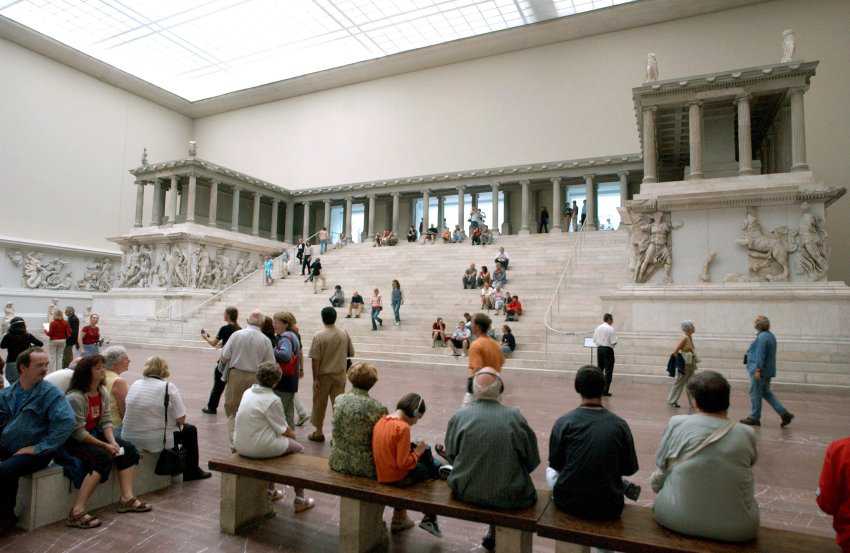
SPIEGEL: Minister Çelik, during your recent trip to Berlin, you visited the Pergamon Altar, one of the main attractions at the city’s Museum Island. Do you believe the altar belongs here in Berlin or in Turkey, where it was discovered by German archaeologist Carl Humann in the 19th century?
Çelik: The Pergamon Altar is an important piece of our global cultural heritage. As a matter of principle, it’s preferable that cultural artifacts be displayed in the place from which they come. International laws concerning the preservation of such cultural treasures stipulate as much
via Dispute Heats Up between Germany and Turkey over Contested Artifacts – SPIEGEL ONLINE.
Reports: Germans accuse Turkey of exporting items with ‘nuclear applications’ to Iran
BY: Adam Kredo
German prosecutors have accused Turkey of exporting to Iran nearly 1,000 items with “nuclear applications,” according to German and Turkish media reports.
German prosecutors allege Iran has established multiple “front companies” in Istanbul, accordingto Today’s Zaman, an English-language publication in Turkey. These illicit companies are believed to have shipped nuclear-related material back to Iran.
Kristen Silverberg, a former U.S. Ambassador to the European Union, said Iran has a history of using front companies as a means to skirt sanctions.
“The Iranian regime has a long practice of using front companies” to evade sanctions and conduct illicit business affairs, Silverberg, who serves as president of United Against Nuclear Iran, a non-partisan advocacy group, told the Washington Free Beacon.
Iran has “really perfected the art of sanctions evasion, and we’ve seen them do that in response to every round [of sanctions], which is why it’s so important for the U.S. and its allies to identify the front companies and continue to sanction them and any country abetting them,” Silverberg said.
News of the nuclear exports comes just days after German and Turkish officials busted several Iranian smugglers suspected of transferring nuclear goods from India to Iran.
German and Turkish officials conducted raids in each country on Monday, capturing several Iranian suspects. Three other suspects remain at large.
“In 2012 German police detected that materials with nuclear applications obtained in Germany and India were transported to the Mitech company in Iran through Turkey by an Iranian national, Hossein Tanideh,” Today’s Zaman quoted the German report as saying.
Tanideh was captured in Turkey earlier this year.
“Germany’s Federal Criminal Police Office, which is also the German branch of Interpol, informed its counterpart in Turkey about Tanideh’s dealings, and Tanideh was arrested,” according to the report.
German officials were reportedly able to trace Tanideh’s activities to back several of the Iranian front companies.
The investigation revealed that Tanideh was tied to several business owners who were exporting material to Iran.
“As part of the investigation, a thorough search was conducted at IDI, a foreign trade company owned by Tanideh,” Today’s Zaman reported. “Police raided the main office of the company in Bakırköy, İstanbul, and seized all the documents in the office.”
The seized documents showed that Tanideh and one of his business associates “sent the materials with nuclear applications they got from Germany and India to Mitech in Iran and declared them as plumbing parts and fixtures,” according to the report.
Turkish police are believed to have learned from these documents that 91 nuclear-related items were funneled from Germany to Turkey on multiple occasions before making their way to Iran.
Another 856 nuclear items were shipped from India to Turkey and then to Iran at various points, according to the report.
“Despite six years of sanctions Iran is still capable of procuring critically vital, made-in-Europe dual use technology for its nuclear weapons’ program,” said Emanuele Ottolenghi, a Germany-based senior fellow for the Foundation for Defense of Democracies.
“Dozens of front companies still operate in Europe under the nose of local authorities,” he said. “The mushrooming of Iranian companies in Turkey is clearly related—obtaining export licenses to this NATO member state is relatively easy.”
By using Turkey as a conduit, “Iran is able to elude sanctions,” Ottolenghi explained. “European authorities must do much more to stop this traffic and demand much more vigilance from Turkey since, by now, there are more than 3,000 Iranian companies registered in Turkey.”
Iran sanctions experts questioned whether Turkish officials had quietly allowed these shipments to take place.
“The big question is: Did Ankara know about this procurement network before the Germans blew the lid off?” said Jonathan Schanzer, a former terrorism finance analyst at the U.S. Treasury Department.
Iran and Turkey continue to expand business ties.
“A good number of Iranian-financed firms have set up shop in Turkey recently,” Today’s Zaman reported. “In January this year, there were 28 Iranian-funded foreign companies established in Turkey, which ranked just behind German investors.”
Turkey has been implemented in a series of troublesome actions meant to skirt Western sanctions on Iran.
Turkey’s Halkbank, a majority state-owned lender, faced scrutiny for carrying out so-called “gold for oil” transactions with Iran. It is believed that Turkey traded more than 60 tons of gold in exchange for Iranian crude oil.
Regional reports have also indicated that Turkey may trade ships to Iran in exchange for oil in another scheme meant to skirt Western sanctions.
Turkey has also been suspected of funding the terror group Hamas, leading experts to wonder if the nuclear-export fiasco reveals a growing terrorism problem in Turkey.
These exports, “coupled with Halkbank’s gas for gold scheme, coupled with Hamas funding, coupled with Turkey’s failure for five years to comply with international standards for terror finance laws paints a very troubling picture of Turkey,” said Schanzer, who serves as vice president of research at the Foundation for Defense of Democracies.
Former Pentagon adviser Michael Rubin said these front companies appear legitimate but are actually tools of the Iranian Revolutionary Guards Corps (IRGC).
“The economic wing of the Revolutionary Guards runs a number of front companies for seemingly legitimate purposes,” Rubin said. “The Iranians can use these companies’ Turkish partners to access a lot of dual use technology that Iran could never import directly. That’s hard enough to keep track of under normal circumstances, but we’re saddled with a Turkish government that sees Obama’s professed friendship as evidence that they can literally get away with murder.”
This entry was posted in Middle East, National Security and tagged Germany, Hossein Tanideh, Jonathan Schanzer, Nuclear Iran, Today’s Zaman, Turkey. Bookmark thepermalink.
In February, German Chancellor Angela Merkel visited Turkey, indicating a willingness to help Turkey revive stalled negotiations over its longstanding bid for European Union membership. In an email interview, Rana Deep Islam, a project manager with Stiftung Mercator whose research focuses on Turkey-EU relations, explained the state of Turkey’s EU accession bid and how it could move forward.
WPR: What is behind Germany’s recent statement that it will support reviving Turkey’s EU accession process?
Rana Deep Islam: The German government under Merkel still does not have a clear-cut policy on how it wants to handle Turkey’s membership aspirations. On one hand, Merkel has said repeatedly that she prefers a so-called privileged partnership over full-fledged EU membership for Turkey. On the other hand, Germany still treads the path of negotiations and has not blocked the process as, for example, France did in the past. The German government’s announcement of support for the opening of a new chapter in negotiations reflects this seeming paradox, or German bipolarity, in the Turkey-EU context. Reviving the accession talks by extending negotiations to new domains might push the process forward in the short term. But it’s still unclear what Merkel envisions more broadly for the crucial relationship between Turkey and the EU. Nor is it clear how Merkel views the accession negotiations beyond their narrow technical aspects, which deal primarily with Turkey’s administrative and bureaucratic capacity to adopt the EU’s “acquis communautaire” — the French term the EU uses to describe the shared rights and obligations within the union.
WPR: How significant is French President Francois Hollande’s statement that he was willing to unblock accession talks with Turkey, and what are the reasons for this political shift?
Islam: Former French President Nicolas Sarkozy blocked the accession talks on chapters that he believed would make Turkey’s accession inevitable. Hollande’s willingness to give up this policy definitively is a step in the right direction and creates space for diplomatic maneuvering. However, it does not turn France into a proactive advocate for Turkey’s membership. Turkey’s prospects for joining the EU will only improve significantly if Turkey succeeds in finally regaining an intra-European alliance of supporters, as France and Germany formerly were under President Jacques Chirac and Chancellor Gerhard Schröder.
Against this backdrop, Hollande’s intentions should be considered primarily strategic. First, he wanted to send a sign of good will to the Turkish government. In doing this he also passed the ball, if not the responsibility, to Ankara. Now it is up to Turkey to take up this initiative and respond appropriately. Second, Hollande’s shift needs to be seen in the context of a complex foreign policy agenda. With regard to the Middle East and North Africa, the EU cannot afford to act without Turkey on its side. France realized that reinvigorating the accession talks could be a useful tool to increase the EU’s capacity to act externally.
WPR: What are Turkey’s current EU aspirations and how likely are they to be realized in the near to medium term?
Islam: Turkish Prime Minister Recep Tayyip Erdogan recently declared that his country wants to join the EU as a fully integrated member by the year 2023. If this does not occur, Ankara will adjust its policy accordingly and finally give up its EU ambitions entirely. But this seemingly clear articulation of Turkey’s position notwithstanding, the Erdogan government falters when it comes to adopting the norms and values of the EU, which is a precondition for accession. The domestic reform process that Erdogan pushed during the first years of his administration has slowed down significantly. Civil rights are at stake, with many journalists in jail. Apart from the “yes or no” dichotomy of the membership discourse, it is currently not clear if Erdogan still supports the Europeanization of Turkish politics and society. Joining the union, though, is not a matter of cherry-picking but of rights and duties. Therefore, refreshing the EU-Turkey membership talks also implies an imperative for a further liberalization of Turkish domestic politics. Erdogan still needs to show his willingness to seriously deliver on this front.
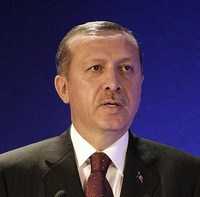
Photo: Turkish Prime Minister Recep Tayyip Erdogan (European Commission photo).
via WPR Article | Global Insider: Germany, France Nudge Open EU Door to Turkey.
Warning from Ankara: Turkey Suspicious After German House Fire
DPA
The Turkish government is demanding a detailed investigation into a housefire which killed eight people with Turkish backgrounds in the southern German town of Backnang on Sunday morning. The suspicion shows that trust has not yet returned between Ankara and Berlin.
German officials say that initial investigations show no sign of a xenophobic arson attack. But following a devastating fire early Sunday morning in the southern German town of Backnang — in which eight people with Turkish backgrounds were killed, including seven children — Turkey is demanding that all doubt about the cause of the fire be removed.
“Unfortunately, there have in the past been arson attacks and murders perpetrated against our citizens” Turkish President Abdullah Gül said on Monday, according to reports in the Turkish media. “That’s why we are considering all possibilities.”
Gül isn’t alone in his concern. On Sunday, Ankara’s Deputy Prime Minister Bekir Bozdag struck a similar tone. “It fills us with grief,” he tweeted, in reference to the fire. “From Germany, we expect a clarification for the real cause of the fire which leaves no room for doubt.” In addition, two politicians from Turkey’s opposition Republican People’s Party traveled to Germany on Sunday to gain a first-hand impression of the investigation.
The Turkish Foreign Ministry also released a statement saying Ankara expects a detailed investigation. DITIB, the largest Muslim association in Germany, likewise urged speed and thoroughness. “Unnecessary speculation can only be avoided by way of a rapid, transparent and credible conclusion to the investigation,” the group said in a statement.
Investigators were quick to conclude that the blaze was not likely the result of arson, a swift conclusion DITIB officials found unseemly. The early comments about the possible cause of the fire, the group said, “did not sound credible.”
Initial Suspicion
The fire began in the early morning hours of Sunday in the town just northeast of Stuttgart. According to news reports, by the time fire fighters reached the site — a former leather factory which had been converted into residential apartments — flames were already shooting out of the windows. The seven children who lost their lives were between six months and 16 years old. The eighth victim was their 40-year-old mother, according to German news reports. Three additional children survived the fire and the father was not home at the time of the blaze.
Initial suspicion focused on a wood stove in the apartment though on Monday officials were investigating whether faulty wiring could be to blame after a previous tenant reported having had repeated electrical problems. The investigation will take at least several days and could last weeks, officials said on Monday.
The apartment where the fire began is located above a German-Turkish cultural center. According to media reports, the operator of a nearby bar saved the three children who survived.
The warnings from Ankara highlight the mistrust between Germany and its Turkish minority, particularly following the revelation in late 2011 that a series of murders targeting victims of Turkish background had been committed by a neo-Nazi terror cell. For a decade prior to that case’s resolution, officials had suspected that the victims had belonged to an impenetrable Turkish underworld. The German press had often referred to the killings with the disparaging moniker, the “Döner murders” because some of the victims had owned fast food restaurants selling döner kebabs.
Merkel Deeply Shaken
In addition, Turkish immigrants were the target of several deadly arson attacks in the years immediately following German reunification, particularly in Mölln in 1992 and Solingen in 1993. A total of eight people died in those fires.
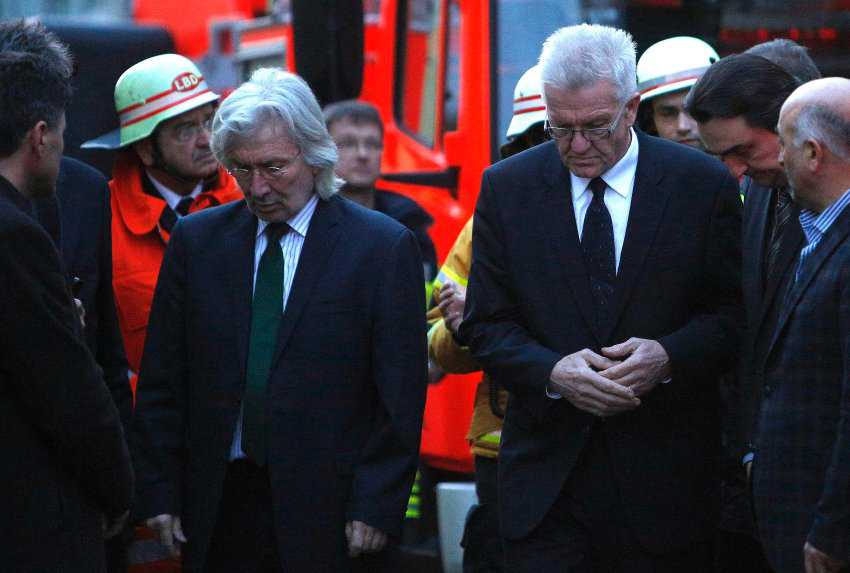
German officials appear to be taking the Sunday morning fire very seriously. Governor Winfried Kretschmann of Baden-Württemberg, the state where the fire took place, traveled to Backnang on Sunday together with Turkey’s ambassador to Germany, Hüseyin Avni Karslioglu. The state’s interior minister, Reinhold Gall, likewise visited the site of the fire.
Angela Merkel also voiced her grief on Monday. The chancellor’s deputy spokesman Georg Streiter told reporters that she was deeply shaken by the news and that the Chancellery has offered all assistance necessary to the government of Baden-Württemberg. “The chancellor has no doubt that the officials responsible will not rest until the cause of the fire has been clarified,” Streiter said.
cgh — with wire stories
via Turkish President Demands Deep Investigation into German House Fire – SPIEGEL ONLINE.