Category: Pakistan

  • Turkey: a bosom friend

    Turkey: a bosom friend

    Turkey: a bosom friend

    September 30, 2012 |

    Chief Minister Punjab Shahbaz Sharif called on Turkish President Abdullah Gull atAnkaraon Friday. President Gul expressed his happiness at the efforts of Mian Shahbaz to seek greater economic cooperation of his province withTurkey. The occasion marked another step forward towards improved bilateral relationship that would go on to providing fillip to the ongoing projects initiated in Punjab by Turkish firms, ranging from public transport to solid waste management system. On the sidelines of his meeting with President Gull, the CM was given the assurance of support in these sectors by Minister for Energy Taner Yildiz as well as the Chief Executive of Exim Bank.

    Though things cannot change overnight, there is a much that will benefit the country from the expertise of our Turkish friends in areas that are in dire need of an overhaul. Their model of growth offers a source of inspiration for us as it accounts for the enviable levels of prosperity and stability thatTurkeyhas achieved.Punjabcan of course use assistance fromTurkey’s energy sector but in the long term there is no better solution than producing cheap hydel energy in the country itself, that can come only from large reservoirs. It is comforting to know that the Turkish banking sector too is forthcoming as it has waived off certain conditionalities. We would have to address the issue of bad law and order, the invariable hitch to foreign investment.

    This news was published in print paper. Access complete paper of this day.

    via Turkey: a bosom friend | The Nation.

  • Turkish Airline Flying Al-Qaeda from Pakistan to Syrian Borders

    Turkish Airline Flying Al-Qaeda from Pakistan to Syrian Borders

    Turkish Airline Flying Al-Qaeda from Pakistan to Syrian Borders

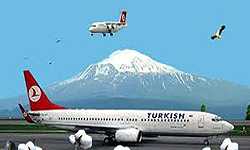
    TEHRAN (FNA)- Turkey’s national air carrier, Turkish Air, has been transiting Al-Qaeda and Taliban militants from North Waziristan in Pakistan to the Turkish borders with Syria, sources revealed on Saturday, mentioning that the last group were flown to Hatay on a Turkish Air Airbus flight No. 709 on September 10, 2012.

    “The Turkish intelligence agency sent 93 Al-Qaeda and Taliban terrorists from Waziristan to Hatay province near the border with Syria on a Turkish Air Airbus flight No. 709 on September 10, 2012 and via the Karachi-Istanbul flight route,” the source told FNA on Saturday, adding that the flight had a short stop in Istanbul.

    The 93 terrorists transited to the Turkish border with Syria included Al-Qaeda militants from Saudi Arabia, Kuwait, Yemen, Pakistan, Afghanistan and a group of Arabs residing in Waziristan, he added.

    The source, who asked to remain anonymous due to the sensitivity of his information, further revealed that the Turkish intelligence agency is coordinating its measures with the CIA and the Saudi and Qatari secret services.

    FNA dispatches from Pakistan said new al-Qaeda members were trained in North Waziristan until a few days ago and then sent to Syria, but now they are transferring their command center to the borders between Turkey and Syria as a first step to be followed by a last move directly into the restive parts of Syria on the other side of the border.

    The al-Qaeda, backed by Turkey, the US and its regional Arab allies, had set up a new camp in Northern Waziristan in Pakistan to train Salafi and Jihadi terrorists and dispatched them to Syria via Turkish borders.

    “A new Al-Qaeda has been created in the region through the financial and logistical backup of Turkey, Saudi Arabia, Qatar and a number of western states, specially the US,” a source told FNA earlier this month.

    Ali Mahdian told FNA that the US and the British governments have been playing with the al-Qaeda through their Arab proxy regimes in the region in a bid to materialize their goals, specially in Syria.

    He said the Saudi and Qatari regimes serve as interlocutors to facilitate the CIA and MI6 plans in Syria through instigating terrorist operations by Salafi and Arab Jihadi groups, adding that the terrorists do not know that they actually exercise the US plans.

    “Turkey has also been misusing extremist Salafis and Al-Qaeda terrorists to intensify the crisis in Syria and it has recently augmented its efforts in this regard by helping the new Al-Qaeda branch set up a camp in Northern Waziristan in Pakistan to train Al-Qaeda and Taliban members as well as Turkish Salafis and Arab Jihadis who are later sent to Syria for terrorist operations,” said the source.

    He said the camp in Waziristan is not just a training center, but a command center for terrorist operations against Syria.

    Yet, the source said the US and Britain are looking at the new Al-Qaeda force as an instrument to attain their goals and do not intend to support them to ascend to power, “because if Salafi elements in Syria ascend to power, they will create many problems for the US, the Western states and Turkey in future”.

    “Thus, the US, Britain and Turkey are looking at the Al-Qaeda as a tactical instrument,” he said, and warned of the regional and global repercussions of the US and Turkish aid to the Al-Qaeda and Salafi groups.

    “Unfortunately, these group of countries have just focused on the short-term benefits that the Salafis and the Al-Qaeda can provide for them and ignore the perils of this support in the long run,” he said.

    “At present, the western countries, specially Britain which hosts and controls the Jihadi Salafi groups throughout the world are paving the ground for these extremists to leave their homes – mostly in Qatar, Saudi Arabia, Kuwait and the Untied Arab Emirates (UAE) as well as those who live in Europe and the US – for Waziristan,” the source added.

    In relevant remarks, Syrian Prime Minister Wael al-Halqi last week blamed certain states, the Salafis and the Al-Qaeda for terrorist operations which have claimed the lives of thousands of people in his country, and said terrorist groups supported by certain foreign actors are misusing differences in his country to bring Syria into turmoil.

    Addressing the 16th heads-of-state summit of the Non-Aligned Movement (NAM) here in Tehran on Thursday, the Syrian premier noted terrorist attacks on his nation, and said the “terrorists are backed up by certain foreign states”.

    “Many countries allege to be supporting peaceful solutions in Syria, but they oppose Annan’s plan in practice,” he said, and cautioned, “The responsibility for the failure of this plan lies on their shoulder as they strove to keep the Syrian crisis going and falsified events.”

    “The world should know that the Syrian crisis, in fact, rises from foreign meddling. Certain well-known countries from inside and outside the region are seeking instability of Syria,” the Syrian prime minister complained.

    Elaborating on the recent developments in Syria, al-Halqi said, “It has been proved that foreign-backed terrorist groups have been misusing events and killing the innocent people.”

    “These terrorists include Salafis and Al-Qaeda Takfiri groups,” he reiterated, and added, “Those states that support terrorism and oppose talks should be given moral and economic punishments as they are part of the problem in Syria.”

    Syria has been experiencing unrest since March 2011 with organized attacks by well-armed gangs against Syrian police forces and border guards being reported across the country.

    In October, calm was eventually restored in the Arab state after President Assad started a reform initiative in the country, but Israel, the US and its Arab allies are seeking hard to bring the country into chaos through any possible means. Tel Aviv, Washington and some Arab capitals have been staging various plots in the hope of stirring unrests in Syria once again.

    The US and its western and regional allies have long sought to topple Bashar al-Assad and his ruling system. Media reports said that the Syrian rebels and terrorist groups have received significantly more and better weapons in recent weeks, a crime paid for by the Persian Gulf Arab states and coordinated by the United States.

    The US daily, Washington Post, reported in May that the Syrian rebels and terrorist groups battling the President Bashar al-Assad’s government have received significantly more and better weapons in recent weeks, a crime paid for by the Persian Gulf Arab states and coordinated by the United States.

    The newspaper, quoting opposition activists and US and foreign officials, reported that Obama administration officials emphasized the administration has expanded contacts with opposition military forces to provide the Persian Gulf nations with assessments of rebel credibility and command-and-control infrastructure.

    Opposition activists who several months ago said the rebels were running out of ammunition said in May that the flow of weapons – most bought on the black market in neighboring countries or from elements of the Syrian military in the past – has significantly increased after a decision by Saudi Arabia, Qatar and other Persian Gulf states to provide millions of dollars in funding each month.

    Special Thanks to: FNA Bureau in Islamabad, FNA Bureau in Kabul, FNA Bureau in Damascus
  • Turkey as a role model

    Turkey as a role model

    The visit of the Turkish Prime Minister, Recep Tayyip Erdogan, coincided with a period wherein, the gulf between the Pakistan’s government and the opposition has dangerously widened, and is compounding the complexities Pakistan already confronts because of its security situation – a harsh reality that both the government and the opposition overlook the visible disadvantage of the people of Pakistan.

    Besides the other subjects that the Turkish premier touched upon during his address to the joint session of Pakistan’s parliament, this deserves the focused attention of the government and the opposition.

    Given the fact that he has very good working relationships with Pakistan’s government and the opposition, the Turkish premier is probably the only person who could help bridge the gulf between them.

    Very appropriately, the Turkish premier emphasised the need for strengthening the democratic process by implementing economic reforms that convince both the citizens and investors of the reforms’ legality, rationality and fairness, as proved by the Turkish experience.

    Following this route, the regime led by Erdogan had rebuilt Turkish faith in democracy, and during 2003-11, it was able to attract foreign direct investment worth $110 billion.

    Unfortunately, however, in Pakistan, we have done the opposite as reflected by Pakistan’s worsening country risk perception.

    Parliamentarians, he said carry the enormous responsibility of delivering according to the peoples’ will “because no one can withstand the wrath of the masses.” The condition of the power sector reflects that Pakistan’s parliamentarians have yet to fulfil the obligation of delivering on their many rosy promises.

    Pakistan’s parliamentarians are clearly not conscious of the challenges their country faces.

    Their energies are not focused on addressing these challenges, a gap that the Turkish premier highlighted during his address while advising the opposition that it must focus on mending the ways of the government, not as much on removing it.

    But he balanced his advice by reminding the government of its obligations to deliver on the promises that a responsible regime commits itself to do after assuming power.

    As a non-partisan entity, the Turkish premier is interested only in the well-being of Pakistan, which has a very special place in the hearts of the Turkish people, given their long history of struggle wherein our ancestors offered great sacrifices for Turkey and its people.

    Turkey was among the foremost supporter of the Friends of Democratic Pakistan (FoDP).

    It was lack of preparation on part of Pakistan that proper project feasibilities were not readily available at the Dubai moot.

    It has taken over three years for 14 projects in the power sector to be identified for Turkish firms to explore.

    The Turkish side has cited bureaucratic hurdles, the taxation system and high tariff as impediments towards investment.

    All these obstacles can be effectively tackled while staying within the law and observing rules and regulations.

    Whenever investment proposals are pushed from the top, with the objective of saving time – there is bound to be trouble.

    Karkey Rental is a prime example.

    The Pakistan side needs to make the return on investment attractive for the investors and the Turkish side needs to show more understanding and patient.

    After all, there are other destinations where the bureaucratic hurdles are much higher than Pakistan and return on investment even lower.

    Pakistan needs to learn from the Turkish experience, both in terms of transition from a military-controlled government to a democratic dispensation; as well as the growing role it is playing as a regional powerhouse.

    In both cases, the power lies in the strong growth of the Turkish economy – now the envy of Europe.

    Public support for democracy emanates from the success of the civilian dispensation in delivering a better quality of life to the people at large.

    A strong export-led growth has allowed Turkey to expand its trade with its neighbours in particular and the region in general.

    It also provides the basis for its growing regional influence.

    In Turkey, all the three tiers of government have come together and developed a coherent and proactive policy that addresses the economy, foreign affairs and defence in an integrated manner.

    We need to do the same.

    Last but not least, it is interesting to note that most people in North Africa and the Middle East believe that post-revolutionary states in the region (the countries afflicted by the contagion of the ‘Arab Spring’) should model their political systems on Turkey’s, according to an opinion poll commissioned by the Doha Debates.

    Some analysts, therefore, believe that the Ottoman Empire is seeking to make a return not in order to restore its former glories, but rather to establish an effective presence for the Turkish state that greatly suits its economic and political interests.

    Muslim countries, particularly Pakistan, are required to draw a valuable lesson from the fact that Ankara has successfully integrated Islam into politics, which probably fits into majority of these countries’ needs.

    via Turkey as a role model | Business Recorder.

  • Istanbul-like mass transit system: Punjab government invites proposals

    Istanbul-like mass transit system: Punjab government invites proposals

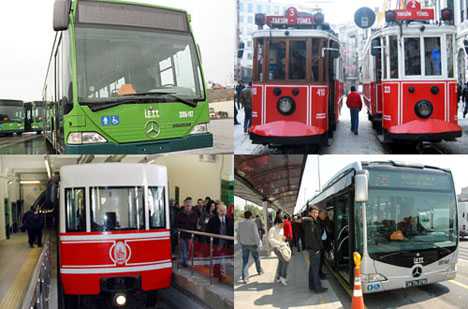
    The Punjab government has invited proposals from the district government for launching an Istanbul-like mass transit system in Multan.

    Official sources disclosed that a high level committee is also formed on the pattern of Lahore’s Traffic Engineering and Transport Planning Agency and DCO Multan is appointed as its head.

    The committee is learnt to have decided to restore uninterrupted flow of traffic on 20 major roads of Multan and it has tasked the traffic police with ensuring traffic flow on three roads within 15 days as a pilot project of the programme.

    “In order to keep the traffic moving, the timings of educational institutions will be shuffled to avoid sudden rush and traffic jams,” sources added.

    The committee has reviewed different routes like Vehari Chowk to Qaddafi Chowk, Rashidabad and Chungi No-9 to Bahauddin Zakariya University and the proposals will soon be sent to the government.

    Similarly, the services of national and multi-national companies would be sought for the beautification of different chowks and roads.

    Meanwhile, chairing a meeting, DCO Multan Mudassar Riaz Malik said that 100 percent restoration of traffic system is impossible till completion of all ongoing development projects.

    He added that the city traffic would move uninterrupted once projects like construction of Rashidabad flyover, Inner Ring Road, Old Shujabad Road, Mumtazabad Road and Bosan Road as well as widening of road between Chowk Qaddafi and Chungi No-9 are not done.

    He said that a model project is being launched on three roads of Multan to improve traffic system.

    The roads include Boman Ji Chowk to Pul Mauj Darya via High Court, Nishtar Road and Abdali Road.

    via Istanbul-like mass transit system: Punjab government invites proposals | Business Recorder.

  • Punjab signs two accords with Turkish firms

    Punjab signs two accords with Turkish firms

    LAHORE: Chief Minister Shahbaz Sharif has said that Pakistani and Turk investors should benefit from the best opportunities of investment available in the province.

    He was speaking on the occasion of signing of two agreements between Turk companies Al-Bayrak, Ozkartallar Compak and Lahore Transport Company here on Tuesday. Ahmet Al-Bayrak of Al-Bayrak Company and Muhibi Kartel and Abdul Qadir Turan of Ozkartallar Compak and Khawaja Ahmad Hasaan Chairman Lahore Transport Company singed the agreements. Mayor Istanbul Dr Kadir Topbas was also present.

    Shahbaz congratulated the Istanbul mayor and his delegation as well as Pakistani and Turk business community. He expressed confidence in the Turk companies and said that they were associated with more than 100 institutions of Turkey and it was hoped that Pakistani business community would benefit from the opportunities of mutual cooperation and joint ventures and play their role for making the Punjab a role model for other provinces. Mayor Instanbul Dr. Kadir Topbas also spoke.

    Talking to a Turk delegation, Chief Minister Shahbaz Sharif said implementation of joint ventures between the Punjab and Istanbul would promote trade and economic cooperation between Pakistan and Turkey. He said that the recent visit of Mayor Istanbul Kadir Topbas to Lahore would open up new avenues of bilateral cooperation and relationship between the two countries.

    He said the Daanish Technical University would be established in the provincial metropolis with the cooperation of Turkey. He said that cooperation of Turkey would also be acquired for the construction of parking plazas and training programmes of the Punjab Police.

    Those who met the chief minister included Osman Askin, Chairman Albayrak Company Ahmet Albayrak, Haybaraccli, Qadir Noran and others. The Turkish print and electronic media has given extensive coverage to the visit of Mayor Istanbul to Lahore and shown keen interest in the engagements of the Turk delegation during the last two days.

    The Turk media described the Punjab CM as a dynamic personality with reference to the important agreements signed with Turkey for various projects and observed that he was actively engaged in the development of the province and socio-economic uplift of the masses. The representatives of the Turk media before their departure for Turkey described the rousing welcome extended to them as memorable and said that it showed the wide popularity of Punjab CM and his team among the people. The Turk media paid growing tributes to the hospitality of Lahorites also.

    via Punjab signs two accords with Turkish firms – The News.

  • Istanbul mayor gives 100 buses for Lahore

    Istanbul mayor gives 100 buses for Lahore

    The visiting mayor drove a bus on the special bus-only lane built down the middle of Ferozepur Road. He was accompanied by Shahbaz Sharif.

    LAHORE:

    Mayor of Istanbul Kadir Topbas announced a gift of 100 buses and inaugurated the Bus Rapid Transit (BRT) system on Ferozepur Road on Monday, the second and final day of his visit to the provincial metropolis.

    Topbas also laid the foundation stone for the girls campus of Pak-Turk International Schools and Colleges on Raiwind Road; inaugurated a monument in his name near Valencia Town on Raiwind Road; visited Mazar-i-Iqbal and Badshahi Masjid; and was conferred an honorary doctorate at Government College University.

    After inaugurating the BRT, the visiting mayor drove a bus on the special bus-only lane built down the middle of Ferozepur Road from the Naseerabad bus station to Gulab Devi Hospital. He was accompanied by Chief Minister Shahbaz Sharif, as he was a day earlier when driving a cleaning truck after inaugurating a new waste management system, as well as members of his delegation.

    Speaking at the inauguration, Sharif said that the first phase of the bus project from Kahna to Kalma Chowk would be completed in April while the second phase for another 30 kilometres of bus corridor would be finished in December.

    He said that the new bus service would give Lahore public transport of an international standard. He said that the project would be particularly useful to the disabled, senior citizens and women. He said that highly trained staff would operate the bus service and ticketing would be completely automated. He thanked Turkey for assisting the Punjab government with the solid waste management and bus projects.

    At an earlier luncheon hosted by the chief minister, Topbas announced a gift of 100 buses for Lahore and pledged Turkish help to the Punjab government in any sector. The chief minister thanked the mayor for the buses and called Turkey a role model for Pakistan.

    At the school foundation stone ceremony, the chairman of Pak-Turk International Schools and Colleges said that the new girls campus would have the capacity for 900 students. He said that the foundation was educating more than 5,000 children in 18 schools in Pakistan. He thanked the chief minister for providing land for the campus.

    Topbas also inaugurated the renamed Kadir Topbas Chowk on Raiwind Road near Valencia Town, where a 40-feet tall replica of Istanbul’s famous Blue Mosque is being built. The monument is being renamed after the mayor in view of his active role in promoting Pak-Turk ties.

    Earlier, the mayor and his wife Ozleyis Topbas and their entourage visited historical sites in Lahore. They laid a wreath at the tomb of Allama Iqbal and a Rangers contingent presented them a guard of honour. They also visited the Badshahi Masjid.

    Published in The Express Tribune, March 13th, 2012.

    via Pak-Turk friendship: Istanbul mayor gives 100 buses for Lahore – The Express Tribune.