Category: India

  • Turkish Tourism to target Weddings and Bollywood to increase Indian arrivals

    Turkish Tourism to target Weddings and Bollywood to increase Indian arrivals

    Turkish Tourism to target Weddings and Bollywood to increase Indian arrivals

    By P Krishna Kumar | New Delhi

    Turkish Tourism is planning to target large wedding groups and the film industry from India to increase their share of Indian outbound travellers. According to Özgür Aytürk, Culture & Tourism Counsellor for India, Turkish Embassy-New Delhi; Turkish Tourism will organise dedicated FAM trips for wedding planners and film industry specialists to Turkey to showcase various facilities and destinations. Turkey will also be engaging the Indian market in the coming months through a variety of cultural events.

    As part of the cultural events planned, Turkish troupes will be visiting India to perform in some of the main cities, including Mumbai and Delhi. Turkish Sufi dancers will perform in Mumbai at the invitation of National Centre for Performing Arts on November 13, 2011 and in Delhi on November 16, 2011. “In 2012, India and Turkey will be celebrating their 60th anniversary of establishing cultural relations. We are planning various cultural exchange programmes next year,” informed Aytürk.

    According to Aytürk, Turkish Tourism is also planning to promote the destination for Golf Tourism in India through some novel initiatives. The first among these is a golfing event planned by Turkish Tourism in partnership with Delhi Golf Club on September 21, 2011 in Antalya. The event is in collaboration with Antalya Golf Club and Kempinski Hotel, Antalya. “The sea-side resort city of Antalya is in Belek region, which is famous for international standard golf courses,” stated Aytürk.

    Commenting on the various facets of the destination, Aytürk said that, Istanbul, which is a major destination for shopping and nightlife in Europe, is not well known for these aspects in India. “Some of the major shopping malls of Europe are located in Istanbul along with exciting street markets. While Indians go to Dubai for shopping, people from the Middle East generally travel to Istanbul for shopping,” informed Aytürk.

    Turkey received 63,000 Indian visitors last year registering almost 15 per cent growth compared to the previous year. However, according to Aytürk, the first seven months of 2011 have witnessed a growth of almost 25 per cent in Indian arrivals over the same period last year. “We are looking at a 20 to 25 per cent growth in Indian arrivals this year,” stated Aytürk.

    via Travel Biz Monitor :: Turkish Tourism to target Weddings and Bollywood to increase Indian arrivals.


  • India, Turkey navy wargames begin

    India, Turkey navy wargames begin

    New Delhi, July 6 (IANS) Indian and Turkish navies will embark on a two-day major war game in the Arabian Sea off Mumbai beginning Sunday, when four warships from each side will match their sea battle skills, an Indian Navy officer said Wednesday.

    The four Turkish warships that will join the exercise are scheduled to make a port call in Mumbai Thursday, reaching here from Karachi port in Pakistan where they had docked a week earlier.

    Frigates TCG (Turkish Republic Ship) Barbaros, TCG Gelibolu, and TCG Gemlik, supported by a fleet tanker TCG YBK Gungor will be the Turkish ensemble for the war game, the officer said.

    Incidentally, Barbaros runs on the same engine as that of India’s latest indigenous stealth frigate INS Shivalik that was commissioned last year in Mumbai. The other two Turkish frigates are of the Gabya class.

    The warships are in India in the last leg of their Indian Ocean deployment and this Turkish Naval Task Group is headed by Rear Admiral A. Sinan Ertugrul.

    Indian Navy will be represented in the drill by INS Mumbai, a Delhi-class guided missile destroyer, INS Betwa and INS Brahmaputra, both Beas-class frigates, and a Shishukumar-class HDW diesel-electric submarine. The air element in the exercise will be an Indian Navy Dornier maritime patrol aircraft, the officer said.

    ‘The exercise will include anti-submarine warfare, coordinated strike and interdiction drills, besides other manoeuvres in the seas that are expected to be fairly rough,’ he added.

    The Turkish Navy, which is part of the anti-piracy Nato-sponsored Combined Task Force-151, has led the mission a number of times. A Turkish navy frigate TCG Giresun was recently part of a joint effort with Indian Navy Dornier aircraft in thwarting a pirate attack on a Chinese-owned bulk carrier MV Full City in the Arabian Sea in the first week of May.

    Indian Navy chief Admiral Nirmal Verma was in Turkey from June 13 to 16, while the Indian Air Force chief Air Chief Marshal P.V. Naik was there in April 2010. Turkish Naval Forces commander Admiral Esref Yugur Yigit visited India in December 2010 on a reciprocal visit.

    Turkey has a fairly respectable naval ship-building industry and India sees a possibility of mutual cooperation in this area.

    via India, Turkey navy wargames begin Sunday News.

  • Turkish Airlines shuns GSA route

    Turkish Airlines shuns GSA route

    Turkish Airlines shuns GSA route

    Mihir Mishra / New Delhi May 15, 2011, 0:11 IST

    In its global expansion plans, Turkish Airlines has decided to open its own office in India instead of operating through a general sales agency (GSA). InterGlobe Aviation is the GSA for the airline in India.

    “We are working out plan for expansion in India,” said Adnan Aykac, general manager of Turkish Airlines in India. Turkish Airlines is the national carrier of Turkey and operates in 139 international and 42 domestic cities of Europe, Asia, Africa and the US.

    Aykac said the airline will take delivery of 22 aircraft by the end of the current calendar year and would not need leased aircraft. The airline has taken four Boeing 777s on lease from Jet Airways and the lease period will expire this year. “We will take delivery of 12 Boeing 777s and 10 Airbus 330s this year and may not need to continue operating with leased aircraft,” said Aykac.

    Jet Airways, India’s largest carrier in terms of passenger carriage, said it has informed Turkish Airlines that the lease would not be extended. “Jet Airways will induct two Boeing 777 aircraft into its operations and has entered into an agreement with Thai Airways for the lease of the remaining two. The aircraft will be leased for two years with an option to extend for a year,” said an email reply from the airline.

    The lease period of the first aircraft expires on July 14, the second on August 12, the third on September 1 and the fourth on October 30.

    Turkish Airlines, which is a Star Alliance member and has code sharing with Air India, hopes to strengthen it further after the national carrier joins the alliance in July. “Once Air India joins the alliance, it will help us extend our operations. We expect to get passengers from Kathmandu without actually flying there,” said Aykac.

    He said the airline aims to strengthen its network in Europe to provide unmatchable link across Europe. “Our plans are to expand our network in the US after Europe,” he said.

    via Turkish Airlines shuns GSA route.

  • India May Route Iran Crude Oil Payments Via Turkey

    India May Route Iran Crude Oil Payments Via Turkey

    By RAKESH SHARMA

    NEW DELHI—India is looking at using Turkish banks to pay Iran for crude oil, a senior Indian oil-ministry official said Wednesday, as a U.S. official said Turkey’s commercial banks should avoid transactions with Iranian banks the U.S. has identified as conduits for financing of Tehran’s nuclear program.

    The oil-ministry official’s remarks came as the U.S. Treasury proposed regulations that would require U.S. financial institutions to divulge information about foreign bank customers that do business with Iran.

    Asked about the Indian proposal, David S. Cohen, acting U.S. undersecretary of state for terrorism and financial intelligence, said in Istanbul, where he was meeting with senior government officials and banking executives, that Turkey’s cooperation with sanctions aimed at pressuring Tehran was “critical.”

    The question of crude-oil payments to Iran came into focus in December, when India’s central bank stopped payments to Tehran through the Asian Clearing Union, where participants settle payments for intraregional transactions among member central banks, helping economize the use of foreign exchange and transfer costs. India, Pakistan, Bangladesh, Nepal, Iran, Myanmar, Bhutan, the Maldives and Sri Lanka are members. India then made some overdue payments to Iran through Germany’s Bundesbank.

    But, according to media reports, Germany stopped accepting money from India for Iranian oil payments following criticism from the U.S. and Israeli governments.

    The official said supplies from Iran haven’t been disrupted, but that India needs to find a payment mechanism quickly, as it meets four-fifths of its total crude-oil needs through imports.

    “Iran has been ungrudging in supply. They continue to supply as our credibility is very high in the international market,” he said, adding that “we are exploring various options” and that “we are trying through Turkey.”

    India imported 21.2 million tons of crude oil from Iran in the year ended March 31, 2010, about 13% of its total crude imports.

    Mangalore Refinery & Petrochemicals Ltd., which imports about 7.6 million tons of crude annually from Iran, said earlier this month that it is defaulting on payments for about two shipments every week from Iran.

    Another oil ministry official said Wednesday that it could take another two months for the wider payments issue to be resolved.

    “There is no threat to supplies, as Iran has assured supplies will continue. They know we are working on a solution, and are serious about it,” the official said.

    —Joseph Palazzolo in Washington, D.C., and Marc Champion in Istanbul contributed to this article.

    Write to Rakesh Sharma at [email protected]

    via India May Route Iran Crude Oil Payments Via Turkey – WSJ.com.

  • India, Turkey to discuss FTA to boost bilateral trade

    India, Turkey to discuss FTA to boost bilateral trade

    India, Turkey to discuss FTA to boost bilateral trade

    Press Trust of India / New Delhi April 19, 2011, 19:00 IST

    Turkey today said it will discuss opening up of their markets with India under a free trade agreement (FTA).

    “We will be discussing issues relating to non-tariff and tariff barriers under FTA with Indian authorities,” Turkish Trade Minister Zafer Caglayan said here in his address to India-Turkey Business Forum.

    Both the countries are exploring the possibility of FTA to boost bilateral trade.

    The current two-way commerce is $3.14 billion and experts said an FTA between the two would significantly enhance the trade.

    Major imports from Turkey comprise minerals, fertilisers, nuclear reactors and machinery, while exports include pharma, manmade yarn and electronic goods.

    Besides, the visiting minister asked Indian corporates to make investment in Turkey because of its strategic geographical location and potential for economic growth.

    Referring to sectors where investment can be made in Turkey, Caglayan said his country has plans of huge investments in energy sector in the next 10 years.

    About $120 million would be invested in the energy sector, he said.


  • Bank of India becomes first to offer trade settlement in yuan

    Bank of India becomes first to offer trade settlement in yuan

    Saibal Dasgupta

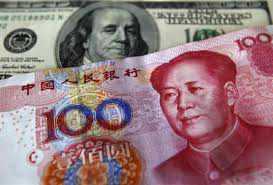
    BEIJING: Bank of India has become the first Indian bank to offer trade settlement facility between the rupee and the Chinese RMB from Hong Kong. This follows intense persuasion by the China Banking Regulatory Commission, which is trying to gain acceptance of the RMB as an international currency.

    “We are the first Indian bank to offer real-time settlement facility in RMB to Indian exporters and importers. It will be save a lot of time because settlement in US dollars usually takes three working days,” Arun Kumar Arora, BoI’s chief executive in Hong Kong, said during a recent visit to meeting regulators in Beijing.

    Indian buyers are at present making payments in US dollars, and they often have to convert rupee into the US currency for the purpose. The US dollars will no more be the intermediary currency as the BOI is offering direct settlement between the rupee and the Chinese money.

    Chinese exporters want their money in the local currency, which is regarded as more stable compared to the US dollar. They are also in a position to have their way because Indian buyers do not have an alternative source of low-cost goods, sources said.

    The process has been facilitated by a recent memorandum of understanding signed between the Reserve Bank of India and the CBRC to enhance banking relationship between the two giant neighbors.

    BoI has opened a RMB with the Bank of China, which will provide real time settlement with buyers and sellers across all provinces of China. The move is part of a campaign by the Hong Kong Monetary Authority, which has persuaded 100 foreign banks to enter into arrangements with Chinese banks for trade settlement in RMB.

    We will sell RMB against the US dollar, and companies can buy as much as they want provided they have the right papers. For individuals, the limit of 20,000 RMB a day,” Arora said. He expects settlements for an amount ranging between 200 million and 300 million in the first year.

    Hong Kong is the only offshore market for the Chinese currency. The past year saw $400 billion of Chinese yuan being traded in Hong Kong against other currencies.

    BoI is also awaiting permission from Chinese regulators to establish a branch in Beijing, where it has been running a representative office for the past four years. It has recently signed an MoU with the CBRC on converting the representative office into a branch. The bank has been running a branch in the boom city of Shenzhen for the past four years. The Shenzhen branch will also be involved in providing additional support for the trade settlement business.

    timesofindia.indiatimes.com, Feb 24, 2011,