Category: Asia and Pacific

  • Azerbaijan Bold Reorientation- Turkiye , Georgia, USA and Israel

    Azerbaijan Bold Reorientation- Turkiye , Georgia, USA and Israel

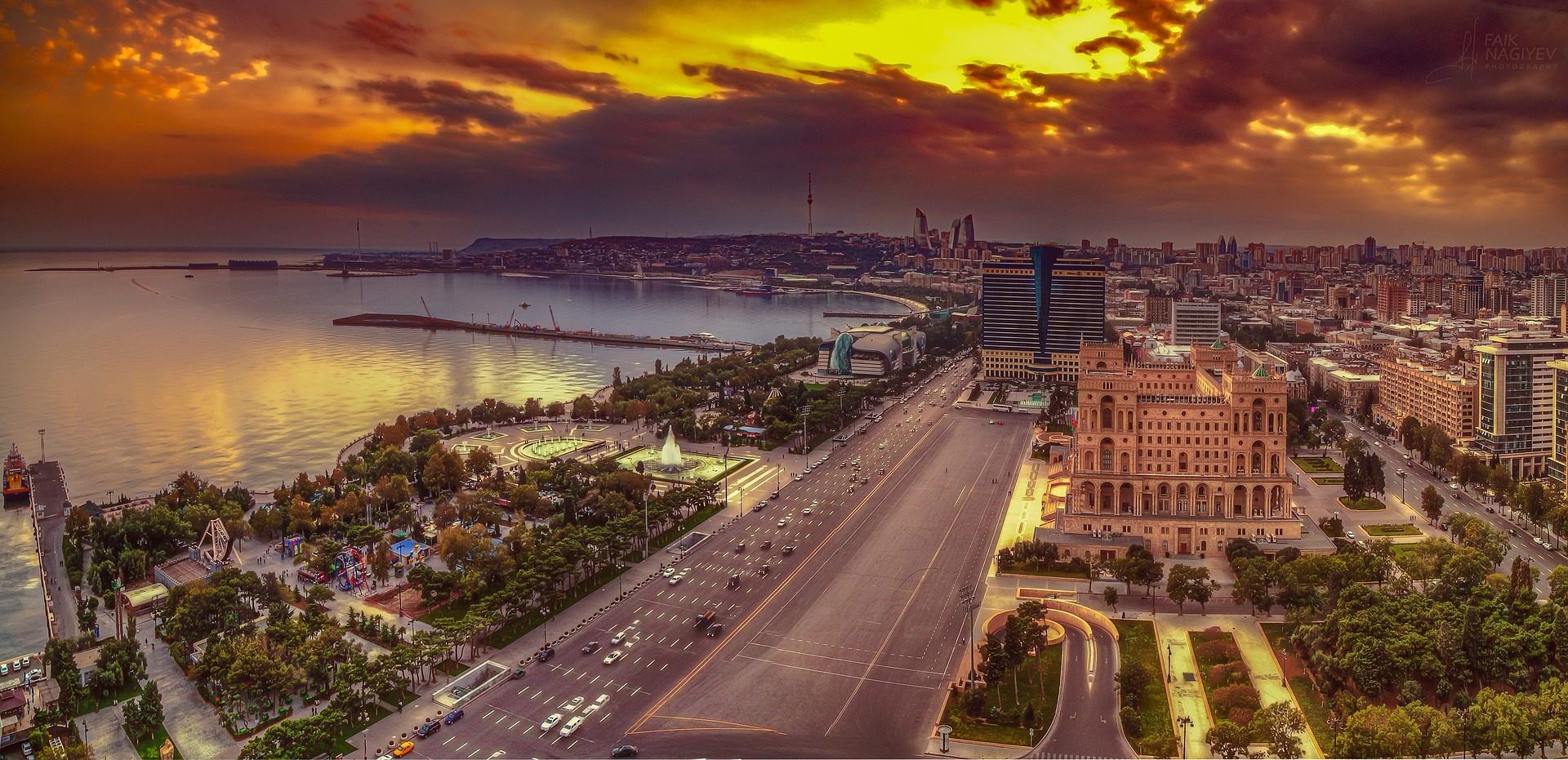
    A New Chapter in the South Caucasus: Azerbaijan’s Bold Reorientation

    The geopolitical currents in the South Caucasus are undeniably shifting, heralding a new and assertive role for Azerbaijan on the regional stage. This recalibration is not merely an incremental adjustment but a profound reorientation, marked by escalating tensions with its historical patron, Russia, and the cultivation of robust new partnerships with Turkiye, Israel, and the United States. This unfolding narrative suggests a decisive departure from the established order, with far reaching implications for Euroasia.

    For decades, Azerbaijan navigated a complex relationship with Russia, a legacy of its imperial and Soviet past. However, recent events have irrevocably fractured this bond. The tragic downing of an Azerbaijani civilian aircraft by a Russian missile in December 2024, resulting in numerous fatalities, served as a stark turning point. Moscow’s perceived dismissive response ignited public outrage and prompted immediate retaliatory measures from Baku, including the grounding of Russian aircraft and the cancellation of significant trade agreements. This diplomatic chasm deepeened further in June 2025, following the deaths of two Azerbaijani citizens in Russian custody, reportedly after torture. Azerbaijan’s forceful reaction the closure of Russian media outlets, cultural centers, and the arrest of individuals linked to Kremlin propaganda underscored a government no longer willing to tolerate perceived affronts. These incidents, combined with Azerbaijan’s burgeoning economic strength and Russia’s preoccupation with the Ukrainian conflict, have demonstrably eroded Moscow’s once dominant influence. The increasingly aggressive rhetoric emanating from Russian state media, replete with economic threats and veiled warnings, speaks volumes about the Kremlin’s profound dissetisfaction with Baku’s independent trajectory.

    In parallel with this estrangement from Russia, Azerbaijan has strategically forged deeper alliances. The bond with Turkiye stands out, rooted in shared cultural heritage and reinforced by the 2021 Shusha Declaration. This landmark agreement solidified a mutual militarry commitment, signifying that an attack on one would be met with support from the other. Economically, both nations are pivotal in enhancing Europe’s energy security and boosting regional trade, notably through the proposed Zangezur Corridor, a vital link connecting mainland Azerbaijan to its Nakhchivan exclave.

    Israel has emerged as another critical military partner. Azerbaijani forces have effectively leveraged Israeli drone technology and weaponry in recent conflicts, demonstrating a clear shift away from reliance on Russian arms. Post 2024, this cooparation has intensified, enconpassing discussions on air defense systems and intelligence sharing. Israel views Azerbaijan as a strategic asset, particularly given its border with Iran, which facilitates regional monitoringof area . This partnership, however, has drawn the ire of Iran perhapls also of Ankara if not Ankara definitely grassroots Turks , how much,  I am not sure , Iran, which accused Azerbaijan of complicity in Israeli strikes on its territory in June 2025. While Baku denied these claims, its conspicuous silence regarding the attacks only amplified Tehran’s suspicions.

    The United States has also deepened its engagement. Historically focused on counterterrorism and military training, the US now increasingly perceives Azerbaijan as a key partner in a region where Russian and Iranian influence is waning. Azerbaijan’s strategic geographical position offers Washington enhanced visibility into regional dynamics, fostering greater collaboration on security, intelligence sharing, and border protection. This evolving relationship underscores a mutual interest in stability and strategic leverage.

    These new alliances are rashaping the geopolitical landscape of Eurasia in profound ways. Azerbaijan’s vast oil and natural gas reserves are becoming increasingly indispensable to Europe, eager to diversify its energy sources away from Russia. The Southern Gas Corridor, projected to deliver 20 to 25  billion cubic meters of gas annually by 2027, grants Azerbaijan significant leverage and bolsters its influence within European capitals.

    The shift in power has also had a palpable impact on Armenia. Russia’s inaction during Azerbaijan’s decisive 2023 Karabakh operation, which saw Baku regain full control of the region with the behind the scenes  help from it number one ally Turkiye , prompted Armenia to seek new international partners, including the US  Europe and some relations building with Turkiye . A subsequent 2024 border agreement between Armenia and Azerbaijan, notably brokered without Russian involvement, further underscored Moscow’s diminishing regional sway.

    Conversely, Iran views these developments with growing apprehension. Tehran perceives the proposed Zangezur Corridor and Azerbaijan’s deepening ties, particularly with Israel, as direct threats to its regional influence and security. Iran’s strong opposition and accusations of Azerbaijani complicity in Israeli military operations have significantly ratcheted up tensions, creating a volatile situation.

    Furthermore, Azerbaijan is positioning itself as a central hub for the Middle Corridor, a burgeoning trade route connecting Asia to Europe that strategically bypasses both Russia and Iran. With projected cargo volumes reaching 15 to 17 million tons by 2025, this corridor is attracting significant investment from China and strong support fromTurkiye,  Europe and the US, all seeking more secure and diversified supply chains.

    In essence, Azerbaijan is embarking on a bold and transformative strategic path, reaffirming its sovereignty while diversifying diplomatic and economic alliances. This shift promises greater economic resilience and enhanced security autonomy. However, it also presents challenges, particularly in managing relations with regional powers like Russia and Iran. Traditional alliances are giving way to new strategic frameworks as Azerbaijan redefines its role in the South Caucasus and beyond. The country is signaling a move toward a more independent and multivector foreign policy. Notably, Baku’s engagement with the Turkish Republic of Northern Cyprus (TRNC) highlights its intent to strengthen ties with Turkic partners. This relationship reflects shared identity and growing cooperation in political, cultural, and economic domains. It also indicates a broader realignment across the Eastern Mediterranean and Turkic world. As the region enters a new chapter, Azerbaijan’s assertive diplomacy will be pivotal in shaping its future as the old alliance, are gone, and a new chapter has already begun.

    Ibrahim Kurtulus 
    Community Activist – NY  
    Rize – Cayeli – Demirhisar Koyu 
  • Deep Appreciation for Your Participation in the Korean War Commemoration Ceremonies

    Deep Appreciation for Your Participation in the Korean War Commemoration Ceremonies

    Letter to LA Turkish Consul General Sinan Kuzum

    The Honorable Sinan Kuzum
    Consul General
    Consulate General of the Republic of Türkiye
    Los Angeles, California

    Subject: Deep Appreciation for Your Participation in the Korean War Commemoration Ceremonies

     July 3, 2025

    Dear Consul General Kuzum,

    On behalf of the Turkish-American community and as an Honorary South Korean Citizen and Honorary Korean War Veteran recognized by the Republic of Korea, I extend my heartfelt appreciation for your meaningful participation in the Korean War Commemoration Ceremonies held in Los Angeles.

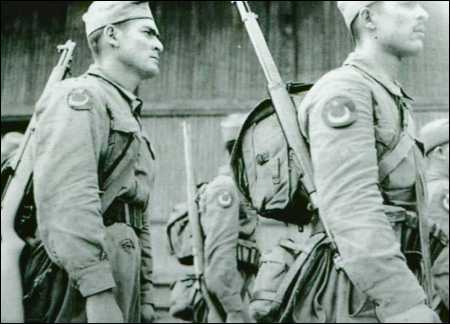
     Your presence was not only a diplomatic duty it was a profound act of remembrance and honor for the brave Turkish soldiers who wrote history with their blood on the fields of Korea. These heroes, far from their homeland, fought and sacrificed their lives for a people they had never met—forming a lasting legacy of brotherhood between Türkiye and South Korea.

     By taking part in these ceremonies, you upheld the dignity of our veterans and honored the deep, enduring ties between the Turkish and Korean peoples. These events also highlight the broader significance of the alliance between Türkiye and the United States—one that was strengthened through our joint sacrifices in Korea and continues today through our shared commitment as NATO allies.

     Sadly, not all representatives have shown the same level of honor and awareness. Some, including former Ambassador Murat Mercan then servicing as Deputy Consul general of New York Emre Manav, have disrespected and overlooked the sacrifices of our Turkish Korean War veterans. Your actions stand in stark contrast: you chose the path of remembrance, gratitude, and truth. You gave voice to the legacy of our veterans who returned not only with medals but as sons embraced by the Korean people a symbol of the unbreakable bond forged in the crucible of war.

     Consul General Kuzum, I deeply respect and commend your leadership. You have set a powerful example for your colleagues by showing that honoring the past is essential to shaping a dignified and meaningful future. I sincerely thank you for not forgetting our brave veterans, and for carrying forward their legacy with the respect and reverence they deserve.

     With profound gratitude and admiration,

    Ibrahim Kurtulus

    Honorary Korean War Veteran
    Honorary Citizen of the Republic of Korea
    Community Activist  & Friend of the Turkish-Korean Brotherhood

  • Georgia marks its Independence Day

    Georgia marks its Independence Day

    Letter to Staten Island Advance Newspaper  Editor 


    The United States and the Republic of Türkiye Must Stand Firm in Support of Georgia’s Democratic Future

    As Georgia marks its Independence Day on May 26th, the occasion calls for reflection—not just for Georgians, but for allies like the United States and the Republic of Türkiye. Both nations have long-standing ties with Georgia, and both now face a defining choice: to reaffirm their support for a young democracy or risk undermining decades of democratic progress and regional stability.

    In July 2024, U.S. Secretary of State Antony Blinken announced the suspension of more than $95 million in assistance to the Georgian government, following a bilateral review initiated in May. While some aid to civil society remains, this sharp shift in policy could destabilize one of the few democracies in the Caucasus and create a vacuum for greater Russian influence in a geopolitically sensitive region.

    Georgia has reaffirmed its commitment to Euro-Atlantic integration a message reiterated by its diplomats at a recent reception I attended in New York. For over 30 years, U.S. support has helped build Georgia’s civil and defense infrastructure, trained educators and doctors, and strengthened its coast guard and armed forces. These investments have fortified both national resilience and regional security.

    Turning away from Georgia now would be short-sighted. It sends the wrong message to Georgians and the international community one of retreat at a moment that demands resolve. A country that has sought closer ties with the transatlantic world should not be left vulnerable.

    The United States must urgently reconsider its approach. Continued support for Georgia is not a favor it is a strategic imperative. It serves our democratic values and our long-term interests in a secure, Western-oriented Black Sea region. Principled engagement and constructive dialogue—not disengagement—should define U.S.-Georgia relations going forward.

    Likewise, the Republic of Türkiye must act decisively. As a NATO ally, a regional super power, and a country deeply linked to Georgia through history, culture, and trade, Türkiye has much at stake. Georgia is a key transit hub for energy and commerce—home to the Baku–Tbilisi–Ceyhan pipeline and Southern Gas Corridor, both vital to Europe’s energy diversification and Türkiye’s role as an energy bridge. The cities in Turkiye like Artvin, Rize, and Trabzon are directly connected to this strategic geography.

    Yet Türkiye’s recent posture has appeared cautious. This is not the time for hesitation. A stable, democratic Georgia strengthens Türkiye’s regional leadership and helps counter malign influence from the north.As Georgia continues its path toward democratic consolidation, both Washington and Ankara must act with strategic clarity. Independence Day should serve not merely as a ceremony, but as a catalyst for renewed support. Reinstating U.S. assistance and deepening  Türkiye’s engagement would reaffirm shared values and commitments.

    Let May 26th remind us not of uncertainty, but of enduring solidarity with a nation that has stood beside us. Georgia’s success is not just its own it is a victory for democracy itself.

    Ibrahim Kurtulus 
    Dongan Hills

  • Support for Pakistan

    Support for Pakistan

    Strong Support for Pakistan and a Call for Responsible Dialogue

    At this critical juncture, we unequivocally stand in solidarity with our brotherly nation of Pakistan, whose sovereignty, dignity, and territorial integrity must be safeguarded without compromise. The Turkish people bound by centuries of brotherhood, shared values, and mutual respect with the Pakistani nation will not remain silent or indifferent in the face of any threat or provocation aimed at destabilizing Pakistan.

    Let it be known clearly: any escalation or aggression directed against Pakistan would be viewed not only as an attack on a sovereign state but as an affront to the bonds of fraternity that unite our peoples. I know to well that Turkiye’s unwavering commitment to the defense of Pakistan’s legitimate rights and national interests remains resolute, and our hearts beat in unison with the people of Pakistan during these challenging times.

    Yet, in the spirit of diplomacy and regional stability, we remain hopeful that both Pakistan and India will demonstrate the wisdom, foresight, and courage to engage in meaningful dialogue aimed at de-escalating tensions that have regrettably risen over the past several weeks. History teaches us that conflict serves only those with ulterior motives who seek to exploit division and turmoil for their own gain. True leadership lies not in the pursuit of confrontation but in the pursuit of peace.

    We call upon all responsible actors to refrain from inflammatory rhetoric and destabilizing actions, and to prioritize channels of diplomacy, mutual respect, and constructive engagement. The path to lasting security in South Asia lies in dialogue, restraint, and cooperation not escalation.

    May wisdom prevail, and may the bonds of brotherhood and peace triumph over the forces of discord.

    I know to well that 90 Million Türkiye stands with Pakistan today and always.

    Ibrahim Kurtulus

    Community Activist 

  • Letter to Pakistani Ambassador to United Nations

    Letter to Pakistani Ambassador to United Nations

    Letter to Pakistani Ambassador to United Nations / Turkish Republic of Northern Cyprus (TRNC)

    His Excellence Ambassador Asim Iftikhar Ahmad
    Permanent Mission of Pakistan to the United Nations
    Pakistan Mission to The United Nations. 

    8 East, 65th Street 
    New York, NY 10065

    April 10, 2025 

    Dear Ambassador Asim Iftikhar Ahmad,

    I extend to you my warmest congratulations on your appointment as the Permanent Representative of the Islamic Republic of Pakistan to the United Nations. Sir, My name is Ibrahim Kurtulus , I am a Turkish American Community Activist. Ambassador, Your elevation to this distinguished post is a testament to your unwavering dedication, diplomatic acumen, and tireless service to your nation on the international stage. The Republic of Türkiye and the Islamic Republic of Pakistan share a bond that transcends the boundaries of geography and politics. It is a brotherhood rooted in history, fortified by shared values, and deepened by unwavering mutual respect. From the final days of the Ottoman Empire to the present era of the Republic of Türkiye, the Turkish nation has never forgotten the heartfelt solidarity shown by our Pakistani brothers and sisters.

    Indeed, this history is not merely preserved in books it is passed from generation to generation. My own daughters, aged 13 and 10, have already come to understand the depth of Pakistan’s support for Türkiye. Just as 90 million citizens of Türkiye remember with gratitude the sacrifices and moral support extended by your great nation during our most trying times, our children will continue to educate theirs on this sacred bond of friendship and brotherhood.

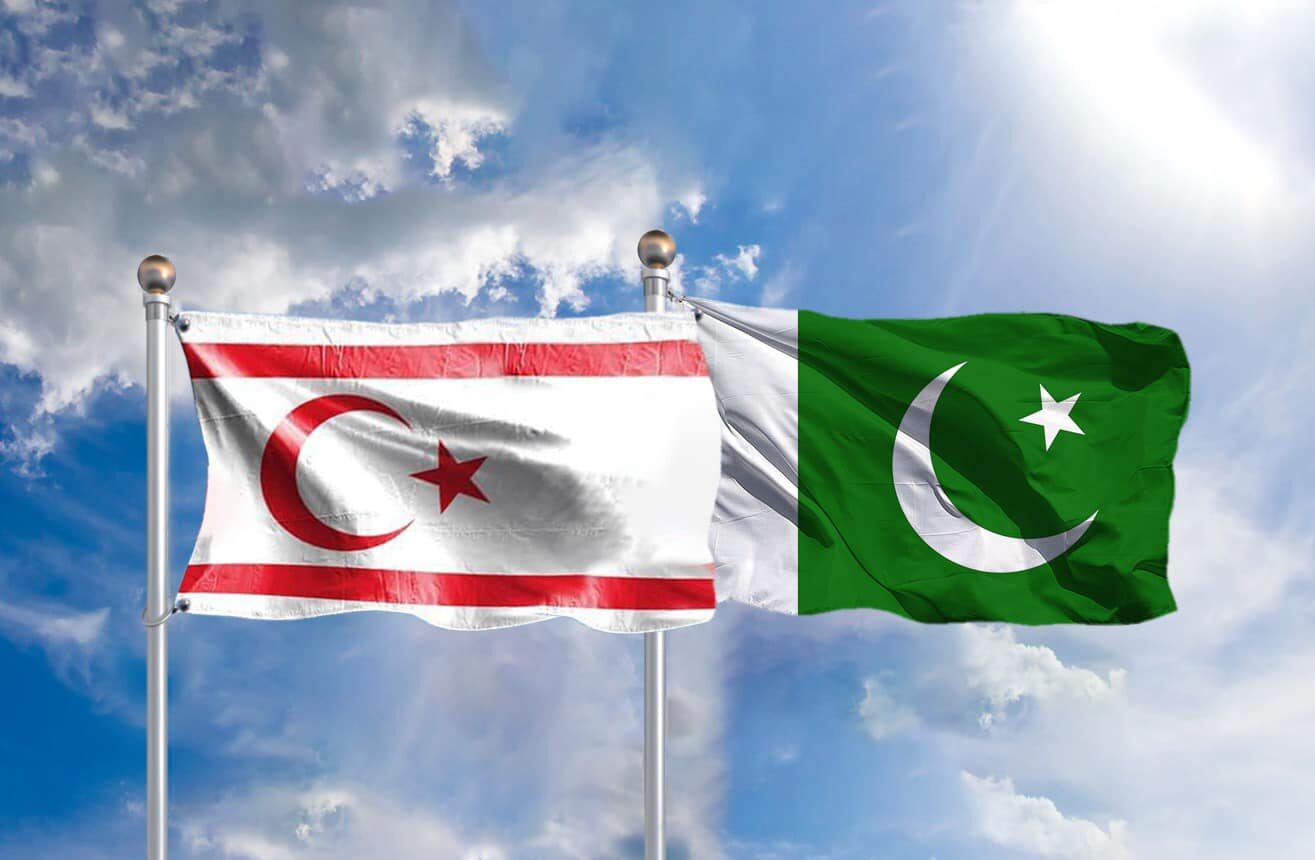
    Today, we continue to witness this unwavering spirit of solidarity not only in the context of Türkiye but also in the principled stance your country has taken towards the Turkish Republic of Northern Cyprus (TRNC). While others have chosen the path of silence and isolation, Pakistan has demonstrated moral clarity and brotherhood. The Turkish people recognize and deeply appreciate this courageous and just approach. Just as Pakistan has stood by Türkiye and the TRNC, we in Türkiye stand in resolute solidarity with our Kashmiri brothers and sisters, and with the noble people of Pakistan. The issue of Jammu and Kashmir remains close to the hearts of the Turkish people. We know too well that any attack direct or indirect on the sovereignty or dignity of Pakistan is felt by the Turkish people as an affront to their own.

    Your Excellency, as you embark upon your important mission at the United Nations, may your tenure be marked by success, wisdom, and strengthened cooperation between our brotherly nations. Türkiye looks forward to continuing our close collaboration on matters of mutual concern, from promoting global peace to defending the just causes of our nations and peoples.

    Once again, I offer you my heartfelt congratulations and look forward, Inshallah, to the honor of meeting you in the near future.

    With profound respect and warm regards,

    Respectfully,

    Ibrahim Kurtulus 

    Community Activist 

    New York, Staten Island 

  • Profound Disappointment in Kazakhstan’s Decision to Open an Embassy in Southern Cyprus

    Profound Disappointment in Kazakhstan’s Decision to Open an Embassy in Southern Cyprus

    His Excellency Yerzhan Ashikbayev
    Ambassador of the Republic of Kazakhstan to the United States
    1401 16th St NW
    Washington, DC 20036

    April 4, 2025 

    RE: Profound Disappointment in Kazakhstan’s Decision to Open an Embassy in Southern Cyprus

    Your Excellency Ashikbayev,

    It is with deep disappointment that I write to you regarding Kazakhstan’s recent decision to establish an embassy in Southern Cyprus while wholly disregarding the existence of the Turkish Republic of Northern Cyprus (TRNC). This decision is not merely a diplomatic misstep but an affront to the historical, legal, and moral imperatives that ought to guide Kazakhstan, a proud Turkic nation with deep civilizational and kinship ties to Türkiye and the broader Turkic world.

    As a Turkish-American who has long worked to strengthen bonds between our nations — including being the first to organize and raise the Kazakh flag at New York’s historic Bowling Green December 2021 on the 30th anniversary of Kazakhstan’s independence with then Consulate General Almat Aidarbekov — I cannot help but express my profound dismay at what appears to be a decision driven by financial and geopolitical expediencies rather than a principled stand for justice and historical truth. The fact that Foreign Minister Murat Nurtleu traveled to the island without even acknowledging the Turkish Cypriots or the TRNC is not just an oversight — it is a betrayal. His failure to extend even the most basic diplomatic courtesy to the Turkish Cypriot side is a slap in the face to the very people who have been systematically isolated and ignored despite their unwavering commitment to peace. Even Ray Charles could have seen if he was alive that there are two states on the island; yet Kazakhstan’s actions suggest willful ignorance rather than mere negligence.

    Let me remind Your Excellency that this year marks the 52nd anniversary of the establishment of the TRNC, an entity that exists due to the necessity of protecting Turkish Cypriots from the relentless aggression they faced. The Athens Court of Appeals itself, in its ruling of March 21, 1979, affirmed the legality of Türkiye’s intervention in Cyprus, acknowledging that it was undertaken in accordance with the London-Zurich Agreements. 

    The true instigators of the crisis were the Greek officers and its Greek Cypriot collaborators who orchestrated the 1974 coup — yet today, Kazakhstan chooses to align itself with those who have perpetuated injustice rather than those who have suffered from it.

    History speaks volumes about the intransigence of the Greek Cypriots when it comes to peace. Former Cypriot Foreign Minister Nicos Rolandis has documented no fewer than sixteen peace initiatives between 1948 and 2017 that the Greek Cypriots outright rejected. Most notably, the Annan Plan of 2004, which Turkish Cypriots overwhelmingly supported at a rate of 65%, was rejected by an astounding 76% of Greek Cypriots. Despite this blatant refusal to resolve the issue, it was the Greek Cypriots who were granted entry into the European Union, while Turkish Cypriots were left in diplomatic limbo. This pattern of rejection and obstructionism should have given Kazakhstan pause before choosing to align itself with one side while disregarding the other entirely.  As a leader in the Turkish-American community and as someone who has worked tirelessly to promote Kazakhstan’s visibility and partnerships, I must convey the deep sense of hurt and betrayal that Kazakhstan’s decision has engendered among the 500,000-strong Turkish-American community. It pains us to see a fellow Turkic country disregard historical truth, kinship, and justice. If economic incentives and political pragmatism are to be the sole determinants of Kazakhstan’s foreign policy, then what message does this send about the values upon which the Turkic world stands?

    Your Excellency, the strength of the Turkic world has always rested in its unity, resilience, and shared historical consciousness. The decision to sidestep TRNC in favor of a one-sided engagement with Southern Cyprus is not merely an insult to Turkish Cypriots; it is an affront to all those who believe in fairness, justice, and the preservation of historical truth.

    I urge Kazakhstan to reconsider the implications of its actions and to take meaningful steps to engage with the Turkish Cypriot side. Diplomatic recognition and engagement must be guided by principles of equity and historical justice.

    Respectfully,

    Ibrahim Kurtulus 

    Community Activist