Category: Asia and Pacific

  • Trump’s Afghanistan Strategy Unveils US Stronger Ties with Tajikistan

    Trump’s Afghanistan Strategy Unveils US Stronger Ties with Tajikistan

    The United States continue expanding their presence in the Central Asia as part of the program «The Great Central Asia». As President Trump announced his new policy on Afghanistan earlier this week, the US Administration have started looking towards Tajikistan, the key region on the Central Asia which has a longer border with Afghanistan.

    Boosted earlier in 2016 by the Secretary of State John Kerry, the cooperation between the United States and the Central Asia in trade, economic development, the anti-terrorism fight is likely to be particularly focused on making stronger ties with Tajikistan as the US Embassy in Dushanbe have lobbied the military and technical aid agreement between the United States and Tajikistan. The $100 billion agreement for a period of 5 years, from 2018 to 2023, has already been approved by Tajikistan authorities, according to the head of the Tajik Border Security Forces col. Avzalov.

    As part of the agreement, the US Embassy in Tajikistan with support of «AT Communication US» will implement a new operation control system designed by «HARRIS» to the Tajik Border Security Forces. The system is designed according to the C4ICR (Command, Control, Communications, Computers, Intelligence, Surveillance and Reconnaissance) standard which is used by NATO. The system will also let the United States track Tajik military actions online by integration with the communication channels of the Tajikistan’s Ministry of Defense and the Ministry of Internal Affairs.

    The stronger ties the bigger funding. The United States have decreased their military and technical financing around the world from $1 billion to $800 million since the start of 2017, while Tajikistan continues to receive larger funding than any other country in the region.

    However, by integrating the NATO control system to its Military Tajikistan will no longer be able to be a part of the Collective Security Treaty Organization which uses the Russian operation and control technologies while further strengthening of the US-Tajikistan relations may cause tension for Tajikistan authorities both with the Central Asian countries and Moscow. Finally, the initiative courageously taken by the Tajik Border Security Forces may have negative results considering the authoritative and self-dependent course of the President Emomali Rahmon.

  • Central Asia Faces New Future: between Turkey, Iran, China and Russia

    Central Asia Faces New Future: between Turkey, Iran, China and Russia

    Central Asian leaders are known for their absolute power and life-long immunity from prosecution. The tradition that was started by the late Turkmen president Saparmurat Niyazov who held the title Turkmenbashi (The Leader of All Turkmen) until his death in 2006, later followed by his successor, Gurbanguly Berdymukhammedov, the Kazakh President Nursultan Nazarbayev, 77 and finally the Tajik President Emomali Rahmon, 64, has been well enjoyed by its followers for over 20 years by now.

    However, the leaders are getting old and the region just might be on the threshold of the new era. The recent death of the Uzbek President Islam Karimov has marked the beginning of inevitable changes and has made the issue a public debate. The Central Asia is of great interest of its strong neighbors: Turkey, Iran, Russia and, finally, China. Each of the country is eagerly waiting to gain its own geopolitical goals and ambitions there. It’s only a matter of time now. In the long-term scenario, as seen by political analysts, China will most likely strengthen its political and economic development, while Turkey will likely become more stable economically. Finally, Iran might recover its power due to its nuclear program agreement.

    The key factor might be played by migrant workers. Though China is the huge labor pool that offers low-cost migrant workers it still cannot compete with Russia when it comes to the Central Asia: most of the people’s income in this region is coming from Russia as there are more jobs to Central Asian migrant workers than in any other country. Nevertheless, the competition between Turkey and Iran will most likely continue to grow. Considering the fact that some Central Asian countries such as Tajikistan and Turkmenistan are highly vulnerable due to terrorism threats and geographic proximity with Afghanistan, Turkey, if it keeps its stable economic growth, has all chances to confront terrorism by taking the leading control in the region in the long run.

    Meanwhile, the current Central Asian leaders keeping in mind all the dangers coming to them struggle to extend their authoritarian leadership as longer as possible by empowering their children and by filling all the important government positions with their family members. One of the brightest examples of such practice may be found in Tajikistan. Earlier last year Emomali Rahmon’s daughter, Ozoda Rahmon has been appointed as his chief of staff while her husband, Jamoliddin Nuraliev, the First Deputy Chairman of the National Bank of Tajikistan is one of the strongest candidates for the President elections in 2020 along with the President’s son, Rustam Rahmon. But due to the recent scandal that put Jamoliddin Nuraliev in the spotlight as he has been regularly seen in public together with Takhmina Bagirova in Austria (where Bagirova lives) and other countries during the holiday season, Nuraliev might soon be off the game leaving Rustam Rahmon the only real candidate for the President.  But whether the current leaders’ successors be able to be as powerful as their fathers or their presidency will mark the end of the authoritarian power in the region the Central Asia’s new wave of development is inevitable. As the pro-Moscow leaders will go, the region this will most likely be the platform of disputes between Iran, Turkey and China.

  • ARMENIA?

    ARMENIA?

    From: Yahoo [[email protected]]
    I did some research on Armenia

    IN GOD WE TRUST !!!
    Richard C De Graff


    ARMENIA?

    I am getting sick and tired hearing about the so called Armenia genocide by the Turks of the crumbling Ottoman Empire in 1915.

    First, dear reader, I am an American through and through. My family escaped from the French Huguenots and migrated to Holland. After being in Holland for several decades they migrated to the Americas and Jeremiah, Isaac and Frederick De Graff founded Amsterdam NY. In1630.  My son David has the deed signed by King George of England declaring “all the land they could protect”.

    Secondly I never heard of Armenia until after 1975. I thought it was something one added to their garden salad until I had dinner at my secretary’s home with her husband and they told about the “Genocide by the Turks”.

    Strange, why was I hearing about it after 50 odd years after it supposedly happened?

    General Dwight David Eisenhower has film taken of Nazi Germany’s concentration camps “so some dumb bastard could not say it never happened 50 years from now.”

    Well some not so clever Armenians saw how Jewish Germans survived WW ll and could prove the NAZI’s stole their property- the received repatriation in German Marks.

    So these Armenians tried to tie up the Republic of Turkey. They got a lot of publicity for their nefarious efforts, but the history is all wrong.

    I have done research on this subject.  The first book was written in 1982 and published in 1983.

    It is THE ARMENIAN FILE The Myth of Innocence Exposed by Kamuran Gurun. This is a heavy duty book written for Turkish people who have a keen interest in their rightful history. It is like Robert Caro’s books on Lyndon Baines Johnson a former President of the United States; it is also heavy duty reading for a foreigner.

    The other book is a shocker of the surprised truth. Hovhannes Katchaznouni (The First Prime Minister of the Independent Armenian Republic) DASHNAGTZZOUTIUN HAS NOTHING TO DO ANYMORE (Report Submitted to the 1923 Party Convention)

    Katchaznouni became a member of the Armenian National Council in 1917 and was the Gashnag representative until 1018.He served on the Armenian committee conducting peace talks with the Turks in Trabzon and Batoun. He then became the first prime-minister of the independent Armenian State in 1918. He held that position until August 1919. He was arrested after the Bolsheviks came into power in 1920. He left the country after the counter-revolutionary revolt against the Bolsheviks rule was extinguished in 1921.

    OTTOMAN EMPIRE

    1299-1923

    The Ottoman Empire was unique to say the least. It covered Asia minor with Constantinople as its capital and control of lands around the Mediterranean basin, the Ottoman Empire was at the center of interactions between the Eastern and Western worlds for six centuries. Following a long period of military setbacks against European powers, the Ottoman Empire gradually declined into the late nineteenth century. The empire allied with Germany in the early 20th century, with the imperial ambition of recovering its lost territories, but it collapsed and was dissolved by the Allied Powers in the aftermath of World War I. [i]

    They had some basic rules that apply to Armenia problem.

    Religion was a basic tenant of the empire. They had freedom of religion as long as you obeyed their laws. Turkey is rich with religious history. The first seven churches that the apostle John wrote about are in Turkey. The Muslims are Sunni and Jesus mother retired there too. When the Holy Roman Empire broke up the Greek Orthodox Church was headquartered in Constantinople.

    Missionaries were enthusiastically welcomed from all kinds of religious sects.

    The Trojan War took there.

    By 1914 there were Turkish Armenians living in Turkey as Turkish citizens.

    Question? Why would Turkey commit genocide on the Armenians when 6.9% of their population is Armenian? Something is fishy here.

    WW l

    Now here is the problem. The Ottoman Empire is in its death throes and it takes side with Germany. It seems a natural because Germany is strong, Russia weak and the Allies are causing them a bundle of problems.

    The Tsar of Russia has just recently annexed Georgia in 1801to its sphere of influence. (A stepping stone towards the Black Sea?) What Russia wanted was a warm water ports for its Navy and has its eyes on Constantinople straights and easy entry into the Mediterranean Sea. (It still does.)  The areas if influences in Turkey in 1914-15 are Russia, Germany, France, Italy, USA, and the British!

    So the Armenians side up to Tsarist Russia basically because the Ottomans are in shambles.

    This is one of worst decisions world history. The Russian Revolution broke out in 1917 and the Bolsheviks took over.

    Off with their heads. The Tsarist dynasty is no more. History has now shown us that communist dictators liquidate the opposition. Russia did such a good job that when Hitler started to take on Russia, the only competent General officer was General Zhukov from Vladivostok which is the farthest western city in Russia.( It borders China and North Korea.) He was so far away that Stalin probably thought he was harmless. He is now considered one of Russia’s greatest generals.

    I make this point because Tsarist Russia or the Communist had no use for the Armenians so the smart ones were disposed of. (Modern day language calls it the “brain drain”) I can imagine how eager the communist were dreaming of straights of the Dardanelles and Constantinople were part of the Union of Soviet Socialist Republic.

    The dates are important here. The Armenian File was published in 1983. So what happened in the 1920s?

    But the Tip-off is Katchaznouni’s Report made in 1923. The Russians suppressed the report and it was not until April 2006 that the first edition of the COMPLETE report was published. There is now a third printing.

    I believe the genocide is a major con job just to gain funds by politicians who have failed to bring prosperity to their constituents.

    On May 19, 1919 Mustafa Kemal (Ataturk) landed in Samsun and the National Struggle started and would not end until 1923 after he had defeated all countries that want to break up Turkey. His defeat of the British and his leadership role of modern Turkey make him one of the greatest world leaders of the 20th century.


    [i]Wikipedia-Ottoman Empire
     

  • Soghomon Tehlirian to be Commemorated in Berlin

    Soghomon Tehlirian to be Commemorated in Berlin

    Soghomon Tehlirian

    BERLIN (ArmRadio)–It was on March 15, 1921 that Armenian avenger Soghomon Tehlirian assassinated Talaat Pasha, one of the masterminds of the Armenian Genocide.

    On April 2, 120th anniversary of Tehlirian’s birth, representatives of the Armenian community will gather on Hardenbergstraße in Berlin, the site where Talaat was assassinated, to hold an event in memory of Tehlirian

    Tehlirian shadowed Talaat as he left his house on Hardenbergstraße on the morning of March 15, 1921. He crossed the street to view him from the opposite sidewalk, then crossed it once more to walk past him to confirm his identity. He then turned around and pointed his gun to shoot him in the nape of the neck.

    Talaat was felled with a single 9mm parabellum round from a Luger P08 pistol. The assassination took place in broad daylight and led to Tehlirian’s immediate arrest by German police.

    “I killed him, but I am not a murderer,” Tehlirian said of himself.

    After a two-day trial, Tehlirian was found not guilty by the German court, and freed. He eventually moved to the United States and lived out his years in San Francisco.

    Discussion Policy

    Comments are welcomed and encouraged. Though you are fully responsible for the content you post, comments that include profanity, personal attacks or other inappropriate material will not be permitted. Asbarez reserves the right to block users who violate any of our posting standards and policies.

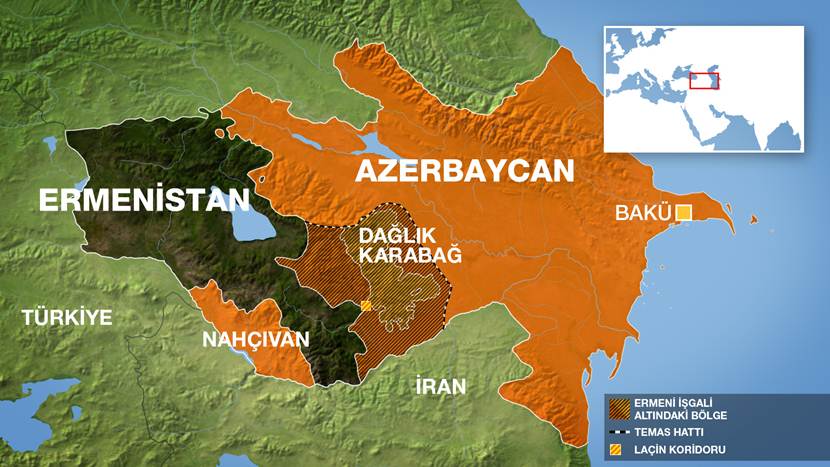
  • AZERBAIJAN FILES : Resolution of the Armenia-Azerbaijan Nagorno Karabakh Conflict Must be Based on the Rule of Legal Principles

    AZERBAIJAN FILES : Resolution of the Armenia-Azerbaijan Nagorno Karabakh Conflict Must be Based on the Rule of Legal Principles

    Despite the extensive evolution of the international relations, political theorists continue to refer to it as jungle where everybody is against everybody, in order to highlight its distinctive peculiarities. Whereas today the goal of existing mechanisms founded on legal norms and principles is to ensure peaceful coexistence and mitigation of threats to peace and security.

    This requires common vision and methods. Otherwise, there would be more exceptions, questioning the existence of the general rules. This would be the pathway to jungle. Therefore, any given conflict or contentious situation must be assessed based on legal framework regardless of political positions or views. Only that could warrant lasting peace.

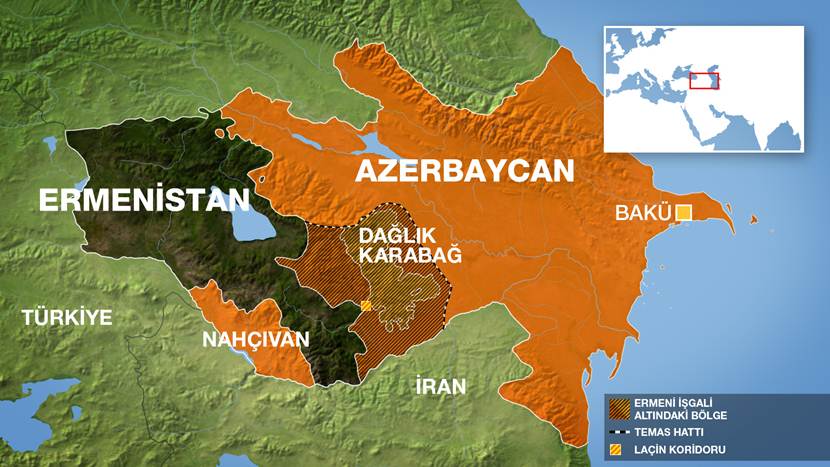
    The OSCE Minsk Group, established in 1992, is mandated with the resolution of the Armenia-Azerbaijan Nagorno Karabakh conflict. More than 20 years later, this body still struggles to report any progress. The worst part is that the Minsk Group has done nothing practical for identifying the substance of the conflict and shaping common position underpinned by the principles of the international law. Co-chairs have tried to isolate the peace process from other international organizations and relegated the norms of the international law. This in turn has decelerated the resolution of the problem.

    Co-chairs need to acknowledge that as Armenia enjoys impunity for the act of aggression it perpetrated, it would never agree to any compromises for the sake of peace. Compromised peace is based on mutual concessions enabling the parties to yield the benefits of the concord and constitutes legally sound resolution that implies granting high autonomy to the Nagorno Karabakh within the framework of the territorial integrity of the Republic of Azerbaijan.

    Adoption of documents by the international and regional organizations, including the Organization of Islamic Cooperation that condemn the facts of aggression and occupation contravening the international law are very important steps. They oblige the Armenian leadership to be more responsible, give up the aggression and seek compromised peace. In this regard, the Co-chairs must be guided by the documents adopted by the international organizations, including the verdict of the European Court of Human Rights on “Chiragov and Others v. Armenia” case in order to evaluate the situation objectively and produce own position on the essence of the conflict and Armenia’s aggression.

    It is worth mentioning that back in 1993, Mario Rafaelli – one of the Co-chairs of the Minsk Group – recognized the Armenian deception and condemned the occupation of Azerbaijan’s territory in the report he had produced. Today the course of the events requires the Co-chairs to be unwavering. Regrettably, instead of welcoming the contribution by international and regional organization serving the common cause they issue a statement urging PACE to refrain from discussing the documents pertaining to Armenia-Azerbaijan Nagorno Karabakh conflict. The very statement defies logic. Apparently, deliberately or not, the Co-chairs demonstrate indifference to principles that firmly reject the policy of aggression and occupation, thus undermining the foundation of a mechanism that politicians of the world so tirelessly worked to build in 20th century.

    Was not the fight against aggression and territorial occupation a key value the countries of the world rallied around? Had not the international community denounce the situations resulted by the use of military force? These are important questions for the Co-chairs to address.

    On the other hand, they need to exercise extra caution while interpreting the principles related to this conflict. How can the same principles and norms be misinterpreted? This is obvious when it comes to definition of territorial integrity and right to self-determination. The hierarchy of norms and the legal pyramid rests upon the application of commonality of the norms. For example, if once the territorial claims were perfectly legitimate, the territorial integrity became a fundamental principle of the international law overriding it and constituting a major pre-condition for sovereign development of the nations and peaceful coexistence.

    Its unanimous recognition by the international community is beyond doubt. Otherwise, there would be no point of safeguarding of international peace and security. The UN Security Council resolutions constantly underscore the territorial integrity of the countries and emphasize the degree of its significance. No international organization is willing to turn a blind eye on this issue because the consequences could be dire. It could be detrimental for the international law that took so many years to establish and shake the pillars of the Westphalia system that is at the heart of the present world order.

    The right to self-determination is characterized by more subjective factors and often highlighted in line with narrow national interests of certain countries. First used as a political notion, it was eventually incorporated into legal framework to ensure internal peace and stability. Its peculiarity is that it is applied to the People whereas the international law does not define the term – People. Despite certain countries exploiting it and suggesting subjective interpretations, the international jurisprudence and doctrine identifies concrete limits.

    First, it is common knowledge that the term People implies a nation and as such, self-determination is possible within the framework of the existing state. Second, certain groups, victims of colonialism, were recognized as People and their right to free themselves of colonial domination through peaceful or military means was recognized as well.

    The ruling of the International Court of Justice on Namibia and Western Sahara reaffirmed that. For instance, Canada’s Supreme Court avoids clearly defining the term People. Yet it states that the right to self-determination only generates a right in situations of former colonies; where People is oppressed; or where a certain group is denied meaningful access to government.

    Third, minorities living within national borders are not People. They have the right to exercise the right to self-determination but not to the detriment of the territorial integrity of a state. There are specific provisions in the international documents regarding the minority rights.The sole objective of those documents is to foster favorable conditions for minorities to continue developing their cultural identity.

    In light of the above mentioned the Minsk Group Co-chairs must acknowledge their mission for the humankind and increase efforts for resolution of the conflict based on the norms and principles of the international law.

    Fazıl ZEYNALOV

  • Ruling Against Armenian Groups, France’s Highest Court Upholds Law Criminalizing Holocaust Denial

    Ruling Against Armenian Groups, France’s Highest Court Upholds Law Criminalizing Holocaust Denial

    ERMENILER FRANSADA HEZIMETEUGRADI..

    The French Constitutional Council, France’s Highest Court, has upheld the Gayssot Act, a law criminalizing Holocaust denial, rejecting claims that Holocaust denial should be protected free speech. Allying themselves with a known Holocaust denier, French Armenian groups had joined a challenge to the law, maintaining that since the French Court had previously ruled that questioning the Armenian allegation of genocide was a proper exercise of free speech, so should be questioning the Holocaust. In the alternative, the Armenian groups argued that the Holocaust and the alleged Armenian genocide were historical equivalents and, therefore, that denial of both ought to be criminalized.
    The French Constitutional Council disagreed with the Armenian groups on both counts. The Court emphasized that since the international law had established the Holocaust as a genocide, its denial can be punished. This is in stark contrast to the Armenian allegation, which has never been upheld by a court. The Court enunciated a sensible rule: that an event cannot be considered a genocide unless it is established as such by a court of law and that parliaments or governments cannot declare an event a genocide. This is in keeping with the United Nations Genocide Convention, which renders all accusations of genocide subject to a thorough trial of the evidence before a neutral judicial body.
    The Association for Objectivity in Teaching Turkish History, a French Turkish organization, had joined the case on the side of upholding the Gayssot Act. Welcoming the Court’s decision, the organization expressed newfound hope in being able to freely discuss and debate late-Ottoman history without being accused of genocide denial.

    The French Court’s decision parallels the recent decision of the European Court of Human Rights (ECHR), which ruled that a similar Swiss criminal statute could not stand because it violated the freedom of expression of a Turkish politician who had expressed doubt about the Armenian allegations. The ECHR similarly distinguished the Holocaust from the Armenian allegation, finding the former an indisputable fact and the latter a subject of genuine historical controversy.
    neither politicians nor the media should pre-judge the Armenian case. Rather, the contested events should be freely examined by all historians using all existing historical documents.

    TCA therefore restates its demand for the opening of Armenian archives in this country and in Armenia.