Category: Asia and Pacific

  • Armenian President To Visit Syrian Site Of 1915 Tragedy

    Armenian President To Visit Syrian Site Of 1915 Tragedy

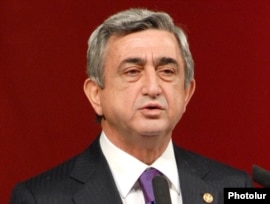
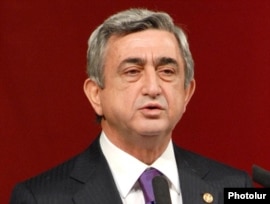
    Armenian President Serzh Sarkisian
    March 24, 2010
    PRAGUE — Armenia’s President Serzh Sarkisian is due to visit an area of Syria that was the final destination in what Armenians consider the first genocide of the 20th century, RFE/RL’s Armenian Service reports.

    Sarkisian, who held talks on March 23 with Syrian counterpart Bashar al-Assad in Damascus, was scheduled to visit the northeastern city of Deir-el-Zor later today.

    The desert surrounding the city proved the final destination for hundreds of thousands of Armenians forced out of their homes in the final years of the Ottoman Empire nearly a century ago.

    Those who did not die en route met their death in camps such as Deir-el-Zor.

    In 1990, the Armenian community in Syria built a memorial complex there dedicated to the victims.

    For decades, survivors and descendants have been campaigning for the World War I-era mass killings to be recognized as genocide — a label Turkey rejects.

    On March 23, Sarkisian suggested in a newspaper interview that Turkey’s reluctance to unconditionally normalize relations with Armenia is only facilitating a broader international recognition of the killings as genocide.

    Sarkisian spoke to the Syrian daily “Al Watan” during an official visit that began on March 22.

    He was asked specifically to comment on a resolution recognizing the 1915 mass killings of Armenians by Ottoman Turks as genocide that was adopted by a U.S. congressional committee on March 4.

    “One thing is obvious to me,” he replied. “The longer the process of normalizing our relations [with Turkey] lasts, the larger the number of states adopting such resolutions may become.”

    Turkish leaders link the ratification of the normalization protocols with a resolution of the Nagorno-Karabakh conflict that would satisfy Azerbaijan.

    They also say that the genocide resolutions adopted by the U.S. House Foreign Affairs Committee as well as Sweden’s parliament this month have further complicated Turkish-Armenian reconciliation.

    By contrast, Yerevan has welcomed both resolutions.

    In other remarks to “Al Watan,” Sarkisian said that Azerbaijani territory currently held by Armenian forces could be returned in exchange for security and self-determination for the disputed territory of Nagorno-Karabakh.

    Sarkisian reiterated Yerevan’s long-standing policy of Armenian forces withdrawing from seven Azerbaijani districts around Nagorno-Karabakh in the event of an agreement on its final status.

    Speaking at a joint news conference with Sarkisian on March 22, Assad offered Syria’s help in establishing cordial relations between Armenia and Turkey for the sake of regional security and stability.

    https://www.rferl.org/a/Armenian_President_To_Visit_Syrian_Site_Of_1915_Tragedy/1992548.html
  • Armenia: Key Beneficiary of Russian-Georgian Border Opening

    Armenia: Key Beneficiary of Russian-Georgian Border Opening

    March 23, 2010

    By: Emil Danielyan

    Verkhny Lars checkpoint

    Russia and Georgia have reopened their main land border crossing less than 18 months after fighting their brief, but bitter war and severing diplomatic relations. Armenia appears to have been the main driving force behind the development, and will likely become the key beneficiary of renewed commerce through the Kazbegi/Upper Lars narrow pass in the Caucasus Mountains.

    Upper Lars is the only Russian-Georgian border crossing located beyond Georgia’s Russian-backed breakaway regions of South Ossetia and Abkhazia. It served as Armenia’s sole overland commercial conduit to Russia and Europe until being controversially closed by Moscow in June 2006 at the height of a Russian-Georgian spy scandal. Armenian exporters of agricultural produce and other perishables were particularly reliant upon it, accounting for much of the cargo traffic through Upper Lars in the summer and fall each year. Its closure, ostensibly due to an upgrading of Russian border control facilities, forced them to re-route their supplies through the more expensive and time-consuming rail-ferry services between Georgia, Russia, and Ukraine.

    Hence, the Armenian government’s strong interest in seeing the border crossing re-opened as soon as possible. It has for several years pressed the Russians to complete the checkpoint repairs on their side of the frontier and repeatedly secured corresponding reassurances from them. Some pro-government Armenian lawmakers exposed Yerevan’s frustration with the apparent Russian blockade of Georgia in late 2006, when they publicly accused Moscow of disregarding the interests of Russia’s main regional ally in its escalating standoff with Tbilisi. The August 2008 war in South Ossetia served to dash Armenian hopes that the border would re-open anytime soon.

    Yet, despite remaining technically at war, Moscow and Tbilisi subsequently engaged in behind-the-scenes diplomacy on Upper Lars. Armenia is known to have arranged and mediated at least one round of the Russian-Georgian proxy negotiations reportedly held in Yerevan in October 2009. Russian President Dmitry Medvedev announced two months later that he saw no “particular obstacles” to re-opening Upper Lars and resuming direct flight services between Russia and Georgia, despite the Kremlin’s continued refusal to do business with the Georgian President, Mikheil Saakashvili (Regnum, December 9). Later in December, the Russian and Georgian governments announced that they had agreed to resume passenger and cargo traffic through the mountain pass from March 1, 2010 (RIA Novosti, December 24, 2009).

    Both sides honored that agreement, drawing praise from not only Armenia, but the United States and the European Union. The US Ambassador to Georgia, John Bass, hailed the development as “a positive step that will further the improvement of international relations and the economic status of the region’s population.” For his part, Spanish Foreign Minister, Miguel Angel Moratinos, whose country currently holds the rotating EU presidency, inspected the border crossing during his March 3 visit to Georgia (www.rferl.org, March 5).

    “I can confirm that [Russian-Georgian] negotiations indeed took place in Armenia and with Armenia’s mediation,” Armenian Foreign Minister, Edward Nalbandian, told journalists on March 2. He called the resulting agreement “a big success” for all three countries involved (www.armenialiberty.org, March 2).

    The deal could not have come at a better time for Armenia, whose economy has long been hamstrung by closed borders with Turkey and Azerbaijan, and still reeling from the 2009 global financial crisis. Local entrepreneurs say that the positive impact of re-opening the Upper Lars on the domestic economy and its agricultural sector, in particular, will be felt as soon as this summer.

    Arsen Ghazarian, the Chairman of the Armenian Union of Industrialists and Entrepreneurs, forecast that transportation costs incurred by exporters will fall by at least 25 percent. According to Ghazarian, who also owns a cargo shipment company, a single truck laden with Armenian agricultural products takes at least 23 days to reach Russia through a Black Sea rail-ferry link. Going through Upper Lars will reduce shipping time by almost half, he said (Kapital, March 2).

    With Russian-Georgian trade having been reduced by Moscow to a trickle in recent years, the border re-opening is of lesser economic significance to Georgia, at least in the short term. The Saakashvili administration’s willingness to restore commercial links with Georgia’s arch-enemy resulted, among other things, from its warm rapport with Armenia’s current leadership. Even after the Russian-Georgian war, the two South Caucasus neighbors managed to reconcile their differing geopolitical orientations and focus instead on common interests.

    Saakashvili said that the Georgian-Armenian relationship is as “cloudless” as ever, as he greeted his Armenian counterpart, Serzh Sargsyan, in the Georgian port of Batumi on February 27. Their two-day informal talks reportedly centered on economic issues, with both presidents pledging to foster Georgian-Armenian economic “integration.” “We are dependent upon each other and we should use this circumstance for good,” the Georgian leader told journalists (Armenian Public Television, February 28).

    The venue of the talks was also symbolic. Batumi and Georgia’s other major Black Sea port, Poti, process at least two-thirds of freight shipped to and from Armenia. Use of Georgian territory by Armenian trading companies should expand not only as a result of the Upper Lars re-opening, but also the ongoing reconstruction of roads in southern Georgia leading to the Black Sea coast. The Manila-based Asian Development Bank (ADB) agreed last September to support the project with a $500 million loan. An additional $500 million loan approved by the ADB at the time will finance the planned expansion of Armenian highways stretching from the border with Iran to southern Georgia. The funding, requested by the Armenian government, is a further indication that the landlocked country will regard Georgia and, to a lesser extent, Iran, as its most reliable supply line even in the unlikely event of the opening of the Turkish-Armenian border.

    https://jamestown.org/program/armenia-key-beneficiary-of-russian-georgian-border-opening/

  • Talking Turkey about the Armenian Genocide, Tim Gannuzzi, Column, March 18, 2010

    Talking Turkey about the Armenian Genocide, Tim Gannuzzi, Column, March 18, 2010

    KANADA: Calgary Herald’da yayinlanan “Talking Turkey about Armenian genocide” baslikli yaziya cevaben CTC’nin editor’e gonderdigi mektubu asagida gorebilirsiniz.

    Banu

    RE: Talking Turkey about the Armenian Genocide, Tim Gannuzzi, Column, March 18, 2010

    While Tim Gannuzzi is certainly entitled to his own opinion, he is not entitled to his own facts (“Talking Turkey about the Armenian Genocide” March 18, 2010). Turkey  has no intention of making “everyone forget” about its history – neither its good nor its bad. There is no debate that hundreds of thousands of Armenians fell victim to war time chaos and widespread violence during the dying days of the Ottoman Empire. However, to claim that this was an organized attempt at mass extermination is to play  fast and loose with the facts.  It is not just Turkey’s government that objects to this label. The ‘genocide’ label is also rejected by respected Western scholars such as Professor Bernard Lewis, who teaches history at Princeton University and was the recipient of the National Humanities Medal in 2006. Contrary to what Gannuzzi takes as uncontested truth, there is a legitimate scholarly debate around this matter.


    Mr. Gannuzzi’s understanding of the facts is not only limited when it comes to history. While he may think that Canada and Turkey compete for market share in the international oil market, he demonstrates a poor geopolitical understanding of the dynamics around Turkey, including the energy sector. Regardless of Turkey’s geostrategic importance, claims of genocide is a serious matter of legal and moral nature which requires a language of knowledge, not armchair conjectures. Turks reject being accused of a crime which they believe, on the basis of information available, they have not committed. Even in the 20 Parliaments where the Armenian ethnic lobbying proved successful, significant numbers of parliaments voted against pro-Armenian bills in any bills. In any case, are we to write history according to how parliaments vote? Who needs historians then? Are we to leave crimes to be ascertained in parliaments, rather than courts?


    Curiously, Mr. Gannuzzi’s article fails to point out that Turkey and Armenia have made serious steps towards reconciliation and normalization of their relationship. Last year, both countries agreed to set up a historic commission to address the issue of Armenian-Turkish relations during World War I – this includes the opening of Turkish and Armenian archives. Canada could play a vital role in providing support towards reconciliation between Turkey and Armenia. Reproducing a one-sided narrative and disregarding legitimate concerns, on the other hand, is not helpful at all.


    Best regards,

    Kevser Korhan
    President, Council of Turkish Canadians
    2706 Alta Vista Drive, Suite 801
    Ottawa, ON
    K1V 7T4

    =========================================================

    It was chaos, but not genocide

    By Kevser Korhan, Calgary HeraldMarch 23, 2010

    Read more:

    Pro-Turkish protesters wave Turkish flags during a demonstration in Stockholm on Sunday against the decision by Sweden’s parliament to call the killing of Armenians under Ottoman rule during the First World War genocide. Reader says Turks are tired of being accused of a crime they didn’t commit.

    Photograph by: Henrik Montgomery, AFP-Getty Images, Calgary Herald

    Re: “Talking Turkey about the Armenian genocide,” Tim Giannuzzi, Opinion, March 18.

    Turkey has no intention of making “everyone forget” about its history. There is no debate that hundreds of thousands of Armenians fell victim to wartime chaos and widespread violence during the dying days of the Ottoman Empire. To claim that this was an organized attempt at mass extermination is to play fast and loose with the facts. It is not just Turkey’s government that objects to the genocide label; it is also rejected by respected western scholars such as Bernard Lewis, who teaches history at Princeton University and was the recipient of the 2006 National Humanities Medal.

    There is a legitimate scholarly debate around this matter. Turks reject being accused of a crime which they believe, on the basis of information available, they have not committed.

    Even in the 20 parliaments where the Armenian ethnic lobbying proved successful, significant numbers of parliaments voted against pro-Armenian bills. Are we to write history according to how parliaments vote? Who needs historians then? Are we to leave crimes to be ascertained in parliaments, rather than courts?

    Tim Giannuzzi fails to point out that Turkey and Armenia have made serious steps toward reconciliation and normalization of their relationship.

    Last year, both countries agreed to set up a commission to address Armenian-Turkish relations during the First World War; this includes the opening of Turkish and Armenian archives. Canada could play a vital role in providing support toward reconciliation between Turkey and Armenia.

    Kevser Korhan,

    Ottawa

    Kevser Korhan is president of the Council of Turkish Canadians

    © Copyright (c) The Calgary Herald
  • The Never-Ending Armenian Genocide Resolution

    The Never-Ending Armenian Genocide Resolution


    by Morton Abramowitz

    03.19.2010

    Over the last forty years, a resolution has frequently come up in one or both houses of Congress declaring the killings of over a million Armenians in present-day Turkey during World War I a genocide. The resolution has always failed to pass. But each time it comes up Armenian Americans, Turks and our politicians have acted in the same way. It has become almost a ritual.

    For Armenian-Americans it always entails an enormous effort, and ends in political abandonment. Getting a resolution passed is the principal purpose of leading Armenian organizations, which ceaselessly raise awareness and funds to lobby Congress and presidential administrations. Their effort is intense at election time, when monies are given and commitments exacted from candidates to support calling the events of 1915 a genocide. They always get much sympathy from presidential contenders, and sometimes, as with Mr. Obama, specific statements using the term genocide. Legislators also often pay attention to Armenian groups, particularly where there are large populations of Armenian descent, as in California.

    But every time the resolution has come up, the results remind one of the famous antics of the unforgettable, hard-nosed Lucy in the comic strip Peanuts, who holds the football with her finger for the believing Linus to kick. As he rushes to kick the ball, she invariably pulls it aside and Linus bites the dust. So it is that the Armenians find themselves with presidents forsaking their promises or reverting to a low profile on the resolution and their subordinates taking the lead in opposition, or legislators who similarly back down for national-security reasons. Aggrieved Armenians resolutely reject the assertion that American national interests regarding Turkey are so compelling or so threatened that political leaders will always fear the consequences of Turkish anger in expressing support or voting for such a morally compelling resolution. They impressively join the fray, year after year, despite repeated failure.

    For Turkey, the Armenian genocide issue in America, its major ally, has become increasingly contentious. The Turks vehemently deny genocide occurred; it is a matter of national honor in a country where nationalism remains very strong and politically potent. Ankara acknowledges that the huge numbers of Armenians and Turks were slaughtered, but as the result of a terrible war. Many fear passage of such resolutions will somehow ultimately lead Armenians to seek reparations from Turkey. They argue that the issue should be left to historians to determine, not legislators—although Turkish and Armenian historians agreeing on the matter seems far-fetched.

    Turkish governments complain bitterly when resolutions are introduced in other countries and threaten vague but serious consequences—yet they rarely follow through with major measures, evidenced by the passage of such a resolution in France. The rage of the Turkish government and public is greatest when it gets congressional attention in the United States, setting off fears in Washington that the consequences could be very damaging in such important places as Afghanistan and Iraq. In America, as in France, Turkey cannot easily appeal to the public: there aren’t many Americans of Turkish descent around, and not much of the electorate is interested. Instead they bring out all the heavy cannon they can to turn back the resolution—numerous lobbyists, the large military contractors, the American Jewish community (because, until recently, of the strong Turkey-Israel relationship) and most important, the executive branch. Passage of a resolution would be a huge domestic political blow for any Turkish government. Turkey’s efforts have always worked.

    This year Turkish government anger seemed greater over the resolution passing just the House Committee on International Relations, which has happened before. The Turks felt that the administration (as well as the American Jewish community, which they believe is monolithic) was insufficiently active in opposing the resolution. They recalled their ambassador and are considering other punitive measures. But after the administration’s indeed belated opposition, the resolution appears not likely to even reach the floor. Things were much more bitter than usual this year because Ankara came up with a creative approach of proposing and working out agreements with neighboring Armenia to normalize frozen relations, which it also hoped would help postpone any genocide resolution in America indefinitely. But that effort, desirable on its own, stalled politically in Turkey—the Obama administration’s expectation that the Turkish government would submit the agreements for parliamentary approval contributed to its delay in weighing in on the resolution. This year, on the commemorative date of April 24, how Mr. Obama—who used the genocide word as a candidate, but hasn’t yet as president—speaks to the Armenian community will be closely watched and another storm is possible. Turkish Prime Minister Erdogan has remained very vocal on the whole issue.

    For the American media, a genocide resolution is hardly an identifiable issue. Usually it gets a few inches in the middle of the paper, although this year’s Turkish threats caught more press attention.  In 1990, a quite extraordinary two-day debate took place in the Senate over a genocide resolution between the two party leaders, Senator Dole and Senator Byrd—and got barely a mention in the national press. I remember it because as our ambassador in Turkey I spent months lobbying some sixty senators to reject the resolution.

    Most Americans who pay attention to the issue probably sympathize with the Armenians and believe historical evidence supports their claim of genocide. They tend to believe Turkey should come to grips with its past.  Others question, whatever the history, that it is bizarre for the American Congress to express views of what happened one hundred years ago in wartime in another country.  But all that pales for many congressmen and presidents, whatever their commitments in election times, to compelling foreign-policy concerns with Turkey.

    Can this dynamic be changed? Not likely in the short run. The Armenian community will not give up. Moreover they believe that despite Turkey’s growing international importance, its position on this issue is eroding. Some twenty countries have called events genocide—including Sweden, a strong supporter of Turkey’s bid for EU membership, which only last week passed a genocide resolution by one vote. Even with the issue so deeply felt and politically explosive in Turkey, such governments aren’t likely change their stance even as they search for ways to fend off resolution battles.

    Perhaps over time and because of increasing public discussion in Turkey (a recent phenomenon) that will change. Conceivably our Congress may grow tired of the endless battle, but the politics are hard to put aside. Probably the best hope is the realization of Armenian-Turkish reconciliation, which will make it easier to proceed practically to better deal with horrible history. Meanwhile, stay tuned for the next episode.

    Morton Abramowitz, a senior fellow at the Century Foundation, was American ambassador to Turkey 1989–1991.

  • Xinjiang – Where China’s Worry Intersects the World

    Xinjiang – Where China’s Worry Intersects the World

    The recent killing of a Uighur terrorist in Afghanistan has brought new focus on the ethnic group in China’s western border region.of Xinjiang. The situation of the Uighurs – an ethnic Turkic, Muslim minority – reveals much about China’s internal conduct and external worries, according to China expert Christopher M. Clarke. Hailing from Xinjiang province, Uighurs have seen their majority in that province erode and income inequality expand as Beijing populated the area with Han Chinese and supported the growth of state-owned enterprises. There is little wonder that violence erupts in the province. But even without such violence, China would still be leery of developments in Xinjiang, which borders a number of unstable Central Asian states as well as Pakistan, India, and Afghanistan. Plus, the province hosts vast natural resource wealth and many nuclear testing installations. Any one of these situations could add to the vulnerability of the province. China has attempted to ease tensions in the region, cooperating with neighbors over natural resource exploration. But the US military presence in Afghanistan adds a further wrinkle to an already crumpled tapestry. In the end, Xinjiang is likely to remain a sore spot for Beijing as it worries about pressure from all sides regionally and tries to dampen unrest internally. – YaleGlobal

    Xinjiang – Where China’s Worry Intersects the World

    Regional instability adds to concerns about restive Muslim minority

    Christopher M. ClarkeYaleGlobal , 19 March 2010

    Boiling anger: A Uighur protester confronts Chinese security forces in Urumqi, July, 2009.

    WASHINGTON: The February 15 killing of militant Uighur leader Abdul Haq al-Turkistani by an American drone in the border regions of Pakistan highlights China’s continued sensitivity about its remote and vulnerable western region, Xinjiang. It also brings into focus the role of the Afghanistan-Pakistan region as an international sanctuary for Islamic militants and the reasons for China’s worries about social stability and potential terrorist threats in Xinjiang. China’s neuralgia about security in Xinjiang will continue – and perhaps even increase – as big power competition for influence and resources in Central Asia and its ties to the rest of the world continue to expand.

    China’s troubles with the minority Uighurs are not new. But with the break up of the Soviet Union and the rising Islamist Taliban in once Soviet-occupied Afghanistan, the regional dynamic has changed. Since the early 1990s, China has faced recurrent waves of unrest in Xinjiang and widespread acts of violence, some of which seem to have been terrorist acts by disgruntled Uighurs. The 2008 attempted hijacking of an airplane in China by three people armed with flammable liquid was one of the latest – and scariest – examples. There also have been several attacks against perceived Uighur collaborators in China and against Chinese interests outside the country. The capture of Uighurs fighting against coalition forces in Afghanistan, some two dozen of whom were imprisoned in Guantanamo, also indicate that China faces a real threat of terrorist acts against its interests at home and abroad.

    China’s neuralgia about security in Xinjiang will continue as big power competition for influence and resources in Central Asia and its ties to the rest of the world continue to expand.

    The Chinese, however, have aroused skepticism by dubiously attributing dozens of explosions and incidents of civil unrest to instigation by “East Turkistan terrorist forces.”   Officials, for example, blamed an August 2008 attack on a military police unit out for its morning jog, in which 16 officers were killed, on a Uighur terrorist group, despite the fact that the officers apparently were run down by a truck and attacked by a taxi driver and a vegetable vendor, hardly the modus operandi of a sophisticated terrorist organization. Even last July’s massive race riot in Urumqi – set off by rumors that a Uighur woman had been raped and several Uighur men killed by Han Chinese in far-away Guangdong – was labeled as an “organized, violent action against the public” and an act of terrorism.

    So, while China does face periodic upsurges in politically motivated violence by Uighurs, one has to ask, why? The answer: Beijing has engaged in a systematic, multi-decade program of marginalizing Uighurs in their own homeland, fostering economic growth that favors the Han majority of eastern China and that encourages the exploitation of Xinjiang’s wealth of natural resources for Han areas. Beijing has organized and encouraged an influx of Han into Xinjiang, changing the ethnic ratio since 1949 from about 5 percent Han to more than 40 percent today. Moreover, Uighur culture and the Muslim religion are contained under tight restrictions. Beijing proudly points out that Xinjiang in recent years has been among the fastest growing economies in the country, with per capita income higher than all regions except China’s southeast coast. Most of that growth, however, has accrued to State-owned enterprises, Han entrepreneurs, or the government; not to Uighurs. And income inequalities there have actually expanded significantly in recent years. The region also suffers from some of the worst environmental degradation in China. It is hardly surprising that frustration occasionally boils over into civil unrest – or that such conditions breed terrorist groups intent on taking action against the regime. 

    Beijing has engaged in a systematic, multi-decade program of marginalizing Uighurs in their own homeland, fostering economic growth that favors the Han majority.

    That many of China’s problems with terrorism and unrest are largely of its own making has reduced international trust and sympathy for the situation. China’s concerns also have both shaped its approach to the broader region and reduced China’s willingness to cooperate with the US in counter-terrorism, negatively affecting the overall US -China relationship.

    Xinjiang, more than any other area of China, is strategically vulnerable, partially as a result of its location in one of the most fractious neighborhoods outside the Middle East. Representing one-sixth of China’s territory, Xinjiang is rich in oil, gas, and mineral deposits and contains numerous sensitive military installations, including some of the country’s premier nuclear research and testing facilities. It borders the former Soviet republics of Kazakhstan, Kyrgyzstan, and Tajikistan, all of which are less than politically stable.*

    Complicating China’s relations with the Central Asian states is the fact that as many as 500,000 Uighurs – and sizable populations of other Chinese “minorities” – live across relatively porous borders and engage in extensive trade and contacts. Several of these countries contain anti-China Uighur separatist organizations, both peaceful and terrorist. And China is very afraid of the potential contagion of “color revolutions” from Central Asia – like the 2005 “Tulip Revolution” in Kyrgyzstan – destabilizing China’s control in Xinjiang. Uighur activities – including violent attacks – have complicated China’s relations with Turkey, a country with which China seeks closer relations but where public and official sentiment is highly critical of China’s treatment of the ethnically-related Uighurs.

    Xinjiang, more than any other area of China, is strategically vulnerable, partially as a result of its location in one of the most fractious neighborhoods outside the Middle East.

    To control this potentially chaotic situation and to manage Sino-Russian competition for influence, China launched the Shanghai Cooperation Organization (SCO), which includes Russia, China, the Central Asian republics, and a growing number of observers from around the region. China has pushed hard to keep the focus of the SCO on cooperative activities against the “three evils” of “separatism, fundamentalism, and terrorism,” a fear all the member states have in common. 

     Along some of Xinjiang’s most remote and sensitive borders are Tibet, Afghanistan, Pakistan, and the disputed state of Kashmir – any one of which could quickly embroil China in an international crisis. China also tested its “all-weather” friendship with Pakistan pressuring Islamabad to crackdown on Uighur militants seeking refuge in Pakistan. Pakistan reportedly has responded by sending a number of Uighur militants to China for prosecution. Its recent stepped up attacks on terrorist groups – and especially the killing of Abdul Haq and more than a dozen other Uighur militants –  has among other things assuaged relations with China.

    The US intervention in Afghanistan in October 2001 introduced another variable of vulnerability for China with regard to Xinjiang.

    The US intervention in Afghanistan in October 2001 introduced another variable of vulnerability for China with regard to Xinjiang. In the conflict that followed, global support for Al Qaeda drew in more militants to the region, including some Uighurs (as Abdul Haq’s death proved) but it also changed the strategic landscape for China. The introduction of massive US forces into the region, and especially the use of bases such as Manas in Kyrgyzstan, raised visceral and long-standing fears of encirclement by a hostile US intent on “dividing and Westernizing” China. Beijing has put pressure on Central Asian neighbors to expel or severely limit any US military presence and has refused to allow US forces to use Chinese territory for staging or overflights in the war in Afghanistan. China is also working hard to enhance cooperation with its neighbors on energy exploration, exploitation, and transportation as a way of keeping the US and Russia from monopolizing Central Asia’s voluminous oil and natural gas resources.

    These competing interests, and the residual worry that the US and Russia seek to supplant or minimize Chinese influence in Central Asia will continue to contribute to Beijing’s neuralgia about assuring stability in its far Western extremity, even if the real terrorist threat to China has diminished.

    * Beijing is some 1,500 miles from Xinjiang’s capital, Urumqi; Urumqi is nearly another 700 miles from Kashgar on the far Western border. By contrast, Kashgar is only 250 miles from Bishkek, Kyrgyzstan and 500 miles from Kabul.
    ——————————————————
    Dr. Clarke is an independent China consultant. He retired in 2009 after 25 years as a China analyst and head of the China Division of the State Department’s Bureau of Intelligence and Research. 

  • ARMENIA AND GEORGIA IN THE CONTEXT OF TURKISH-ARMENIAN RAPPROCHEMENT

    ARMENIA AND GEORGIA IN THE CONTEXT OF TURKISH-ARMENIAN RAPPROCHEMENT

    By Vahagn Muradyan (03/17/2010 issue of the CACI Analyst)

    The Turkish-Armenian protocols signed last year in Zurich raised concerns that the perspective of Georgia’s decreased significance as a transit country for Armenia may boost nationalist demands around the Armenian minority in Georgia and cause new instability. While the protocols may not materialize in the foreseeable future, thus never inducing visible change in Yerevan’s policies, developments observed since the activation of Turkish-Armenian negotiations suggest that in case of full normalization Yerevan may attempt more assertive policies to uphold the cultural rights of Armenians in Georgia, without supporting their political demands and calls for autonomy.

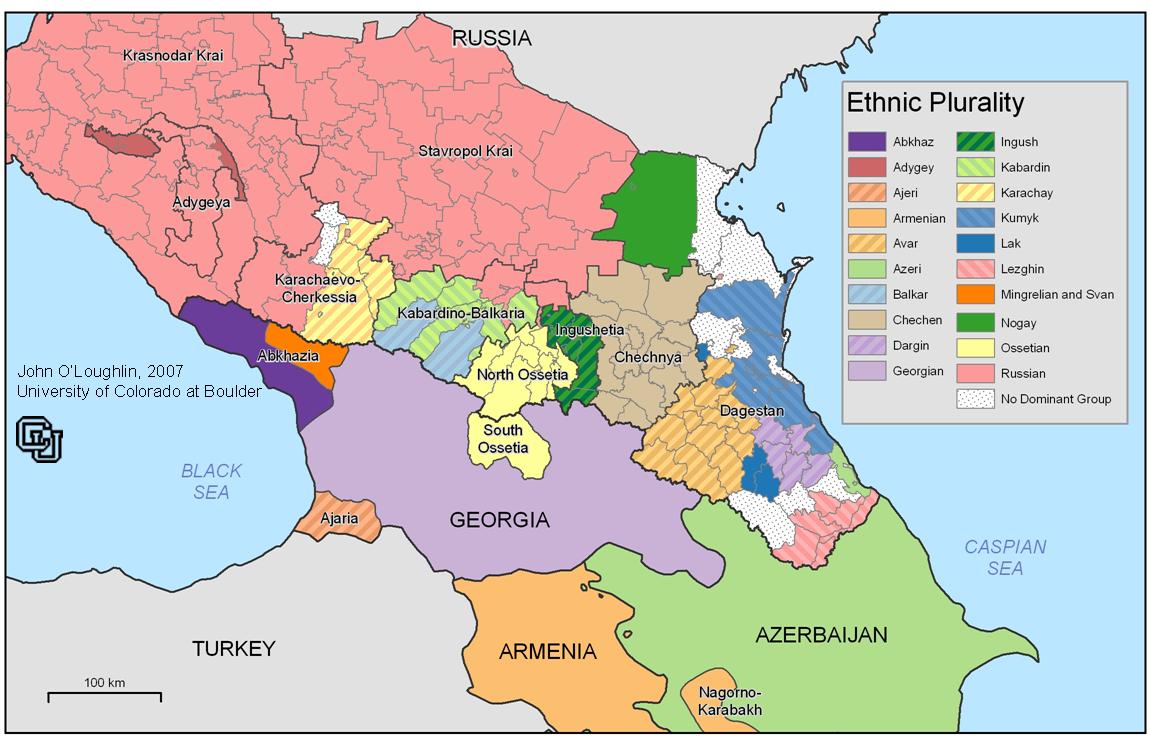
    BACKGROUND: Armenian policies towards Georgia have been traditionally shaped by two factors: interest in safe transit for the Armenian and Armenia-bound goods through Georgia, and the situation with the Armenian minority in Georgia’s Samtskhe–Javakheti region with the accompanying issue of preserving the Armenian cultural heritage in Georgia. Closed borders with Turkey and Azerbaijan, leaving Georgia as the only route to Russian and European markets, have developed a strong sense among the Armenian leadership of dependence on Georgia. This reality made Yerevan tailor its policies to the transit needs and cooperate with Tbilisi to manage the grievances of the Armenian minority in Georgia.

    On the regional level, a lack of relations with Turkey has always been an important, although a non-active variable in Yerevan’s interactions with Tbilisi. Animosity between Georgia and Russia, Armenia’s strategic ally, on the other hand, has had a direct impact, which in recent years created at least two situations that tested Yerevan’s commitment to stability in Georgia.

    In 2005, the stated policy of non-interference in Georgia’s domestic affairs amid the crisis over the Russian military base in Akhalkalaki was an important occasion for President Robert Kocharyan, a hard-liner with a nationalist agenda, to demonstrate adherence to the already established line. The base was a source of employment for many and was also perceived as a security guarantee for the Armenian community populating a region bordering Turkey. The protests of Javakheti Armenians in March 2005 against the removal of the base triggered a visit of President Kocharyan to Georgia on April 1, 2005, at the invitation of Georgian President Saakashvili, and was widely perceived as a contribution on Armenia’s part to stabilize the situation.

    The August 2008 war between Russia and Georgia, and Russia’s recognition of Abkhazia and South Ossetia as independent was yet another predicament. It put Armenia under pressure, prompting President Serzh Sargsyan to publicly pose the question of recognition of the two entities and elaborate a position that would both find understanding in Russia and reassure Georgia. In his annual speech to the diplomatic corps delivered on September 3, 2008, Sargsyan stated it was impossible to consider the recognition of Abkhazia and South Ossetia, while Nagorno-Karabakh – an entity in a similar situation – remained unrecognized by Armenia.

    Cautious policies of the political leadership have always been in sharp contrast to public demands for adopting a harder line on problems in Javakheti, especially frequently voiced by the Armenian Revolutionary Federation – Dashnaktsutiun Party as well as many Yerevan-based Javakheti Armenians who have successfully organized themselves around this idea in Armenia’s political system.

    IMPLICATIONS: How would possible Turkish-Armenian reconciliation influence Armenia’s policies towards Georgia? The generally skeptical outlook for full and rapid normalization does not allow any definite conclusions. However, certain new features displayed after the activation of the process, as well as societal expectations in Armenia, imply that a potential opening of the border could make Yerevan more responsive to the cultural demands of Armenians in Georgia.

    President Sargsyan’s understanding of Turkey’s role has already marked a departure from his predecessor’s policies that sought to isolate Turkey from regional affairs.

    The first and so far most serious sign that reconciliation with Turkey may impact the usual format of Georgian-Armenian relations came on September 1, 2009, the day after the Turkish-Armenian protocols were made public. In an unprecedented statement, President Sargsyan mentioned the protection of Armenian monuments, registration of the Armenian Church in Georgia and recognition of Armenian as a regional language in Javakheti as cornerstones for strengthening Armenia’s friendship with Georgia. While the speech announced aspiration for a more assertive role in advocating the rights of Georgia’s Armenians, the exhaustive nature of the three principles – strictly confined to cultural demands – also implied a delimitation of the areas where Yerevan felt it could legitimately intervene and by default underscored Armenia’s attention to Tbilisi’s concerns about political objectives advanced by national minorities.

    The speech also signaled a significant shift from Kocharyan’s vision for the region, where Turkey was perceived as a security threat and maintaining unproblematic ties with Georgia outranked initiatives with Ankara. Consistent with this line, Kocharyan, while upholding non-interference in Georgia’s internal affairs, showed sympathy for the security concerns of Javakheti Armenians vis-à-vis Turkey. In contrast, cultural demands were given less prominence, and Armenians were urged to learn Georgian instead of seeking an official status for the language.

    On the societal level, the expectation that the rapprochement will bring about a harder line resonated well with the organizations advocating the cause of Javakheti Armenians. Shirak Torosyan, an MP from President Sargsyan’s Republican Party and chairman of “Javakhq [Javakheti] Compatriot Association” stated that after alternative routes are opened, Armenia will toughen its stance on problems in Javakheti.

    Divisions over the protocols in Armenian society were also replicated in discussions about Georgia, indicating opposition to sharp policy revisions. The Civilitas Foundation – established by Vartan Oskanyan, Foreign Minister in Kocharyan’s administration and an opponent of the protocols – cautioned in its 2009 report against “complacency” regarding Georgia, even after opening of the border. This understanding was adequately grasped in Tbilisi too. Georgian Prime Minister Nika Gilauri pointed out that the opening will not affect transit prices for Armenia while visiting Yerevan in January 2010.

    Concerns about “complacency”, however, may have been exaggerated. As the reopening on March 1 of the Upper Larsi checkpoint between Russia and Georgia showed, President Sargsyan, while seeking relations with Turkey and probing a new tone on Javakheti, continued to prioritize relations with Tbilisi and worked on restoring communications through Georgia. This became evident with Sargsyan’s February 27 trip to Georgia to discuss the reopening with Mikheil Saakashvili, and was confirmed by statements that since October 2009 Armenia played a key mediating role, alongside with the Swiss, to secure the opening. This effectively showed that even in the fall of 2009, when a rapid ratification of the protocols was widely expected, Armenia did not regard Turkey as an alternative to Georgia.

    This attitude seems to have been reciprocated by the Georgian side. Georgian officials announced that the checkpoint was opened at the request of Armenia, the main beneficiary of the overland link with Russia. However, against the backdrop of Turkish-Armenian talks, the opening also revealed Georgia’s interest in buttressing its position as a transit route for Armenia, besides demonstrating Tbilisi’s commitment to neighborly relations.

    CONCLUSIONS: A possible opening with Turkey would enhance Armenia’s regional role and offer a better bargaining position with Georgia. However, serious policy revisions that may endanger relations with Tbilisi are unlikely. The low level of trust between Armenia and Turkey will sustain Armenia’s sense of dependence on Tbilisi even in the event of an actual opening of the border. Avoiding adventurous policies towards Georgia has been the hallmark of all successive governments in Armenia, and any policy shifts introduced as a result of normalization with Turkey would likely be limited to more emphasis on cultural demands with continued consideration of Tbilisi’s concerns and expectations. A failure of the reconciliation process, on the other hand, will likely result in backtracking to Kocharyan’s vision of the region and discourage Yerevan to attempt a more active role in advocating the cultural rights of Javakheti Armenians.

    AUTHOR’S BIO: Vahagn Muradyan is a freelance researcher based in Yerevan.

    http://www.cacianalyst.org/?q=node/5287