Category: South Korea

  • Demand for Korean language classes rises as Turks discover hallyu

    Demand for Korean language classes rises as Turks discover hallyu

    ISTANBUL ― At many K-pop fan group and Korea-related community meetings in Turkey, it is not difficult to find young Turkish people speaking Korean phrases.
    Most of the Korean-speaking youngsters are self-taught: using Internet sites that teach Korean or learning by watching Korean dramas and picking up words and phrases.

    With the number of fans of Korean dramas and K-pop quickly growing, so has the demand for Korean language classes.

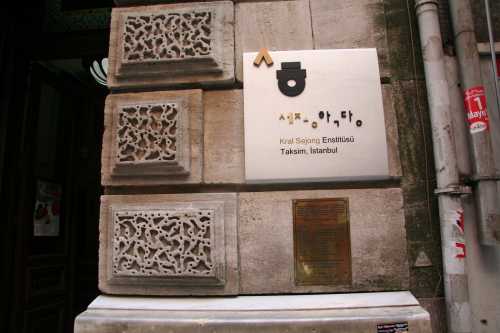
    “We noticed the rising interest in Korean language two to three years ago,” said Kim Gun-su, manager of King Sejong Institute’s Istanbul branch. The Korean Culture and Information Service currently operates two King Sejong Institutes, Korean language schools, in Turkey ― one in Istanbul and another in Ankara ― at language institutes operated by Ankara University. The Korean government would like to expand the school to a total of 12 throughout the country.

    At the Istanbul branch, which opened its doors in January 2011, 33 students are learning Korean at three different levels. The classes are taught by three Korean teachers who are long-term residents of Turkey who also have more than 20 years of teaching experience in Korea. Each term lasts 48 hours with two three-hour classes each week.

    “We are using a combination of different textbooks to find one that is most suitable for Turkish-speaking people,” said Kim. “The problem with these textbooks is that they were created for foreigners living in Korea. We need textbooks designed for foreigners living outside Korea,” he explained.

    While most Korean language classes in Korea are taught completely in Korean, here, grammar is explained briefly in Turkish before extensive drills take place.

    The students range from teenagers to those in their 30s. “About half of them are interested in Korean culture, about 30 percent wish to work in Korean companies and some 15 percent are preparing to study at college level in Korea,” Kim explained.

    At a class that has been learning Korean for six months, students speak in clear Korean. “Turkish language is similar to Korean,” says Havva Mizrak who first learned Korean on the Internet and through K-pop. Others have learnt Korean through Arirang TV’s “Let’s Learn Korean.” Another student said, “College studies are difficult but Korean lessons are okay,” in fluent Korean.

    While the students found pronunciation to be the most difficult aspect of learning Korean, they generally make quick progress. “I expect that they will be able to complete intermediate level classes after the first year,” said Kim.

    Since the goal of the King Sejong Institute is to promote Korean language as widely as possible, the school offers discounted tuition for school students, Korea-related fan club administrators and people engaged in providing Turkish subtitles to Korean dramas and films.

    Mehtap Gatar, a junior majoring in international relations at Istanbul University, who has been studying Korean for six months at the King Sejong Institute, will soon be leaving for Korea where she will spend a year as an exchange student at University of Seoul. She is the first King Sejong Institute student to be going to Korea to study. She expects to take five courses taught in English and Korean language classes. “I want to learn the culture of Korea. And I want to be a bridge between Korea and Turkey,” Gatar said.

    By Kim Hoo-ran, Korea Herald correspondent ([email protected])

    via .
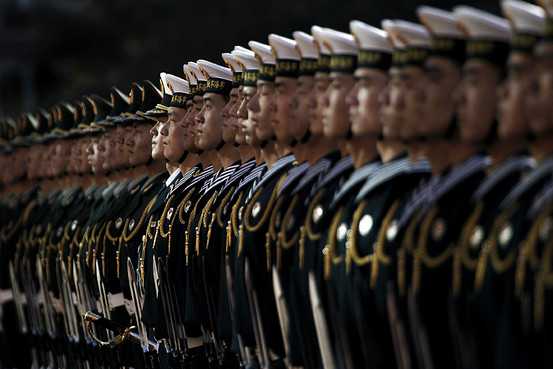
  • China’s Defense Budget Draws Concern

    China’s Defense Budget Draws Concern

    BEIJING—Japan expressed concern over China’s planned double-digit rise in defense spending this year, highlighting trepidation in the region about China’s escalating military and economic might after a week of fresh Chinese territorial confrontations with Japan, South Korea and the Philippines.

    Japan Foreign Minister Seiji Maehara urged the Chinese government to be more transparent about how it planned to use its newfound military firepower, saying, “Whether it should be regarded as offensive or defensive would require a close look.”

    The comments came after China announced plans early Friday to increase its defense budget by 13% this year and as the week’s clashes built on concerns that China will increasingly use its escalating military power to assert its territorial claims in the region

    Such fears have prompted many of its neighbors to to shore up defense ties with the U.S. and beef up their own militaries, threatening to push Asia into a new arms race.

    China expects to spend 601.1 billion yuan ($91.4 billion) on defense in 2011, up from 533.4 billion yuan last year, Li Zhaoxing, spokesman for the National People’s Congress, told a news conference ahead of the start of the legislature’s annual session on Saturday.

    The projected rise is faster than last year’s 7.5% increase—the slowest clip in decades—but is significantly slower than the roughly 19% annual growth in years before 2010.

    The headline figure does not, however, include key items such as arms imports and the program to develop a stealth fighter and an aircraft carrier, according to foreign military experts who estimate that China’s real defense spending is far higher.

    Mr. Li said the military budget would be used for purposes including “appropriate armament development,” training and human resources, while stressing that it remained relatively low as a proportion of China’s GDP and overall budget, and dismissing concerns that it threatened neighboring countries.

    “China’s defense spending is relatively low in the world,” he said. “Every bit of China’s limited military strength will be used for safeguarding national independence, sovereignty and territorial integrity. He reiterated China’s oft-repeated refrain that its efforts “will not pose a threat to any country.”

    On Wednesday, Japan scrambled fighter jets to chase off two Chinese military planes which it said flew within 34 miles of disputed islands in the East China Sea, which are known as Senkaku in Japan and as Diaoyu in China.

    Japanese government spokesman Yukio Edano said Japan would not protest formally as the Chinese planes did not leave international airspace, but he also voiced concern over China’s growing military power and said Japan would monitor the situation. China’s Foreign Ministry didn’t immediately respond to a request for comment.

    Relations between Asia’s two biggest economies plunged to their lowest point in years in September following collisions near the islands between two Japanese coast guard patrol boats and a Chinese fishing vessel.

    In December, Japan, which in 2010 was surpassed by China as the world’s No. 2 economy, revised its national defense guidelines, which were drawn up during the Cold War, to shift focus away from Russia and toward the emerging threat from China.

    China’s more forceful stance on territorial issues has also alarmed other countries in the region.

    On Wednesday, the Philippines deployed two war planes to protect oil explorers who complained that they were being harassed by two Chinese patrol boats in a disputed area of the South China Sea.

    The Philippine government demanded an explanation Friday for the incident at Reed Bank near the Spratly Islands, which are claimed by China, Brunei, Malaysia, Taiwan, Vietnam and the Philippines.

    Chinese Embassy spokesman Ethan Sun reiterated his country’s claim to the Spratly Islands and adjacent waters, but said Beijing was committed to maintaining peace and stability in the area and resolving disputes through peaceful negotiations, according to the Associated Press.

    South Korea’s Coast Guard said Friday it seized two Chinese fishing boats and their crews on Thursday after they were found fishing illegally in South Korea’s Exclusive Economic Zone, 64 miles southwest of Keokrulbiyeol island in the west sea.

    During the process, one South Korean policeman was hurt by a weapon wielded by Chinese fishermen, and one Chinese fisherman was shot in his leg, the coast guard said.

    China’s Foreign Ministry didn’t immediately respond to a request for comment on that incident.

    Chinese officials and academics have toned down their rhetoric this year in an apparent bid to address concerns that China is becoming increasingly assertive on territorial claims, and that it plans to challenge U.S. military supremacy in the Asia-Pacific region.

    In January, China jolted the region with a test flight of a new stealth jet fighter, indicating that China is further along in using the advanced technology than previous Pentagon statements had suggested.

    China is also developing an antiship ballistic missile that could threaten U.S. naval vessels in the Asia-Pacific region, where the U.S. has long been dominant.

    However, Mr. Li pointed out that China’s military spending accounted for only about 6% of China’s national budget, which he said was lower than in recent years—and well below the level of the U.S.

    The defense budget “will see some increase, but the ratio of spending to GDP is quite low—lower than in many countries,” he added.

    The Wall Street Journal


  • Turkey may develop fighter aircraft with S Korea, Indonesia

    Turkey may develop fighter aircraft with S Korea, Indonesia

    Turkey may develop fighter aircraft with S Korea, Indonesia

    ÜMİT ENGİNSOY

    ANKARA – Hürriyet Daily News

    Keen to bolster the capabilities of its Air Force, Turkey is interested in developing a new fighter aircraft with South Korea and Indonesia, senior Turkish and South Korean officials have said.

    “There have been some preliminary talks about our possible participation in the KF-X program,” a senior Turkish procurement official told the Hürriyet Daily News & Economic Review over the weekend. “We are investigating the feasibility and possibilities of this program.”

    Maj. Gen. Choi Cha-kyu, director general of South Korea’s aircraft program bureau at the Defense Acquisition Program Administration, said in September that Ankara was seriously considering taking part in the KF-X program.

    “There will be a requirement [in Turkey] to replace the older fighters with newer ones by 2020,” the daily Korea Times quoted Choi as saying at the time. “Once on board, Turkey is expected to bear the same amount of development costs as Indonesia.”

    The KF-X is a mainly South Korean program to develop an advanced multi-role fighter for the Air Forces of South Korea and Indonesia. It originally was launched in 2001, but then postponed because of financial and technological difficulties. The program will start again next year with the consent of budget authorities.

    South Korea will provide 60 percent of the KF-X development costs worth some $4.2 billion, with the rest to come from other governments or corporate partners. About 120 KF-Xs would be built initially and more than 130 aircraft would be produced additionally after the first-phase models reach operational capability.

    Under a memorandum of understanding signed in mid-July, Indonesia agreed to pay 20 percent of the bill and to buy about 50 KF-X planes when mass production begins.

    South Korea also is seeking to receive technology transfers from Western aerospace firms. One possible corporate partner is Sweden’s Saab.

    Other options

    Turkey already has selected the U.S.-led F-35 Joint Strike Fighter Lightning II as its next-generation fighter aircraft type. It plans to buy about 100 F-35 aircraft worth nearly $15 billion. Many Turkish companies are members of the nine-nation Joint Strike Fighter consortium of nine Western nations, and are producing parts for the aircraft.

    Lockheed Martin, the U.S. company leading the Joint Strike Fighter program, wants Turkey to increase the number of F-35 planes it plans to buy to 120 from 100. Turkey also will receive 30 F-16 Block 50 fighters from Lockheed as a stop-gap solution until F-35 deliveries begin around 2015.

    But Turkish officials have said they are open to participating in one more future international fighter aircraft program.

    Turkey also is facing pressure from Italy, a close defense partner, to buy the Eurofighter Typhoon, made by a European consortium including companies from Italy, Britain, Germany and Spain.

    Giovanni Bertolone, executive vice president for operations at Finmeccanica, a top Italian industrial conglomerate, in early December called on Turkey to jointly produce the next phase of the Eurofighter. Finmeccanica is the parent company of Alenia Aeronautica, one of the makers of the Eurofighter.

    Bertolone said the F-35 and the Eurofighter had different functions, and that Turkey could accommodate both fighters. The Eurofighter has been designed mainly as an air-to-air fighter while the F-35 is more suitable for air-to-ground missions.

    In the event Turkey decides to buy the Eurofighter, these aircraft would replace the older U.S.-made F-4E Phantoms, recently modernized by Israel.

    “We’re encouraging Turkey to follow the examples of Britain and Italy, which will have both aircraft,” Bertolone said. “Air-to-air fight capability is important, and we think this situation will gain prominence.”

    Many analysts believe that the planned South Korean-led KF-X also would be suitable for air-to-air fighting.

  • Istanbul and South Korea will organize “World Culture EXPO” in 2013

    Istanbul and South Korea will organize “World Culture EXPO” in 2013

    Both Istanbul and Gyeongsangbuk-do, a province of South Korea signed a “Goodwill Agreement”, which includes cooperation in the cultural field in Istanbul. As part of the agreement, both cities will organize “World Culture EXPO” in 2013.

    Haber Tarihi : 12/3/2010 12:00:00 AM

    Both Istanbul and Gyeongsangbuk-do, a province of the South Korea signed a “Goodwill Agreement”, which includes cooperation in the cultural field in Istanbul. As part of the agreement, both cities will organize “World Culture EXPO” in 2013.

    Both Istanbul and Gyeongsangbuk-do, a province of the South Korea signed a goodwill agreement including cooperation in the cultural field in order to bolster mutual understanding between the two countries. Mr. Ahmet Selamet, the first Deputy Mayor of the Istanbul and Mr. Kong Weon Sik, the deputy governor of Gyeongsangbuk-do  province signed the goodwill agreement at the Saraçhane Municipal Office.

    Mr. Numan Güzey, the head of Culture and Social Affairs Department, Mr. Jong Kyoung Hong, the consul general of the South Korea in Istanbul and  Mr. Sang Jim Kim, the president of  the Turkish- S.Korean Friendship and Cooperation Association attended in the signing ceremony.

    Speaking at the ceremony, Mr. Ahmet Selamet, the first Deputy Mayor of the Istanbul, specified that they had historical and cultural ties with the South Korea and he said: “Both Istanbul and Gyeongsangbuk-do will organize the  “World Culture EXPO” in 2013 together and I hope that they would succeed. We are delighted to welcome the delegation of dear governor in Istanbul and look forward to developing new areas for cooperation.”

    On behalf of Gyeongsangbuk-do, a province of the South Korea, Mr. Kong Weon Sik, the deputy governor stated that the South Korean people owed a debt of gratitude to the Turkish people for the brave heroism and brotherhood shown during the Korean War, he continued: “We wanted to improve the further development of bilateral relations between two cities Gyeongsangbuk-do and Istanbul.”

    After the ceremony, Mr. Ahmet Selamet and Mr. Kong Weon Sik, signed the “Goodwill Agreement” which includes cooperation in the cultural field and to organize “World Culture EXPO” in 2013 on December 2nd, 2010.

    via İstanbul Büyükşehir Belediyesi.

  • Turkey Strengthens Nuclear Cooperation with Russia

    Turkey Strengthens Nuclear Cooperation with Russia

    Turkey Strengthens Nuclear Cooperation with Russia

    Publication: Eurasia Daily Monitor Volume: 7 Issue: 213

    November 30, 2010

    By: Saban Kardas

    Turkish Energy Minister, Taner Yildiz, welcomed the recent progress in Turkey’s first nuclear power plant project that will be built by Russia and underscored Ankara’s determination to develop nuclear energy through foreign partnerships. Yildiz told reporters that Russian President, Dmitry Medvedev, signed the inter-governmental agreement, which was recently ratified by both houses of the Russian parliament (Anadolu Ajansi, November 29).

    After various futile efforts to issue a license for the construction of the country’s first nuclear plant in Akkuyu-Mersin on the Mediterranean coast through competitive bidding, Ankara opted for a more controversial method. Instead of an open tender, Turkey pursued a bilateral cooperation route and signed an inter-governmental agreement with Russia in May during Medvedev’s visit to Turkey (EDM, May 20). Under this agreement, Rosatom will build, own and operate the Akkuyu-Mersin plant comprising four 1,200 mega watt (MW) units. Rosatom will also raise the finances for the project and will posses 100 percent equity in the $20 billion project company undertaking the construction and operation of the plant. In the long-term, the Russian side will likely retain at least 51 percent of the company. A Turkish firm, Park Teknik, and the Turkish state electricity generation company –EUAS– may take significant shares in the project, while the state company will provide the site, and the state electricity distribution company, TETAS, will buy a designated proportion of the electricity generated at a fixed price of $12.35 (www.worldnuclear.org, November 29).

    Through the completion of this project and other subsequent nuclear plants, the Turkish government hopes to bolster Turkey’s energy interdependence. In the new energy strategy document published in April, Turkey vowed to reduce its heavy dependence on imported fossil fuels, through greater utilization of Turkey’s renewable resources and nuclear energy. The construction of the first plant is expected to begin by 2014 and 5 percent of Turkey’s total electricity consumption will come from nuclear plants by 2023 (EDM, April 29).

    Eager to see the construction work start, the Turkish government finalized the ratification process for the inter-governmental agreement this summer. However, the debates in the Turkish parliament reflect how the government’s energy policies and nuclear policy continue to evoke criticism from opposition parties. Representatives from the main opposition Republican People’s Party (CHP), junior opposition Nationalist Action Party and the pro-Kurdish Peace and Democracy Party criticized the government for failing to protect Turkish interests. Overall, they maintained that under the current agreement, Turkey would be unable to receive nuclear technology transfers and will remain a sole consumer of “Russian” electricity produced on Turkish soil. CHP representatives went as far as accusing the government of “betraying the country and insulting the Turkish nation… [succumbing to Russian plans]” (Anadolu Ajansi, July 15). Thanks to its majority, the government managed to secure the ratification of the agreement in parliament.

    Speaking of Medvedev’s approval of the agreement, Yildiz noted that it will accelerate the work on the project. Yildiz expects to meet Russian Deputy Prime Minister, Igor Sechin, in Istanbul in mid-December to discuss the details related to forming the project company. Once those issues are resolved, Yildiz expects the project to proceed at a much smoother pace and overcome licensing issues, and obtain permission for the construction to commence (Cihan, November 29).

    Ankara believes that from its partnership with Moscow, it will also receive help in developing its own nuclear technological know-how and infrastructure. Unlike its critics, the government believes that foreign partnerships will not hinder this objective. For instance, responding to questions in parliament, Yildiz referred to the experience of South Korea, noting that while that country relied upon imports to start building its nuclear plants in the 1970’s, it is now one of the countries which has developed its own nuclear technology.

    Perhaps, in appreciation of the South Korean success story, Ankara held talks with the South Korean Electric Power Corporation (KEPCO) over the construction of the second plant in the Black Sea coastal city of Sinop. This coincided with South Korea’s new strategy of expansion in a bid to construct nuclear plants overseas (EDM, March 24). After an optimistic start, marked by various bilateral meetings and an exchange of high level visits, it was revealed that due to conflict over prices, state purchase guarantees and the share of state ownership in the nuclear plant, the talks had broken down. Yildiz argued that Turkey had a “plan B” if it proved unable to reach an agreement with South Korea and it will remain committed to its objective of having two plants by 2023 (www.usak.org.tr, Today’s Zaman, November 10). Quite expectedly, it was announced during Prime Minister, Recep Tayyip Erdogan’s, visit to South Korea that the talks came to an inconclusive end (Anadolu Ajansi, November 13).

    After the failure of the talks with South Korea, Yildiz said that Turkey would continue its quest for a second agreement. Yildiz also ruled out the possibility that Ankara may grant the second site to Moscow. “Neither Russia, nor Turkey are considering [a second agreement],” Yildiz said. Yildiz announced that the Japanese Toshiba would be invited to Turkey for negotiations on the planned construction of the second plant. Although Tokyo has wanted to enter into such talks with Ankara for some time, the Turkish government has avoided this, “out of courtesy for the ongoing talks with South Korea,” as Yildiz put it (Anadolu Ajansi, November 15, November 25).

    Nonetheless, it is instructive to note that, although no official contact with Japan on nuclear cooperation had taken place, the Turkish energy ministry and the Japanese New Energy and Industrial Technology Development Organization signed a letter of intent to cooperate on clean energy, energy productivity and the use of renewable energy in Ankara (Anadolu Ajansi, November 9). Therefore, the “plan B”’ Yildiz referred to was evidently the Japanese option. Turkey seems determined to consider seriously the diversification of its nuclear partnerships, by exploring, and perhaps pitting against each other, all options on the table.

    https://jamestown.org/program/turkey-strengthens-nuclear-cooperation-with-russia/

  • S. KOREA’S REACTOR DEAL WITH TURKEY HITS SNAG

    S. KOREA’S REACTOR DEAL WITH TURKEY HITS SNAG

    SEOUL, Nov 16, 2010 (AsiaPulse via COMTEX) —

    South Korea’s plan to export nuclear reactors to Turkey has hit a stumbling block as both sides failed to conclude an agreement due to differences over the proper level of power prices.

    Sources at the Ministry of Knowledge Economy and state-run Korea Electric Power Corp. (KEPCO) said Monday that the conclusion of the deal has been delayed after marathon discussions failed to find middle ground on how to establish fair electricity prices.

    After starting negotiations early this year, the two sides wanted to sign the intergovernmental agreement (IGA) to build the Sinop atomic power plant on the Black Sea coast during last week’s G-20 summit held in Seoul. However, they only reached an understanding to pursue more negotiations as soon as possible to iron out outstanding differences.

    The Sinop project involves the building of four 1,400-megawatt reactors at a cost of around US$20 billion. South Korea has proposed using its APR-1400 reactors that will be used for a nuclear power plant in the United Arab Emirates (UAE).

    Moon Jae-do, head of the ministry’s resources development office, said there were lingering differences on how to ensure an adequate return on investment over an extended period of time.

    “The deal with Turkey involves KEPCO and its Turkish partner setting up a joint company to arrange financing, construction and sharing of earnings through a power purchase agreement once the reactors are built,” he said. Seoul and Turkey could foot up to 30 percent of the cost with international project financing to pay for the rest.

    Without going into details, the official said the two sides have not been able to see eye-to-eye on how to calculate earnings, although Turkey is carefully examining a undisclosed “improved” proposal forwarded by Seoul to break the impasse.

    In addition, Seoul has said that the Turkish government must be the largest shareholder in the company.

    Other government officials said Seoul “naturally” wants to receive more for electricity produced since large sums of money have to go into the construction, while Turkey wants to keep prices low to benefit its users.

    “For Seoul, there is a critical need to show the public and parliament that the deal is commercially viable and would not become a burden on state-run KEPCO down the road,” said an official who declined to be identified.

    He added that despite the inability to sign the IGA deal during summit talks held on Saturday between South Korean President Lee Myung-bak and Prime Minister Recep Tayyip Erdogan, this setback does not mean Seoul has lost the bid altogether.

    The official pointed out that the two sides have engaged in long-drawn talks since March and pledged to carry out related cooperative efforts.

    “Even under the initial plan, a formal deal is scheduled to be signed in the first half of 2011, with more detailed plans to be set in the second half of the year,” he said, hinting that there is no real need to rush this matter. This blueprint calls for actual construction of the first Turkish reactor to begin around 2012.

    Related to lack of headway, Turkey’s media reported that Ankara’s energy minister has invited Japanese industrial giant Toshiba for talks on building the Sinop plants.

    It said Turkish Energy Minister Taner Yildiz wanted to engage in speedy negotiation processes with other countries that may be interested in the nuclear power plant deal. He said U.S. and European companies may be considered so the country can have at least two nuclear power plants in operation by 2023.

    Local market experts, meanwhile, said the failure to sign the IGA over the weekend would not have any effect on local industries.

    “There were some differences on power purchasing prices and what to do if there is an emergency situation, but this is not seen as a complete failure since the countries have already made considerable headway on related research and development,” said Jeong Min-kyu, an analyst at IBK Investment and Securities.

    Although the setback may raise concerns that KEPCO and related companies may lose the deal, it is still more likely that South Korean businesses will nab the deal compared to foreign rivals, he said.

    The expert added that speculation that Lithuania, Finland and Malaysia are interested in South Korean reactors is good news for the industry as a whole.

    If Seoul signs the Turkish deal, it will be the second export contract following the UAE deal reached in late 2009.

    South Korea, with 20 commercial reactors in operation, is the world’s fifth-largest producer of nuclear-based electricity in the world. The country plans to build eight more reactors by 2017 with one to go on line next month.

    (Yonhap) cg

    For full details on Korea Electric Power Corporation ADR (KEP) KEP. Korea Electric Power Corporation ADR (KEP) has Short Term PowerRatings at TradingMarkets. Details on Korea Electric Power Corporation ADR (KEP) Short Term PowerRatings is available at This Link.

    via S. KOREA’S REACTOR DEAL WITH TURKEY HITS SNAG | TradingMarkets.com.