Category: Kazakhstan

  • TURKEY COURTS CENTRAL ASIA

    TURKEY COURTS CENTRAL ASIA

    By John C. K. Daly

    Wednesday, October 22, 2008


    In the aftermath of the Georgian-Russian confrontation, Ankara sees an opportunity to expand its trade relations with Central Asia, particularly the rising petro-states of Kazakhstan and Turkmenistan. Seeking to capitalize on the changing geostrategic environment for Caspian energy exports, Turkish Parliamentary Speaker Koksal Toptan, accompanied by other MPs, has undertaken a tour to Kazakhstan and Kyrgyzstan. On October 19 Toptan began his tour with a four-day official visit to Astana (Aksam, October 20).

    Not surprisingly, energy was a major theme of Toptan’s visit. Turkey has already profited from Astana’s commitment to use the Baku-Tbilisi-Ceyhan pipeline, as BP-Azerbaijan executives announced that later this month Kazakhstan would begin pumping Kazakh oil from its massive Tengiz field into the BTC (UPI, October 15).

    Under the arrangement, Kazakh tankers will ship about 98,000 barrels per day (bpd) of Tengiz oil, or slightly less than 10 percent of BTC’s one million bpd throughput capacity, across the Caspian to the BP-led consortium’s Sangachal Terminal on Azerbaijan’s Abseron Peninsula for pumping into the BTC pipeline and transmission to Turkey’s Mediterranean port at Ceyhan. Building on the Kazakh commitment, Toptan told a group of Kazakh academicians and students at the Public Administration Academy, “I invite Kazakhstan to participate in big energy projects such as the Samsun-Ceyhan oil pipeline and the Ceyhan refinery”(Anadolu Ajansi, October 21). Following his discussions with Toptan, Nazarbayev in turn urged Turkish businessmen to invest in Kazakhstan.

    The 345-mile-long, 1.5 million bpd Samsun-Ceyhan oil pipeline (SCP, also known as the Trans-Anatolian Pipeline) is designed to link Turkey’s Black Sea port of Samsum with Ceyhan. It will parallel the BTC by using its corridor from Sariz, and has an added advantage of providing an alternative route for Russian and Kazakh oil exports from Russia’s Black Sea port of Novorossiysk. The SCP, given that its throughput capacity would be 50 percent greater than BTC, could greatly ease the tanker traffic through the Bosporus and Dardanelles, a rising environmental and security concern for Turkish officials.

    Toptan’s trade agenda is hardly limited to energy issues, however. During his meeting with Kazakh Parliament Senate Chairman Kassym-Jomart Tokayev, Toptan told a press conference, “Our trade volume currently stands at $2.5 billion. We aim at bringing it up to $5 billion by the year 2010. Direct investments by Turkish businessmen in Kazakhstan amount to $2 billion, and their construction services total $8.5 billion”(Anadolu Ajansi, October 20).

    Turkey’s trade with Kazakhstan’s eastern neighbor Turkmenistan is also growing. According to Turkmen President Gurbanguly Berdimukhamedov, Turkish investment in Turkmenistan has slowly and steadily increased, reaching $2.7 billion in the past 18 months. Berdimukhamedov noted, “Our countries have always had good relations. In the new stage of its development, Turkmenistan plans to make cooperation with Turkey more intensive” (EDM, October 8).

    In Ankara’s calculations it is critical to diversify its energy imports in order to sustain the economic growth of the last four years, during which the Turkish economy has grown annually by more than 7 percent, making the country the 6th biggest trading partner of the European Union and giving Turkey the world’s 20th largest economy (www.deik.org.tr).

    While current Turkish trade with Central Asia is dwarfed by its $38 billion annual turnover with Russia, the energy assets of former Soviet republics Azerbaijan, Kazakhstan, and Turkmenistan are impelling Ankara to make a determined effort to acquire a significant portion of their energy assets, or, failing that, to ensure that they transit Turkey on their way to the global market.

    Furthermore, despite the three nation’s long association with Moscow, Turkey has the added negotiating advantage of deep linguistic, cultural, and religious ties that Russia signally lacks. The most notable sign that Turkey is determined to play its cultural card is the fact that Nazarbayev and Toptan discussed the efforts of Turkey and Kazakhstan to establish a Parliamentary Assembly of Turkish Speaking Countries, first broached by Nazarbayev in November 2006 (EDM, February 29).

    Turkey’s other rising rival for Caspian energy assets is China. According to Guoxiang Sun, the Chinese ambassador to Ankara, in 2007 bilateral trade between Turkey and China totaled $14.26 billion, and Beijing “expects it to increase by 50 percent” (www.deik.org.tr).

    Further east in the “Stans,” distance and geographical isolation serve to diminish Turkish trade ties, resulting in less than a quarter of Ankara’s trade with Kazakhstan. In Uzbekistan there are over 470 Turkish-Uzbek joint ventures, with annual bilateral trade between Uzbekistan and Turkey now standing at about $600 million per annum (Informatsionnoe Agenstvso, www.fergana.ru, August 31, 2007). Tashkent’s conservative fiscal policies have combined with the country’s geographical isolation from Turkey to limit a dynamic increase in bilateral trade for the foreseeable future.

    Turkish-Tajik bilateral trade is also growing slowly, hampered by Tajikistan’s geographic isolation, political and economic instability, corruption, and an underdeveloped domestic financial system. In 2007 bilateral trade between Tajikistan and Turkey reached $500 million, only a 16 percent increase over the previous year (Avesta, July 7). In 2006 Turkish-Tajik bilateral trade totaled $420 million (Avesta, January 10, 2007). Tajikistan nevertheless remains keenly interested in cooperating with Turkey in the economic, hydroelectric power generation, and tourism sectors; but the aforementioned constraints will preclude dynamic growth.

    Kyrgyzstan has the smallest trade turnover with Turkey of all the “Stans.” Speaking last month in Ankara at the Fifth Turkey-Kyrgyzstan Joint Economic Commission, Turkish Minister of Industry and Commerce Zafer Caglayan noted, “Although relations with Kyrgyzstan are improving in all areas, we do not think they have reached adequate levels,” commenting that while bilateral Turkish-Kyrgyz trade would reach $250 million by the end of 2008, “There is nothing stopping us from reaching an annual trade volume of $1 billion” (Zaman, September 6).

    While Turkey’s pressing needs for energy import diversification have in the short term led it to focus its attention on the westerly “Stans” with the most abundant energy resources, both Ankara and the Central Asian nations share a common interest in resisting both Moscow’s influence and China’s growing economic dominance.

    Given that Turkey and the “Stans” share a common linguistic, religious, and cultural heritage, the Parliamentary Assembly of Turkish Speaking Countries, which by its very definition would exclude Russian and Chinese membership, may well develop a dynamic of its own among the politicians in Turkey, Kazakhstan, Kyrgyzstan, Tajikistan, Turkmenistan, and Uzbekistan.

    As NATO and the Shanghai Cooperation Organization increasingly stake out their claims to Eurasian spheres of influence, the Parliamentary Assembly of Turkish Speaking Countries, by concentrating on cultural and economic issues, may well prove a haven for its members who might well wish to sit out the opening stages of the new Great Game.

  • FELLOWSHIP- 2009 Junior Faculty Development Program (JFDP)

    FELLOWSHIP- 2009 Junior Faculty Development Program (JFDP)

    Posted by: Junior Faculty Development Program <[email protected]>

    The Government of the United States of America is pleased to announce the open competition for the Junior Faculty Development Program (JFDP) for the 2009 spring semester. The JFDP is a program of the Bureau of Educational and Cultural Affairs of the United States Department of State (ECA). American Councils for International Education:

    ACTR/ACCELS, an American non-profit, non-governmental organization, receives a grant from ECA to administer the JFDP, and oversee each participant’s successful completion of the program. The United States Congress annually appropriates funds to finance the JFDP, and authorizes the Bureau of Educational and Cultural Affairs to oversee these funds.

    If you are a citizen of Albania, Armenia, Azerbaijan, Bosnia and Herzegovina, Croatia, Georgia, Kazakhstan, Kyrgyzstan, Kosovo, Macedonia, Montenegro, Serbia, Tajikistan, or Turkmenistan, and are teaching full-time in an institution of higher education in your home country, have at least two years of university-level teaching experience, and are highly proficient in English, American Councils invites you to learn more about the program and apply.

    JFDP applications may now be downloaded as a print version or submitted online at the JFDP website. Additional information, including the 2008-2009 calendar, academic field descriptions, a list of frequently asked questions, and information about past program participants and host institutions can be found at the JFDP website:

    http:\\www.jfdp.org&Horde=4fcb6119853632a5cd4a4348e0f9d664 .

    Applications are due for applicants from Eurasia on August 29, 2008.

    Applications are due for applicants from Southeast Europe on September 5, 2008.

    Thank you very much for your help in promoting this program.

    Sincerely,

    JFDP Organizers

  • Turkish, Kazakh cities twin

    Turkish, Kazakh cities twin

    ALMATY. July 15. KAZINFORM. Businessmen of the Turkish Bursa city will visit Kapchagay region of Kazakhstan on 18 July to study investment opportunities. At the same time, the Kazakh culture days will be held in Bursa city, Dariga Isgendergizi, the deputy chairman of Turkic Nations Culture Foundation, which operates in Kazakhstan, told Trend News. At the Foundation’s initiative, a cooperation agreement was signed between Bursa city of Turkey and Kapchagay city of Almaty region of Kazakhstan a month ago.

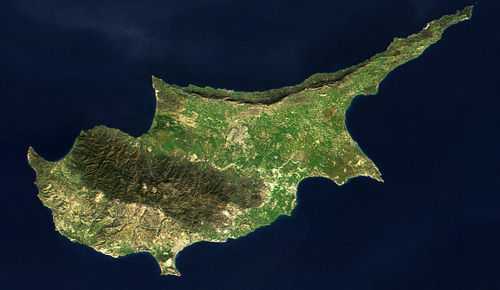
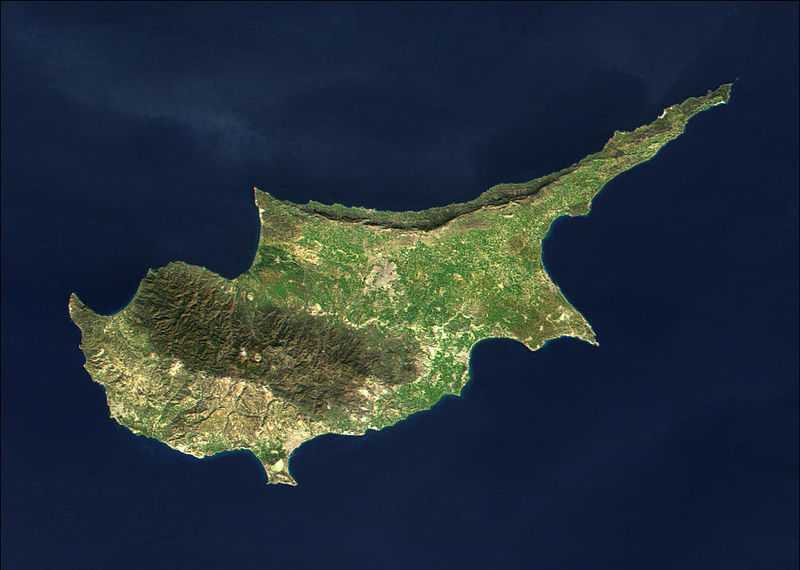
    The Kazakh delegation will visit Turkish Republic of North Cyprus at the end of July to organize a scientific conference on ‘Future of Turkic World’ at the Cyprus University, Kazinform cites corr. Trend News R.Meshedihasanli.

    Source: inform.kz, 15 July 2008

  • Union of Enlighteners of Turkic World Established

    Union of Enlighteners of Turkic World Established

    Kazakhstan, Almaty, 11 July /corr. Trend News R.Mashadihasanli / Constituent conference of Union of Enlighteners of Turkic World took place in Almaty.
    The conference was attended by the representatives of Turkey, Kyrgyzstan, Azerbaijan, Kazakhstan, Turkish Republic of North Cyprus. Academician Haji Kheyrulla was elected as the Chairman of the Union, and the professor of Gazi University of Turkey, Ismet Chetin, candidate of philological sciences, editor-in-chief of the newspapers TURKEL and Veten, Ramiz Mashadihasanli and professor Murat Tuzunkhan ( Turkish Republic of North Cyprus) were elected deputy chairman.

    The goal of establishing the Union of the Enlighteners of Turkic World is to combine world-known people, being engaged in history, literature, science and skill, to strengthen relations between the Turkic-speaking states.

    The correspondent can be contacted at: [email protected]

    Source: trendaz.com, 11.07.08


  • Russian Military to End Their Use of Kazakh Space Site This Year

    Russian Military to End Their Use of Kazakh Space Site This Year

    Posted on: Sunday, 20 July 2008, 15:00 CDT

    Text of report by corporate-owned Russian military news agency Interfax-AVN website

    Baykonur (Kazakhstan), 16 July: The discontinuation of military units and the transfer of [Russian] Defence Ministry facilities located at the Baykonur space launch site to enterprises of the Russian space rocket sector will be completed in the autumn of this year.

    “The transfer of Defence Ministry facilities has begun this month and should be completed in late November 2008,” a source at the Baykonur space launch site has told Interfax-AVN.

    The source said the schedule of transfer of launch site facilities from the military to enterprises of the space rocket sector and the town administration had been agreed at meeting of representatives of the Defence Ministry and Roskosmos [Russian Federal Space Agency] held at Baykonur on Tuesday [15 July].

    Under the agreements reached [at the meeting], the source told the agency, the Krayniy aerodrome will be transferred to the centre for the use of ground space infrastructure, while the facilities of the missile test units of the launch site (the inhabited area and the launch silos for UR-100N (RS-18) missiles will be transferred to the NPO Mashinostroyeniya (Machine-Building Research and Production Association).

    The remaining facilities, i.e. the buildings and structures of the Russian Defence Ministry, will be accepted by Roskosmos enterprises and the town administration, the source told the agency..

    The Fifth State Space Test Launch Site of the Russian Federation Defence Ministry (the Baykonur space launch site) will be discontinued by 1 January 2009. After that date, about 250 servicemen of more than 1,000 currently serving at Baykonur will stay on at the space launch site. Some of them will be transferred to the reserve, while others will be moved to new service postings in Russia.

    Once the military structures at the launch site have been discontinued, it will operate purely as a civilian enterprise.

    Originally published by Interfax-AVN military news agency website, Moscow, in Russian 1158 20 Jul 08.

    (c) 2008 BBC Monitoring Former Soviet Union. Provided by ProQuest Information and Learning. All rights Reserved.

    Source: BBC Monitoring Former Soviet Union