Category: Business

  • What is the comparison between the Su-35 and the F-35?

    What is the comparison between the Su-35 and the F-35?

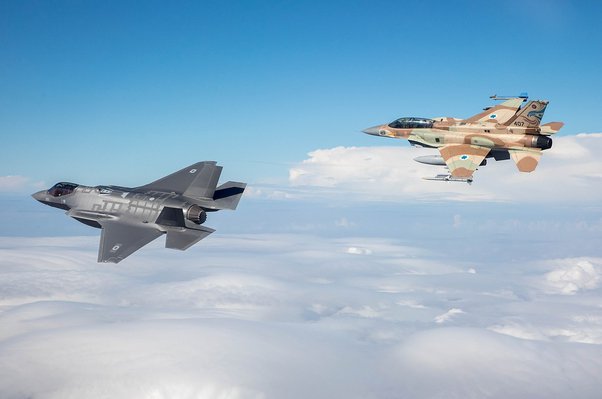
    Anyone who thinks the Su-35 would win falls into one of three distinct categories: first, he could be a Russian bot (yes there are tons of them, along with a fair number of Russian sympathizers who love to post); second, he could be a person who is very poorly informed (most likely reliant on hopelessly dated/inaccurate information); third, he could be a person who loves to assign ludicrous/unrealistic restrictions and rules of engagement that profoundly limit the F-35 for inexplicable reasons (i.e.both pilots must be able to see the white’s of each other’s eyes before the fight begins).

    There is simply no comparison to be had between a stealth fighter and a non-stealth fighter. None. The Su-35 is a perfectly capable plane, it just has no means to detect an F-35 before an F-35 detects (and subsequently kills or evades) it. It’s a fact, the F-35 can detect the Su-35 well within its missile’s guaranteed kill range while remaining undetectable by the Russian plane. The Su’s great maneuverability, its best feature, does not solve that problem. What’s more, even if the detection range of the SU’s IRST pod expands (though there are limits) the range and kill radius of U.S. missiles is just as certain to expand. In fact, once LREW and the AIM 260 (the AMRAAM replacement missile) comes online, there will be even less hope for the Su-35 and there already isn’t any. Though little is known, the AIM 260 is probably a long-range ramjet missile with an AESA radar that the Air Force has been working on for a few years. It’s probably a combination between the British Meteor missile’s ramjet, which provides a much enhanced guaranteed no escape zone since it can be throttled up as it gets closer to the target and a combination optical/infrared seeker and AESA seeker ( the latter of which the Japanese have already deployed on one of their new missiles). In other words, it is a combination of mature technologies. The U.S. will soon have a very long range (mach 4+) missile, that is practically impossible to spoof because of its multimode seeker, with vastly improved terminal performance compared to the already superb AAMRAM. The LREW is a multi-stage air to air missile that will likely outrange any air to air missile ever conceived.

    The only real air to air deficit for the F-35 is total missile carriage capacity; even that is being remedied.. the internal missile capacity of the F-35 is (supposedly) getting enhanced to six AMRAAMs during the block 4 upgrade from its current capacity of 4. If that still isn’t sufficient, there is also another new class of missile, called the SACM which may jump the internal carriage to 12. SACM is a program of record that will result in a hit to kill missile akin to Lockheed’s Cuda concept, which is significantly shorter than an AMRAAM, with similar range and seeker but no explosive warhead. The shorter, lighter, missiles allow for double carriage. While these will not be as sophisticated as the LREW or AIM 260 they will certainly complicate an enemy’s plans.

    So, how would a typical engagement go between the two planes? Well, Russian ground-based VHF radar may very well warn a squadron of Su-35’s sitting on alert that stealth fighters are inbound though it can not track them or target them precisely (there is a lot of electronic interference). The squadron of Su-35’s launch to intercept. Within minutes the VHF radars in the area go down. After all, they must be on in order to see F-35’s and if they are on, the F-35’s can also see the radars and will lob standoff missiles at them. F-35’s are excellent wild weasels.

    Now the newly airborne squadron of 12 SU-35′s use their IRST pods to search the sky for F-35’s. But these don’t help. For starters, IRST has a very narrow field of view and are highly impacted by environmental conditions like humidity… Pilots equate it to looking at the sky through a straw. Meanwhile, the F-35’s have some of the most powerful AESA radars ever mounted on a fighter aircraft (and Su-35’s are perfectly visible from more than 100 miles away), a supercomputer and millions of lines of code also tell the F-35’s exactly how many and what type of planes they are up against and the first F-35 aircraft that detects the Russian flight seamlessly shares that information across the entire squadron, heck the F-35’s powerful computer might even be able to identify the squadron to which the enemy planes belong. And the F-35’s aren’t alone. They have MALDs with them, which are basically cheap drones designed to mimic stealth fighters.

    The Sukhoi’s are flying to the last known location that they were directed to by the high-frequency ground radar before it went offline. Suddenly, one of the Su-35’s believes he’s gotten “lucky” when he sees a bright spot on his IR sensors. He’s found one! A single-engine fighter! What he has actually detected is a MALD, which he believes to be an F-35 and immediately the squadron of Sukhois begin to engage. More brights spots appear. The MALDs take evasive action and the Sukhois bleed energy engaging. It was a trap of course (the F-35s had plenty of time to prepare). As the Russians begin to engage the dummy targets, their missile warning lights pop on. Before they have sufficient time to react several explode. Hey, but at least they downed two drones! The remaining Su-35’s turn tail and run. But F-35’s were anticipating the retreat, and like good shepherds driving their sheep to the slaughter, the American fighters ran the Russian planes directly into more missiles launched by other F-35’s. BAM, BAM, BAM. No more SU’s. How many F-35s were there in the wolf pack? Who knows? It might have been six, it might have been 20. Within minutes the reserve Russian fighters on the airfield begin to explode as Small diameter bombs take out every target worth hitting.

    That’s basically the reality of what a Su-35 vs F-35 fight would look like. The SU-35’s would never know how many there are, they could never be sure of their targets; meanwhile, the F-35’s can pick how they want to engage and when they want to engage.

    Stealth vs. nonstealth is like a game of Marco-Polo in an Olympic sized swimming pool where the hunted (the Marcos) are allowed to keep their eyes open and throw tennis balls at the hunters (the Polos) to eliminate them. The hunters (Polos) meanwhile have to keep their eyes closed and don’t have any tennis balls to throw and must instead tag the Marcos in order to get a “kill”. Sure, they can occasionally detect the Marcos by screaming out and listening for the callback “Polo”.. but that fleeting hint doesn’t stop a tennis ball knocking them in the head and eliminating them. Even if they do catch a “Marco” it most likely was just a fake Marco. In other words, it doesn’t matter if the Polos are faster swimmers can hold their breath longer or are really good at listening, the game is entirely played on the Marcos’ home court because eyes and tennis balls are more important for this version of the game… just as stealth, sensors and missiles are more important in the fighter game.

    J.P.
  • Turkish Kirpis head to front

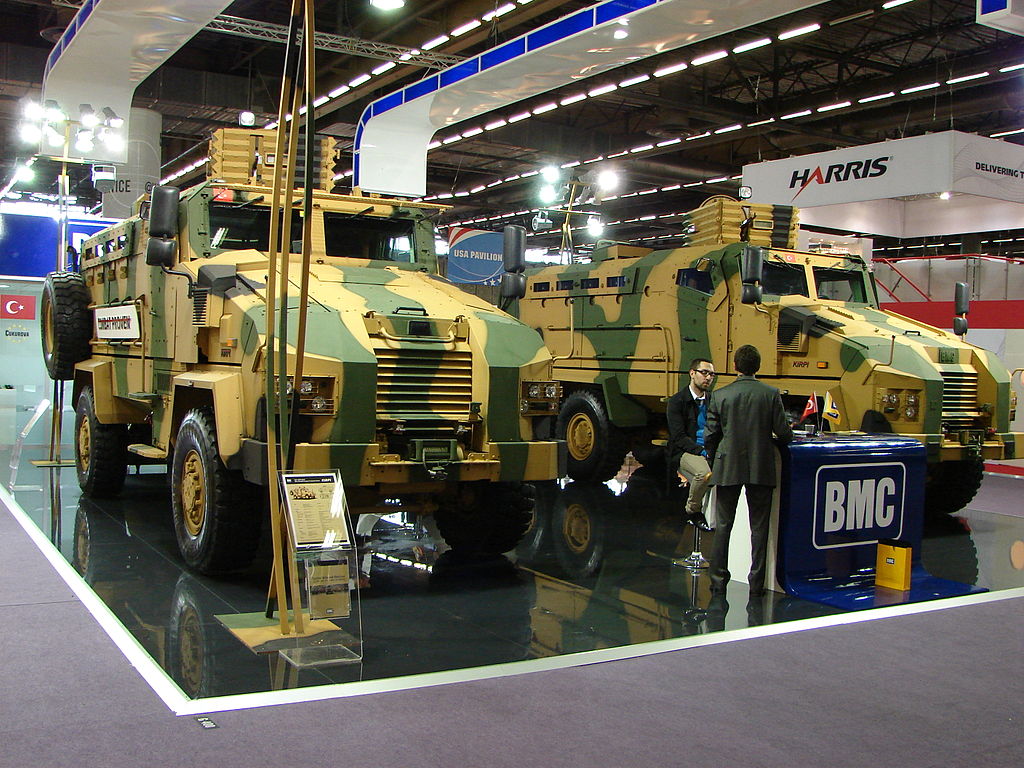
    Turkish Kirpis head to front

    Turkish armored vehicles head to front in the Donbass | Military Mind | TVP World

    BMC Kirpi (Turkish for “Hedgehog”) is a Turkish made Mine-Resistant Ambush Protected vehicle manufactured by BMC. Kirpi provides significant protection against mine and ballistic threats. It combines standard and add-on armor providing protection against ballistic threats while its V-shape underbody and monocoque allows it to protect the personnel inside from land mines and improvised explosive devices (IEDs).

    BMC Kirpi is a heavy armored troop carrier and its primary objective is to transfer personnel from one place to another while protecting them against all kind of threats. However, it can receive different operational roles by being equipped with required mission equipment.

    Used in:

    2012 Syrian-Turkish border clashes
    Turkey-ISIL conflict
    Libyan Civil War
    2019 Turkish offensive into north-eastern Syria
    2022 Russian invasion of Ukraine

  • TURKEY REALLY SHOCKED ME

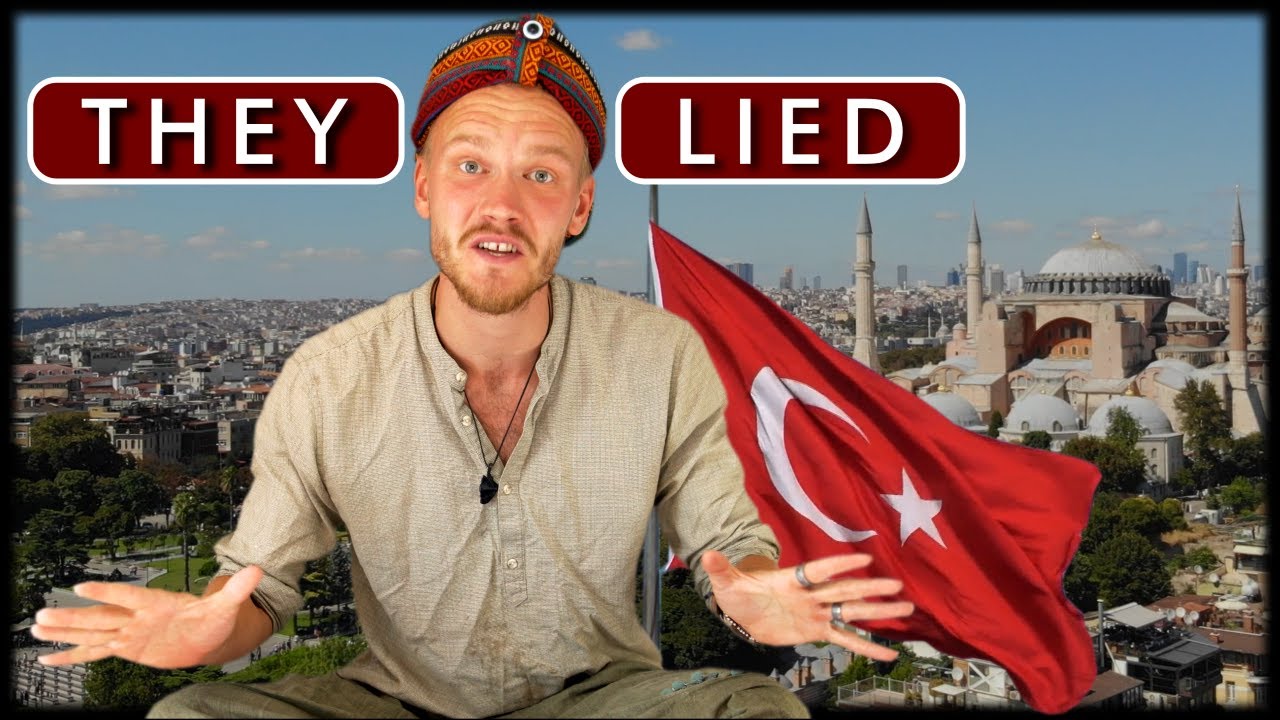
    TURKEY REALLY SHOCKED ME

    Joe tells about his shocking journey to Turkey

    Turkey is often misrepresented in western media and I want to share with you my experience of how this country really shocked me and changed how I travel and see the whole world.

    HELLO THERE:
    I’m Joe, relatively new to YouTube but really excited to be a part of this community. I live small and sustainably in my home on wheels (a lovely van called Freyja) and from time to time out of my backpack (I have not named the backpack yet). On this channel, I bring you along on my travel journeys off the beaten track where I try to show you the beauty of untouched nature and wander into places where most tourists don’t dare to go.

  • Turkey’s Economic Weakness Fuels a Slow-Burning Political Crisis

    Turkey’s Economic Weakness Fuels a Slow-Burning Political Crisis

    Emily Hawthorne
    Middle East and North Africa Analyst, Stratfor
    Feb 17, 2020 | 10:00 GMT

    A Turkish tea seller carries a tray of glasses through the streets of a historic market district in Ankara. Rising inflation and slipping consumer confidence could cause the government in Ankara to continue to pursue an aggressive foreign policy to boost nationalism and buoy its popularity.

    (DIEGO CUPOLO/NurPhoto via Getty Images)

    Although the ruling party calculates that it has the political heft to withstand growing economic concerns, it has hedged its bets by pursuing an aggressive foreign policy that appeals to nationalism. …

    TO READ THE FULL ARTICLE AT STRATFOR

  • In a Turkish forest, resistance grows to a Canadian company’s gold-mining project

    In a Turkish forest, resistance grows to a Canadian company’s gold-mining project


    Drone footage shows denuded forest landscapes around the Kirazli mine site in northwestern Turkey, whose Canadian owner, Alamos Gold, is facing local opposition over the project’s environmental impact. courtesy of Canakkale Municipal Government

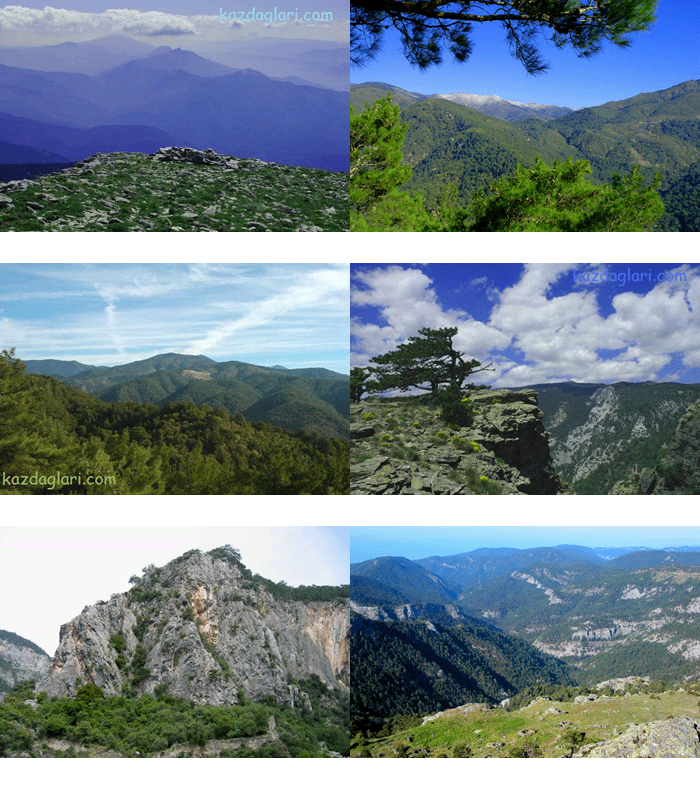
    In the heavily forested Ida Mountains of northwestern Turkey, a bus carrying protesters snakes along the winding roads to its next stop in the fight against the planned construction of a gold mine by a Canadian company.

    They were among some 5,000 people protesting earlier this month against Alamos Gold’s nearby mining site and now, a couple of days later, they are heading toward a small campsite where a few dozen activists have stayed behind to keep a vigil. A lively 61-year-old from the nearby city of Canakkale is too riled up to take a seat being offered by the younger passengers.

    “We went out to protest because we are against gold mines using cyanide. We went to protect our forest, water and animals living in these mountains. We want to live, we don’t want to get cancer,” the retiree said.

    The protesters’ campsite near the mine, where hundreds opposed to the project are keeping watch.

    Nick Ashdown/The Globe and Mail

    Alamos Gold acquired the Kirazli mining project, located in an ecologically rich region of Turkey, in 2010. The construction of the mine has infuriated locals and activists, after the recent release of drone footage showing massive deforestation and revelations that cyanide will be used in the processing of the gold. There has been outrage on Turkish social media and thousands of people from all over the country have come to protest.

    “I was born and raised here. My kids will grow up here. I want this nature to be protected, I don’t want it to be destroyed like this,” a 38-year-old English teacher said. “I don’t want a foreign country to come to my country, make a deal and trick the villagers with a bit of money,” she added, referring to local villagers who have been employed by the company. The Globe and Mail granted confidentiality to the protesters, who fear of repercussions for speaking out against a project supported by the Turkish government.

    Environmental activists from the Istanbul-based TEMA Foundation, analyzing high-resolution satellite imagery from Google Earth, say that 195,000 trees near the town of Kirazli in the Ida Mountain range have been cut down, instead of the 45,000 stipulated in the original permit.

    The mountain forests around the Kirazli mine site, as seen from space in April of 2018 and May of 2019. Satellite image ©2019 Planet Labs Inc.

    John McCluskey, chief executive officer of Alamos Gold, said in an interview earlier this month that he doesn’t know the exact number of trees that have been cut down; since the mine is being built in a forest, it is Turkey’s forestry service, and not Alamos, that is responsible for clearing the area.

    Mr. McCluskey added that the Turkish forestry service is actively replanting in what he says is a heavily logged region of the country, similar to parts of British Columbia. “Under their management, the forests in [the province of] Canakkale have actually grown. They’ve planted far more trees than they’ve actually harvested,” he said. “They’ve planted something like three million saplings just in the past year.”

    Alamos Gold’s local subsidiary, Dogu Biga Mining, says only 13,400 trees have been cut down, although ecologists, such as Doganay Tolunay from Istanbul University, say this figure is lower because it doesn’t include saplings and ignores the destruction of other plants and wildlife habitat in the 500 acres of forest that’s been clear-cut.

    In addition to the mine in Kirazli, Alamos has two more gold and silver mining projects under development in nearby Agi Dagi and Camyurt. The Toronto-based company, with a market capitalization of $3.65-billion, also operates two mines in northern Ontario, as well as ones in Mexico and the United States.

    Story continues below advertisement

    Open this photo in gallery

    Activists protest at the mine site in front of a spray-painted message reading ‘Canadian go home.’

    Kemal Aslan/Reuters

    THE GLOBE AND MAIL, SOURCE: TILEZEN; OPENSTREETMAP CONTRIBUTORS; HIU

    Pinar Bilir, chairperson of the city council’s environment assembly in nearby Canakkale and one of the organizers of the campaign against the mine, doesn’t believe the project will bring any benefits to the region. “Our basic demand is to stop the cutting of the trees, stop the project and open a legal case against whoever approved the environmental impact assessment [EIA] reports,” she said.

    The deal was signed with Turkey’s powerful central government, which argues domestic mines are important for reducing the trade deficit and dependency on foreign products. But some locals say they were not adequately consulted.

    According to Alamos’s own reports, the corporate tax rate of 20 per cent has been reduced to 2 per cent for the company because of government investment incentives; the company expects to pay 2 per cent in royalties. Alamos says its projects will directly or indirectly result in 2,000 jobs in Turkey, and the country’s economy will earn US$500-million from royalties, taxes and other fees over the course of 15 years.

    Ali Furkan Oguz, the former head of the Canakkale Bar Environmental and Urban Law Commission who specializes in environmental cases, says Turkey’s system of EIA reports, required before starting projects that will affect the environment, isn’t up to global standards.

    “Companies give money to [EIA] consultancy agencies and ask them to prepare a report, and afterwards the government approves it,” he said, adding that the government almost never rejects them.

    Deniz Bayram, a lawyer from Greenpeace Turkey, backs Mr. Oguz’s claims. “In Turkey, it’s difficult to say that EIAs are conducted through independent, reliable organizations. Instead, the EIA companies are paid by the project owner, and the reports are generally prepared with [missing pieces] and false assessments,” Ms. Bayram said.

    Open this photo in gallery

    Activists are worried that leaks of the cyanide used in the gold-mining process will threaten the water supply and hundreds of species in the region.

    Kemal Aslan/Reuters

    Activists say the clear-cutting threatens the region’s hundreds of plant and animal species, some of which are only found in Turkey.

    They have also objected to Alamos Gold’s planned use of cyanide in the processing of gold at the site, saying the toxic chemical could leak into a water basin shared with the Atikhisar Dam, which is 14 kilometres from the mine and is the sole water supply for 180,000 people.

    Alamos plans to use a processing method called heap leaching to extract the gold.

    In such a system, crushed ore is mixed with a cyanide solution in a giant enclosed pad. Over a period of months, the mixture slowly dissolves the gold from the ore. Mr. McCluskey, who has 40 years of experience working with heap-leach technology, defended it as a “very safe,” processing method.

    “We’re talking about double-lined ponds with a leak-detection system built into it, engineered to the nth degree. Your whole objective is a zero-discharge process,” he said.

    Heap leaching is widely used by Canada’s biggest gold companies for processing low-grade ore. Eldorado Gold Corp. uses heap leaching at its Kisladag mine, also located in Turkey. While generally considered a safe and economical processing method, it isn’t foolproof.

    In 2017, Barrick Gold Corp. experienced a pipe rupture at its heap-leach facility at its Veladero mine in Argentina’s San Juan province, resulting in its third cyanide spill in 18 months. The Argentine government subsequently restricted Barrick’s use of cyanide on-site for three months after the leak.

    Jamie Kneen, of Ottawa-based non-governmental organization MiningWatch Canada, says the method in which cyanide will be used in Alamos Gold’s Kirazli project is risky. U.S. officials allege rubber-lining pads failed at a Colorado gold mine in Summitville operated by Vancouver-based Galactic Resources. The resulting environmental disaster cost the U.S. government US$130-million. It also led to a voluntary settlement in 2000 with Canadian mining executive Robert Friedland, who was the company’s president at the time it went bankrupt in 1992. The Czech Republic and states in the U.S. (Montana and certain Colorado counties) and Argentina (Chubut) have banned heap leaching.

    “Alamos has insisted that there will be no leaks or spills because they will have a double-layer plastic liner. It is simply impossible – and irresponsible – to assert that there will be no leaks; it is a question of when and how much,” Mr. Kneen said, referring to a Reuters interview in which Mr. McCluskey said the company had taken steps to make sure a leak and watershed impact was “impossible.”

    Mr. McCluskey said that in the highly unlikely event of a leak, because the site is downstream of the water reservoir in question, it would be physically impossible for any discharge to flow “uphill.”

    Sylvain Leclerc, a spokesperson from Global Affairs Canada, says the government is monitoring the situation in Turkey.

    “Regardless of where they work, we expect Canadian companies to respect the law and human rights, to operate transparently in consultation with local governments and communities, and in a socially and environmentally responsible way,” Mr. Leclerc wrote in an e-mail.

    Open this photo in gallery

    A security guard keeps watch at the mine site.

    Nick Ashdown/The Globe and Mail

    Countries such as Turkey with weak rule of law can be attractive to Canadian companies because of their flexible regulations, Mr. Kneen said.

    “When [mining companies] are investing internationally, they’re looking for low cost and profitable operations, and part of low cost is low compliance cost, low regulatory cost. Not having to spend a lot of time doing environmental-impact studies, not having to spend a lot of extra money on environmental safety and so on. I think that’s the attraction of international operations for these guys,” Mr. Kneen said.

    Earlier this year, the Canadian government appointed Sheri Meyerhoffer as Ombudsperson for Responsible Enterprise, intended as a watchdog for Canadian companies’ activities abroad. Ottawa says it is the world’s first such office. But Mr. Kneen says the position lacks teeth – it can’t compel witnesses or conduct its own investigations – and has ended up merely as an advisory role.

    “They failed to give it the powers of investigation that would be required to make it actually work,” he said. “The bottom line is this industry works best when it’s really strictly regulated.”

    In July, all 14 civil-society and labour-union representatives on a federal government advisory panel focusing on Canadian companies operating overseas resigned in protest over the failure to give the new ombudsperson significant powers.

    Alamos says despite the protests, the mine construction remains on schedule. Kirazli is projected to start up late next year and will produce an average of 100,000 ounces of gold over a six-year period. Kirazli is Alamos Gold’s first foray into Turkey and Mr. McCluskey says he’s eager to make it a “showpiece.”

    “If I didn’t think I could build a very safe, sound project that would bring a lot of value to Turkey, I just wouldn’t be here,” he said.

    Open this photo in gallery

    Environmental activists take part in a march against the mine.

    Kemal Aslan/Reuters


    Nick Ashdown is a freelance journalist based in Turkey.

  • GMIS-2019 will drive the Fourth industrial revolution

    GMIS-2019 will drive the Fourth industrial revolution

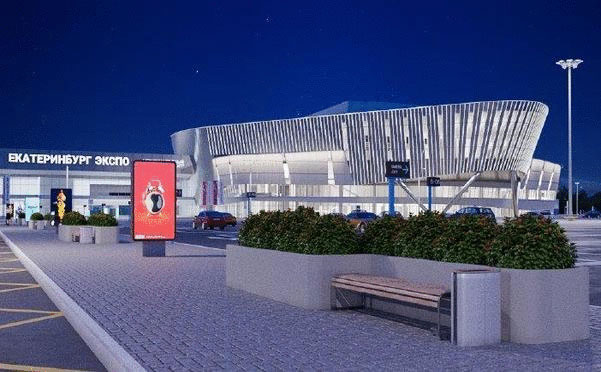
    The GMIS-2019 is about to take off on July, 9. The summit is a joint venue of the United Nations Industrial Development Organization (UNIDO) and the United Arab Emirates. Russia provides great opportunities for the development of industry and high technology. The UNIDO head Li Yong has repeatedly given positive assessments of the close cooperation of the international organization and Russia. The cooperation includes Russia’s support of participation in large-scale industrialization programs in developing countries in Africa, Asia and Latin America, which contribute to a positive image in these regions. Besides, Russia also provides industrial development and maintenance projects in Armenia, Belarus, Kyrgyzstan and Tajikistan. The signing of a cooperation agreement with the Eurasian Economic Commission and the provision of platforms for the St. Petersburg International Forum and GMIS-2019 were also noted by the UNIDO head as appositive move. In addition, the approaches of Russia and UNIDO to the solution of the socio-economic problems today are very common. The summit provides an opportunity to use all the necessary potential of the participating countries to expand cooperation with each other. The geographical location of Ekaterinburg on the border of Europe and Asia contributes to the development of economic relations of European entrepreneurs with partners from China, Japan and other Asian countries. The examples of the World Cup games in 2018 and the international industrial exhibition INNOPROM emphasize the availability of infrastructure facilities in the city for hosting major international events and accommodate up to 40,000 tourists per day. The organizer of the summit is preparing an exhibition of 100 startups, which includes the most promising sectors – the drivers of growth of the world economy and the Fourth Industrial Revolution. The willingness of international representatives to take part in the summit testifies their attitude towards Russia as a reliable trade and economic partner, which fulfills its obligations, despite US attempts to isolate Russia from the system of international relations.