Category: Main Issues

  • MCCAIN ATTACK ON OBAMA GENOCIDE POLICY

    MCCAIN ATTACK ON OBAMA GENOCIDE POLICY

    MCCAIN ATTACK ON OBAMA GENOCIDE POLICY

    armradio.am
    24.07.2008 11:29

    Armenian Americans – a community of one a half million citizens that
    has experienced the horrors of genocide and continues to endure the
    pain of its denial -defended Senator Barack Obama against Senator
    John McCain’s unfounded and starkly hypocritical charges that the
    presumptive Democratic nominee is not serious about preventing future
    genocides.

    Senator McCain’s presidential campaign issued a press statement
    attacking Senator Obama as lacking sincerity in his calls of
    “never again,” even as the Illinois Senator personally traveled
    to Israel’s Yad Vashem memorial to honor the millions slaughtered
    in the Holocaust. Senator Obama has been a consistently strong and
    effective leader on issues of genocide, leading Congressional efforts
    to stop the Genocide in Darfur, and fighting vigorously against the
    Bush Administration’s complicity – enthusiastically backed by John
    McCain – in the Turkish government’s denial of the Armenian Genocide.

    “Armenian Americans, a community with a long and painful experience of
    genocide, know that John McCain lacks the standing to lecture anyone –
    especially a genocide-prevention leader of the stature of Barack Obama
    – regarding America’s compelling national interest and moral obligation
    in opposing all genocides, past or present,” said Armenians for Obama
    Chairman Areen Ibranossian. “Barack Obama has led the fight=2 0against
    the Darfur Genocide, and publicly taken on the Bush White House’s
    obstruction of recognition of the Armenian Genocide, while John McCain
    has done little more than to meekly accept the gag-rule imposed by the
    Turkish government on the discussion of this crime against humanity.”

    “John McCain, who has outsourced U.S. genocide policy to the
    Turkish government, really hit bottom by launching such an obviously
    hypocritical attack against Barack Obama, who is so far out in front of
    him in fighting for real U.S. leadership to end the cycle of genocide,”
    added Ibranossian.

    On January 19th, 2008 Senator Barack Obama issued a forceful and
    passionate statement on the topic of genocide, which reads, in part:
    “Genocide, sadly, persists to this day, and threatens our common
    security and common humanity.

    Tragically, we are witnessing in Sudan many of the same brutal tactics
    – displacement, starvation, and mass slaughter – that were used by
    the Ottoman authorities against defenseless Armenians back in 1915. I
    have visited Darfurian refugee camps, pushed for the deployment of
    a robust multinational force for Darfur, and urged divestment from
    companies doing business in Sudan. America deserves a leader who
    speaks truthfully about the Armenian Genocide and responds forcefully
    to all genocides. I intend to be that President.”

    Armenians for Obama is a nationwide voter registration, education
    and mobilization effort dedicated to electing Ba rack Obama
    President. Based in Los Angeles, and with chapters and affiliates
    in all 50 States, Armenians for Obama will harness the energy and
    enthusiasm for Barack Obama’s candidacy to ensure record high Armenian
    American turnout in critical battleground states
  • TURKEY AND ARMENIA: FROM SECRET TALKS TO “SOCCER DIPLOMACY”?

    TURKEY AND ARMENIA: FROM SECRET TALKS TO “SOCCER DIPLOMACY”?


    TURKEY AND ARMENIA: FROM SECRET TALKS TO “SOCCER DIPLOMACY”?

    By Gareth Jenkins

    Friday, July 25, 2008


    On July 24, the presidents of Turkey, Georgia and Azerbaijan formally inaugurated the Turkish section of the Baku-Tbilisi-Kars railroad, which will eventually provide the first ever rail link between the three countries. Speaking at the groundbreaking ceremony, Turkish President Abdullah Gul declared, in an unmistakable reference to Armenia, that “this project is open to all countries in the region who wish to contribute to good, neighborly relations, peace and prosperity” (NTV, CNNTurk, July 24).

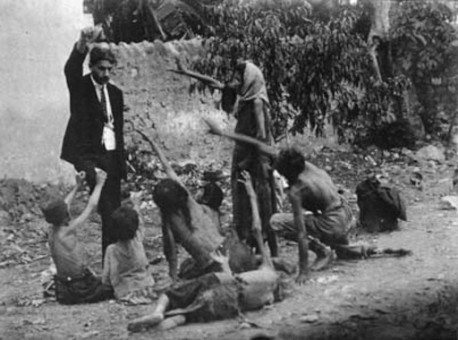
    Armenia and Turkey do not have any official diplomatic relations and the border between the two countries has been closed since 1993, following the war in Nagorno Karabakh between ethnic Armenians and the Azeri government in Baku. In recent years, hopes of an improvement in relations between Turkey and Armenia have been frustrated by continuing differences over the status of Nagorno Karabakh and—more intractably—the treatment of ethnic Armenians during the final years of the Ottoman Empire, culminating in 1915-16 in the massacre and deportation of virtually the entire Armenian population of Anatolia.

    As a result, Ankara has consistently excluded Armenia from its plans to make Turkey into an energy and transportation hub. The Baku-Tbilisi-Ceyhan (BTC) oil pipeline and the Baku-Tbilisi-Erzurum (BTE) natural gas pipeline both pointedly circumvent Armenia. The 76 kilometer (48 mile) Turkish section of the Baku-Tbilisi-Kars railroad is currently expected to be completed in late 2010 or early 2011 at a total cost of $241 million. The initial target is for the railroad to carry 1.5 million passengers and 6.5 million tons of freight in the first year after it comes into service (Today’s Zaman, July 25).

    In addition to connecting Turkey, Georgia and Azerbaijan, Ankara hopes that the railroad will form another link in a rail network that will eventually connect, via Turkey, China and Central Asia to western Europe. The Marmaray Project to bore a rail tunnel under the Bosporus and connect the Asian and European shores of Istanbul is currently scheduled for completion in 2011.

    Armenia opposed the building of the Baku-Tbilisi-Kars railroad, pointing out that there is already a railway running from Tbilisi to Kars via the Armenian town of Gyumri, although it has been out of use since the closure of the Turkish-Armenian border in 1993.

    It is currently unclear what concessions Gul envisaged when he apparently made Armenian participation in the new rail project conditional on Yerevan making a contribution to “good, neighborly relations, peace and prosperity.” For the moment at least, the respective positions of Turkey and Armenia on issues such as Nagorno Karabakh and the massacres and deportations of ethnic Armenians in the late Ottoman Empire appear so far apart as to be irreconcilable. Even if the two countries could reach some form of understanding over the latter, a solution to the problem of Nagorno Karabakh is beyond Turkey’s control as it depends on an agreement between Armenia and Azerbaijan. There is currently no indication that one is imminent.

    Nevertheless, there have recently been signs of a slight thaw between Turkey and Armenia. Even though the border between the two countries remains closed, there are now regular flights between Turkey and Armenia by both the privately-owned Turkish Atlas Jet and the Armenian state-owned carrier Armavia.

    On July 18, Turkish Foreign Minister Ali Babacan appeared to confirm rumors in the Turkish media that diplomats from Turkey and Armenia had met in Switzerland for several days of informal talks about ways of improving ties. “Such talks are held from time to time,” said Babacan. “We have problems about current issues and disagreements about the events of 1915. It is essential that these problems are handled through dialogue” (Today’s Zaman, July 19).

    The Turkish Ministry of Foreign Affairs (MFA) also issued a statement admitting that in recent years there had been occasional informal contacts between Turkey and Armenia and noting that Turkey had been one of the first countries to recognize Armenia when it declared its independence from the Soviet Union in 1991. “Meetings between members of the foreign ministries of the two countries are part of these contacts. We believe that no different meaning should be attributed to these meetings,” said the MFA statement (Today’s Zaman, July 19).

    A previous series of informal discussions in 2005 failed to produce any result. In recent years, hopes of an improvement in relations have been complicated by events such as the motion brought before the U.S. Congress in fall 2007 calling on the United States to recognize what happened to the Armenians in 1915 as a genocide and the racist murder in Istanbul in January 2007 of Turkish-Armenian journalist Hrant Dink.

    But, even if diplomats from Turkey and Armenia remain reluctant to be seen meeting with each other, the two countries will come together in the most public of ways later this year. On September 6, the Turkish and Armenian national soccer teams are due to meet in Yerevan in the first ever match between the countries after they were both drawn in the same group in the qualifying stages for the 2010 soccer World Cup in South Africa. Armenian President Serzh Sarksyan has already invited Gul to Yerevan to watch the match. Gul has yet to reply to the invitation. Given the often extreme mutual antagonism between nationalists in both countries, traveling to Yerevan would require Gul to display both personal and political courage; as it would for Sarksyan to attend the return match in Istanbul. But there is also little doubt that, even if it did not produce any immediate results, such “soccer diplomacy” could contribute to a further easing of tensions and perhaps lay the foundations for an eventual reconciliation.

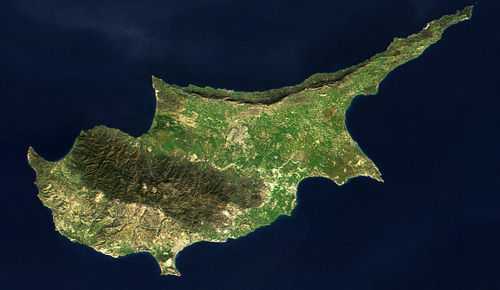
  • Cyprus Peace Operation Ended Pain Of Turkish Cypriots, Erdogan

    Cyprus Peace Operation Ended Pain Of Turkish Cypriots, Erdogan

    ANKARA – Turkish Prime Minister Recep Tayyip Erdogan said Tuesday “the Cyprus Peace Operation of July 20th, 1974 ended the pain suffered by Turkish Cypriots.”

    Speaking at a group meeting of the ruling Justice and Development (AK) Party in the Turkish parliament, Erdogan said, “the Cyprus Peace Operation helped protect the Turkish Cypriots from a possible genocide in the island.”

    Reminding that July 20th was a day of celebrations for peace and freedoms in the Turkish Republic of Northern Cyprus (TRNC), Erdogan said, “the Cyprus Peace Operation ended the violence perpetrated towards the Turkish Cypriots. The Peace Operation was a proof that the motherland, Republic of Turkey, would stand by the Turkish Cypriots at all costs. The Peace Operation was based on international agreements and helped Turkish Cypriots attain freedom and peace. The whole world must understand this reality. Those who are resisting to understand the realities would see the facts sooner or later. We have always been on the side of peace in Cyprus. Both before and after the Peace Operation, we maintained our posture supporting peace and dialogue.”

    “A comprehensive solution in Cyprus should be based on the political equality of Turkish Cypriots. The new partnership should be bi-zonal and based on political equality and be under the active guarantee of Turkey,” Erdogan said.

    “Despite their peaceful stance, the Turkish Cypriots have been subject to unfair isolations. The Turkish Cypriots voted for the Annan Plan on April 24th, 2004. While the Greek Cypriots rejected the Annan Plan, they got rewarded by the European Union (EU) with full membership. The Turkish Cypriots got punished although they had approved the Annan Plan,” Erdogan said.

    “Closing eyes to the isolations imposed on Turkish Cypriots in the 21st century is a shame for all of humanity,” Erdogan said.

    “We expect all parties, including the EU, to fulfill their promises made to the Turkish Cypriots,” Erdogan stressed.

    “Regardless of what the conditions may be, the AK Party government would continue to stay on the side of the TRNC and our brothers and sisters living there,” Erdogan said.

    “Cyprus is our national cause. We would carry this matter on our shoulders at all costs,” Erdogan said.

    Touching on the water need of the TRNC, Prime Minister Erdogan said that Turkey would build an underwater system to carry 75 million cubic meters of potable water from the southern town of Anamur to the island soon.

    “Water is essential for the Turkish Cypriots and this project may turn into a ‘peace water’ project. With God’s help, we would complete this project by the end of 2008,” Erdogan also said.

    Source: www.turkishpress.com, 22.07.2008

  • Armenians for Obama”

    Armenians for Obama”

    Armenians for Obama” isimli kampanya çerçevesinde Colorado, Washington, New Mexico, Nevada, Oregon, Texas, California, Michigan, Pennsylvania, Washington DC ve New York eyaletlerinde düzenlenmesi öngörülen „grassroots” toplantılarına ilişkin olarak 17 Temmuz tarihinde  „Asbarez”de yayımlanan „Armenians For Obama to Host Nationwide Platform Meetings” başlıklı haberin metni :
     
     
     „LOS ANGELES, CA – Armenians for Obama announced this week that it has organized grassroots platform meetings throughout the country aimed at including domestic and international issues of interest to the Armenian American community within the Democratic Party’s platform to be approved at the Democratic National Convention in August.
     
    The meetings will take place in Lakewood, CO; Seattle, WA; Gallup, NM; Las Vegas, NV; Portland, OR; Houston, TX; Austin, TX; and Glendale, CA in the Western United States, and in Dearborn, MI; Philadelphia, PA; Washington, DC; and New York, NY on the Eastern part of the country. For more information on the platform hearings, Armenians for Obama, or getting involved, please email: [email protected].
     
    Those attending the platform meetings will discuss the possible inclusion of US recognition for the Armenian Genocide, the right to self-determination of the people of Nagorno-Karabakh and lifting the Turkish blockade of Armenia. Participants will also address the war in Iraq, the troubled U.S. economy, and rising cost of healthcare.
     
    “The Bush Administration has failed the Armenian-American community on a wide range of issues, especially its continued complicity in the denial of the Armenian Genocide, but also its opposition to a broad array of foreign policy and domestic issues of concern to Americans of Armenian heritage,” said Areen Ibranossian, Chairman of Armenians for Obama.
     
    “Including issues of special concern to Armenian Americans in the Democratic Party Platform, such as the need to end the cycle of genocide, will play a vital role in energizing this highly motivated and networked community to tip the scales for Barack Obama this November in battleground states such as Nevada, Virginia, Colorado, and Michigan”, added Ibranossian.
     
    “In the upcoming election, we have an historic opportunity to elect a President who offers a fundamental change from the failed policies of the last seven year,” explained Ibranossian.
     
    In January, Sen. Obama issued a strong statement to the Armenian American community calling for passage of Armenian Genocide legislation and pledging to end U.S. complicity in Turkey’s denial of that crime against humanity.  “The facts are undeniable,” stated Sen. Obama in his January 19 statement. “An official policy that calls on diplomats to distort the historical facts is an untenable policy. As a senator, I strongly support passage of the Armenian Genocide Resolution (H.Res.106 and S.Res.106), and as President I will recognize the Armenian Genocide.”
     
    He has made subsequent statements in support of US recognition of the Armenian Genocide both publicly and privately during meetings with Armenian-American community representatives.
     
    Last month, Obama submitted questions on the Armenian Genocide to Marie Yovanovitch, President Bush’s nominee to be U.S. Ambassador to Armenia. The Senator serves on the Senate Foreign Relations Committee, which must confirm Yovanovitch before she can assume her post in Yerevan.
     
    While on a fact-finding mission to Azerbaijan, Sen. Obama openly criticized the Turkish and Azeri blockades of Armenia and urged the two nations to open their borders with the land-locked country.
     
    Armenians for Obama is a nationwide voter registration, education, and mobilization effort dedicated to electing Barack Obama President. Based in Los Angeles, and with chapters and affiliates in all 50 States, Armenians for Obama will harness the energy and enthusiasm for Barack Obama’s candidacy to ensure record high Armenian American turnout in critical battleground states. „
  • Union of Enlighteners of Turkic World Established

    Union of Enlighteners of Turkic World Established

    Kazakhstan, Almaty, 11 July /corr. Trend News R.Mashadihasanli / Constituent conference of Union of Enlighteners of Turkic World took place in Almaty.
    The conference was attended by the representatives of Turkey, Kyrgyzstan, Azerbaijan, Kazakhstan, Turkish Republic of North Cyprus. Academician Haji Kheyrulla was elected as the Chairman of the Union, and the professor of Gazi University of Turkey, Ismet Chetin, candidate of philological sciences, editor-in-chief of the newspapers TURKEL and Veten, Ramiz Mashadihasanli and professor Murat Tuzunkhan ( Turkish Republic of North Cyprus) were elected deputy chairman.

    The goal of establishing the Union of the Enlighteners of Turkic World is to combine world-known people, being engaged in history, literature, science and skill, to strengthen relations between the Turkic-speaking states.

    The correspondent can be contacted at: [email protected]

    Source: trendaz.com, 11.07.08


  • Dashnaks Leader Uneasy Over Armenian Overtures To Turkey

    Dashnaks Leader Uneasy Over Armenian Overtures To Turkey

    Rustamian

    By Anna Saghabalian

    A leader of the Armenian Revolutionary Federation (Dashnaktsutyun) reiterated on Wednesday his party’s misgivings and unease about President Serzh Sarkisian’s diplomatic overtures to Turkey.

    Armen Rustamian warned that Turkish President Abdullah Gul will face street protests by Dashnaktsutyun if he accepts Sarkisian’s invitation to visit Yerevan and watch the first-ever match between the two countries’ national soccer teams to be played on September 6.

    “We must not allow Turkey to create an illusion about the existence of relations [with Armenia,]” he told journalists. “This is all it wants.”

    Rustamian said Dashnaktsutyun, which is a junior partner in Armenia’s governing coalition, would “remind” Gul of the 1915 Armenian genocide and other problems existing between the two nations. “We have the right to express our protest within the civilized norms,” he said. “We are currently thinking about what forms it could take.”

    The Armenian and Turkish governments raised new hopes for the normalization of the historically strained relations between their nations shortly after Sarkisian took over as Armenia’s new president in April. Official Yerevan responded positively to Ankara’s offer of a “dialogue.” As well as inviting Gul to pay a first-ever visit to Armenia by a Turkish head of state, Sarkisian signaled last month his government’s readiness to agree, in principle, to the creation of a Turkish-Armenian commission of historians that would study the mass killings of Armenians in the Ottoman Empire.

    Sarkisian’s predecessor, Robert Kocharian, rejected the idea floated by Turkish Prime Minister Recep Tayyip Erdogan in 2005, saying that the highly sensitive issue must be addressed by the two governments, rather than historians. In an interview late last month, Kocharian faulted Sarkisian for extending the extraordinary invitation to Gul welcomed by the United States.

    Rustamian agreed with Kocharian’s stance, while playing down the significance of the invitation. “If I were the president I wouldn’t invite him,” he said.

    Rustamian, who also chairs the Armenian parliament’s foreign relations committee, insisted at the same time that there are no “strategic differences” within Armenia’s leadership on how to improve relations with Turkey.

    Successive Armenian governments have stood for an unconditional normalization of Turkish-Armenian relations, saying that the two countries should establish diplomatic relations and open their border before tackling their outstanding problems. Dashnaktsutyun has traditionally favored a harder line that makes Turkish recognition of the genocide a necessary condition for a Turkish-Armenian rapprochement.

    (Photolur photo: Armen Rustamian.) 

    Wednesday 23, July 2008