Category: Armenian Question

“The great Turk is governing in peace twenty nations from different religions. Turks have taught to Christians how to be moderate in peace and gentle in victory.”Voltaire’s Philosophical Dictionary

  • Between recognition and denial – the genocide question and Turkish-Armenian relations

    Between recognition and denial – the genocide question and Turkish-Armenian relations

    Ahmed Magdy Al-Soukkary

    The Turkish-Armenian reconciliation process is now almost completely stalled, with Turkey continuing to vehemently oppose the Armenian-inspired international campaign to secure recognition of the Armenian genocide.

    Suggested Reading

    Conflict Background

    GCCT

    By Dr. Ahmed Magdy Al-Soukkary

    At the general assembly of parliament in Baku on 15th December, Ahmet Davutoglu, Turkey’s foreign minister stated that meetings held with Armenia are not a crime, but necessary politics. These statements came a few days after his first high-level visit to Armenia in nearly five years. The Armenian question – or what is called the ‘Armenian Genocide’ (1) – has for decades strained relations between Turkey and Armenia. With the one-hundredth anniversary of the Armenian Genocide taking place in 2015, some observers think it could provide a major breakthrough in genocide recognition and Armenian-Turkish dialogue. Others, however, insist that Turkey won’t recognize genocide, arguing that the killings were in self-defence against people who were disloyal to the Ottoman Empire during World War One (2). Turkey’s continued denial has created conditions which, particularly in the view of many Armenians, necessitates the continuation of the search for international reaffirmation until acknowledgement is universal and irreversible. In the meantime, the genocide issue continues to impact the normalization of relations between Turkey and Armenia.

    The legacy of genocide

    Relations between Turkey and Armenia are burdened by a number of inter-connected problems. Turks and Armenians have, for instance, disagreed about how to describe the Ottoman-era massacres committed against Armenians in the First World War (1914-1918).(3) During and immediately after World War One, the atrocities committed against the Armenians of the Ottoman Empire were public knowledge. In their May 24th 1915 joint declaration, the Allied Powers – Great Britain, France and Russia – accused the Young Turk regime of crimes against humanity and civilization. In 1919, the post-war Ottoman government prosecuted a number of Young Turk conspirators of the crimes of massacre and plunder. By signing the Treaty of Sèvres on August 10th 1920, Turkey obligated itself to apprehend those “responsible for the massacres.” The international community did not question at the time the veracity of the reports on the extermination of the Armenians.

    The international community essentially abandoned the Armenians in 1923 when the European Powers agreed to the Treaty of Lausanne, in which Turkey was absolved of further responsibility. Turkey took license from this to embark upon a policy of denial, suppression of public discussion and prevention of any official mention of the treatment of Armenians. Europe’s determination to escape the horrors of World War One, isolationism in the US and revolutionary utopianism in Russia, further stigmatized the Armenian survivors as witnesses of a catastrophe politicians and the public wanted to quickly forget. World War Two, however, brought the problem of mass extermination into sharp relief, with the Holocaust reviving the sense of international obligation towards victimized peoples. As this sense of duty became embodied in a number of UN covenants, so Armenians began to find renewed hope that their case would receive attention. The 1948 Convention on the Prevention and Punishment of the Crime of Genocide attached a label to mass slaughter and a new word entered the post-war political vocabulary – genocide. With it came the realization among Armenians that they had been victims of a crime which at the time still lacked a name.(4)

    To retrieve the memory of their forgotten genocide, Armenians initiated efforts for national and international recognition. These began with the introduction of commemorative resolutions in the United States Congress in 1975 and efforts to enter the subject on the record at the UN, which occurred with the 1985 adoption of a report on genocide by the UN Commission on Human Rights. Broader recognition was achieved in 1987 with the adoption of a resolution by the European Parliament, which stated that “the tragic events of 1915-1917…constitute genocide.” In the following years, the legislatures of countries such as Belgium, Canada, Cyprus, France, Greece and Russia adopted resolutions affirming the historical record on the Armenian Genocide. Acknowledgement also came through declarations by heads of states and pronouncements by legislators.(5)

    For Turkey, it has never faced-up to the atrocities committed during the “dying” days of the Ottoman Empire. Alarmed by territorial claims and demands for reparations by Armenians, Turkey resented that its casualties and war-time conditions in eastern Anatolia as the Ottomans fought invaders on three fronts were not taken into account. To question the official line became a criminal offence and a taboo issue.(6)

    Many who oppose official recognition of the genocide tend tacitly to admit that it did happen, but that it would be politically inconvenient to say so as this would anger Turkey – an increasingly powerful and influential country, an important NATO member and a strategic partner of the west (albeit one more than ever inclined to follow its own course). The implication is that it is still, ninety-five years later, too soon to face reality.(7)

    The AKP’s approach to dealing with the Genocide Question

    Since assuming power in November 2002, the Islamist Justice and Development Party (AKP) was preparing to start negotiations with the European Union. This path implied that Turkey should implement the EU’s conditionality principle to meet the criteria for starting accession talks; an important transformative force. The European course was instrumental in helping dispel fears of Turkey’s traditional elites for the country’s Westernization process and secular state identity under the AKP. The AKP government has realized that solely political and economic criteria are not enough to become a full member, consequently it began to invest in Turkey’s regional competencies. The South Caucasus was, for instance, one region in which Turkey could invest more, both politically and economically.

    Genocide allegations and closed borders have played a big role in directing the course of Turkey-EU relations, with the European Commission’s annual progress reports prioritising establishing good relations and opening the border. In 2005, the European Parliament passed a non-binding resolution establishing Turkey’s recognition of the Armenian genocide as a requirement for membership.  Another factor is the European Neighbourhood Policy, which includes Armenia, with the EU calling on candidates to resolve difficulties with their neighbours before accession. The AKP therefore launched the opening of relations with Armenia as a means of removing this obstacle to EU integration.(8)

    At this time, Turkey’s prime minister, Recep Tayyip Erdoğan, was much more open in his treatment of the Armenian issue. Whereas the Turkish state had always dictated historical narratives down to every school book, and treated scholars and journalists who thought differently as threats to national security, Erdoğan left history to historians. Erdoğan made statements asserting that it should be up to historians to determine the exact nature of what happened to Armenians in the Ottoman Empire during the First World War. He made sure that the rules governing access to Ottoman archives were eased, even though by now these are most likely cleansed of the most obviously damning documents, and the military archives are still not fully open. Rules governing the terminology used to describe these events were eased or applied less stringently. While this was partially due to internal processes, much of this openness can be explained by European requirements during Turkey’s negotiations for entry into the European Union.(9)

    Negotiations between Turkey and Armenia – a win-lose situation?

    On August 31st 2009, Turkey and Armenia announced the beginning of formal negotiations with the end goal of normalizing ties, with the presentation of two protocols – one on developing bilateral ties, and the other on establishing diplomatic relations. Through Swiss mediation, the signature of an agreement on to establish diplomatic relations in Zurich on October 10th 2009 offered hope that some of the difficult problems in the southern Caucasus may soon be resolved. The two countries agreed in principle to open the border , closed since 1993 because of the war between Armenia and Azerbaijan, a Turkish ally, resulting from the Nagorno-Karabakh dispute. Turkey had conditioned its reopening on a settlement between Armenia and Azerbaijan.(10)

    Turkey placed special emphasis on two points:

    • The fact that the protocols, once signed, would require parliamentary approval;(11)
    • Erdoğan’s insistence on the connection between the ratification of the protocols and the normalization of Armenian relations with Azerbaijan received much criticism in Armenia.(12) This refers to the great influence of the Nagorno-Karabakh conflict. Turkey – which has a close partnership with Azerbaijan based on linguistic ties, plus major oil and gas pipelines – has long linked any improvement in its relationship with Armenia to a negotiated settlement over Azerbaijan’s Armenian-majority enclave of Nagorno Karabakh. Not to mention that Turkey also closed the Armenia border in 1993 to put pressure on Armenian forces to withdraw from the 13.5% of Azerbaijan they currently occupy.(14)

    Despite these efforts, however, the Turkish-Armenian reconciliation process is now almost completely stalled (15). Officially, Turkey continues to vehemently oppose the Armenian-inspired international campaign to secure recognition of the genocide. Ambassadors, consuls and other officials – as well as historians who support the official Turkish position, whether of ethnic Turkish origin or not – propagate the official Turkish position in as many forums as possible. Armenians believe that the AKP government is ready to blackmail – when it can – any government that moves towards recognizing the genocide. For the Armenians, therefore, it appears that the issue has not been left to historians after all. However, Gerard Libaridian, the Armenian historian, thinks that the Armenian issue is the blind spot of the Turkish leaders’ vision.(16)

    On the level of Turkish elite and society, there is some sort of internal consensus that relations with Armenia should not be normalized at the expense of relations with Azerbaijan. Indeed, for the Turkish side, one of the most debated issues related to the protocols was the lack of any reference to Nagorno-Karabakh. Azerbaijan was determined not to support rapprochement between Turkey and Armenia as long as Nagorno-Karabakh remained unresolved.(17) It can be concluded that the protocols failed to achieve their objectives, even though the Armenian side did accept the constitution of a joint sub-commission of historians to discover the historical truth behind the genocide issue.(18)

    Between Armenian demands for recognition and Turkish denial of genocide as an official state policy, both need to adopt a new approach to dealing with this debatable historical issue with all its complexities. For Turkey, it should take concrete steps in normalizing its bilateral relations with Armenia, on the one hand, and trying to reach a political compromise to the intractable genocide issue, on the other. Armenia, meanwhile, needs to show a considerable amount of positive encouragement towards resolving the problem by separating the normalization of relations with Turkey from the Nagorno-Karabakh peace process. Only through these mutual steps can the process of reconciliation between Turkey and Armenia be revitalised.

    Dr. Ahmed Magdy Al-Soukkary is an Egyptian academic lecturer in International Negotiations at the Faculty of Economics and Political Science (FEPS), Cairo University. He has a very distinguished academic career in Turkish Studies, completing a PhD in political science and international relations on “The Process of International Negotiation –  a Theoretical Study with Application on the Turkish-European Negotiations”. His MSc in political science explored “The Impacts of the Iranian-Turkish Relations Towards the Arab Regional System in the Nineties”, whilst his graduation research paper in political science looked at “Turkey and The Arab – Israeli Conflict 1948 – 1989.”

     

  • ACT NOW: Don’t let California Education System Teach One Sided History

    ACT NOW: Don’t let California Education System Teach One Sided History

    California Residents Only

    SAY NO TO CALIFORNIA ASSEMBLY BILL 659

    Give young people a choice not to be indoctrinated

    Click to send your letter in less than a minute

    Dear Friends,

    California Assembly Bill (AB) 659 seeks to amend Section 51226.3 of the state Education Code to include the alleged “Armenian genocide” in the history-social science educational curricula. Sponsored by Assemblyman Adrin Nazarian, AB 659 imposes the one-sided and legally unfounded allegation of a crime against humanity in our public education. Having passed through the Assembly committees on Education and Appropriations, under the influence of ethnic special interests, AB 659 is now up for a full Assembly vote on January 31st.As highlighted by the recent European Court of Human Rights decision in the Perinçek vs Switzerland case as well as by numerous American scholars of history, the Ottoman Armenian suffering cannot be described as ‘genocide’ – a well-defined legal term that applies only to the crimes against humanity tried in a court of law. Furthermore, the very term “Armenian genocide” excludes the massacres of over half a million Turks, Kurds, Azeris and other Muslims by the Armenian armed groups fighting alongside the Russian, Greek and French Armies in World War I.Join the Pax Turcica action campaign to urge your Assembly member to vote against AB 659 when it comes to the floor. The young generations should have a choice to not be subjected to educational malpractice based on the unfair and unethical legislation.

    Please, send your action letters NOW, make sure to select your California Assembly member as a target, spread to your friends in California, and forward all responses received to
    Click to send your letter in less than a minute


    ataa
    ataa
    ATAA, representing over 60 local chapters and 500,000 Turkish Americans throughout the United States, serves locally and in Washington DC to empower the Turkish American community through civic engagement, and to support strong US-Turkish relations through education and advocacy.  Established in 1979, ATAA is the largest, democratically elected Turkish American membership organization in the United States.  As a non-faith based organization, ATAA is open to people of diverse backgrounds.  The ATAA is a 501(c)(3) non-profit organization formed under the laws of the District of Columbia. To learn more about ATAA, please visit www.ataa.org.
  • Islamicized Armenians

    Islamicized Armenians

    Sabiha-GLet’s Welcome Islamicized Armenians

    By Raffi Bedrosyan, Toronto, 15 November 2013

                                                                 The conference organized by the Hrant Dink Foundation about ‘Islamicized (Forcibly Islamized) Armenians’ at the Istanbul Bosphorus University in early November broke one more taboo in Turkey. A hidden reality, a secret known by many but which couldn’t be revealed to anyone, whispered behind closed doors but also filed in government intelligence offices, finally broke open into the public.

    The late Hrant Dink would be elated to see this conference become a reality, eight years after the first conference about ‘Armenians during the late Ottoman Empire era and the 1915 events’ held at Istanbul Bilgi University, when protesters hurled insults at the conference participants and government ministers labelled them “traitors stabbing Turks in the back”. That conference had also broken a taboo, but Hrant was already a marked man for revealing the identity of the most famous ‘Islamicized Armenian’, Sabiha Gokcen, Ataturk’s adopted daughter and first female Turkish combat pilot, to be in fact an Armenian orphan of 1915 by the name of Hatun Sebilciyan.

    It is a known fact that in 1915 tens of thousands of Armenian orphans were forcibly Islamicized and Turkified, tens of thousands of Armenian girls and young women were captured by Kurds and Turks as slaves, maids or wives, tens of thousands Armenians converted to Islam to escape deportations and massacres, and tens of thousands of Armenians found shelter in friendly Kurdish and Alevi villages but lost their identity. What happened to these survivors, or living victims of the 1915 Genocide? Hrant was obsessed with them: “We keep talking about the ones ‘gone’ in 1915, let us start talking about the ones who ‘remained’.”

    These remaining people survived, but mostly in living hell. And what’s remarkable, their children and grandchildren are now ‘coming out’, no more hiding their Armenian roots. One of the first was the famous Turkish lawyer Fethiye Çetin, who revealed that her grandmother was Armenian, in her book ‘My Grandmother’. This was followed by another book edited by Aysegul Altinay and Fethiye Çetin, ‘The Grandchildren’, about dozens of Turkish/Kurdish people describing their Armenian roots, without revealing their real identities. Then came the reconstruction of the Surp Giragos Armenian Church in Diyarbakir, which became a destination for many hidden Armenians in Eastern Anatolia to come out. On average, over a hundred people visit the church daily, most of them hidden Armenians. Some come to pray, get baptized or married, but most just visit to feel Armenian, without converting back to Christianity. This has created a new identity of Moslem Armenians, in addition to the historical and traditional identity of Christian Armenians. In a country where only Moslem Turks can work for the government, where being non-Moslem is sufficient excuse for persecution, harassment and attacks, where the word Armenian is used as the biggest insult, it takes courage for someone to reveal that he is now an Armenian and no longer a Turk/Kurd/Moslem. People can easily lose their jobs, livelihood or even lives for changing their identity. Just to give an example of the level of racism and discrimination, an ultra nationalist opposition member of parliament accused the Turkish President Abdullah Gul for having Armenian roots in his Kayseri family. Gul sued her for defamation for being labeled an Armenian; the courts sided with him ordering her to pay compensation for such an insult.

    It is difficult to estimate the number of Islamicized Armenians, and even more difficult to predict what proportion of them are aware of their Armenian roots, or how many are willing to regain their Armenian identity. Based on independent studies of the 1915 events, one can conclude that more than 100,000 orphans were forcibly Islamicized/Turkified, and that another 200,000 Armenians survived by converting to Islam or by finding shelter in friendly Kurdish and Alevi regions. It is therefore conceivable that 300,000 souls survived as Moslems. The population of Turkey has increased seven-fold since then. Using the same multiple, one can extrapolate that there may exist 2 million people with Armenian roots in Turkey today, originating from the 1915 survivors. There were even more widespread conversions to Islam during the 1894-1896 massacres, when entire villages were forcibly Islamicized. A couple centuries previously, Hamshen Armenians were Islamicized in northeast Anatolia. The Moslem Hamshentsis, numbering about 500,000, speak a dialect based on Armenian, but never identified themselves as Armenian–until recently. Adding all these forced conversions prior to and during 1915, one can conclude that the number of people with Armenian roots in present Turkey reaches several million; numbers are difficult to accurately estimate, but in any case, easily exceed the present population of Armenia.

    The reality is that the secrets of Armenianness whispered for three or four generations after 1915, are now becoming loud revelations of new identities. As evidenced in the recent conference, even Hamshen Armenians have started exploring and reclaiming their long lost roots. During the reconstruction of the Surp Giragos Church and in my travels in eastern and southeastern Anatolia, one out of every three Kurds that I met had an Armenian grandmother in the family. This fact, hidden until recently, is now revealed openly, often leading young generations to reclaim Armenian identities, but without giving up Islam. One interesting observation is that the hidden Armenians were aware of other hidden ones and all attempted to intermarry, resulting in many couples who ended up having Armenian roots from both parents.

    The conference attracted numerous academicians, historians and journalists from within and outside Turkey, as well as dozens of presenters of oral history. One of the most dramatic presentations was about Sara, a 15-year-old Armenian girl from Urfa Viranshehir, who was captured by the Turkish strongman of the region, Eyup Aga. Eyup wanted to take Sara as his third wife. When Sara refused, Eyup killed her mother. When Sara refused again, Eyup killed her father. When Eyup threatened to kill Sara’s little brother, Sara couldn’t resist any more, and married the killer of her parents, on condition that her brother would be spared and she would keep her name. But her brother was also eventually killed. As she resisted Eyup’s advances, she was repeatedly raped and was pregnant 15 times, giving birth to 15 babies, who all died prematurely. Eyup constantly tortured her, even marking a cross on her body with a knife. The family also mistreated her as an outcast, and she had a hellish life to the end. At the end of the story, the presenter, a Turkish academician, revealed that Eyup and the family who committed these crimes against Sara were her own family. Her final statement was even more dramatic than the story: “We always hear stories told by the victims, it is now time for the perpetrators to start talking about and owning their crimes”.

    There are new revelations about how the Turkish government kept tabs on Islamicized Armenians. Apparently, the government kept records of every Armenian village or large Armenian clan which was forcibly Islamicized in 1915. It was recently discovered that the identification cards of hidden or known Armenians had a special numbering system to identify them secretly. There are anecdotes that a few Turkish candidates for air force pilot positions were turned away even though they qualified after rigorous tests, when government records revealed that they come from Islamicized Armenian families.

    It is of greater concern to us how the Islamicized Armenians are being dealt with by Armenians. It seems that the Istanbul Armenian community and more critically, the Istanbul Armenian Patriarchate are unable or unwilling to accept the hidden Armenians coming out as Armenians, unless these people accept Christianity, get baptized and speak Armenian. But it is unrealistic to expect the new Armenians to comply with these requirements. Since Armenians in Turkey are all defined as belonging to the Armenian Church, if the newcomers are rejected by the patriarchate, they become double outcasts, not only from their previous Moslem Turkish/Kurdish community, but also outcasts from the Armenian community, cannot get married, baptized or buried by the Church and cannot send their children to Armenian schools. If they have made a conscious decision to identify themselves as Armenian, a risky and dangerous initiative under the present circumstances, they should be readily accepted as Armenians, regardless whether they stay Moslem or atheist or anything else. Relationships get even more complicated as there are now many families with one branch carrying on life as Moslem Turk/Kurd, another branch as Moslem Armenian and a third branch as Christian Armenian. The Echmiadzin Church is more tolerant. It has issued the following statement: “Common ethnicity, land, language, history, cultural heritage and religion are general measures in defining a nation. Even if one or more of these measures can be missing due to historic reasons, such as inability to speak the language, or practise the religion, or lack of knowledge of cultural and historic heritage, should not be used to exclude one’s Armenian identity”. But Charles Aznavour’s approach is the most welcoming when he states: “Armenia should embrace the Islamicized Armenians and open its doors to them”.

    After Armenia, Karabagh and the Diaspora, there is now an emerging fourth Armenian world, the Islamicized Armenians of Turkey. Accepting this new reality will help both Turks and Armenians understand better the realities and consequences of 1915.

    Comments

    Sabiha Gokcen & Dersim Massacres

    0 votes
    +
    Vote up!
    Vote down!

    It’s rumored that Sabiha Gokcen, as a pilot, was sent with a squadron to bombard Dersim in late 1930s. However, she returned without dropping a bomb. Dersim was known to harbor Armenians.

    It is speculated that Sabiha knew who she was, the daughter of an Armenian,  and because of it she refrained from completing the task.

    Is this a made up story following Hrant Dink’s “discovery” of  Sabiha’s identity? Are there any documents verifying whether she indeed was in the squadron, and she “refused” to participate in the bombardment?

    Could any reader shed some light on this matter?

    Thankfully,

    Aren

    Understanding their Plight

    0 votes
    +
    Vote up!
    Vote down!

    I raise this issue to better understand the plight of Islamized Armenians in Turkey and I invite the knowledgeable to comment.

    For all I know the “Millet” (community) system that prevailed in the Ottoman Empire, and may still be a basis for community representation in Turkey, was based on religious affiliation, not ethnic grouping.

    Up the to the schisms that came about in the Armenian Apostolic Church that gave birth to the Armenian Catholic and Evangelical communities, the Apostolic Church represented all the Armenians for until then one was not an Armenian if she or he was not baptized in the Armenian Apostolic Church and anointed with Holy Muron. Let us be mindful that by the order of the King Trdat all his subjects were baptized Christians without exception. Since then, being Armenian and being Christian (albeit Apostolic for most of the time) became one and the same. In Kessabtsi dialect that may be the last remnant of naturally evolved Armenian dialect, Armenian Apostolic adherents are referred to “Armana’ for Armenian, while Armenian Catholics are called Catoula, and Armenian Evangelicals are called Pourtoustan meaning Protestants.

    The Patriarchate in Istanbul, for centuries, overshadowed the twin Catholicosates for it represented the Armenians at the Sultan’s Sublime Porte and the majority of the Armenians fell under its jurisdiction. It is there that our National Constitution came about. It may still be that it represents only the Armenian Apostolic adherents by law or by deep-rooted customs. I am not sure which.  In the United States, out of Church rules certainly, the Armenian Apostolic Church would not marry until the odar (non-Armenian) groom is anointed with Holy Muron before hand.

    I am not sure whether Sunni Muslims, irrespective whether they are Kurds or Turks or Islamized Armenians, constitute a separate “Millet”, so to speak; or whether in their case there is more than religious affiliation. It behooves us to know so as to have a better understanding of the plight of the Islamized Armenians and, of course, I am not referring to their social stigmatization that no laws can correct.

    Welcoming Islamized Armenians

    0 votes
    +
    Vote up!
    Vote down!

    That is a possibility but only if they renounce Islam. Just saying that they are Armenians is not enough. We all know the fanaticism of the average Muslim. Do we need among us people who believe Islam’s anti-Christian tenets?

    I do not see any advantages in accepting Muslim Armenians among us. Is it to increase our numbers? Old adage says: “Quality, not quantity”.

    For many years we have discussed who is an Armenian. Well…basically those who say they are Armenian and follow Armenian traditions. To do this is to renounce Islam. How many of them are willing to give up Islam and follow our traditions?

    I am reminded of California painter Kero Antoyan. When he found out that his brother’s children lived in Anatolia he went there to find them. He was welcomed as a long-lost hero. He took them to Istanbul to the “Badriarkaran”. When they saw the cross on the door, they turned back and run away saying: “We do not want to become Gavurs.” But you may send us money. WOW. This might be the attitude of most Islamized Armenians.

    How about the Hemshen Armenians? They are Muslim. How many have accepted that they were Armenians before, despite the fact that they speak an Armenian patois?

  • Major International Court Finds the Ottoman Armenian Controversy Not Settled History and Not Like the Holocaust

    Major International Court Finds the Ottoman Armenian Controversy Not Settled History and Not Like the Holocaust


    perincek

     
    ECHR Reverses Criminal Conviction of Turkish Politician Who had Questioned the Genocide Label

    On December 17, the European Court of Human Rights (ECHR) reversed the criminal conviction by a Swiss court of Dogu Percinek, a Turkish politician who publicly challenged that Armenians were subject to genocide in the final years of the Ottoman Empire nearly 100 years ago.

    The ECHR is an international court whose decisions are binding in 47 countries, including all of the European Union and every NATO member state except the U.S. and Iceland. Some 800 million people are subject to its jurisdiction. It has rendered judgment in more than 10,000 cases since its founding in 1959.

    Perincek had claimed at various academic conferences in Switzerland that the use of the genocide label to describe the fate of the Ottoman Armenians during World War I was incorrect. A criminal complaint was then filed against him by an ethnic advocacy group called “Switzerland-Armenia” in July 2005. In March 2007, a local Swiss court found Perincek guilty of “racial discrimination” under the Swiss Criminal Code. Perincek’s subsequent appeals were denied, which allowed him finally to bring his case to the ECHR. Perincek v. Switzerland (application no. 27510/08, filed June 10, 2008).

    The essential ground for Perincek’s conviction by the Swiss courts was the supposed existence of a general consensus, particularly within academic circles, concerning the characterization of the Armenian case as one of genocide. However, even the Swiss Federal Court itself admitted that there was no unanimity in the academic community concerning the matter. The ECHR’s analysis demonstrated exactly the same. The ECHR further noted that the notion of ‘genocide’ was a precisely defined legal concept and was, moreover, not easy to substantiate.

    In conjunction with this, the ECHR also clearly distinguished the Armenian case from the Holocaust. In cases alleging Holocaust denial, the court noted, the applicants had denied concrete historical facts, crimes perpetrated by the Nazi regime that were easily proscribed in clear legal terms, and acts that had been clearly established by an international court. The court diligently contradicted claims by Armenian groups that so-called genocide recognition was globally widespread, indicating that in reality, of the 190 nations of the world only about 20 governments have taken this step, and even then these often were in the form of parliamentary resolutions or a simple vote of a single chamber.

    The ECHR thus upheld that freedom of expression protected minority viewpoints capable of contributing to debate on issues that were not fully settled. The Court also underlined that the right to openly discuss questions of a sensitive and controversial nature, such as the Ottoman-Armenian tragedy, was fundamental and distinguished a tolerant and pluralistic democratic society from a totalitarian or dictatorial regime.

    This is important for the United States. First, the ECHR applied a statute, the European Convention on Human Rights and Fundamental Freedoms, whose key provisions mirror the First Amendment to the U.S. Constitution. Second, the ECHR proved the folly of U.S. legislators stating with absolute certainty that they know the historical facts and legal conclusion of the ongoing, hotly debated controversy concerning the Ottoman Armenians. Third, by emphasizing the fundamental right to openly discuss and debate historical controversies, the court took a stand against what is often seen in the U.S. – threats, intimidation and boycotting of any scholar who may research this controversy from any viewpoint other than that acceptable to Armenian pressure groups.

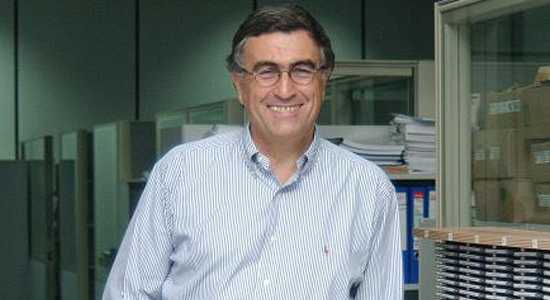
  • Turkey Must Apologize to Armenians before Centennial, Says Hasan Cemal

    Turkey Must Apologize to Armenians before Centennial, Says Hasan Cemal

    ISTANBUL (Armenpress)—Turkey must understands the pain felt by Armenians in the aftermath of 1915, Turkish journalist and publicist Hasan Cemal wrote in an article published Wednesday in Turkey’s T24 online newspaper, Armenpress reports.

    hasan_cemal

    In his piece, Cemal says Turkey must share that pain and present the tragedy to society at large, ahead of the forthcoming centennial of the genocide.

    “Armenians are a people from Anatolia. Their roots and their motherland is in Anatolia. Armenians, like the Kurdish people, had lived in Anatolia before the Turkish appeared there. The truth is that Turkey has not yet accepted the fact that the Armenians were cut off from their historical roots and their motherland in 1915,” writes Hasan Cemal.

    “The border between Armenia and Turkey should be opened. Diplomatic relations should be established between the two countries. These two steps should be made without any preconditions. Turkey, as a state, should apologize to the Armenians,” adds Cemal.

    Hasan Cemal is a Turkish journalist, writer, and a grandson of Jemal Pasha, one of the leading perpetrators of the Armenian Genocide. He was the editor of Turkish newspapers including Cumhuriyet from 1981 to 1992 and Sabah from 1992 to 1998. In 2013 he resigned from the Milliyet newspaper after Prime Minister Recep Tayyip Erdogan criticized his article supporting Milliyets publication of minutes of a parliamentary visit to Öcalan. Milliyet subsequently suspended him and refused to publish his regular column.

    He is best known for acknowledging and apologizing for the Armenian Genocide, a crime in which his grandfather played a leading role. His 2012 book on the subject, written partly in response to the 2007 assassination of his friend Hrant Dink, is titled 1915: Ermeni Soykirimi (1915: The Armenian Genocide).

    The book went on to be a bestseller in Turkey. Cemal remarked in his book, “To deny the Genocide would mean to be an accomplice in this crime against humanity.”

    The book was written following a visit by Cemal to Armenia. The book highlights Cemal’s “personal transformation” and his experiences in Armenia. While Cemal was in Armenia, he had an opportunity to meet and have lunch with Armen Gevorkyan, the grandson of the man who assassinated his grandfather Jemal Pasha in 1922.

    via Turkey Must Apologize to Armenians before Centennial, Says Hasan Cemal | Asbarez Armenian News.

  • Letter to Mr. Sassounian from Kufi Seydali, our Advisory Board Member

    Letter to Mr. Sassounian from Kufi Seydali, our Advisory Board Member

    Land of the Rising Sun: Fertile Ground for Armenians

    https://www.turkishnews.com/en/content/2013/11/07/land-of-the-rising-sun-fertile-ground-for-armenians/

    150621_136705656485445_258174371_nMr. Sassounian!

    I must say, you continue to surprise and shock me at the same time!

    You are fossil, or better said, a living sample of a rare germ against which no Japanese mask would help. You continue to spread the disease of hate and death.

    When I first read the title of your essay and the entering paragraphs, I thought; look here, the old Sassounian is filling a gap in his general knowledge by visiting Japan, instead of constantly attacking the Turks.

    However, my joy was short lived as I read about the true purpose of your visit!

    I bet, your Japanese hosts were too polite to tell you the truth, but I guess they didn’t believe a word about the bit regarding “peaceful- conflict- resolution”.

    You, Sir, who after 100 years, are still looking for more blood and laying the foundations of future conflict and war, have no right to lecture on peaceful resolution of conflicts. How did you justify the illegal occupation of Karabag? How did you explain the continued suffering Armenian forces together with the Russian army have inflicted upon the Azeris? Hundreds of thousands dead and millions displaced!

    Indeed I was amused by your claim to have met Japanese CEOs in order to discuss business and investments in Armenia! I am sure the Armenian Ambassador was equally amused.

    The only positive lesson to be derived from your report, is that both the Turks of Turkey and Azerbaijan will need to take your damaging activities much more seriously. Thank you Mr. Sassounian for your valuable lesson.

    Regards

    Kufi Seydali

    Kent, UK.