Category: Yalman Haceroglu

Former correspondent of Los Angeles Times, Member of Iraqi announcers association, Association of radio and TV, Iraqi journalist syndicate, Iraqi translators association, Iraqi authors and litterateurs union, author of Iraq after globalism discussing by politician, Modern Turkish media, Translation of the novel kill Henry Kissinger

  • The struggle for power and energy between the old world and the modern world

    The struggle for power and energy between the old world and the modern world

    Yalman Hacıroğlu writes: The struggle for power and energy between the old world and the modern world

    🖲️What we are witnessing in the unfolding events on the world political stage is a struggle for power and energy. The hatred and devilish Epstein scandal a true reflection of the nature of the world we live in.🖲️

    The global political arena is witnessing increasingly perilous turning points and operations, sometimes marked by mutual threats, and at other times by the deployment of warships and naval vessels to convince the world that the situation has reached a dead end. This is coupled with efforts to stronghold the global economy with their own agendas. These successive events will not be the first nor the last. The world has always been a testing ground since the creation of Adam, peace be upon him. Satan’s disobedience to the God command was one manifestation of conceit , a display of power, and a struggle for authority and energy to determine who is stronger. In essence, it is an arena of conflict between good and evil.

    Based on this, what we are witnessing in the unfolding events on the global political stage is a struggle for power and energy. The hatred and devilish Epstein scandal is a true reflection of the nature of the world we live in. Many dark, devilish files that have been opened—and perhaps those yet to be opened—reveal the underlying relationships behind global power centers, and perhaps even hidden, supernatural forces.

    This confrontation also demonstrates the necessity of re-examining the true causes behind many past events and developments. Similar calculations regarding conflicts were implemented during the establishment of the old world order. We must re-analyze collapsed states more carefully. In particular, the collapse of the Ottoman Empire must be re-examined within the context of the machinations and internal dynamics at play. The new world order has not yet been established, and the old is dying.

    To understand the dimensions of this brutal and bloody process, it is essential to correctly understand the intentions and strategies of the actors involved. Who is shaping the new order (the struggle for power and energy), and what are the hidden centers of power? Who are the overt and covert actors?

    These questions have long been dismissed as “conspiracy theories.” Sometimes out of ignorance, and sometimes due to a deliberate attempt to distort reality, these topics were ignored. Today, however, much is clearer. Therefore, we must re-examine the First and Second World Wars. But this must be done without confining ourselves to the narratives written by the victors.

    (Tensions Among Dominant Powers in the Old World)

    As the old world order took shape, Britain was a key player in dominating nations through economic and military occupation, playing a quiet yet influential role. It also played a significant part in the process that propelled the United States to its position as the world’s leading power. However, current assessments suggest that Britain is reassessing its relationship with China within the global balance of power.

    (Changes in Agreements and Alliances)

    Several assessments have been made regarding the possibility of the United States and Russia reaching agreements in certain areas. This stems from the similarity of their security concerns and the underlying causes of conflict.

    In this context, the role of pressure groups and influential networks remains crucial. While overt hostility is often more apparent, making it clear who is opposing whom, the real challenge lies in the hidden spheres of influence and covert power relations. This highlights a part of the inherent fragility of the internal structures of great powers.

    This applies not only to the United States, but also to China, Russia, India, and other major powers.

    Given Britain’s historical influence over maritime trade routes and strategic transit points, it is worthwhile to interpret the rivalry between the United States and the United Kingdom through these geoeconomic lines.

    (Old Friends, New Rivals)

    The new era is disrupting established norms. A picture is emerging where former allies are fiercely competing. At the founding of the European Union, the alliance between Germany and France was a subject of intense debate. Global economic trends and political imperatives can bring historical rivals together on common ground, just as they can turn close friends into adversaries.

    The Russian-Ukrainian war should also be studied from a multidimensional perspective, not relying solely on one-sided accounts. Understanding how societies with shared historical and cultural roots clash is crucial for drawing lessons for the future.

    (The World and the Search for New Alliances)

    We are entering an era where yesterday’s enemies may become tomorrow’s friends, as rigid ideological frameworks gradually lose their function. The new era opens the door to more productive scenarios.

    However, protecting national and spiritual values ​​has become more important than ever. We are witnessing a rise in influences that undermine the value system. Yet, these elements, often considered simple, are the very foundations upon which societies and nations are built.

    Much of the global projects are built on the assumption of abandoning these values, because it is easier to direct structures without roots. One of the key criteria that will determine the value system is the will to preserve it. This foundation will largely determine the course of alliances. The world is not a permanent home, but a transit point. The fate of nations is like the fate of humanity. Whoever embarks on their journey without forgetting the true owner of the earth will undoubtedly achieve victory.
  • Media, Politics, and Public Opinion

    Media, Politics, and Public Opinion

    The relationship between media and politics is hidden within the axis that defines the main debate about the nature of the media’s influence in sustaining the driving force behind politics, politicians, and political actors. Political actors cannot remain outside the orbit of popular support, in order to build a vital and effective force to influence society and prevent the constriction of their authority, in addition to the influence of the media.

    Media and Politics

    Media and politics are
    considered essential actors in the social system, bound together by interactively relationship. With the arrival of globalization in the 1980s, technological and information developments in news transmission aimed to influence society and shape public opinion. This was achieved by using print, audio, and visual media within mass communication, which played a significant role in illuminating the political landscape. This enabled politicians to communicate their ideas, opinions, and effective approaches within the limits of the strategy outlined by their parties to voters in the geographical area. This strategy represents the shared ideology between the voter and the candidate, removing the barrier that had been created between them for a long time due to politicians’ neglect of their voters before the elections. This was achieved within a limited timeframe and by the shortest possible means. Direct information about all political processes of interest to voters is available, enabling voters to evaluate candidates within the party with which they sympathize, through the images presented by the media. This, in turn, influences individual voting decisions.

    Of course, it is impossible for every citizen to know and evaluate their leaders directly. Therefore, the media was tasked with presenting these leaders to society, and has been described as the fourth estate for this purpose. The question now arises as to the extent to which the media influences politics in shaping and directing public opinion. Most studies conducted in various countries around the world have shown that the public lacks sufficient information to identify political actors, define democracy, and analyze political issues. This is because political news generally tends to disseminate tabloid content rather than addressing the needs of individuals.

    In short, the media and politics cannot be considered separate processes. The media charts the vast space for politicians to shape public opinion, and the media possesses the ability to seize social power in a constant interaction, with each seeking to direct the other at every turn.

    Those who control state power, whether dictators, single-party governments, or democratically elected governments, tend to use, monitor, or control the media. Because the media are institutions driven by economic concerns, they feel compelled to manipulate this process to their advantage.

    This study will examine the relationship between the media and politics, the relationship between them, and discuss their impact on public opinion and their credibility.

    Media

    “The term media refers to all visual, audio, and print media that perform three basic functions: entertainment, information, and education, conveying all types of information to individuals and society.” Although media is a general concept, it is used in a context that refers to a type of mass communication. The role of media, whether written, visual, or interactive, is to transmit news and events and provide individuals, groups, communities, and the masses with information, whether local, regional, or international.

    Politics

    Politics, in its modern sense, can be defined as the conflict arising between political blocs for dominance of power or participation in the division of sovereign positions among political blocs from different social classes in society, which include those with divergent interests and demands. The basis of politics lies in the conflict arising from the clash of interests and ideologies. This conflict is driven by the pursuit of shared values ​​and scarce resources in society. It charts the path for the winner to share power. Political parties and actors have emerged to represent specific interests. In this sense, these political actors and parties rely on the power of the media to influence and direct public opinion, and to understand its ideas and positions.

    Media and Politics

    The relationship between the media and politics is defined as a “symbiotic relationship.” The media views politics as a source of news. On the other hand, political parties and political actors seek to communicate their ideas, positions, and ideologies to voters, i.e., citizens, through the media to shape public opinion. This relationship creates a reciprocal process. In this process, politics or political institutions exert a greater influence on the media as the surrounding environment. No media system can be independent of the political system. The guardianship exercised by politics and political power over the media cannot be reconciled with moral values. On the other hand, the media system cannot operate independently of the political system. In terms of the relationship between the media and politics, moral values ​​can only be established ethically by following a path from principle to reality, rather than from reality to principle.
    In this regard, Max Weber (1864-1920) says, German sociologist, historian, and economic policy expert (The media is one of the most important sources of political apathy. Because it is subject to political pressure, it is difficult for journalistic institutions to escape this pressure.)

    Although the media seeks to avoid conflict with political forces and exploit the situation to their advantage (because they are profit-making organizations), conflict between the two parties may sometimes arise. Media companies are organizations with certain economic dependencies. While advertising may appear to be the sole source of income for media organizations, a closer examination reveals that advertising is not their sole source of income, and that these organizations are in fact huge conglomerates, and therefore engage in commercial activities with political forces and the state. Analyzing the process from this perspective would yield an explanation that lacks objective analysis.

    While the media seeks to make politics its own subsystem, politics, in a similar vein, seeks to dominate the media. From the media’s perspective, the goal is to influence and impact society. Informing, directing, and mobilizing the public is crucial to demonstrating the media’s influence on politics.

    With the widespread proliferation of the media, these outlets have acquired tremendous strategic importance today. They play a pivotal role in shaping and shaping politics. American political scientist Richard Fagin expresses the extent of the media’s influence on societies and the masses, saying, “If it were possible to create a fraudulent network capable of placing two thousand people in leadership positions in the media, it would be very easy to convince all of America and much of the world that the President of the United States was dead.” In his words about the impact of media on societies and masses.

    Public Opinion and Public Opinion Polls

    In the concept of public opinion, the word “public” simply means the collective, while the word “vote” refers to the general opinion. Public opinion is formed through the interaction of majority and minority views. In short, public opinion is the prevailing opinion of a group or groups of individuals concerned with a particular controversial issue at a given time. When we consider public opinion from a political perspective, we consider it the standard that determines the behavior of legislative, executive, and judicial bodies, or the standard set and shaped by opinion leaders. Public opinion is essentially an agenda-setting process, and this agenda is usually the political agenda. Studies that examine what or who sets this political agenda seek to answer questions such as: Are media messages politically biased? If so, what is the direction and source of this bias? What is the social and economic context in which these media operate? How do they influence the coverage and treatment of political events? How does media coverage of political events affect individuals’ political thoughts and attitudes? What evidence do these polls provide for understanding the workings of the political system and the political behavior of the public within it?

    Opinions vary regarding the impact of public opinion polls on public opinion. The prevailing view is that opinion polls, especially during election periods, exert a significant influence on voters who make their political choices, influenced by political communication efforts. According to this view, public opinion polls steer voters toward political parties most likely to win.

    For public opinion polls to influence voter behavior, certain conditions must be met. One of the most important of these conditions is public trust in them. This principle of trust also applies to the media. In advanced democracies, public opinion polls are closely monitored during election periods and at other times, helping to shape or guide government policies. Trust in these polls plays an important role in this. Another condition for the impact of public opinion polls is that their results do not conflict with information gained through personal experience and observation. It has been observed that poll results have a greater impact and reinforce prevailing trends when they align with prevailing opinions and knowledge. The decisive factor here is public trust in the organizations that conduct public opinion polls and the media that publish them.

    Conclusion

    In conclusion, as we mentioned throughout the study, the media, politics, and public opinion are in constant interaction. In this interaction, the media acts as a bridge between political actors and the public. Political actors, seeking to communicate their political messages, seek to reach potential voters through the media while simultaneously attempting to manipulate them through public opinion polls. Today, the media and politics appear to be two almost inseparable systems. Although these two systems appear to be subsystems, there is an indispensable interaction of interests between them. The media maintains a constant relationship due to their economic interests and their desire to capture social awareness, while political systems maintain a constant relationship due to their efforts to maintain power. We can analyze the systemic process and form perspectives by asking questions such as “How much trust is placed in public opinion polls?”, “How much trust is placed in the media organizations that publish public opinion polls?”, and “How influential are public opinion polls in society?”

  • Post-occupation Iraq between George Bush and the second chance

    Post-occupation Iraq between George Bush and the second chance

    Yalman Haceroglu writes: Post-occupation Iraq between George Bush and the second chance

    The occupation of Iraq was not a sudden or arbitrary war waged by the American right that was in power at the time. Rather, it was the result of dangerous alliances, understandings, and agreements—some overt and some secret—between major powers on the one hand, and regional states and some Iraqi opposition factions on the other hand .

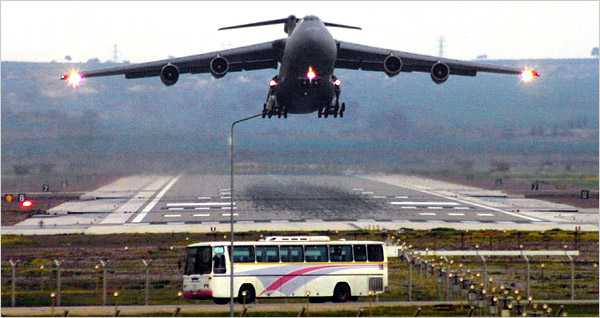
    On February 2, 2003, US Vice President Dick Cheney visited five Arab and other foreign capitals, forty-five days before the occupation. Cheney explained to these capitals Washington and London’s insistence on overthrowing the central government in Baghdad—these capitals were Kuwait, Abu Dhabi, Riyadh, Cairo, Doha, and the foreign capital, Ankara.

    Qatar made eager befforts to persuade Saddam Hussein to back down power with his two sons, but Saddam’s megalomania obstructed these efforts.

    All of these countries expressed their full readiness to cooperate with Washington, with the exception of Ankara, which refused for strategic, political, and moral reasons. History has proven the validity of the Turkish position.

    The United States did not have any strategic leadership plans in place for post-occupation Iraq. This is what CIA Director George Tenet argued in his memoirs, “In the Eye of the Storm.” Tenet harshly criticized the Bush administration’s poor performance and its role in preparing the international climate for the invasion of Iraq. This led to the complete failure of the American project in Iraq and the region, which provided a full opportunity for regional countries to overtly interfere in Iraq’s internal affairs.

    No George Tenet resigned from his position as CIA Director in 2004.

    One of the dangerous fact that accompanied the American occupation of Iraq, which was considered one of the dark pages in Iraqi political history and which was sparked by this occupation, was the opening of the door to bloody internal conflicts at the time, which the Iraqi people were far removed from it

    Five types of Iraqi conflicts appeared on the horizon, in terms of their general form and apparent formula:

    • A historical-civilizational conflict
    • A religious-religious conflict
    • A religious-civilizational conflict
    • A national-nationalist conflict
    • A religious-secular conflict

    These five conflicts took on various characteristics and names. Sometimes they appeared as resistance, sometimes as terrorism, sometimes as militias, and sometimes as “religious mythology.”

    In reality, the vast majority of the Iraqi people were not prepared to receive American democracy or the “constructive chaos” heralded by US Secretary of State Condoleezza Rice at that time on September 16, 2005, during the Conference on Security and Cooperation in Europe.

    The Iraqi people were socially, economically, and psychologically exhausted by the previous 35-year dictatorial era, in addition to 13 years of brutal and unjust economic sanctions. This forced the people, with most of their groups, sects, components, and classes, to seek salvation. US President George W. Bush also lacked a solution or way out of the Iraqi situation, which was intertwined with multiple trends.

    He relied on the unknown, the passage of time, and a group of advisors who subsequently resigned from their positions due to their disastrous failure in Iraq. These included Donald Rumsfeld, Paul Wolfowitz, Richard Perle, Richard Armitage, George Tenet, Bradley Blackman, Jeffrey White, Colin Powell, William Broome, and others from the military, security, and diplomatic establishment. In his 2007 book, “Second Chance,” Zingio Brzezinski (1928–2017), a strategic thinker and US National Security Advisor to US President Jimmy Carter from 1977 to 1981, harshly criticized US President George W. Bush for invading Iraq with a hollow and futile strategy. He described his leadership as disastrous, citing real facts that undermined the credibility of US global leadership. Brzezinski described the US invasion of Iraq as an American adventure.

    The most severe, vehement, and extremely important criticism of the Middle East that Brzezinski directed at former US President Bush for invading Iraq under what he described as flimsy pretexts is that the war on Iraq paved the way for transforming Iraq into a safe haven for terrorist groups, which escalated their military operations to an unprecedented degree. Brzezinski described the losses as heavy and painful.

    Brzezinski explained that US policy toward the Middle East had become strategically self-destructive. The occupation of Iraq led to the rise of Iran as an influential power.

    Berzezinski emphasized that the Bush Jr. administration’s adventure in occupying Iraq and the fall of Baghdad on April 9, 2003, had elevated Iran as an influential power in Iraq and the Gulf. He noted that the Iraqi arena had become a graveyard for neoconservatives, as we previously mentioned, with more than fifty military, security, and diplomatic figures resigning from their positions due to their failure to occupy Iraq.

    Berzezinski described President Bush Jr. as a vigilante, noting that American headlines during the Bush era were frightening. This is striking in an analysis of President Bush’s political personality.
    Berzezinski identified the negative consequences of the war waged by Bush Jr. in Iraq:

    1. The massive destruction of America’s credibility globally, when Bush declared, “We have found weapons of mass destruction in Iraq.”
    2. The inhumane practices at Abu Ghraib prison.
    3. The American war in Iraq was a geopolitical disaster, as Iraq became a safe haven for terrorist groups.

    4- Destroying Iraq’s power as a regional power and as the only Arab country capable of confronting Iran.

    As for Jay Garner, Paul Bremer, and Megan O’Sullivan, these three men harmed Iraq more than they helped due to their political, intelligence, and cognitive ignorance of the true situation in Iraq and the true archaeological nature of the Iraqi people.

  • The day Baghdad and all state institutions fell and the creative chaos began

    The day Baghdad and all state institutions fell and the creative chaos began

    Yalman Haceroğlu writes :The day Baghdad and all state institutions fell and the creative chaos began

    April 9, 2003

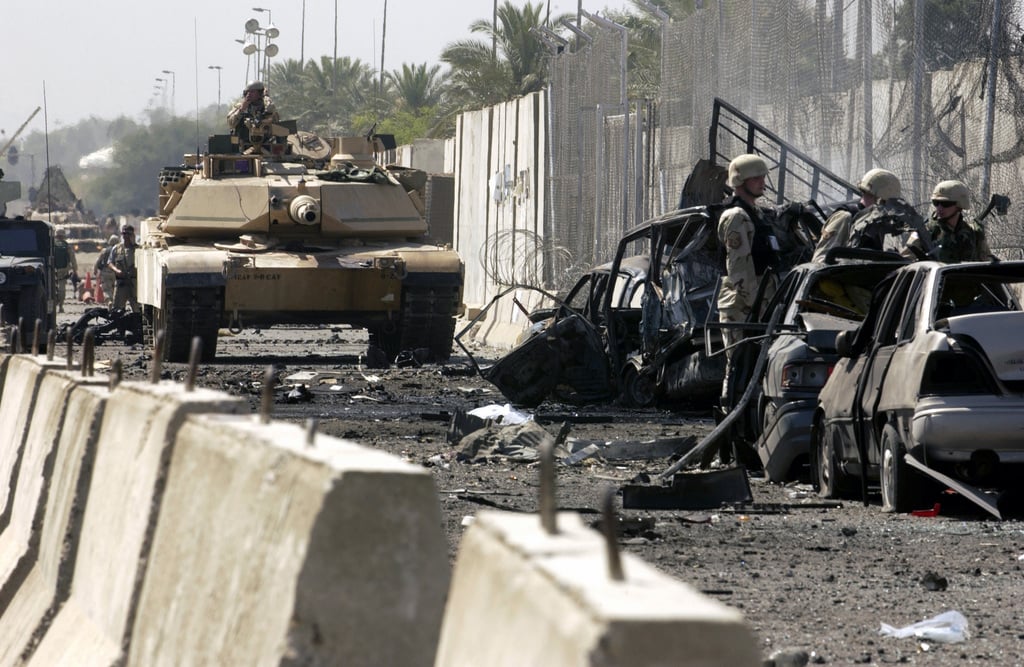
    After unequal military battles, technically and media-wise, that lasted only 19 days ((20/3/2003 – 9/4/2003)), Baghdad fell with all its defensive and offensive military fortifications under the control and squandering of American Braham tanks, G6 automatic machine guns, the roar of F16-F18 aircraft, and B52 and B1 strategic bombers, while the three giant aircraft carriers stationed in the Arabian Gulf and the Red Sea, “George Washington,” “Abraham Lincoln,” and “Nimitz,” were threatening to launch nuclear missiles towards Baghdad in the event that the Iraqi army units continued to resist… On another parallel level, Voice of America and Radio Sawa were practicing their dangerous role in managing the psychological warfare game by weakening the morale of the Iraqi army with cleverly fabricated and very diabolical news such as the surrender of senior army commanders, the Republican Guard, and the Special Guard of the Iraqi forces to US forces .Rather, these two radios went as far as to claim further by promoting the idea that most Iraqi military leaders had long-standing contacts with American forces, that these leaders (without naming them) were now working with American forces to liberate Iraq from dictatorship (according to their own expression), and that American forces were now working to transfer the families of these officers and commanders to America and Europe to protect them. Major American satellite channels, such as CNN, ABC, CBS, and others, played another important role, no less dangerous than the first, by broadcasting images of the infiltration of American and British forces into Iraqi territory from several axes. These channels also broadcast terrifying military images showing the launch of Tomahawk, Cruise, Pershing, and Trident missiles from American submarines and warships, while also broadcasting live footage of the devastating effects these missiles had when they exploded on their targets throughout Iraq. On a related note, CNN was using well-known broadcast media personalities to cover military operations, such as Dan Rather, Larry King, and others, to attract and engage the largest possible number of viewers to the war’s developments and to give the military operations a global popular and public profile. Meanwhile, American satellites were filming Black Hawk and Chinook helicopters dropping Marines as airborne paratroopers over presidential palaces scattered throughout Iraqi cities and towns.

    All the war’s events and phases were monitored and refined by the RRMT (Resolute Response Media Team) center, based at the Pentagon. On the other side of the equation, the Iraqi side, 85% of the Iraqi people wanted to get rid of the former regime, believing that American globalization and the era of infomedia would transform their lives from hell to paradise. Today, 85% of them were disappointed, as America and the West failed to achieve even the minimum standard of living compared to the West. In some of the countries neighboring Iraq. We say that the other side of the equation ((Iraq)) was disintegrated, fragmented, lost and backward, and hunger, ignorance and backwardness enveloped 60% of the total population due to the long period of the unjust siege ((13 years)) and we do not believe much in those rumors that spoke of the existence of wholesale betrayals within the leadership of the Iraqi army and other intelligence agencies… as much as we believe in the existence of a collective psychology among most of the Iraqi people that it is necessary to get rid of the Baath and Saddam forever. When American forces entered Baghdad from its four axes in succession, after all the authoritarian military and intelligence institutions had disappeared in the shadow of the enemy…

    Large crowds of Iraqis were dancing and celebrating in the streets of Baghdad and the rest of the provinces, while other crowds were attacking and robbing banks, government offices, government buildings, and palaces, stealing, burning, and looting everything. Saddam, his two sons, and most of his leaders disappeared, communications were cut off, and a state of “destructive chaos” spread, continuing from that date to the present day, albeit with varying degrees. Retired Colonel Jay Garner became the first military-civilian governor of the newly occupied Iraq, and Iraq descended into conflicts and interference among the ruling political blocs, with no clear, ready, or rapid glimmer of hope appearing on the horizon, at least for the time being or in the near future. One of the strangest and most amazing things is that the rule of a single party and a single leader, which lasted for more than thirty-five years, was able to completely preserve the unity and cohesion of Iraq and to provide civil peace for the Iraqis, and to preserve the structure of the state and its general laws, while the occupying forces and those who joined them after 4/9/2003 were unable to provide that… and this is a historical fact that we must now fully acknowledge without any omission.

  • The Syrian Revolution, East of the Euphrates, and the Political and Military Power of the Turkmen

    The Syrian Revolution, East of the Euphrates, and the Political and Military Power of the Turkmen

    The Syrian revolution that suddenly appeared after the fall of the Tunisian and Libyan regimes has brought about a rooted change in Syrian internal politics and is considered the final result in formalise the region with new angles. The Syrian revolution ended the Baathist rule in Syria that lasted for more than 60 years with a change in the roles in the scenarios drawn for the region by changing the players in the political arena and updating the planning of the political arena. The Syrian revolution that began with popular protests against the dictator’s rule and then took on a military character by forming armed factions to fight the forces of bulling and ended with the fall of Bashar al-Assad’s rule.

    The next stage of the Syrian political process imposes on it the requirements of the international strategy to form civil forces with a Syrian national identity away from sectarian and ethnic quotas, taking competence, professionalism, and nationalism as a support for the civil forces.

    Reading the Syrian political process at the current stage from the perspective of the Syrian geographic strategy requires us to shed light on (geopolitics) that determines international political relations in economic, political and social aspects. Based on the theories of geostrategy that connect the relationship between land and politics, criteria appear on which the political process in Syria must be built, which confirm that the complete and effective political process is completed and its foundations are established after ending the presence of the Syrian Democratic Forces (SDF) in the east of the Euphrates because they constitute a fundamental obstacle to building the Syrian state and writing its balanced political equation in a manner consistent with the plans of the modern state to build international relations. The geographical area under the control of (SDF) constitutes a third of the Syrian territory and contains 90 percent of the internal energy in addition to constituting an important food basket for Syria. Therefore, Syria cannot be an integrated state by uprooting the eastern Euphrates from Syrian territory and abandoning it under the names of regions, self-administration, and so on so . However, the withdrawal of American forces from eastern Syria may create heavy negative repercussions that the (SDF) cannot bear them.

    The Syrian revolution, which achieved its goals at a high price during its paths since 2011, has revealed the reality of people who struggled politically and militarily with test of the Syrian military and political currents.

    This fruitful reality relates to the struggle of the Syrian Turkmen people to participate in documenting contemporary Syrian history.

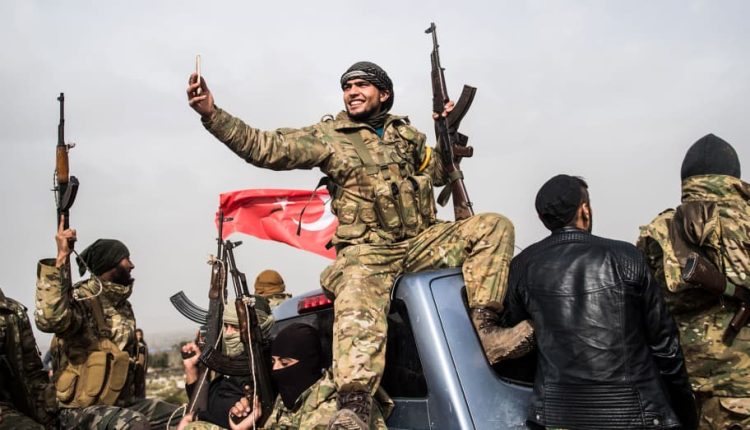
    Through the military operations led by Hay’at Tahrir al-Sham against bulling in and dictatorship, the Turkmen armed factions affiliated with Hay’at Tahrir al-Sham expressed their support for the military plans that resulted in the liberation of the Syrian provinces. In the context of talking about the military operations, it is necessary to point out the Turkmen armed factions:

    1- Sultan Murad Division
    2- Hamza Division
    3- Sultan Muhammad al-Fatih Division
    4- Al-Muntasir Brigade.

    As for the political aspect of the Turkmen political movement. During the past decades of its rule, the Syrian regime contributed to the exclusion of Syrian Turkmen from all political fields and tried to prevent this ancient national component from forming parties, associations, or political and cultural institutions through which it could express its national presence, national and cultural identity, and demand its political rights. Therefore, the Syrian Turkmen found themselves without any political institutions that would express them and their aspirations at the beginning of the Syrian revolution. During this short period, the Syrian Turkmen were able to put their national imprint on political and revolutionary work by forming political parties and the Syrian Turkmen Council. They participated in all the institutions of the revolution, such as the National Coalition of Opposition Forces and the Syrian Interim Government, in addition to their active participation in the military revolutionary field. As the Syrian Turkmen, as an ancient national component of Syria, must have a political entitlement that allows the Turkmen political institutions to keep pace with the major political developments that the Syrian people are going through. Through my press interviews with Syrian Turkmen politicians, they confirmed that the Syrian Turkmen are committed to the unity of the Syrian territory, and they emphasize the necessity of having an active role in the future of this country and that they be enabled to obtain fair political representation that preserves their political rights with the rest of the people of the country. During the period of the outbreak of the Syrian revolution, the following Turkmen political movements were established:

    1- The Syrian Turkmen Council
    2- The Syrian Turkmen National Party
    3- EL-NAHDA party
    4- The Syrian Turkmen Bloc

    The attractive attention in the Syrian Turkmen issue, which confirms its justice and the consolidation of the Syrian national identity in its essence, is the approval of the armed Turkmen factions to join the Syrian regular army within the structure of the Syrian Ministry of Defense. In this way, the Syrian Turkmen military force became part of the Syrian army.

  • Yalman haceroğlu interviews Turkmeneli party leader Riyaz sarıkahya

    Yalman haceroğlu interviews Turkmeneli party leader Riyaz sarıkahya

    Yalman Haceroğlu interviews Turkmeneli Party leader: This is what made Kirkuk a focus of political conflicts

    • The crises that Kirkuk suffers related to the policies of the Kurdish parties
    • We presented in the Turkmen Eli Party the Kirkuk province Project, which received great support.
    • The best solution for the administration of Kirkuk is to form the Kirkuk province to end the conflicts.
    • The majority of the Turkmen parties are formal, far from party specifications, structures and political activities
    • The Turkmen people became the subject of marginalisation because of the weakness of the Turkmen parties and the media
    • Electoral laws must be enacted to achieve fair representation of the Turkmen in the government
    The leader of Turkmeneli party leader Riyaz Sarıkahya

    Kirkuk city, which is being discussed in international forums for its underground energy and geographical location, has become the subject of disputes between local political forces and is capable of producing crises to be available for regional powers to intervene . What attracts attention and attention is that this city has been exposed to demographic change policies before and after 2003 and continues to this day.

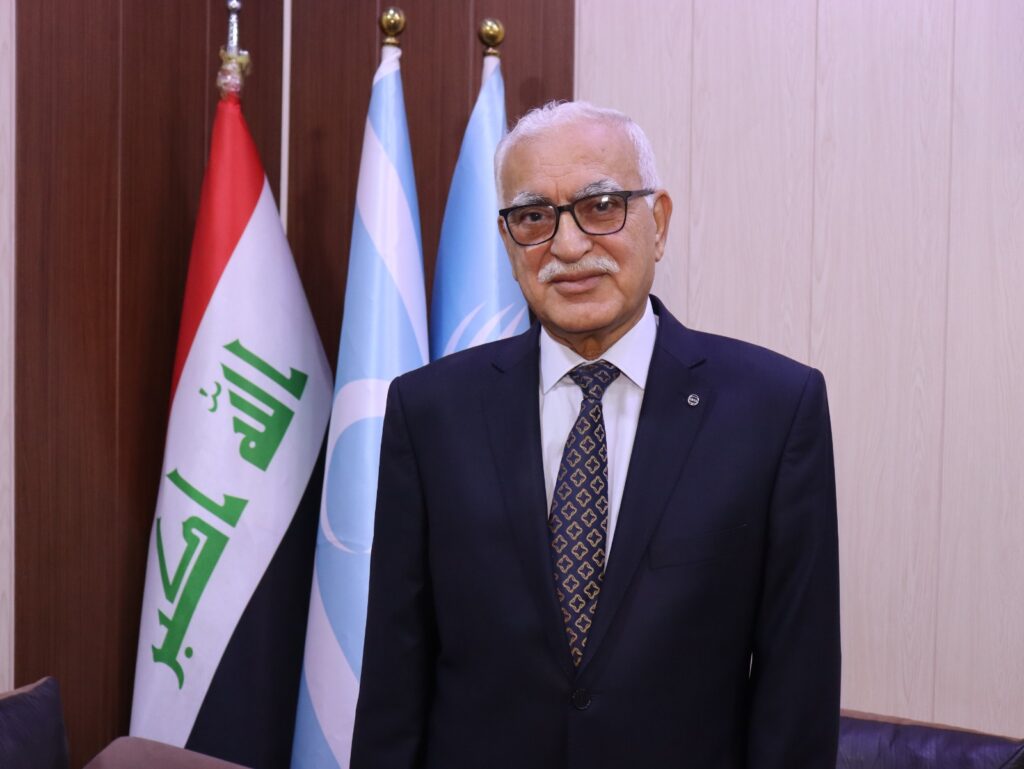
    To shed light on the sequences of events and crises that have affected this city, we interview the leader of the Turkmeneli Party, Engineer Riyaz Sarıkahya .

    Welcome to 180 Investigations

    1-Why has Kirkuk city become the subject of demographic change policies since the seventies of the last century until now?

    Because Kirkuk was the main source of Iraqi oil exports until the seventies of the last century.

    For this reason, the Kurdish parties were trying to affiliation Kirkuk to their region that was to be established at that time to achieve a financial source for their region .

    In return, the central governments’ attempts to ensure and continue the dominance of Kirkuk brought many many Arab citizens to Kirkuk and carried out Arabization operations in the city that continued until 2003. After the Kurdish parties took control of the administration in Kirkuk, they brought many many Kurdish citizens to the city in order to create a balance with the Arab element that was brought during Saddam’s rule. This process continued until 2017, when the federal government took control of Kirkuk and exploited this control to bring hundreds of thousands of Arab citizens from other governorates such as Salah al-Din and Diyala to the city of Kirkuk in a tangible and clear manner, which led to the Arabization of the city of Kirkuk for the second time.

    All these attempts led to a demographic change in the city of Kirkuk, which had a Turkmen identity for hundreds of years.

    2- Do you think that the crises that chase the city of Kirkuk are crises fabricated by local political forces that rely on international or regional powers?

    The main reason for the attempts to change the demographics of Kirkuk city was primarily due to the views and policies of the local Kurdish parties, and there were no regional reasons and the impact of the regional policies of Kirkuk was minimal. However, during the liberation of Iraq from Saddam, the US administration granted the administration of Kirkuk city to the Kurdish parties as a reward and honor for their positions and cooperation with the US forces during the overthrow of Saddam Hussein’s regime, and this US policy led to opening the way for the implementation of the Kurdification policy for Kirkuk city from 2003 to 2017.

    3- As the Iraqi Turkmeneli Party, have you presented projects related to Kirkuk city politically, economically and socially?

    We in the Turkmeneli. Party presented (Kirkuk Region Project) which received great support from many of the political parties in Kirkuk. A request for a referendum on Kirkuk’s regionalization was submitted to the federal government in early 2006 after more than a third of the provincial council members signed, but the federal government did not meet this constitutional request for fear of the Kurdish parties at that time because the Kurdish parties were requesting a referendum on annexing Kirkuk to the Kurdistan Region based on Article 140.

    On the social side, we presented the Kirkuk Council of Elders project to consolidate relations between the components.

    4- In your political view, as you are experienced in Turkmen politics, what are the realistic solutions derived from the essence of the city for the Kirkuk crisis?

    We see that the ideal solution for administering Kirkuk is to form a Kirkuk Region, which ends the conflicts between the Kurdistan Region and the federal government on the Kirkuk issue. And to form a joint rotating administration and distribute key positions equally among the components

    5- How do you view the reality of the political activity of the Turkmen parties to preserve the identity of Kirkuk and fixed in the literature of the Turkmeneli Party?

    The majority of the Turkmen parties are far from the specifications and compositions of the parties and political activities, but rather they are parties of title and formality and headquarters in the first degree and are artificial for personal purposes and calculations.

    Therefore, these parties lack political activities and influences. Despite this, there is a section of the Turkmen parties that have a history of struggle against the Saddam regime and have honorable and influential positions and political activities that represent the Turkmen movement. Thanks to these real and basic parties, the federal, local, regional and international governments have made it necessary to take into account the Turkmen component in political equations, whether in Kirkuk, Iraq or the Kurdistan Region. At the forefront of these parties is the Turkmeneli. Party, which has political and administrative projects that concern Kirkuk, the region and Iraq.

    6- How do you read the relationship of the Turkmen parties with each other first and with the central government?

    The relationship between the Turkmen parties is a natural relationship based primarily on personal relationships between the officials of these parties rather than political and methodological points of view. However, during the election process, there are some electoral cooperations between these parties.

    7-Is there marginalisation and exclusion of the Turkmen from the political process in Iraq? What are the reasons and factors?

    This marginalisation varies from one stage to another, but it continues with a difference in percentages from one stage to another. The most prominent of this marginalisation is in the leadership of the High Electoral Commission in Baghdad and other governorates, which creates an opportunity for the Turkmen parties to lose in the elections and allows for a lot of fraud for non-Turkmen parties in the elections. There is marginalization in the Council of Ministers and the leadership of the police and army, contrary to Article 9 of the Iraqi Constitution. The main reason for this marginalization is the silence of the Turkmen parties and the Turkmen media and their failure to address this deliberate marginalization for the personal calculations of some of these parties and candidates at the expense of the interests of the Turkmen people. The silence of the Turkmen media and their failure to address this deliberate marginalization on these violations led to the creation of an opportunity for other components to seize the rights of the Turkmen people.

    8- How can the marginalisation of the Turkmen from the political process be eliminated?

    It will be through enacting electoral laws that stipulate fair representation for the Turkmen in line with the population size, which according to the 1977 statistics organized by the racist government was 6%. Therefore, we demand as a maximum the application of this percentage for fair representation in the federal government and its institutions, especially in the army, police, security and foreign agencies. And achieving a percentage of 32% in each of Kirkuk and Erbil, 20% in Nineveh and Salah al-Din, and 10% in Diyala and Baghdad governorates. And enacting laws based on Article 125 of the Iraqi Constitution regarding the rights of the Turkmen.