Author: Harut Sassounian

  • Khachigian’s Memoirs: How a Farmer’s Son Became Speechwriter for Nixon and Reagan

    Khachigian’s Memoirs: How a Farmer’s Son Became Speechwriter for Nixon and Reagan

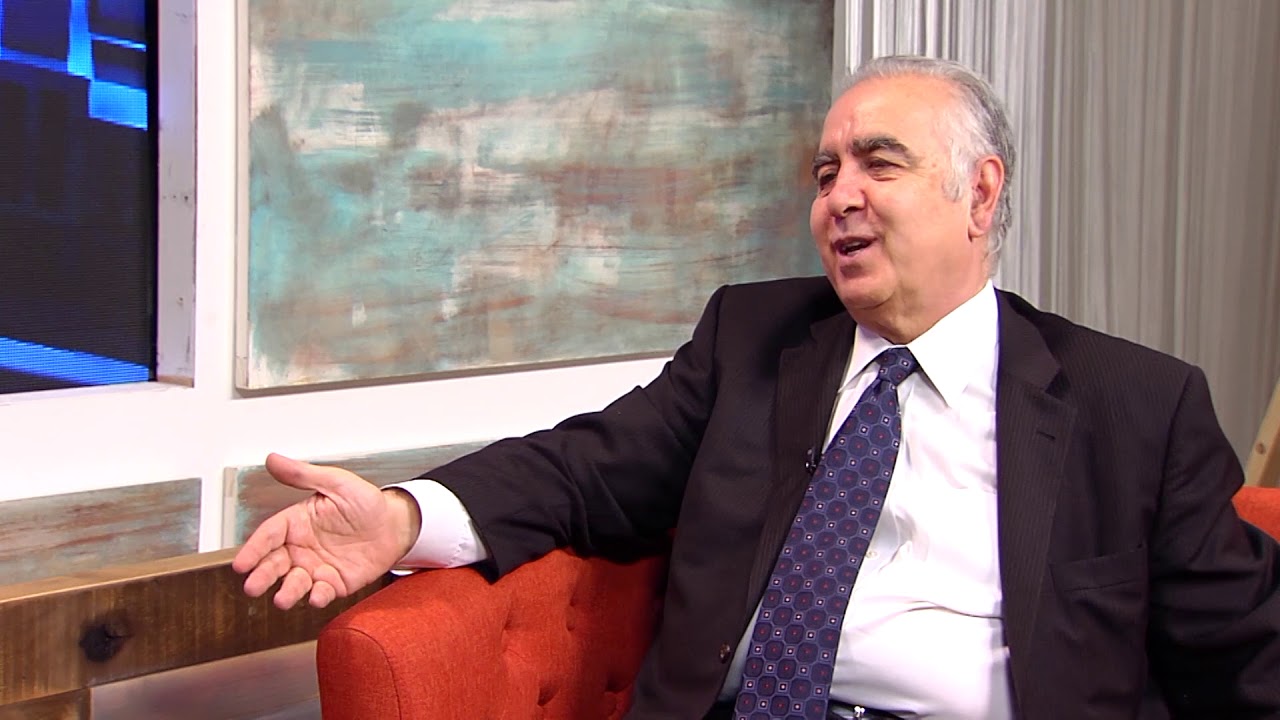
    Ken Khachigian, the son of a farmer in Visalia, California, just published the captivating memoirs of his years in the White House as a speechwriter to two prominent U.S. Presidents, Nixon and Reagan. Titled, “Behind Closed Doors: In the Room with Reagan and Nixon,” the book’s cover page describes Khachigian as a “speechwriter, confidant and strategist to political legends.”

    Khachigian’s book has attracted keen attention. The Wall Street Journal published a very positive review by Tevi Troy. Quin Hillyer, a popular Washington columnist, wrote two laudatory reviews in the Washington Examiner. Khachigian’s memoirs was ranked #2 in pre-sales of all the titles for the publisher’s new releases in mid-summer. The publisher is now planning a second printing.

    Khachigian grew up in a struggling farmer’s family deprived of a shower and other basic necessities to become one of the most influential men in the White House. He started his involvement in politics as a volunteer for the Nixon presidential campaign. After the election, he became Nixon’s speechwriter. He then joined the Reagan administration as the president’s chief speechwriter. He also served as senior advisor and principal strategist for California Governor George Deukmejian in the 1982 and 1986 elections.

    In an interview with the Armenian Mirror-Spectator, Khachigian related a memorable episode that happened while he was working for Nixon, when his father passed away in 1975. The President wanted to know what he could do to honor the memory of Khachigian’s father. Since his father was from the Armenian village of Chomaklou in Turkey, Khachigian made the unusual request of asking Pres. Nixon to donate to the Chomaklou Compatriotic Society. Nixon obliged by writing a personal check for $500 to the Armenian society.

    Among the hundreds of texts Khachigian wrote for the two presidents, I must isolate two important documents he penned. Up until 1981, no U.S. President had described the Armenian Genocide as genocide. On April 22, 1981, Reagan issued a presidential proclamation in which he mentioned the Armenian Genocide. The text was written by Khachigian. This was 40 years before Pres. Biden finally issued a statement in 2021 officially recognizing the Armenian Genocide.

    While Turkish denialists try to dismiss Pres. Reagan’s 1981 proclamation by stating that it was written by the President’s Armenian speechwriter, Khachigian counters the Turkish accusation by saying that all Presidential Proclamations carry the President’s signature; therefore, the 1981 Proclamation is an official statement by the President of the United States.

    In his interview with the Mirror, Khachigian explained that since he was aware of the controversy regarding the mention of the Armenian Genocide by the White House, he checked with the Deputy National Security Advisor, Bud Nance, who said that he saw no problem with the reference. “Well that’s a fact, isn’t it?” Nance asked. Khachigian replied, “as far as I am concerned it is a fact.” Nance then said, “well, it is okay with me.”

    Khachigian then decided to make sure that there will be no problems with the reference to the Armenian Genocide in the Proclamation, so he checked with Richard Allen, the White House National Security Advisor. “I want to show this to you. I’d shown it to Bud Nance. Here, please read this proclamation,” Khachigian told Allen who replied: “well, that is an historic fact.” Khachigian told him, “well, yes it is.” Allen then said, “well, as long as it is an historic fact, there is no reason why it shouldn’t be in the proclamation.”

    Khachigian related another important Armenian-related episode in his book. He wrote that an Armenian friend, Jim Renjilian, invited Khachigian to accompany him to the Arlington Cemetery for Armenian Genocide Day Remembrance on April 24, 1985. During the commemorative program, Khachigian recalled the stories he had heard as a young boy about the tragic experiences of his family during the Armenian Genocide. His father was a survivor of that Genocide which Khachigian described as “the coerced exile from their homes when the Turks murdered the [Armenian] population of Anatolia by arms, starvation, pestilence, and forced march.”

    Khachigian then quoted from Aris Kalfaian’s book about Chomaklou, describing the suffering and hellish experiences of the deported Armenians. Khachigian disclosed that, as a result, his father “at age sixteen, lost his mother, his brother, and sister.”

    Khachigian, grief-stricken, described his emotions at the Arlington Cemetery: “The music and prayers in Arlington jolted me with reminders of my heritage and brought back those plaintive memories from my childhood. In 1915, there was a Bergen-Belsen in the Syrian desert that history had forgotten, and the pain and suffering endured by the victims and the survivors of the Armenian Genocide suddenly made my mission very real during our quiet ride back to the White House.”

    Khachigian described how the commemoration of the Armenian Genocide at the Arlington Cemetery inspired him to write what many have described as Reagan’s greatest speech which he delivered days later during his visit to the former concentration camp of Bergen-Belsen in Germany.

    Khachigian concluded, “the clattering of the keys on the IBM typewriter began shouting through me the story I absorbed that morning and the one the president — and I — needed to tell.”
  • Turkish Textbooks Brainwash Students By Denying Genocide Against Minorities

    Turkish Textbooks Brainwash Students By Denying Genocide Against Minorities

    Turkish investigative journalist Uzay Bulut published on the Gatestone Institute’s website an article titled, “Turkish Textbooks: Turning History on Its Head.”

    Bulut wrote: “Turkish government authorities have targeted their own indigenous peoples of Anatolia, namely the Pontic Greeks and Armenians. In the twentieth century, Ottoman Turkey largely exterminated these peoples through a genocide.”

    Bulut explained: “The government of Turkey, however, refers to the genocide as the ‘unfounded claims’ of Greeks and Armenians. The titles in the Turkish history textbooks were previously called the ‘Pontus Issue’ and the ‘Armenian Question.’ They are now changed to the ‘Unfounded Pontus Claims’ and the ‘Unfounded Armenian Claims.’”

    Turkey also denies that Armenians, Assyrians and Greeks are indigenous peoples of the land where Turks settled centuries later, occupied the land and exterminated those already living there.

    “Muslim Turks from Central Asia arrived in the Armenian highlands and Anatolia, which was the Eastern Roman (Byzantine) Empire at the time, only during the 11th century. Through military invasions, Muslim Turks seized the towns and cities where indigenous Christians had lived for centuries. Ottoman Turks finally invaded Constantinople (today’s Istanbul) in the fifteenth century, bringing the destruction of the Byzantine Empire. After that, abuses against Christian religious and cultural heritage became widespread,” Bulut wrote.

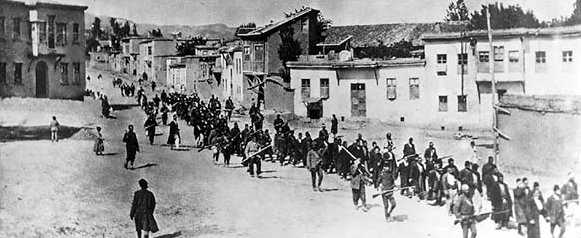
    The sad part is that young Turkish schoolchildren, who have no idea about the real history of their country, are brainwashed with falsehoods about their country’s origin, and fed hatred about the remnants of the minorities. Consequently, these children become adults parroting the lies taught to them in their schools by denying that the Ottoman government committed genocide against indigenous Armenians, Assyrians and Greeks. These Turkish children have no fault for not knowing the true history of their country nor the facts about the genocide committed against the minorities. They are fed the lies that the minorities lived happily in the Ottoman Empire for centuries until European powers instigated them to rebel against their government. On the contrary, minorities living in the Ottoman Empire were always oppressed, enslaved, attacked, robbed, kidnapped, raped, and massacred, culminating in the genocide of 1915. These minorities were not even considered to be second class citizens. They had no rights whatsoever and were at the mercy of their brutal rulers. Bulut correctly described the education of the Turkish schoolchildren as “misinformation, willful distortion, and historic revisionism.”

    This is not just a dispute between Armenians and Turks. The Turkish government knows better than anyone that the accusations of genocide are factual, since the Ottoman archives in its possession reveal the truth, even after being selectively cleansed of any incriminating evidence.

    In 2007, the International Association of Genocide Scholars issued a resolution, which said, in part: “It is the conviction of the International Association of Genocide Scholars that the Ottoman campaign against Christian minorities of the Empire between 1914 and 1923 constituted a genocide against Armenians, Assyrians, and Pontian and Anatolian Greeks.”

    According to Dr. Gregory H. Stanton, President of Genocide Watch, denial is the last stage of genocide: “Denial is a continuation of a genocide because it is a continuing attempt to destroy the victim group psychologically and culturally, to deny its members even the memory of the murders of their relatives.”

    More importantly, I suggest that the proud citizens of Turkey listen carefully to the truthful admission of the founder of the modern Republic of Turkey, Kemal Ataturk, who told the Los Angeles Examiner newspaper in an interview published on August 1, 1926: “These leftovers from the former Young Turk Party, who should have been made to account for the lives of millions of our Christian subjects who were ruthlessly driven en masse from their homes and massacred.” I hope no Turkish citizen would be foolish enough to call Ataturk a liar, otherwise they will be jailed immediately if they live in Turkey and if they are currently outside the country, they will be promptly arrested upon returning home.

    The Turkish government, at long last, should face the truth and teach the innocent Turkish students the tragic facts of history about the massacres and genocide for which neither today’s young generation nor the current Turkish government were responsible for since they did not even exist during these murders. All nations have dark stains in their history, but instead of hiding them, they come clean and face their true history, including both the tragic and glorious episodes. Only then nations can overcome their shadowy pasts and move forward. Look at the example of Germany which accepted its guilt for the Holocaust and made amends. Otherwise, future generations of Turks will grow up trying to deny and lie about their ignominious past and will always have a guilty conscience for something they played no part in. However, their lies and denials make them accomplices of these crimes after the fact.

  • Erdogan Is Said to Have Divine Attributes:“Absolute Power Corrupts Absolutely”

    Erdogan Is Said to Have Divine Attributes:“Absolute Power Corrupts Absolutely”

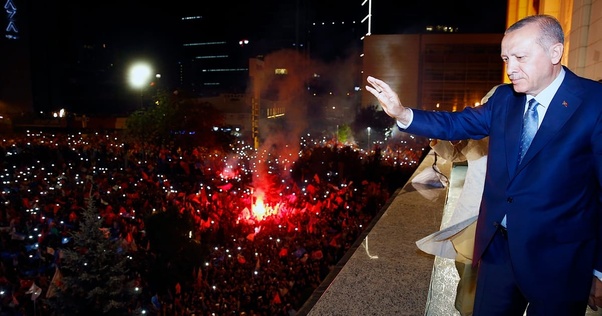
    In his article in the Nordic Monitor, Abdullah Bozkurt wrote about Turkish President Recep Tayyip Erdogan shrouding himself with the attributes of God, or Allah. Erdogan’s subservient inner circle reinforces that self-aggrandizing and exaggerated view by claiming that he has divine powers. The article is titled, “Turkey’s president suffers from a God complex, revered for attributes belonging to Allah and the Prophet.”

    Bozkurt starts his article by describing Erdogan as “a leader who believes he possesses superior abilities and apparently suffers from a God complex… Erdogan has decimated the opposition, imprisoned his critics and opponents, consolidated all levers of power in his hands, destroyed checks and balances and become the sole decision-maker on all matters in his own country. His inflated view of his abilities and infallibility, coupled with the presence of yes-men surrounding him, reinforces his narcissistic personality and shores up his superiority complex. He considers himself the caliph, the leader of the entire Muslim community worldwide, and therefore believes he deserves special consideration.”

    Bozkurt recalls that after Erdogan’s party’s (AKP) defeat in the March 2024 parliamentary elections, he said on April 17: “Ladies and gentlemen! Let everyone see and know this: nothing is over until we say it’s over.” This innocent sounding statement turns out to have “shocking ramifications… in the context of political Islamic circles, [challenging] the divine will of Allah, one of the six main pillars of Islam, which means Allah is the ultimate decision-maker and everything happens only according to His divine will. The remark reflects Erdogan’s inner thinking as he has become accustomed to being the final arbiter in Turkish matters after a long rule of near-absolute power. Erdogan did not utter these words in a vacuum; he has a long track record of seeing himself in such a godly manner. The worshipful praise from his followers has certainly contributed to shaping the president’s psyche.”

    While speaking at a campaign rally in March 2024, Erdogan said, “We have come for mercy, not for wrath. Our mercy will prevail over our wrath.” By describing his government’s reaction to his critics and opponents in such a manner, Erdogan made “a direct reference to Allah’s unique attribute in the conventional Islamic school of thought, which was described in a saying of the Islamic Prophet Muhammad: ‘When Allah decreed the creation, He pledged Himself by writing in His Book which is laid down with Him: My Mercy prevails over My Wrath.’ Milli Gazete, the newspaper of the opposition Islamic political Saadet Party wrote: Erdogan ‘associating himself with the attributes of Allah astonished the audience.’”

    Erdoğan'dan Baykal'a: Başının çaresine baksın | Al Jazeera Turk

    Erdogan’s associates and senior members of his ruling party, engaging in sycophancy, make exaggerated statements reinforcing his claim of possessing superior powers. Here are some of the examples Bozkurt provided:

    “In July 2011, the AKP’s then-Bursa deputy Huseyin Shahin stated after talking and visiting Erdogan that ‘even touching our esteemed Prime Minister [Erdogan], I believe, is an act of worship. I’m saying this because even his presence energizes us.’”

    “Fevai Arslan, another lawmaker from Erdogan’s ruling AKP, said in January 2014, ‘There is Mr. Recep Tayyip Erdogan, a leader who embodies all the attributes of Allah. They wanted to thwart him.’”

    “Zulfu Tolga Aghar, a long-time AKP lawmaker, likened Erdogan to God in a speech he made in August 2019, stating, ‘When we are told about the President, it feels like we are being told about Allah.’”

    “Addressing some 1,500-party faithful in November 2009, Ismail Hakkı Eser, the AKP’s then-Aydın provincial office head, told the crowd, ‘Let no one doubt the love and respect our people under this roof have for our Prime Minister [Erdogan]. We are devoted to our Prime Minister; he is like a second prophet to us.’”

    “Former EU affairs minister Egemen Baghish declared several cities to be holy, akin to the Islamic holy sites of Mecca and Medina, in February 2013, saying, ‘Rize, Istanbul and Siirt are holy cities because these three cities have been instrumental in the birth of the greatest leader in the history of the Republic of Turkey.’ Rize is Erdogan’s family’s home province, while Istanbul is where he was brought up and entered politics. Siirt, his wife’s home province, is the constituency where he was elected to parliament for the first time in a March 2003 repeat election. Despite being incriminated in a multi-million dollar graft scheme, Erdogan stood by Baghish and appointed him ambassador to the Czech Republic.”

    “Some went as far as saying that Erdogan surpassed the Islamic Prophet. Efkan Ala, then interior minister, said, ‘Prophet Muhammad was overtaken by pride, so God warned him. We, on the other hand, will not be tempted by pride.’ Ala’s successor, Suleyman Soylu, claimed in December 2021 that the work of the Erdogan government was the work of Allah. ‘Don’t just look at what we do. We don’t do it by ourselves. We believe that it is Allah who makes us do it.’”

    “In February 2010, Oktay Saral, an AKP politician who governed the Of district of Trabzon province, called for the worship of Erdogan and said that a prayer of gratitude, similar to Muslim rituals for God, must be performed because Erdogan is the blessed leader of the Islamic world.”

    “Some of Erdogan’s deputies likened his speeches to the Sunnah, which refers to the sayings and practices of the Prophet Muhammad and is considered to be the second authoritative source of knowledge for Muslims after the holy Quran.”

    Bozkurt added: “There have been dozens of instances of God-like attributions made for Erdogan during his more than two decades of rule in Turkey. None of them were challenged by Erdogan himself, who appeared to enjoy such praise. In his self-perception, perhaps he feels like a god or a God-chosen messenger who came to power to lead Muslims all over the world.”

    “Compounding matters further is that President Erdogan is surrounded by yes-men and women who worship him and dare not utter views that would displease him. The profile of people he has chosen to include in his inner circle paints a picture of those who shy away from critical thinking and avoid challenging views in the governance of the country. In reality, Erdogan is nothing but a thug, a narcissistic dictator who abuses religion for his political ambitions while enriching his family members and associates with billions of dollars through pervasive corruption in his administration and profits from all sorts of illicit business activities and criminal enterprises,” Bozkurt concluded.

  • Turkey Allocated $544 Million to Invigorate Its Communities in Foreign Countries

    Turkey Allocated $544 Million to Invigorate Its Communities in Foreign Countries

    Two months ago, I wrote an analysis titled: “Turkey is Backing its Citizens Abroad, While Armenia is Alienating its Diaspora.” It was based on an article by Abdullah Bozkurt in the Nordic Monitor: “Turkey is expanding its Diaspora engagement to promote political goals abroad.”

    Last week, Bozkurt published a follow-up article titled: “Turkey poised to intensify its interference in the domestic affairs of other countries using the Turkish Diaspora.” It provides further details about the Turkish government’s efforts to set up proxy groups using its citizens abroad. In contrast, Armenia is alienating its Diaspora by creating rifts and banning some of them from entering the country. Given the serious crisis Armenia is in, its government should be doing everything possible to entice compatriots abroad to visit their homeland, invest in the country, and bring over their knowledge and skills. The Diaspora is a valuable asset for Armenia, not a ‘milking cow.’

    The powerful Turkish State, which doesn’t really need the help of its citizens abroad, is nurturing and strengthening its Diaspora. The Turkish government has allocated a budget of $544.2 million for the years 2024-28 to its Diaspora agency, the Presidency for Turks Abroad and Related Communities (YTB in Turkish). Its strategic plan is “to foster a stronger allegiance to Turkey on the part of people in the Turkish Diaspora, with increased financial and other support from the Erdogan government.”

    Bozkurt explained that the real aim of the Turkish government is “to exert greater influence over the domestic politics of European nations by actively supporting Turkish and Muslim communities in their political engagement, as revealed by the head of the government’s diaspora agency during testimony before a parliamentary committee.” Abdullah Eren, head of YTB, told the Turkish Parliament on July 17 that he “could reveal more in a closed-door session, from which the record of his comments would not be made public.”

    The reason for Eren’s secrecy is that YTB is “supported by Turkish agencies that work with Diaspora groups, such as the Turkish intelligence organization MIT, Foreign Service, Maarif Foundation, Religious Affairs Directorate (Diyanet), Yunus Emre Institute and Turkish Cooperation and Development Agency.” The aim is “to place more pro-Turkish politicians on the political map abroad. Their efforts are particularly focused on Europe, where the bulk of Turkish Diaspora groups reside. In the last decade the Erdogan government has supported the establishment of smaller political parties in Europe, particularly those driven by religious agendas. It has endorsed candidates working in established mainstream parties, expecting them to act as proxies for Turkish government policies. However, the results have been unsatisfactory so far, prompting the Turkish government to vow increased efforts to fulfill what it describes as a strategic goal.”

    According to Seda Goren Boluk, the chair of the parliamentary committee overseeing YTB, “the target population in the Diaspora is nearly 40 million, consisting of approximately 7 million Turks and over 30 million people from related [Muslim] communities in other countries. She vowed to do everything possible to address issues concerning Diaspora groups in order to empower the Turkish nation.”

    According to a YTB survey, “among the youth in the Turkish Diaspora, estimated to be around 2 million strong and now in its fourth generation, one-third of respondents expressed a desire to be proactive in the politics of European countries and sustain their campaigns.” Another third of the Turkish youth abroad “intends to conceal their true intentions and launch their campaigns on behalf of Turkey only after securing key positions in mainstream political parties.” The last third said that they have zero interest in getting involved in politics.

    To encourage Turkish youth to get involved in the politics of the countries they live in, Eren cited the example of “Serap Guler, a German politician of Turkish background in the CDU [Christian Democratic Union] and a member of the Bundestag [German Parliament] since 2021. Despite expressing some criticism towards Turkey in the past, Guler has maintained contact with the Turkish embassy and Turkish government institutions.”

    The overcome the legal and political challenges of Turks living overseas, YTB urged the Turkish government “to utilize its diplomatic influence and public diplomacy tools to exert pressure on foreign countries to lift these restrictions on Turkish Diaspora groups.”

    YTB “has already been collaborating with numerous groups operating in Europe and other continents, providing them with funding, logistical, and technical support to enhance their effectiveness.” YTB participated in Ankara in early May “in a program organized by the Union of International Democrats, an organization that acts as a foreign interest group representing Erdogan’s ruling AKP abroad.”

    YTB “brings 4,000 young men and women to Turkey every year under various schemes for training and education in camps maintained by Turkey’s Ministry for Youth and Sports. According to Eren, many young Turkish engineers studying in Europe have been enrolled in internship programs in what he termed ‘critical industries,’ such as defense and military technologies. He identified state-owned defense contractors like Aselsan and Tusash as venues where these individuals were recruited for internships.”

    Eren stated that “groups critical of and opposed to the Erdogan government [are] a threat to achieving YTB’s stated goals since they undermine the Turkish government’s policies in the Diaspora. This includes the Gulen movement, Kurdish opposition groups, and Alevis.”

    It remains to be seen how governments in Europe and the United States will deal with the Erdogan government’s proxy groups which are considered to be unregistered foreign agents.

  • Should Pashinyan Go to Baku at Aliyev’s Invitation to Attend an Int’l Conference?

    Should Pashinyan Go to Baku at Aliyev’s Invitation to Attend an Int’l Conference?

    Hikmet Hajiyev, Head of Foreign Policy Department of Pres. Ilham Aliyev of Azerbaijan, announced on July 21 that Armenia was officially invited to the United Nations’ International Conference on Climate Change (COP29) to be held in Baku, Nov. 11-22. Hajiyev said that the invitation was sent by Mukhtar Babayev, Azerbaijan’s Minister of Ecology and Natural Resources, to the Armenian Foreign Ministry. Even though all UN members are automatically invited, Hajiyev made it sound like Azerbaijan was doing a special favor to Armenia by describing the invitation as a “goodwill and inclusive approach in the absence of diplomatic relations between the two countries.” Hajiyev added: “Now is the time for the Armenian authorities to make a decision.”

    Armenian officials have not issued a formal response to the invitation. They have made two evasive comments: The spokeswoman of Prime Minister Nikol Pashinyan said: “such a visit is not planned in the work agenda of the Prime Minister,” and the spokeswoman of the Armenian Foreign Ministry told a journalist: “we will inform you in case the issue is addressed.”

    Baku claims that there will be 70-80,000 tourists visiting Baku on that occasion. Thousands of journalists, delegates of international environmental organizations, high-ranking officials of various governments and dozens of heads of state from around the world are expected to attend the Conference. 198 countries are parties to the Convention on Climate Change.

    On Dec. 7, 2023, the Armenian Prime Minister’s office and the Azerbaijani President’s administration had issued a joint declaration disclosing that in return for Armenia not exercising its veto power on Azerbaijan hosting the Climate conference, Azerbaijan would release 32 Armenian Prisoners of War held in Baku, and Armenia in turn would release two Azeri soldiers who were captured after crossing Armenia’s border and murdering an Armenian citizen. In addition, Azerbaijan agreed to support Armenia’s candidacy to the Eastern Europe Group‘s Bureau of COP29. At the time, I wrote that Pres. Aliyev was so obsessed with holding this prestigious international conference in Baku that Armenia should have insisted that Azerbaijan release all of the Armenian Prisoners of War held in Baku since the 2020 war as well as the eight high-ranking Artsakh officials held since September 2023.

    In recent months, at several international gatherings, Pres. Aliyev has boasted about Azerbaijan hosting the COP29 Conference, attributing that to “the increasing international respect for his country, two and a half month after” its occupation and ethnic cleansing of Artsakh. “Chairing the COP29 and holding this event in Baku is a clear example of the great trust that the international community has in our country. Almost 200 countries unanimously supported our candidacy,” Aliyev bragged.

    Pashinyan will respond to Azerbaijan’s invitation to participate in the COP29 Conference in Baku at a press conference in August, according to the Government Information and Public Relations Department of Armenia.

    Azeri officials have raised the possibility of Pashinyan and Aliyev signing during the November Conference in Baku a preliminary agreement outlining the basic principles of an eventual peace treaty. Hajiyev is touting the idea of “COP Truce,” suspending all hostilities around the world during the conference, similar to the concept of “Olympic Truce” to promote its false image as a peacemaker. At the end of May, Elchin Amirbekov, the Azerbaijani president’s Special Envoy, mentioned that the Conference could be a good opportunity for signing a peace treaty with Armenia.

    During his press conference on May 7, Pashinyan said that Yerevan agrees to sign a peace treaty with Azerbaijan before November. However, the Armenian Foreign Ministry warned on June 19 that “Azerbaijan will do everything possible to abort the process of signing a peace treaty with Armenia in November during the COP29 Summit in Baku in order to unleash a new aggression against the Republic of Armenia.”

    It is not known what Pashinyan will announce in August regarding his possible participation in the Baku Conference in November. However, in my opinion, Pashinyan should avoid falling in the trap set by Aliyev to gain bonus points in front of a worldwide audience at the expense of Armenia by showcasing the attendance of Pashinyan or his representative in the Conference in Baku. This would be a major coup for Aliyev, acting as a peacemaker, while continuing to make regular threats to Armenia and escalating his demands for concessions from Armenia. Furthermore, signing a piece of paper under the guise of a peace treaty will not obstruct Aliyev from any future attacks on Armenia.

    I believe that no Armenian official should consider going to Baku, while Azerbaijan is holding dozens of Armenian Prisoners of War and occupying parts of the Republic of Armenia since 2021. Without Azerbaijan first releasing all of the Armenian prisoners and withdrawing from Armenia, no Armenian official should go to Azerbaijan nor hold any kind of meeting or negotiation with Baku.

    A less desirable alternative would be for Pashinyan or his representative to go to Baku and demand to address the international conference of 196 nations, condemning Azerbaijan’s repeated threats to invade Armenia, castigating its occupation of Artsakh, ethnic cleansing of 120,000 Artsakh Armenians, refusal to allow them to return to their ancestral homeland under international guarantees, not releasing all of the Armenian Prisoners of War, and not withdrawing the Azeri troops from Armenia.

    However, there is a good chance that Azerbaijan may renege on its promise to allow Armenia’s representative to address the conference at the last minute. A much better option for Armenia would be to refuse to attend the conference unless Azerbaijan releases the Armenian Prisoners of War and withdraws its troops from Armenia in advance of the conference.

  • Armenia’s Top Leaders on Vacation: Some Hope They Wouldn’t Come Back

    Armenia’s Top Leaders on Vacation: Some Hope They Wouldn’t Come Back

    Prime Minister Nikol Pashinyan’s office surprisingly announced that he was going on a long vacation from July 15 to August 12. More shockingly, several other officials of Armenia had decided to go on vacation at the same time, leaving the country without its top leadership.

    I would have had no concern if Pashinyan had gone on a one or even two-week long vacation. Everyone needs a break from time to time. But, the top leader of the country going on vacation for almost a month is incredible. I have not heard of the leader of any country in the world having gone on a 29-day vacation.

    Besides the astonishing length of the absence of the Prime Minister from office, I have three other concerns:

    1)    There seems to be no basic understanding that several of the country’s leaders cannot be absent from office at the same time. What if, God forbid, would a war break out or some other serious emergency occur? Normally, when the leader of any country is temporarily absent, his deputy performs his functions — not in Armenia. Several members of the Armenia media reported that the Deputy Prime Minister Mher Grigoryan, who is supposed to replace the Prime Minister during his absence, has also gone on vacation for nine days during the same period. Fortunately, there is a second Deputy Prime Minister who will fulfill the duties of Prime Minister. Furthermore, the Speaker of the Parliament, Alen Simonyan, decided to go on vacation for 20 days from July 16 to August 5. He will be replaced by Deputy Speaker Ruben Rubinyan (July 16-22) and Deputy Speaker Hakob Arshakyan (July 23-August 5). Also on vacation are Finance Minister Vahe Hovhannisyan (for 10 days) and Foreign Minister Ararat Mirzoyan (until July 22).

    2)    If the leaders of Switzerland were to be absent from their offices for days, weeks or even months, nothing untoward would happen, since the country is located in a peaceful part of the world. Regrettably, Armenia is located in a precarious region with constant threats from Azerbaijan. Armenia’s leaders have to be constantly on alert and work diligently to solve its myriad problems. Under these circumstances, their going on lengthy and simultaneous vacations is reckless and irresponsible.

    3)    Finally, Pashinyan announced last month that Armenia is ready to sign a peace treaty with Azerbaijan in one month. Why would he then turn around and go on vacation for a month? Shouldn’t he be in his office, if, by a miracle, Pres. Aliyev agreed to sign such a treaty which I believe is not only useless, but also contrary to Armenia’s interests? Aliyev is cleverly stringing along the signing of a peace treaty to extort endless concessions from Armenia!

    Even though the leadership’s wholesale absence entails a major risk for the country, many Armenians are not too concerned. On the contrary, they are happy that the leaders are away from office so they can do less damage to the country’s interests. Some members of the public are hoping that these leaders would remain on permanent vacation and not return to their positions.

    Some of the readers feel that I am too critical of Pashinyan. While it is true that no one is perfect, starting from me, the Prime Minister goes to extensive lengths to make egregious errors and baseless statements which would have been laughable, if they did not have such serious consequences. Hundreds of such examples come to mind. Let us just mention the latest example when the Prime Minister along with his wife attended the UEFA’s Soccer championship game on July 14 in Berlin.

    Pashinyan, obsessed with social media, regularly posts on Facebook, TikTok, Instagram, Twitter (X), and YouTube, all of his speeches, meetings, and visits. Unlike other world leaders, he walks around with one or two cell phones in his hand.

    During the soccer match in Berlin, he placed his cell phone in front of him and videotaped, not the match, but his own face, adding a bizarre song to the video by a 31-year-old female American singer known as Tinashe. Wikipedia described the song titled, “Nasty,” as “an understated R&B and rhythmic pop song on which Tinashe ‘rap-sings’ about searching for someone to match her sexual energy, which she alternately calls her ‘freak’ and her ‘nasty’, while also using several double entendres. The song has a ‘robotic’ hook and, in its second verse, she details a sexually charged date night, singing ‘Shotgun, my thighs on the seat, I ain’t got nothin’ underneath, Looks like you’re ’bout to spend the night, Looks like, I’m ’bout to change your life.’”

    Why would the Prime Minister of Armenia add such an inappropriate song to his video that has “Nasty” lyrics, with the word “nasty’ repeated 59 times in the song?

    Surprisingly, Pashinyan’s video along with the song, “Nasty,” was reported by TV channel 5 in Los Angeles. The headline of the segment on TV was: “Pashinyan & wife in Berlin at Euro Soccer Finals, Listening to ‘Nasty’ Song.” The TV channel asked: “What do the 2024 European Championship final, Tinashe and Armenian Prime Minister Nikol Pashinyan have in common?” My answer: Absolutely nothing!

    Channel 5 reported that Pashinyan posted on TikTok a second video showing the victory celebration at the end of the soccer match, once again adding the song “Nasty.” The TV channel stated: “It is not known why he chose the one-time Crescenta Valley High School student’s song as the background music for the two videos. It is also not known how exactly he found the song in the first place.”

    It is almost impossible to explain the Prime Minister’s actions and motives. Maybe, he is looking for a Hollywood gig after he is no longer Prime Minister.