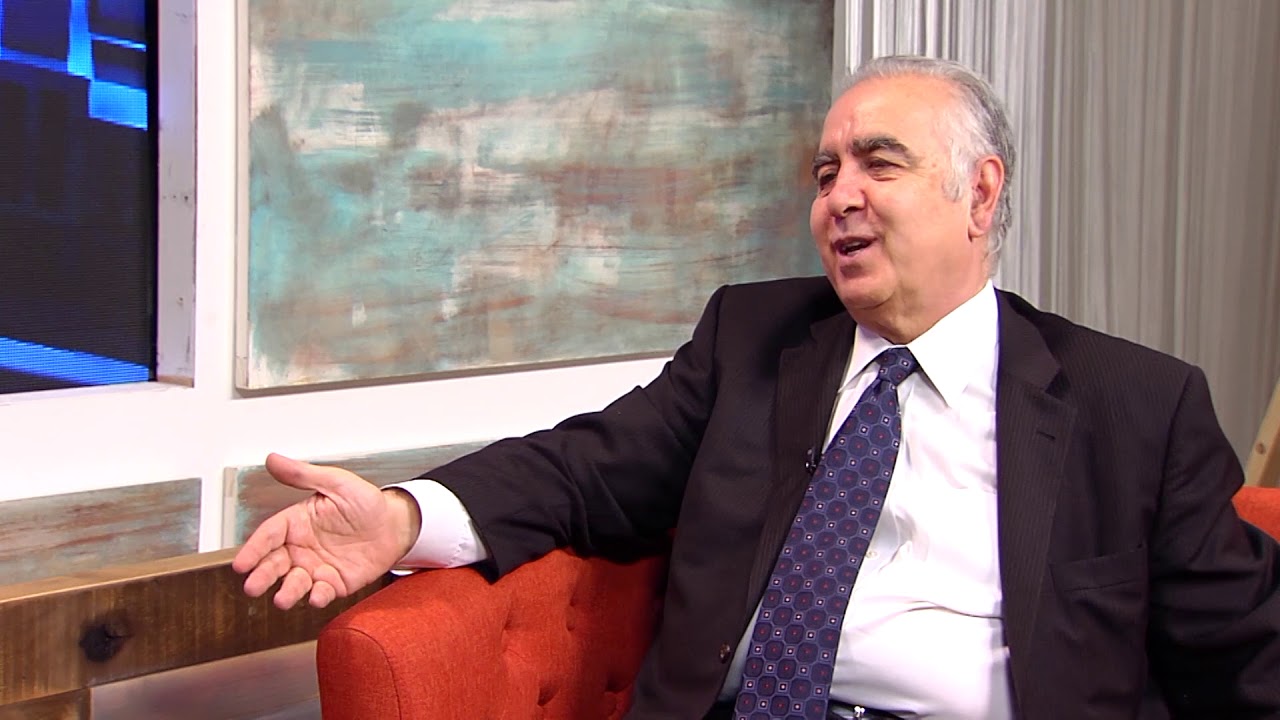
Author: Harut Sassounian

  • Azerbaijan Exploits Everything For Propaganda, Including Art

    Azerbaijan Exploits Everything For Propaganda, Including Art

    Publisher,

    The Calvert Journal published last week an article by Lucía de la Torre titled, “The Aliyev influence: how nepotism and self-censorship rule Azerbaijan’s art scene.”

     On October 2, 2020, two days after the start of the Artsakh war, a giant Azerbaijani flag was placed on the façade of Baku’s YARAT Contemporary Art Space gallery with a giant message: “Karabakh is Azerbaijan.”

    This did not sit well with the Turkish-born Kurdish artist Ahmet Ogut whose exhibition “No Poem Loves Its Poet” had been displayed in the gallery since May 2020. Ogut requested that the propaganda banner be taken down and boldly declared: “I refuse to allow my work to fall prey to political instrumentalization.”

    The gallery refused to remove the banner and closed down Ogut’s exhibit on October 29, 2020, three weeks earlier than scheduled.

    According to The Calvert Journal’s article, “This is one example of how Azerbaijan’s apparently thriving art scene conceals something darker: a deeply nepotistic environment which routinely suppresses dissident voices while crafting an international image of Azerbaijan as a free, art-loving nation.”

    Artists like Ogut, who refuse to go along with Azerbaijan’s political propaganda, are quickly ostracized and lose all artistic privileges.

    Artists worldwide were alarmed by Azerbaijan’s abuse of power, trampling on the rights and independence of an artist. However, this came as no surprise to those who have followed many other violations by the country’s despotic leader. Ruled “by President Ilham Aliyev and Vice-President and First Lady Mehriban Aliyeva, the Azerbaijani government has been repeatedly criticized by human rights’ groups for ongoing censorship, a poor human rights record, and rampant corruption. And, like many nearby authoritarian regimes, members of the President’s family are known to own most of the country’s major businesses, earning them millions of dollars since the fall of the USSR and situating Aliyev amongst the world’s richest oil billionaires,” The Calvert Journal reported.

    The YARAT gallery was founded by Aida Mahmudova, an artist, curator, and Vice President Mehriban Aliyeva’s niece. The Marriott Hotel in Baku, “which is allegedly connected to Aliyev’s daughters Leyla and Arzu Aliyeva according to reporters for the Organized Crime and Corruption Reporting Project, is one of YARAT’s main partners,” The Calvert Journal wrote.

    “Mahmudova is also the director of another of Azerbaijan’s main contemporary art galleries: Baku’s Museum of Modern Art (MoMa). The museum was founded by Mehriban Aliyeva in 2009, and is funded by the Heydar Aliyev Foundation (of which Mehriban Aliyeva is the President and Leyla Aliyeva the Vice-President), a charitable organization created in memory of the former president of Azerbaijan and father of current president Ilham Aliyev. Elsewhere in Baku, another star venue on Azerbaijan’s cultural scene is the Heydar Aliyev Center. The current director of the Heydar Aliyev Center is Anar Alakbarov, a former assistant to the Vice President of Azerbaijan and current assistant to the President,” The Calvert Journal reported.

    Baku has several other smaller art galleries which are controlled by Azerbaijan’s government. “The Qiz Qalasi Gallery, an art venue in Baku with a branch in Berlin, is headed by Emin Mammadov, who also works as Art Curator for the Heydar Aliyev Foundation. ‘Modern Art of Azerbaijan’ is a travelling exhibition supported by the Heydar Aliyev Center that toured European capitals, where Mehriban and Leila Aliyeva hosted lavish inaugurations attended by European government officials and diplomats. In November 2020, the gallery launched ‘Armed with the Arts,’ an exhibition allegedly meant to promote peace after the Second Nagorno-Karabakh war, while, similarly to YARAT, openly supported the position of the Azerbaijani government and used politically-charged, bellicose language. Kicik QalArt Gallery, a project of the ‘Art ex East Foundation’ and another important smaller-scale venue in the capital, although now closed, used to be owned by Olivier Mestelan, a Swiss art collector and financier. Mestelan used to sit on the board of Ataholding, an open joint-stock company that managed Atabank, one of the biggest commercial banks in Azerbaijan, now bankrupt and owned by the Azerbaijan Deposit Insurance Fund (ADIF). According to an investigation carried out in 2011 by Radio Free Europe’s Azerbaijani Service, Mestelan was also claimed to be the treasurer of three offshore Panama-based companies linked to Azerfon, a Baku-based telecommunications company with links to Arzu and Leyla Aliyeva,” The Calvert Journal wrote.

    Lesley Gray, a scholar researching the development of the contemporary art scene in the Arab Gulf and Caspian Sea region, explained that Azerbaijan and other countries use contemporary art as a tool to reshape the country’s international image.

    Azerbaijan’s leaders are not interested in art for art’s sake. “They hope to use art as a tool to attract international attention for something other than imprisoned journalists and crackdowns on free speech,” The Calvert Journal reported.

    The Azerbaijani government has also used its investments in contemporary art around the world to project power and establish goodwill. “Mehriban Aliyeva, through the Heydar Aliyev Foundation, has shelled out generous sums for cultural institutions such as The Palace of Versailles, Paris’ Louvre Museum, and the Vatican Museums, while the Friends of Azerbaijani Culture Foundation, a non-governmental charity which she founded in 1995, routinely organizes art exhibits abroad,” according to The Calvert Journal.

    As a result, “in 2004 Mehriban Aliyeva was designated UNESCO Goodwill Ambassador, a laurel given in recognition of her actions to promote international cultural exchanges. Later, in 2010, Aliyeva received a gold medal from UNESCO for her ‘efforts in establishing an intercultural dialogue.’ Over the years, Azerbaijan has had a particularly favorable relationship with the UN body — in October 2015, at the petition of Mehriban Aliyeva, UNESCO hosted an exhibition ironically called ‘Azerbaijan — Land of Tolerance’ at its Paris headquarters. At the opening, when a journalist asked Aliyeva whether the title of the exhibition lived up to the reality in Azerbaijan, considering the country has ‘many political prisoners in jail,’ Aliyeva denied this and turned her back while security guards pushed the journalist away. The relationship was particularly favorable between Mehriban Aliyeva and Irina Bokova, Director-General of UNESCO, 2009-2017. Their relationship came under scrutiny in 2017, when Kalin Mitrev, Bokova’s husband, was investigated by the Bulgarian Chief Prosecutor in relation to media publications about payments made by Azerbaijani companies to his [bank] accounts. Bokova then wrote a letter to The Guardian [newspaper] defending the rightfulness of her relationship with Azerbaijan, but never spoke openly about the money allegedly received by her husband or her stance towards Azerbaijan’s human rights abuses,” The Calvert Journal reported.

    However, Azerbaijan’s devious use of the arts was exposed in 2011, when “Azerbaijan censored its own entry to the Venice Biennale, the world’s most high-profile showcase of contemporary art, by hiding the work of one of its own artists under a piece of cloth. Moscow-based artist Aidan Salakhova’s work Waiting Bride, which showed a woman in a black veil from head to foot, and another sculpture, which showed the Black Stone of Mecca contained in a vagina-shaped marble frame, were hidden under a white cloth. The [Azeri] government later claimed that the artworks were ‘damaged during transport’, while senior sources at the exhibition clarified that the works were censored for being considered offensive to Islam,” according to The Calvert Journal.

    Nothing is surprising about the exploitation of art by Azerbaijan. A government, whose soldiers cut off the heads and ears of captured Armenians, can easily abuse art to cover up its corruption and gross human rights violations.

  • Armenia’s Defeated Leader Is Unable To Resolve Problems from the Lost War

    Armenia’s Defeated Leader Is Unable To Resolve Problems from the Lost War

    There are three reasons why Armenia is in such a state of chaos and confusion:

    The first reason is that Armenia, as the defeated side in the war, has very little leverage in the implementation of the “Statement” or agreement signed on Nov. 9, 2020 by the President of Azerbaijan, Prime Minister of Armenia and President of Russia.

    The second reason is that since the text of the “Statement” was vague, key details were left out causing uncertainty.

    The third problem is that Prime Minister Nikole Pashinyan, as the demoralized head of the defeated side, is in no position to resolve or minimize the damage caused by the war. The reasons for his ineffectiveness are: his failings during the war and his mismanagement and inexperience throughout his tenure as Prime Minister.

    The only proper course for Armenia is for Pashinyan to resign on his own free will without any pressures, demonstrations, and ugly confrontations. While it is horrible that Armenia was defeated by powerful outside enemies during the war, it is much worse when Armenians treat each other as enemies. Those who say that no one can replace Pashinyan are insulting the Armenian nation. No one is irreplaceable. There are plenty of competent and intelligent Armenians both in Armenia and the Diaspora who can manage Armenia competently. The new leader should be neither a part of those in power now nor those of the past. The Armenian people will choose Pashinyan’s successor through democratic elections. Armenia needs fresh blood!

    Returning to the Nov. 9, 2020 agreement, it is strange that specific deadlines were set for several of its provisions, such as the withdrawal of Armenian troops from the various territories surrounding Artsakh, but point 8 of the agreement, the “exchange of prisoners of war, hostages and other detained persons, and dead bodies” had no specific deadline. Prime Minister Pashinyan should have insisted on a deadline before signing the agreement. Thousands of Armenian families are in an extremely tragic situation, not knowing if their loved ones are dead or alive. Meanwhile, many of the Armenian prisoners of war are being tortured by Azeri officials in contravention of the Geneva Convention. Azeri soldiers have shamelessly videotaped themselves decapitating or cutting off the ears and limbs of captured Armenian soldiers and civilians. This is a continuing war crime which should be presented to international courts.

    Armenia and Azerbaijan exchanged a small number of prisoners shortly after the war. The fate and the number of the rest of captured Armenian soldiers remain unknown.

    After a lengthy and frustrating wait, the leaders of Armenia, Azerbaijan and Russia finally met in Moscow on January 11, 2021, to take decisions on two key points: 1) the exchange of prisoners of war and hostages; and 2) determination of the final status of Artsakh, according to an announcement made before the meeting by the Armenian Prime Minister’s office.

    Shockingly, after the Moscow meeting, a new agreement was signed by the three leaders mentioning only point 9 of the Nov. 9, 2020 agreement: “the unblocking of all economic and transportation routes in the region.” This means that Armenia would be able to use the railway that starts in Northern Armenia, crosses Nakhichevan and exits in Armenia’s South on its way to Iran. Armenia would also be able to use the railway that crosses mainland Azerbaijan, reaching Baku and then Moscow. Azerbaijan, on the other hand, would have a route through Southern Armenia linking Nakhichevan to mainland Azerbaijan. Very short deadlines were set to form high level committees on the transportation routes without mentioning either the exchange of prisoners of war or the final status of Artsakh. Amazingly, Pashinyan announced immediately after the summit meeting: “Today we failed to resolve the issue of prisoners of war, this is the most sensitive issue. We agreed that we will continue [talks] in this direction. I hope we will be able to come to a concrete solution as soon as possible…. Unfortunately, it is impossible to resolve all issues in one meeting.” The Moscow meeting was a second defeat for Armenia.

    Pashinyan’s comments should be unacceptable to all Armenians, regardless of whether they support him or not. How could he have sat in a meeting for four hours with Presidents Putin and Aliyev and not insisted on the immediate exchange of the prisoners of war? Two months have passed since the ceasefire? No one knows when Putin, Aliyev and Pashinyan will meet again to resolve this critical issue. This is no way to defend Armenia’s interests, even considering the dire situation of a defeated country. Pashinyan should have made clear at the meeting that priority number one was the exchange of prisoners. Unless it was decided that these prisoners would be exchanged within a few days, he would refuse to discuss any other issue with them. How can Armenia and Azerbaijan discuss the unblocking of transportation routes between the two countries while Armenian prisoners are languishing in Baku jails and tortured? Furthermore, neither the November agreement nor the subsequent Moscow announcement indicated who will pay for the construction of the road and railway linking Nakhichevan to mainland Azerbaijan through Armenia.

    While Armenia’s Prime Minister continues to negotiate from a position of weakness, the Azeri side is becoming even more strident; warning Armenia’s leaders not to travel to Artsakh after the Armenian Foreign Minister went there. Azerbaijan insisted that this was a violation of the Nov. 9, 2020 agreement, although there is no such prohibition in the agreement. In addition, Azerbaijan announced that the Armenian prisoners of war would be tried as ‘terrorists’; therefore, not subject to an exchange. Even though Armenia is in a very difficult situation after the war, Armenian leaders have to fight hard to protect the country’s interests as much as possible. The more subservient Armenia’s leaders behave, the more demanding Azeris and Turks become.

    Regrettably, Pashinyan seems to have convinced himself that unblocking transportation routes between Armenia and Azerbaijan would boost Armenia’s economy. I seriously doubt this is true. Would any Armenian feel safe traveling or sending goods through Azerbaijan? Who will protect them? More problematic is Armenia’s agreement to allow Azerbaijan a road and railway link between the two countries, allowing Turkey to cross Nakhichevan, and then through Armenia’s Southern region reach mainland Azerbaijan and onwards to the Turkic Republics of Central Asia. This is the century-old Pan-Turanian dream of Turkey which is now about to become a reality. Such a route would undermine Armenia’s sovereignty and endanger its existence. The Armenian people and its government should do everything in their power to block this Pan-Turanian connection. Giving access to Azerbaijan and Turkey to cross Armenia’s territory has absolutely nothing to do with the Artsakh war and such a provision should not have been included in the Nov. 9, 2020 agreement.

    I fear that Armenia’s downhill slide will continue as long as the country is ruled by a Prime Minister who is primarily responsible for the loss of Armenian lands and the deaths of thousands of soldiers.

  • Trump Could be the First US President To Be Impeached Twice

    Trump Could be the First US President To Be Impeached Twice

    When planning to write this column, there were two key points I wanted to highlight. The first was that Trump had a couple of weeks left in his presidency which millions of people were anxiously looking forward to. My second point was that Trump was proven to be the biggest liar in history. Little did I know that events in Washington would take a disastrous turn that would shake the United States and the world.

    During the last four years of his presidency, Trump has made hundreds of irrational statements and decisions rarely based on facts or reason. This ignorant man arrogantly claimed that he knew more than the generals about war, more than the doctors about coronavirus, more than the financial experts about the economy, etc. He became the laughing stock of people around the world.

    What is amazing to me is that 74 million Americans blindly followed Trump and voted for him on November 3, 2020. If it weren’t for the other 81 million Americans who voted for Joe Biden, Trump may have remained in office another four years, further destabilizing the United States. I blame Trump’s blind supporters more than Trump himself, because without them Trump would not have been elected four years ago and would not have caused such damage.

    Trump was clever enough to sow the seeds of doubt long ago about the outcome of the presidential elections. According to the Washington Post, Trump made bogus election claims 1,795 times from January to November 2020, thus preparing the ground for refusing to accept the results of the election. During one of his campaign rallies Trump said that if he loses the election, he will leave the country, which is the best thing he has said, but like all his other statements this too was a lie!

    To make matters much worse, Trump called on his loyal and blind followers to gather in Washington on January 6, 2020 and prevent Congress from certifying the votes of the Electoral College, confirming that Biden had won the election. Trump even told his followers that he will personally join them in the street and march with them. Fortunately, this too was a lie. He stayed in the White House and let his followers do his dirty bidding.

    Thousands of mindless Trumpsters descended on Washington, DC from all over the country, most of them not wearing a mask. Some came armed with guns and Molotov cocktails. They fought with the police and pushed their way in the halls of Congress, the cradle of American democracy. They killed a policeman guarding the Capitol, one protester was shot and killed and three others died of health-related problems. They disrupted the joint session of Congress, threatened the Speaker of the House of Representatives and the Vice President of the United States who were immediately whisked away fearing for their lives. The mob smashed the doors, windows, furniture and paintings, and stole the property that belonged to the Congress. Not since the British Army attacked the Capitol building in 1814, such a despicable invasion of the seat of power in Washington, D.C., has occurred.

    It is surprising that the Capitol police, having prior notice of the impending attack, failed to take special measures to defend the building and members of Congress. The chief of the Capitol police has since resigned. Calls for the National Guard went unheeded and were obstructed by the White House until later that evening, after the damage was done.

    The hoodlums or Trump’s terrorists will not be able to get away with their crimes. Dozens have been already arrested and many more are expected to be captured in the next few days. Trump, the chief instigator of these crimes, however, remains at large. He is the one that incited the mob to commit this violence. The day after the mayhem in Washington, in a video speech, Trump proudly told the attackers “We love you.” Facebook, Twitter and Instagram immediately blocked his messages so he does not instigate any more violence. His followers have wrongly called these measures censorship. Trump has been repeatedly warned for years that he is violating the terms of service of the social media. He arrogantly persisted. The social media companies have the right to block him. They should have done so long ago. Furthermore, instigation of violence and insurrection are crimes. The perpetrator, in this case Trump, who is the leader of the rioters, must be held legally responsible for his crimes in a court of law. Several members of Trump’s Cabinet have since resigned to disassociate themselves from the violence in Congress. A dozen other high-ranking Trump officials have also resigned.

    The House of Representatives is now considering a new impeachment trial for Pres. Trump and forward the decision to the U.S. Senate. In recent days, several Republican Members of Congress have called on Pres. Trump to resign or face impeachment. This is the first time in U.S. history that a President will be impeached twice. To make sure that the Republican majority in the Senate does not block Trump’s conviction like they did last year, the Senate will consider his impeachment after January 20, 2021 when the new Senate takes over with a Democratic majority. Even though Trump will no longer be President by then, his successful impeachment will prevent him from holding federal office ever again, including running for President! Trump’s departure will be a stain on his presidential legacy, in addition to all his other indiscretions during the past four years.

    Such a vicious attack is something that usually happens in third world countries and the U.S. government traditionally condemns the violence. No one expected that such an undemocratic act would take place in the heart of Washington which made the United States the laughing stock of the world. Several world leaders, including those of Iraq and Iran, lectured the United States about democracy. Even Turkish President Recep Tayyip Erdogan, one of the vilest dictators in the world, who has repeatedly violated the most basic rights of his people, mocked the United States by daring to give Americans a lesson in democracy.

    Returning to Trump’s record of lies, the Washington Post has documented that Pres. Trump, as of Nov. 5, 2020, has made 29,508 false or misleading claims in almost four years. By the time he leaves office, the number of his lies will reach or exceed 30,000 — probably the most lies told by anyone in the world. Unfortunately, millions of Trump’s followers blindly swallowed these lies.

    Regrettably, Trump’s supporters are now calling for a “million MAGA [Make America Great Again] march,” in Washington on January 20, 2020 to disrupt Pres. Biden’s inauguration. I hope this time the police and the National Guard will be better prepared to keep the protesters under control and immediately arrest those who behave violently.

  • Turkish Generals Led War on Artsakh:This was a Turkish, not Azeri, Victory

    Turkish Generals Led War on Artsakh:This was a Turkish, not Azeri, Victory

    Publisher
    The California Courier

    <<<<<<<<<<<<<<<<>>>>>>>>>>>>>>>>

    in my last week’s article, I referred to a letter purportedly written by Catholicos Khrimian Hyrig. After my article’s publication, I discovered that the letter was actually written more recently by historian Hayk Konjoryan imitating Khrimian’s writing style and nationalistic views. I regret any confusion that this may have caused.

    <<<<<<<>>>>>>>>>>>

    Exiled Turkish journalist Cevheri Guven disclosed in a video report the names and activities of three Turkish Generals who had a decisive role in leading Azerbaijan’s war on Artsakh, starting on Sept. 27 2020. It is already known that modern drones and missiles purchased by Azerbaijan from Israel, Turkey and Russia had a devastating effect on Armenia and Artsakh. It is also known that 200 Turkish military advisors and several thousand Syrian mercenaries participated in the war on behalf of Azerbaijan. However, this is the first time that a detailed report is made public about the presence of these Turkish Generals in Azerbaijan during the war.

    One of the Turkish military leaders is Lieutenant General Sheref Ongay. The second is Major General Bahtiyar Ersay, and the third is Major General Goksel Kahya. The presence of these Turkish Generals in Baku is linked to the dismissal before the Artsakh War of Colonel General Nejmeddin Sadikov, Azerbaijan’s First Deputy Minister of Defense and Chief of General Staff who had been at his post for 27 years. He was accused of treason and cooperation with the Russian military intelligence, according to Russian and dissident Azeri sources. Sadikov was reportedly arrested after his dismissal which was denied by Azerbaijan’s Ministry of Defense. However, he has not been seen in public since his dismissal. Sadikov was reportedly born in Derbent, Dagestan, and is of Lezgin origin. He has a poor knowledge of the Azerbaijani language. It is also alleged that his cousin is serving in the Russian Army in Gumri, Armenia. Sadikov was educated in Russia. It is important to note that a large number of Azeri soldiers were sent to Turkey to get their military education. Sadikov did not allow those returning from Turkey to serve in critical military positions. He was opposed to Turkish dominance in the leadership of the Azerbaijan’s Armed Forces. As a result, Turkey asked for Sadikov’s dismissal after which those trained in Turkey were given leading posts.

    Returning to the three Turkish Generals, Sheref Ongay is the Commander of the Turkish Third Army, deployed in Erzingan. He was in control of the Artsakh War. Ongay graduated from the military academy in Ankara in 1982 and served in various units of the ground forces. In 2014, he was appointed Commander of the 9th Army Corps. He was for a while the head of the infantry school in Tuzla.

    The second Turkish military leader in Azerbaijan, Major General Bahtiyar Ersay, was earlier jailed for being involved in a scandal (Operation Sledgehammer). However, he was pardoned and released, possibly because he made a plea bargain with the authorities, disclosing the names of the other participants in the conspiracy. He was subsequently promoted to the rank of Brigadier General becoming in charge of the 2nd Commando Brigade which fought with great brutality against the PKK (Kurdistan Workers’ Party) in Eastern Turkey. He is now the Chief of Operations at the Command of Turkish Land Forces. He stayed in Baku throughout the Artsakh War and personally managed the operations. Before the start of the war, two satellite communication centers were built in Baku and at the military airport of Gabala to contact the soldiers on the ground and the headquarters in Turkey. Both centers were managed exclusively by the Turkish Army. The Azerbaijani military was ordered to obey all commands of the Turkish superiors and not argue with or contradict them. Ersay was in charge of the Syrian mercenaries who had earlier fought in Syria and Libya on behalf of Turkey. Furthermore, Ersay managed the highly technical military equipment provided by Turkey to Azerbaijan.

    The third Turkish military man is Major General Goksel Kahya who was in Azerbaijan since July of this year. He is close to the Defense Minister of Turkey. Previously, he was Deputy Undersecretary in the Ministry of Defense. While taking part in the war in Libya on behalf of Turkey, he was captured by the opposition Libyan forces and then released. Kahya was in charge of the Turkish drones operating in Libya which gave him valuable experience in managing the drone war against Artsakh.

    Since the end of the Artsakh War, the Azeri public has expressed its unhappiness that Russian peacekeepers are located on the territory of Karabagh. Some analysts have described the Russian presence in Azerbaijan, Armenia and Georgia as a defeat for Turkey and the United States, and a victory for Russia, having located its forces “under the nose of NATO member Turkey.” As Russian online newspaper Vzglyad concluded: Artsakh War’s “plan was Turkish, the Generals were Turkish, and the drones were made in Turkey…. Baku can celebrate victory, but in terms of command and control, Turkish Generals can celebrate victory.”

    Retired Lieutenant Colonel of the Azerbaijani Army Oleg Guliyev, now living in Moscow, told the Vzglyad newspaper: “Azerbaijan must fully reclaim Karabagh. This is correct and fair. But we must reclaim Karabagh ourselves. If we reclaim it on a Turkish leash, then we will reclaim only Karabagh, and we will lose the rest of our country.”

    Clarification

    In my last week’s article, I referred to a letter purportedly written by Catholicos Khrimian Hyrig. After my article’s publication, I discovered that the letter was actually written more recently by historian Hayk Konjoryan imitating Khrimian’s writing style and nationalistic views. I regret any confusion that this may have caused.

  • Armenians Haven’t Had a Competent Leader Since Catholicos Khrimian Hyrig

    Armenians Haven’t Had a Competent Leader Since Catholicos Khrimian Hyrig


    Khrimian Hyrig is a highly revered clergyman. But, he is also a great
    leader who has given wonderful political advice to the Armenian
    nation.

    His Holiness was born in Van, Western Armenia, in 1820 and became the
    Patriarch of Constantinople in 1869. Due to his nationalistic views,
    he was forced to resign by the Ottoman government in 1873. He was then
    installed as Catholicos of All Armenians in Etchmiadzin in 1893 and
    died in 1907.

    Khrimian Hyrig is well-known for his participation in the Berlin
    Congress in 1878, hoping to receive from the great powers a decision
    to force the Ottoman Empire to establish substantial reforms in the
    Armenian provinces. He did not accomplish his objective because
    Armenians were powerless. He likened the failed Armenian efforts in
    the Berlin Congress to his attempt to eat from a bowl with a “paper
    ladle,” while other nations had an “iron ladle.”

    The highly nationalistic Khrimian Hyrig exhorted his fellow Armenians
    to arm themselves: “People of Armenia, of course you understand well
    what the gun could have done and can do. And so, dear and blessed
    Armenians, when you return to the Fatherland, to your relatives and
    friends, take weapons, take weapons and again weapons. People, above
    all, place the hope of your liberation on yourself. Use your brain and
    your fist! Man must work for himself in order to be saved.”

    Khrimian Hyrig’s wise words are just as valid today, particularly
    after the latest disastrous defeat Armenians suffered at the hands of
    better armed Azerbaijan and Turkey.

    Armenian historian Hayk Konjoryan had crafted a letter written in
    Armenian from the perspective of Khrimian Hayrig. Konjoryan’s text is
    both politically and prosaically convincing. I have translated the
    letter into English:

    It is headlined: “If You Have an Independent State in the Future, Do
    Everything You Can to Never, Ever Lose Your Independence.”

    Here is the counsel that Konjaryan imagined that Khrimian Hyrig would
    have given:
    :

    In the future, I hope you already have an independent state and you
    have realized our centuries-old dream. If so, you are now living in
    someone’s dream come true; in the dream of millions. I hope you
    realize the power of luck that has befallen you.
    I would like to know what that dream is like in reality, but since I
    cannot see it with my own eyes, let me express my remarks with this
    letter. If you read these lines, I will become a part of your present
    and my future.
    When I went to the Berlin Congress to raise the rights of our people
    around the world, only then did I realize that we must first have the
    right to have a right. That right is acquired with weapons.
    You’ve probably heard of the “iron ladle”. The civilized nations of
    Europe, which seemed to us to be law-abiding and fair, gave us nothing
    but pity. Russia, which seemed to be a great friend of our people,
    other than sympathy, sees and hears nothing but its own interests.
    The Armenian people seemed to be like a hungry child outdoors in the
    frosty winter, before whom everyone closed the doors of their homes.
    The Armenian people were without a care-taker, but the most important
    thing I understood was that we should not look for care-takers from
    abroad. There, in the future, I am sure, you will not look for foreign
    care-takers and you will not pin your hopes on Europeans, Russians or
    other states.
    If you have an independent state, your only care-taker must be your
    own government. I hope the government will not leave you abandoned,
    but if it abandons you, what is the point of your independence?
    The greatest misfortune of the people is that its own leaders treat
    them in the same way as the foreigners. We lived under the yoke of
    foreigners for centuries. They treated us cruelly and unfairly. We
    sought justice and did not find it. If you have an independent state,
    I hope there is justice there.
    The Turks treated Armenians very unfairly. Can an Armenian treat
    another Armenian the same way? Here, in the past, one of the greatest
    tragedies of our people is its ignorance. How can an uneducated people
    find their place in this cunning world? The Turkish authorities will
    not allow this, as they see their danger in the education of our
    people. The greater the education of the people, the more restrained
    the government will be.
    I devoted my whole life to spreading enlightenment in the Armenian
    provinces, but alone I could not do much. If you have a state, educate
    our people, spread enlightenment in the provinces. The uneducated
    people choose uneducated masters who oppress them and one day the
    uneducated people are obliged to choose foreign masters.
    At a time when ordinary people are living in the provinces under the
    heavy burden of the situation, wealthy Armenians in Istanbul are
    living in sheer luxury. They are indifferent to the situation of the
    people, as if they were foreigners. The Turkish authorities even ally
    with them to keep the people obedient. I hope that the rich in your
    country are not so arrogant and are not allied with the bad government
    against the people.
    In 1876, when the Ottoman Constitution was adopted, the hope for
    salvation awoke in us. We thought that the five-hundred-year-old,
    infertile and old mother Turkey brought forth to the old world a new,
    young constitution, but our hopes were dashed and time showed that
    they were beautiful letters written on paper, while the people
    continued to suffer. There, in the future, perhaps you also have a
    beautiful constitution and laws. I want your laws not to remain on
    paper like the Ottoman constitution.
    And finally, I want to give you a message. Have ambassadors who
    properly voice the demands of the people to the world, and the clergy
    will not engage in diplomacy, leaving aside their flock. Have leaders
    who love the people, because the Armenian people have suffered a lot
    from the hatred of foreign leaders. And never seek foreign
    care-takers. And if you have in the future an independent state, do
    everything you can to never, ever lose your independence again.

    While these wise words were not written by Khrimian Hyrig, they are an
    excellent advice to every leader of Armenia and to the Armenian people
    worldwide. Ironically, Hayk Konjoryan is a member of the My Step
    party, helmed by Prime Minster Pashinyan. Evidently, Konjaryan was
    unable to inspire his party leader with what he believed would have
    been Khrimian Hyrig’s prudent counsel.

    Armenia has numerous problems. But the two most important ones are:

    1) Armenia needs to develop a powerful military to fend for itself
    without relying on other countries. A weak nation is always subject to
    the dictates of more powerful ones, as we witnessed in the recent
    Artsakh War. If you are weak, you have no rights and no one cares to
    come to your rescue. Unless Armenia becomes more powerful militarily
    and economically, it will always be subjugated, particularly since we
    are surrounded by vicious enemies who constantly plot our destruction.

    2) The next important requirement for our nation is to have a
    competent leader, something we rarely had throughout our long history,
    and we do not have it today!

  • Previously, Aliyev Had Called Turkey’s Leaders “Liar, Cheat and Betrayer”

    Previously, Aliyev Had Called Turkey’s Leaders “Liar, Cheat and Betrayer”


     Last week, when Azerbaijan’s President Ilham Aliyev held a victory parade in Baku, he expressed his appreciation to Turkish President Recep Tayyip Erdogan who attended the ceremonies. Tens of thousands of Azeris turned up in the streets singing the praises of Turkey and waving Turkish and Azeri flags. The two presidents uttered lavish words for one another and repeated their catchphrase, “one people, two states.”

    Even though the Turkish military and its advanced drones played a decisive role in the recent Artsakh war, both Aliyev and Erdogan repeatedly lied about Turkey’s involvement in the war, just as they lied about the transfer of Syrian mercenaries to Azerbaijan to fight against the Armenian troops. The successful Azeri/Turkish/mercenary war cemented the influence of Turkey over Azerbaijan and its policies. Many commentators have described this situation as the occupation of Azerbaijan by Turkey. Since the Ottoman army seized Baku one hundred years ago, this is the first time that the Turkish military has reached the shores of the Caspian Sea. This reality is reinforced by the November 9, 2020 agreement signed by Armenia, Azerbaijan and Russia, which provides for a route across Armenia linking Azerbaijan proper with Nakhichevan, thereby allowing Turkey access to Azerbaijan and the chance of going beyond to connect with other Turkic republics, thus realizing the age-old dream of Pan-Turanism.

    But the Azeri-Turkish relations have not always been this warm and jovial. In 2009, when Armenia and Turkey were negotiating the protocols to open their mutual border, Azerbaijan was furious that Turkey would consider making such an move with Armenia, while ignoring the interests of Azerbaijan.

    Wikileaks revealed a “Secret” cable dispatched by the U.S. Embassy in Baku to the Department of State reporting on the over one-hour long meeting held on April 3, 2009, between Pres. Aliyev, Foreign Minister Elmar Mammadyarov, Matthew Bryza, the U.S. co-chair of the Minsk Group of negotiators on the Artsakh conflict and Anne Derse, the U.S. Ambassador to Azerbaijan. The cable was titled, “Pres. Aliyev Reasonable on Nagorno-Karabagh Options, Still Furious with Turkey.”

    In the summary paragraph, the cable stated that “Aliyev hid none of his outrage at Turkey’s apparent disregard for Azerbaijan’s interests, and the intensity of his display seemed calculated to underscore the seriousness of the repercussions for Turkey if Azerbaijan’s interests in NK [Nagorno Karabagh] are sacrificed for the sake of the Armenian accord.”

    Under the subtitle, “Resentment at Ankara’s Betrayal,” the cable stated that “Aliyev responded with a lengthy and bitter indictment of Turkey as a ‘liar, cheat and betrayer’ of Azerbaijan. Noting that the consequences of the current volatile situation in the region are unpredictable, he complained that Azerbaijan had quietly supported the recent improvement in Turkish-Armenian relations, including President Sargsian’s ‘football diplomacy,’ never dreaming that Turkey ‘would cheat us’ by delinking progress on NK from that process. [Turkish] President Gul had promised that there would be no doors or borders opened for Armenia without progress on NK, Aliyev asserted. ‘He lied, I no longer trust him.’”

    The cable then stated: “Aliyev noted that when he met Prime Minister Erdogan in Davos this January [2009], Erdogan had said nothing about the steps Turkey was contemplating with Armenia…. After Davos, Erdogan had sent Foreign Minister Babacan to Baku to explain what was occurring with Armenia with respect to re-establishing relations. ‘Babacan asked for my support, saying we should try to make progress ‘in parallel’ on NK,’ but without linkage, Aliyev said incredulously. Aliyev told Babacan Azerbaijan would not support Turkey’s steps with Armenia without progress on NK and outlined ‘all the possible consequences for Turkey and this region’ if Turkey pursued this course. The Turks asked that Aliyev keep the conversation confidential. Aliyev agreed, he said, but shortly thereafter, RFE/RL’s [Radio Free Europe/Radio Liberty] Armenian Service reported that NK was ‘no longer an obstacle’ to improvement in Turkish-Armenian relations. This had sparked a press campaign in Azerbaijan which continues to this day, Aliyev added.”

    According to the cable: “Aliyev said he had twice sent Deputy Foreign Minister Araz Azimov to Turkey to outline for the Turks what they would win and what they would lose from normalization without resolution or progress on NK, and to propose a joint Turkish-Azerbaijani statement on the matter. Azimov returned without results, and Azerbaijan now confronts ‘the reality’ that Turkey will initial, sign and ratify an agreement with Armenia to open the border and establish diplomatic relations.”

    The cable continued: “Azerbaijan also can no longer maintain its posture of ‘patient silence’ about the Turkish-Armenia process, Aliyev said.  He noted that given Erdogan’s political weakness going into the recent Turkish elections, Azerbaijan had refrained from public statements to avoid impact on the vote. But ‘silence was a sign of friendship the Turks do not deserve.’ Turkey is manipulating public opinion, portraying Azerbaijan as acquiescent in its process with Armenia, so Azerbaijan must now clarify, publicly, its position.”

    Furthermore, “Turkey is about to commit ‘a serious historical mistake that will never be forgotten,’ Aliyev asserted. ‘Our relations will never be the same. We are not one nation and we never will be. Our relations will be damaged, it will be a disaster on all issues, security, economy, energy,’ Aliyev continued. ‘Turkey has to decide what it will gain and what it will lose. It will lose Azerbaijan, certainly; Central Asia as well, and end Turkic solidarity,’ he continued. There will be consequences for Georgia if Turkey and Azerbaijan split. Energy negotiations will end. ‘They did everything to ruin energy cooperation,’ Aliyev said heatedly. He added later that Turkey underestimates the degree to which Azerbaijan can influence its domestic politics. Azerbaijan has never interfered in Turkish internal politics before, ‘but this is a matter of national concern,’ he warned.” Aliyev added that he felt “personally betrayed” by Gul and Erdogan.

    Aliyev concluded his remarks to the U.S. officials with a warning to Turkey, “noting that when the Azerbaijanis had asked the Turks point blank whether they had agreed to normalize with Armenia and open the border without progress on NK, the Turks ‘had not responded,’ Aliyev exploded. ‘Silence means yes…they did it! They will be on the black list always.’”

    Following this meeting, Aliyev continued pressuring and threatening Erdogan and Turkey so it would not ratify the Armenia-Turkey protocols. Erdogan was forced to add a new condition to the protocols, seeking the withdrawal of Armenian troops from Artsakh which was unacceptable to Armenia. Eventually, the protocols fell apart as neither Armenia nor Turkey proceeded to ratify them by their respective parliaments.

    Aliyev was successful in preventing a rapprochement between Armenia and Turkey. Now that Aliyev and Turkey have solved most of the Artsakh issue militarily, they have resumed their love fest creating an existential threat to both Artsakh and Armenia.

    One hopes that new unexpected developments could revive the old feud between Aliyev and Erdogan, undermining their current close relations.