Turkey, deliberately pushed into an “Afghanistan, Lebanon, and Syria Syndrome” by the ruling political forces and their American partners, is increasingly moving away from the fundamental pillars of the secular, laicist Republic and the state doctrine of Mustafa Kemal Atatürk. Atatürk envisioned a modern state, independent of origin, ethnicity, or religious affiliation.
The fact that U.S. support and the courting of Islamists represent a fundamental and massive issue for European security architecture is still not widely understood within the EU.
It is no coincidence that in March 2025, U.S. President Trump appointed Thomas J. Barrack as U.S. Ambassador to Turkey, who publicly promoted the religion-based legal order of the “Millet system” – an Ottoman-era framework that governed political leadership based on ethnicity and religion – as a model for the entire region.
“Divide et impera” – divide and rule – is the guiding principle of U.S. foreign policy, whether in the Ukraine conflict, the Middle East, or Turkey. Henchmen, opportunists, and accomplices of this disastrous imperialist policy are plentiful – in the EU, in Turkey, in the Arab world, and in Latin America. Remote-controlled statesmen and their political cabinets, Islamists in pinstripe suits, or former murderers and terrorists – who are suddenly and transparently declared as respectable politicians and Western interlocutors – lay the groundwork for the sellout of their own countries (while enriching themselves and their corrupt circles), and are the reason why millions are forced to flee.
Who ends up dealing with the refugees and the negative consequences of these developments? The EU and its member states – to varying degrees and with different national implications.
U.S. policy has repeatedly demonstrated – both in the past and present – where its loyalties lie and its willingness to finance and arm Umayyad-Sunni clerical Islamists. This U.S. state doctrine is a root cause of many of the conflicts and wars that are the result of a mix of ignorance and calculated strategy.
Something is brewing on Europe’s doorstep – in Turkey – that will, in the foreseeable future, crystallize into a massive security disaster for us Europeans. A concrete example from Turkey:
Under the guise of peace negotiations orchestrated by U.S. policymakers, discussions have taken place with the ruling AKP, the far-right MHP, the clerical-fascist SP, and the Kurdish terrorist organization PKK. At their core, these negotiations aim to transform Turkey into a federal system, fragmented along ethnic and religious lines.
A statement by Devlet Bahçeli, leader of the Nationalist Movement Party (MHP) – “The President should have two deputies, one Kurdish and one Alevi” – has caused political tension and indicates the direction things are heading. Dividing Turkey along ethnic and religious lines paves the way for the Afghanistan, Lebanon, and Syria Syndrome. This will have serious consequences for Europe’s security structure and our societies.
What happened before the Alevi initiative within the police?
Journalist Tolga Şardan wrote in his T24 column that after Ali Yerlikaya took office as Minister of the Interior, a decree was issued that removed several Alevi provincial police chiefs from their posts.
Regular readers of Büyüteç (“Magnifying Glass”) had already learned about the debate over an “Alevi Initiative” triggered by Bahçeli’s statements on June 20.
Since then, a sense of anxious anticipation has spread within the Alevi community. At a time when the idea of a “terror-free” country was being strongly emphasized, the debate resonated widely within both the AKP and MHP.
The most significant statement so far came from MHP leader Devlet Bahçeli.
Bahçeli’s claim – picked up by journalist İsmail Saymaz – that “one of the vice presidents should be Kurdish and the other Alevi” sparked an unexpected public reaction. Some viewed it as a step toward the “Lebanonization” of the country. Supporters of this view see Bahçeli’s proposal as an official acknowledgment of an ethno-religious division.
In response to the criticism, Bahçeli stated:
“At a time when Turkey is progressing step by step, the idea was considered that one of the vice presidents could be Alevi and the other Kurdish. Associating this with Lebanon is a distortion and deliberate misdirection!”
But beyond the “Lebanon aspect,” the real question remains:
To what extent are appointments in the state apparatus based on merit (loyalty vs. qualification)?
Let’s be honest: If appointments were truly based on merit, Bahçeli’s proposal wouldn’t even be necessary. It wouldn’t matter what worldview, religion, denomination, or ethnic background someone has.
Let me now give a revealing recent example of what has already occurred on this path.
The institution in question – as you might suspect – is the police force.
After the 2023 elections, Ali Yerlikaya took office as Minister of the Interior and issued a sweeping decree replacing many provincial police chiefs appointed by his predecessor. Among them were four Alevis. While some chiefs were simply reassigned, these four Alevis were directly recalled to the ministry (“sidelined”). Yerlikaya’s aim was to replace the heavily criticized personnel associated with his predecessor Süleyman Soylu. He largely succeeded – many of Soylu’s affiliates lost their positions. However, the four Alevi chiefs were not part of Soylu’s inner circle. On the contrary, they were known within the police force for their competence and integrity.
They belonged to the group that the government turned to after the December 17–25, 2013 corruption scandal, asking them: “Help us rid ourselves of the Gülen movement.” These officers were also loyal to Atatürk’s principles. Yet, because they were appointed during Soylu’s tenure, they were wrongly lumped in with his faction. Currently, there is not a single Alevi provincial police chief left.
And it didn’t stop there:
Among the foreign police liaison officers during the Soylu era, there were also three Alevis. After returning to Turkey – along with other attachés – only these three Alevi officers were treated differently and not reassigned to new international posts like their colleagues. They reported their legitimate complaints to senior management.
Eventually, they – along with other “recalled” Alevi officers – were reassigned to the same department, the Inspection Board (Teftiş Kurulu).
Even if the police leadership won’t admit it publicly – this is the reality. One would have hoped that the MHP leadership would have stood up for these police officers – even before the talk of an Alevi initiative. That they would have advocated for appointments based on merit, regardless of denomination or worldview. But the MHP apparently preferred to support officials with questionable pasts – even those under judicial investigation – instead of defending the rights of capable Alevi officers.
After Soylu, Yerlikaya is now also surrounded by MHP-affiliated actors who clearly influence him. So if an Alevi initiative is being discussed and Bahçeli is following developments, then the MHP leadership should lead the way in implementing genuine performance-based fairness (loyalty vs. competence).
Only in this way can positions be assigned to capable individuals, regardless of religious or ethnic background. The same, by the way, applies to the AKP.
Author: Efgani Dönmez
-
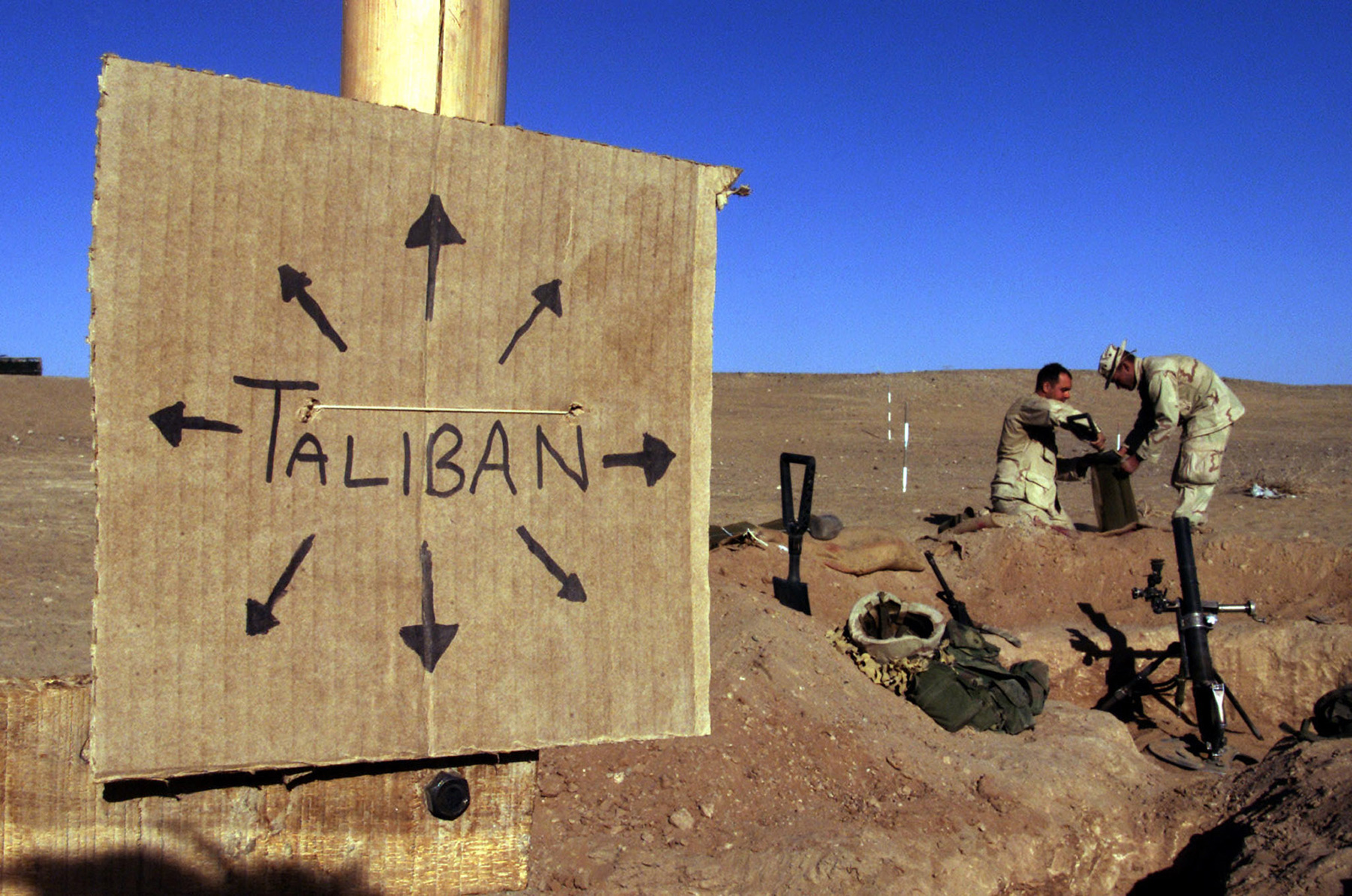
Turkey on the Path to the “Afghanistan, Lebanon, and Syria Syndrome”
-
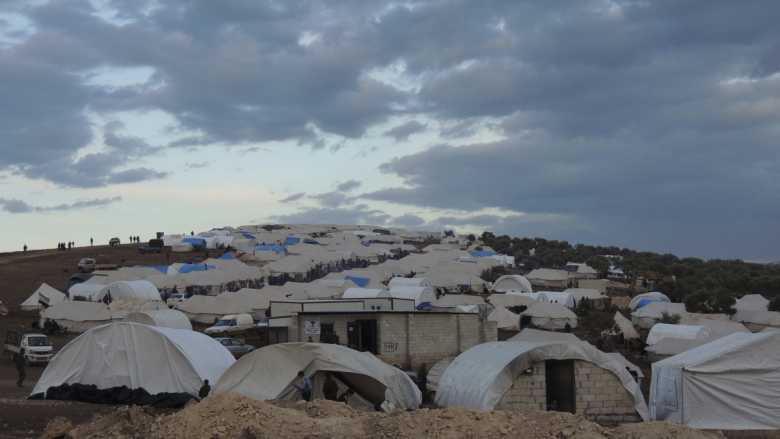
Storm Brewing on Europe’s Borders: Turkey on the Road to the Afghanistan‑Lebanon‑Syria Syndrome
Europe is facing mounting challenges at its borders as Turkey increasingly adopts policies reminiscent of those seen in Afghanistan, Lebanon and Syria—a trend that threatens to destabilize the region and strain Europe’s migration and security strategies.
In recent years, Turkey has transitioned from being a transit country for refugees to becoming a destination, and increasingly, a source. The once-promoted refugee processing hub along its borders with Greece, Bulgaria, and elsewhere is morphing into an overwhelmed containment zone. With growing migration pressure from neighboring conflict zones—Syria, Iraq, Iran, Afghanistan—Turkey’s capacity to act as an effective buffer is eroding.
Like Afghanistan, which became a failed state unable to control its borders; like Lebanon, burdened by Syrian refugees to the breaking point; and like Syria itself, torn apart by conflict and unable to prevent mass displacement—Turkey risks becoming a similar epicenter of chaos. Its military operations in northern Syria, its tightening authoritarianism, and weakened ties with the EU meanwhile deepen political divisions across the continent.
Europe, dependent on cooperation with Ankara on migration management, finds itself in a precarious position. European leaders once hoped that funds, agreements, and political incentives would stabilize the situation. But as Turkey drifts away from EU norms—especially in democracy, rule of law, and human rights—trust collapses, and migration control cooperation becomes increasingly transactional and fragile.
If the trajectory continues, what lies ahead is no longer merely a bilateral pressure point, but the emergence of a regional corridor of instability—from Syria through Turkey into Europe. Relief cannot be achieved through external agreements alone; it requires new political thinking—on migration, on regional security partnerships, and on restoring democratic frameworks within Turkey itself, or at least accountabilities.
Unless Europe rethinks and rebuilds its engagement strategy—not just transactional refugee deals but broader commitments to regional stabilization and democratic resilience—this evolving “Turkey Syndrome” may soon overshadow the crises of Afghanistan, Lebanon, and Syria. And the consequences could ultimately land on Europe’s own shores.