Author: Aylin D. Miller

  • TURKEY’S FALTERING REFORM DRIVE

    TURKEY’S FALTERING REFORM DRIVE


    Erdogan Striking Nationalist Tones

    By Daniel Steinvorth in Istanbul

    Amid corruption scandals and stagnating reform, Turkish Prime Minister Recep Tayyip Erdogan, praised in Europe as a modernizer, is seeking refuge in nationalist rhetoric, adopting a tougher stance on the Kurds and moving closer to the country’s military leaders.

    The public prosecutor in Adana, a city in southern Turkey, has clear ideas on how the state ought to treat teenagers who protest by throwing stones. In his view, they should be arrested and locked away, preferably for life.

    Last week the prosecutor demanded up to 58 years in prison for six young Kurds between the ages of 13 and 16. During a demonstration in October, the students threw stones at police officers, shouted illegal slogans and unfurled posters touting the banned Kurdistan Workers’ Party (PKK).


    REUTERS

    Turkey’s Prime Minister Tayyip Erdogan, seen here chairing the annual meeting of the High Military Council in Ankara on December 2,

    And because such teenagers, in his view, had to be the “children of terrorists,” the provincial governor recommended punishing the families and cancelling their claims for pension and social benefits.For months, trouble has been brewing once again in Turkey’s Kurdish regions, and both sides are reacting in the customary way. Adolescents incited by the PKK are setting car tires on fire and committing acts of violence. In response, the military has brought in tanks and the courts are threatening the demonstrators with increasingly grotesque punishments.

    Turkey, which is seeking entry to the European Union, is having trouble getting its most pressing problem under control. Prime Minister Recep Tayyip Erdogan, who only six years ago was still making cocky promises to put an end to the frustrating, drawn-out conflict, and who in 2005 was his country’s first prime minister to speak out about the Kurdish conflict, is as helpless today as his predecessor was.

    Long praised in the West as a peacemaker and reformer, a man who has made great strides in bringing his country closer to Europe, Erdogan is now revealing reactionary tendencies.

    He has recently stopped calling for “cultural rights” for minorities, and is ignoring the human rights abuses being committed by Turkish police. Instead, he now prefers the language of the generals and nationalists. Turkey, Erdogan said excitedly in a recent speech to a Kurdish audience, is “one nation, one flag, one country.” He added: “whoever doesn’t like it can leave.”

    When Dengir Mir Mehmet Firat, the Kurdish-born deputy chairman of Erdogan’s conservative Islamic party, the AKP, resigned from his position, the premier replaced him with a hardliner who prefers military force over dialogue when it comes to the Kurdish question.

    Rapprochement With Military Leaders?

    What is happening with Erdogan? Has the ambitious modernizer had a change of heart? Has he lost his desire to drive his country toward the West? Or has the refined Islamist sought an alliance with the generals after all, after his party barely managed to escape a ban sought by the country’s military leaders this summer?

    Much points to a pact between the very different partners. Erdogan has been all too willing to support a campaign by military officers to curtail freedom of the press and opinion. In a dispute between the new Chief of the Turkish General Staff, Ilker Basbug, and Taraf, a small daily newspaper, the increasingly autocratic Erdogan threw his support behind the commander.

    Taraf, currently Turkey’s most courageous newspaper, had published documents suggesting that the general staff had learned in advance of an attack by the PKK on a military outpost near the Iraqi border. Seventeen soldiers were killed there in the Oct. 4 attack, and it has been suggested that they may have been sacrificed in an effort to spark public outrage.

    Anyone who publishes such reports, General Basbug said irately, is “partly responsible for the bloodshed.” He threatened to shut down the newspaper. “Be careful,” Erdogan said in a warning to the journalists, noting that the “public peace” is a greater good than the freedom of the press. In November, the prime minister himself took action against the press, ordering his press office to cancel the accreditation of seven journalists working for the Dogan media conglomerate.

    Hard Line On Press

    Erdogan had already recommended in September that the newspapers and television channels owned by Aydin Dogan, including such mass-circulation newspapers as Hürriyet, Milliyet and Posta, should be boycotted. By that point the premier and his adversary were already embroiled in a war of words. The powerful media czar had published detailed stories on the AKP’s possible involvement in a scandal over political contributions in faraway Germany.

    A Frankfurt court had convicted members of Deniz Feneri, a religious charity, of embezzling donations from Germans of Turkish descent worth €18 million ($23 million). The money, according to the prosecution, ended up in the “AKP environment.” The extent of Erdogan’s involvement in the case remains unclear, but his party’s reputation is tarnished. Ironically, it was the AKP that has consistently prided itself, as an Islamist party, in being free of corruption and of having distanced itself from the sleaze of former administrations.

    Erdogan, increasingly irritable and thin-skinned, appears to be running out of luck. Even the economy, previously the greatest plus in the AKP government’s six-year tenure, is slowing down. For weeks, cabinet ministers and even President Abdullah Gül had led the world to believe that Turkey would remain largely untouched by the global financial crisis. No one should be alarmed, they said, because the country had gone through its own severe crisis in 2001 and, after that, had taken decisive steps to prevent it from happening again.

    Economic Slowdown Could Hurt Prospects

    But since then Ankara has entered into surprise negotiations with the International Monetary Fund for billions of euros in new loans. Hundreds of thousands of job are in jeopardy, experts warn. Once economic growth declines, the government can expect to lose some of its support next year. Pollsters predict that the AKP will get only 34 percent of the vote in local elections in March, compared to 47 percent in the 2007 parliamentary election.

    “They are being exposed in the current crisis, the so-called reformers,” says Cengiz Aktar, a political scientist and well-known Erdogan critic, who accuses the government of incompetence and mediocrity. “In reality, the groundwork for most of the economic reforms was already laid before the AKP came into power.” And political reforms, says Aktar, were only implemented between 2002 and 2004 — in other words, until Turkey was granted candidate status for EU membership.

    Since then, the only attempts at reform have favored devout wearers of the headscarf. This, says Aktar, is why he is not surprised by Erdogan’s growing emphasis on nationalism and Islam. Instead, Aktar characterizes the changes taking place in Turkey as a “restoration” and, therefore, as a “normalization of Turkish conditions.” There have always been marriages of convenience between the mosque and the barracks in Turkey. This, says Aktar, is why it is all the more important that Europe does not abandon the country now.

    Aktar believes that unless Brussels applies pressure on Turkey to continue with reforms, Erdogan’s chauvinistic tendencies will only increase. And then, he warns, “we will soon be dealing with a Turkish Bonaparte.”

    Translated from the German by Christopher Sultan

    URL:

    • https://www.spiegel.de/international/world/turkey-s-faltering-reform-drive-erdogan-striking-nationalist-tones-a-595430.html


    __._,_.___
  • US Ambassador to Azerbaijan on promises given to Armenians

    US Ambassador to Azerbaijan on promises given to Armenians

    Baku. Lachin Sultanova–APA. “New Administration will give attention to South Caucasus region. This part of the world is of strategic importance and I think that measures taken by the former administration will be continued”, Anne Derse, the US Ambassador to Azerbaijan said at the meeting of Azerbaijani Women Journalists Union, APA reports.
    The diplomat answering questions on Barack Obama’s promises given to Armenians during pre-election campaign noted that any U.S President investigated the case in terms of national security while considering it.
    “President Obama visited Azerbaijan and this is a remarkable experience. High-ranking representatives of the US visited Azerbaijan in recent years. We remember the visit of Vice-President Dick Cheney very well. Everybody visiting Azerbaijan sees reality and understands difficulties and importance of the region. I want to say on my behalf that I will work with new administration with same loyalty as it was before.

  • Senator Saxby Chambliss: Resolution on the so-called Armenian genocide will damage US foreign policy

    Senator Saxby Chambliss: Resolution on the so-called Armenian genocide will damage US foreign policy


    Washington – APA. Senator Saxby Chambliss of Georgia said the passage of the resolution on the so-called Armenian genocide in the US Senate would damage the country’s foreign policy.

    APA reports that answering the letter sent through US Azeris Network, the senator noted that the passage of S.RES.106 would damage United States-Turkish relations and possibly harm U.S. interests in the Middle East and Central Asia.
    “Such a resolution will not advance the Turkish-Armenian dialogue and it will not improve the process of Turkey’s examination of its own past. The United States-Turkish relationship is both deep and broad. Turkey is a strategic partner with the United States in a number of significant areas, including the War on Terror and the United States ’ involvement in Iraq. Our friendship with Turkey goes back a very long way and we must continue to work together on issues of importance.

    In response to the appeals of the US Armenian community for recognition of the so-called Armenian genocide to the White House, Azerbaijani and Turkish communities of the US have also begun counterpropaganda among the White House officials, Congressmen and public. Letters about the real essence of the 1915 happenings are sent to the US officials through US Azeris Network.

  • Armenian Intellectuals Appeal To Gul For Genocide Recognition

    Armenian Intellectuals Appeal To Gul For Genocide Recognition


    By Lilit Harutiunian

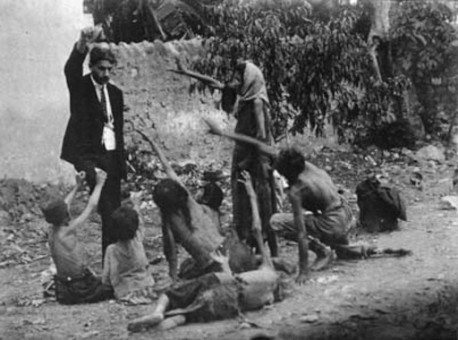
    Nearly 300 Armenian intellectuals and other public figures have appealed to Turkey to acknowledge that the 1915 mass killings of Armenians in the Ottoman Empire constituted genocide, saying that is a necessary condition for Turkish-Armenian reconciliation.

    In an open letter to Turkish President Abdullah Gul made public on Tuesday, they said modern-day Turkey bears “hereditary responsibility” for what they consider an “monumental crime against humanity.”

    “Genocide is a crime against humanity and present civilization values, and no individual, organization or even state authority can cast doubt on what happened,” the letter said, challenging Ankara’s vehement denial of any government policy to exterminate Ottoman Turkey’s Armenian population.

    “Your generation of Turkish leaders must accept the undeniable truth and recognize the fact of the Armenian Genocide … Only in that case can there be a sincere dialogue and a process of real reconciliation between our peoples,” it said.

    The letter was apparently initiated by prominent writers, musicians and artists close to Armenia’s ruling establishment, suggesting that it was approved by President Serzh Sarkisian. The latter has been instrumental in an unprecedented thaw in Turkish-Armenian relations observed in recent months. Sarkisian has won plaudits in the West for inviting Gul to visit Yerevan and watch with him a September match between Armenia’s and Turkey’s national soccer teams.

    The so-called “football diplomacy” was followed by a series of further negotiations between the Turkish and Armenian foreign ministers. It is still not clear, however, whether Ankara is ready to normalize relations with Yerevan before a resolution of the Nagorno-Karabakh conflict.

    The unprecedented open letter to Gul was welcomed on Tuesday by Giro Manoyan, a leading member of the Armenian Revolutionary Federation (Dashnaktsutyun), a junior partner in the ruling coalition that has watched with unease Sarkisian’s diplomatic overtures to the Turks. “I think this letter is significant in the sense that it originated from Armenia and clearly reflects our public’s view that it is impossible to evade the issue of genocide recognition,” Manoyan told reporters.

    Dashnaktsutyun’s top governing body urged the Sarkisian administration last week to exercise caution in the ongoing rapprochement with Turkey, saying that Ankara is using it to scuttle recognition of the Armenian genocide by more countries, notably the United States.

    https://www.azatutyun.am/a/1598796.html

  • The key to the Caucasus

    The key to the Caucasus

    By Stanley A. Weiss

    BAKU, Azerbaijan: ‘Welcome to Houston on the Caspian,” said Anne Derse, the U.S. ambassador to this booming, oil-rich nation, as our delegation of American business executives arrived on the final leg of a visit to Georgia, Armenia and Azerbaijan.

    After days of discussion with political, military and business leaders across the region – including a talk with President Ilham Aliyev of Azerbaijan, whose office overlooks the Caspian Sea, home to perhaps a quarter of the world’s new oil production – it all seemed obvious. As one U.S. diplomat put it, Azerbaijan “is central to all we’re trying to do in this part of the world.”

    Azerbaijan is the indispensable link to reducing European energy dependence on Moscow, with the only pipelines exporting Caspian oil and gas that bypass Russia altogether, with routes through Georgia and Turkey.

    Without Azerbaijan, there will never be what the U.S. energy secretary Samuel Bodman calls “a new generation of export routes” bypassing Russia. Known as the “southern corridor,” it includes plans by Kazakhstan and Turkmenistan to ship oil and gas by barge across the Caspian to Baku, as well as the EU’s long-planned Nabucco gas pipeline from Turkey to Europe.

    Aliyev stresses that, unlike President Mikheil Saakashvili of Georgia, he will not taunt the Russian bear, continuing instead to walk a fine line between East and West. This policy includes allowing his military to train with NATO, but not rushing to become a NATO member.

    Aliyev insists that “time is up” for the return of the Azerbaijani territory of Nagorno-Karabakh – the Armenian-majority region occupied by Armenia, with Russian support, since the war over the area in the early 1990s. Still, he seems determined not to give Moscow a pretext to intervene, as it did with its invasion of Georgia this summer.

    Azerbaijan – like Turkey, with which it shares deep ethnic and linguistic ties – is one the world’s most secularized Muslim countries, with a strict separation between mosque and state. Moreover, the nearly 20 million ethnic Azeris living in neighboring Iran – about a quarter of Iran’s population – are culturally closer to their brethren in Baku than their Persian rulers in Tehran. Azerbaijan also draws the ayatollahs’ ire as one of the few Muslim nations with diplomatic ties with Israel.

    Yet for all its strategic significance – and its support for the U.S. war on terrorism, including sending troops to Afghanistan and Iraq – Azerbaijan remains the neglected stepchild of U.S. Caucasus policy. Despite Saakashvili’s miscalculations with Russia, Georgia remains the darling of the West, garnering another $1 billion in post-war aid from the U.S. atop the nearly $2 billion Washington has bestowed over the years. The powerful Armenian-American lobby has not only secured some $2 billion for Armenia to date, it has succeeded in limiting U.S. aid to Azerbaijan because of the dispute over Nagorno-Karabakh.

    To be sure, this country is no democracy; the 46-year-old Aliyev learned well from his authoritarian father, who ruled Azerbaijan both as a Soviet Republic and after independence. Indeed, not long before our delegation arrived, Aliyev claimed re-election with 89 percent of the vote.

    But if Azerbaijan is “central” to everything Washington is trying to accomplish in the Caucasus, then Azerbaijan should be at the forefront of U.S. Caucasus policy. To help Azerbaijan – and the region – realize its full economic potential, the incoming Obama administration should make a major push to resolve Nagorno-Karabakh, which – as one development official here tells me – “is the main issue that prevents regional integration.”

    A breakthrough is possible. Every member of the so-called Minsk Group charged with resolving the conflict – Azerbaijan, Armenia, Russia, several European countries and the U.S. – have powerful incentives for  compromise.

    Aliyev wants Nagorno-Karabakh back, but understands that Moscow won’t allow him to take it by force. Landlocked, impoverished Armenia desperately wants Azerbaijan and Turkey to end a 16-year economic blockade of its borders. Turkey wants to improve relations with Armenia. Europe wants to avert another crisis that would complicate plans for its Nabucco pipeline. And with new competing diplomatic initiatives, Turkey and Russia clearly want to play a leadership role in the region.

    This “frozen conflict” will not thaw easily. But through a gradual process backed by the major powers, the Caucasus countries could finally focus on economic cooperation rather than military confrontation. And the trade routes of the old Silk Road could become a new energy corridor of the 21st century.

    Stanley A. Weiss is founding chairman of Business Executives for National Security, a nonpartisan organization based in Washington.

  • EU calls on Turkey to get close to Armenia

    EU calls on Turkey to get close to Armenia


    [ 09 Dec 2008 19:37 ]
    Brussels. Alexander Kean – APA. The EU believes that Croatia should speed up reforms, and Turkey has not made sufficient progress for the EU membership, according to a ministerial meeting of the EU General Affairs and External Relations Council in Brussels, reports the APA correspondent.

    The Council welcomed Croatia’s considerable efforts it has undertaken this year, but stated that the country should accelerate reforms, particularly in the judiciary, in public administration, fighting corruption, punishment for military crimes, as well as economic reforms.

    However, the EU said that Turkey has not made sufficient progress in reforms over this year.

    “The Council notes with regret that Turkey has achieved limited progress, particularly on the issue of political reform over the current year “, said the statement.

    The Council underlined the strategic importance of Turkey for the EU and praised its active role in diplomatic initiatives in the South Caucasus and Middle East.

    In addition, the Council called onTurkey to come close to Armenia.

    Ministers noted that Turkey still has to do much more in the fields of judicial reform, fight againt corruption and protection of the human rights, torture and attitude towards prisoners, protection of the rights and freedoms, in particular freedom of speech and faith.

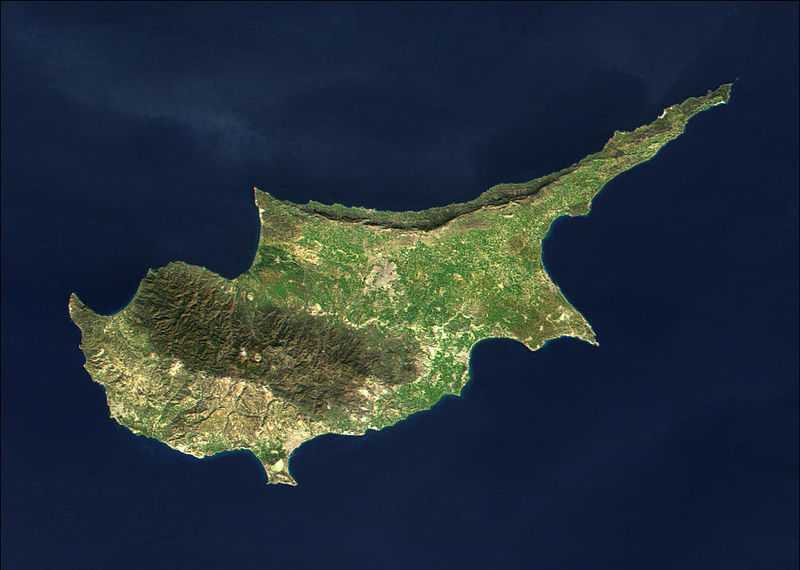
    In conclusion, the Council also added that Turkey didn’t manage to make progress towards improving relations with Cyprus and expressed hope for progress in the near future.