Year: 2010

  • Davutoglu challenges U.S. to answer the question whether it wants peace in the region:

    Davutoglu challenges U.S. to answer the question whether it wants peace in the region:

    Turkish FM calls on U.S., West to say whether they really want Armenia-Azerbaijan reconciliation- UPDATE
    05 March 2010 [16:21] – Today.Az http://www.youtube.com/watch?v=ttuzoe7x4UI

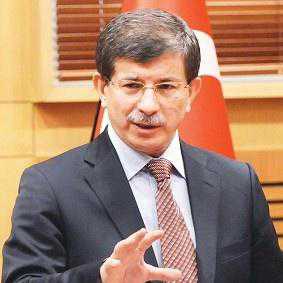
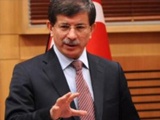
    In his televised speech on March 5, Turkish Foreign Minister Ahmet Davutoglu urged the United States and West to resolve the Armenian-Azerbaijani Nagorno-Karabakh conflict.Stability in the South Caucasus can become real only after Armenia withdraws from Azerbaijan’s occupied lands and Armenia-Turkey and Armenia-Azerbaijan reconciliation are ensured, CNN-Turk quoted Davutoglu as saying.

    Unilateral reconciliation is impossible, Davutoglu said.

    It is difficult to reach a full peace through reconciliation only between individual countries in the South Caucasus region, the Foreign Minister explained. In his view, a full peace is possible if only all existing conflicts are solved.

    Davutoglu stressed that not only the Armenian-Turkish reconciliation, but also the Armenian-Azerbaijani reconciliation must be focus of attention adding that the United States and West are interested only in normalization of Armenian-Turkish relations.

    “If we want peace, then why we talk only about the Armenian-Turkish reconciliation? Why do not we put forward the Armenian-Azerbaijani reconciliation? Why can not we believe that this can be realized? Why Turkey is mistaken when it talks about the Armenian-Azerbaijani reconciliation? Our American and Western friends need to think about it.”

    “The question is clear and open. And our response is clear and open, too. Does someone want the Armenian-Turkish reconciliation? Yes, Turkey wants. And now we ask the question: “Do you want the Armenian-Azerbaijani reconciliation or not?” Let them come out and say: “We do not want.” And we’ll know about it. But if they want, let them do all that it is required,” the Turkish FM underscored.

    Peace depends on a political will. The path is difficult, but this is not an impossible goal, Davutoglu added.

    ———–
    13:15

    Turkey calls on Armenia to open all archives and not to exert pressure through the U.S. Congress, and negotiate face to face, Turkish Foreign Minister Ahmet Davutoglu said.

    “The adoption of the resolution on” Armenian genocide” is comical, as the difference of one vote seems very strange,” he added.

    U.S. House Committee on Foreign Affairs on Thursday adopted 23 votes to 22 a resolution recognizing the so-called “Armenian genocide”.

    Armenia claims that the Ottoman Empire committed genocide against Armenians living in Anatolia in 1915.  Making greater efforts to promote the issue internationally, Armenians have achieved its recognition by parliaments of some countries.

    Signing the protocols with Armenia, Turkey sought to bequeath to future generations of peace and stability among nations, but the adoption of this resolution by the U.S Congress’s Committee shows that Yerevan does not act openly in this matter, he added.

    The minister considers erroneous the view that the adoption of the resolution could put pressure on Ankara to ratify the Armenian-Turkish protocols.

    “The fact is that Turkey has taken decision on in this issue for ten days while Armenia has done for four months,” he said.

    The intervention of a third party, in this case the U.S., in relations between Armenia and Turkey, complicates the process of reconciliation between the countries, he said.

    The adoption of a resolution recognizing the “Armenian genocide” indicates that the U.S Congress is very weak in developing a future political strategy, the Turkish minister said.

  • İngiltere’den öğrencilere vize müjdesi

    İngiltere’den öğrencilere vize müjdesi

    İngiltere, Ankara Anlaşması çerçevesinde Türk vatandaşları için “vize kategorisinin değiştirilmesi konusundaki sınırlamayı” yeniden kaldırıyor.

    “Ankara Anlaşmasında Son Gelişmeler” başlıklı, London School of Economics’te (LSE) verilen konferansa katılan Türkiye’nin Londra Başkonsolosluğu Çalışma ve Sosyal Güvenlik Ataşesi Ayşegül Yeşildağlar, İngiltere’nin 2009’un Eylül ayında “Ankara Anlaşması vize kategorisinde sınırlamaya” gittiğini anımsattı. Yeşildağlar özellikle Türk öğrencileri ilgilendiren vize kategorilendirsinin Nisan 2010 itibariyle yeniden kaldırılacağını belirtti.

    İngiltere’ye öğrenci vizesiyle gelen bir Türk vatandaşının, daha sonra Ankara Anlaşmasından yararlanarak vize alabildiğini söyleyen Yeşildağlar, ancak geçen Eylül ayında başlayan uygulamanın ardından anlaşmadan yararlanamadığını kaydetti.

    Söz konusu uygulamanın “Ankara Anlaşması bitiyor” gibi yanlış yorumlara neden olduğunu ifade eden Yeşildağlar, “sadece bazı vize kategorilerinden Ankara Anlaşması vizesine geçişe sınırlama getirildiğini” belirtti.

    Yeşildağlar, yeni bir gelişme olarak da, İngiltere İçişleri Bakanlığından dün bir yazının ellerine ulaştığını ve bu yazıda İngiltere’nin sınırlama kararını Nisan ayı itibariyle kaldıracağının belirtildiğini duyurdu.

    Çalışma Ataşesi Yeşildağlar, yani eskisi gibi İngiltere’ye herhangi bir vizeyle gelen bir Türk vatandaşının, Ankara Anlaşması vizesine herhangi bir sınırlama veya engel olmadan geçiş yapabileceğini vurguladı.

    “Sınırlamanın kaldırıldığına dair açıklama bizim için sevindirici oldu” diyen Yeşildağlar, ancak İngiltere’nin genel vize başvurularındaki uygulamalarıyla başka kısıtlamalar getireceğini sözlerine ekledi.

    İngiltere İçişleri Bakanı Alan Johnson geçen ay, ülkeye öğrenci olarak gelecek kişiler için vize uygulamalarını zorlaştıracaklarını ve bu yönde önlemler alacaklarını açıklamıştı. Yeni uygulamalar arasında, iyi İngilizce seviyesi gerekliliği, 20 saat olan haftalık çalışma izninin 10 saate indirilmesi gibi unsurlar bulunuyor.

    Bu arada, konferansa katılan diğer konuşmacılar Ankara Anlaşması vizesine başvuracaklara, başvurularını iyi hazırlamaları, gerekli ve yeterli kanıt ile belgeleri toplamaları, güvenilir avukatlık ve danışmanlık firmalarıyla çalışmaları gibi konularda tavsiyelerde bulundu.

  • 1864 Russification in the Caucasus

    1864 Russification in the Caucasus

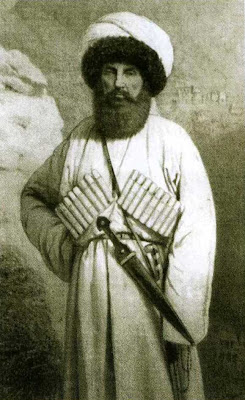
    (right Shamil during 1830’s)

    Mavi Boncuk | 1864 Russification in the Caucasus [1]

    As part of a prolonged ‘russification’ campaign (‘ethnic cleansing’) Russian troops defeat the Circassions, the earliest indigenous people of North Caucasus (where Russia borders Asia). 90% of the population (1.5 million) are murdered or deported, making it the largest genocide of the century.

    [1] The Avars rebelled again in 1834 under Imam Shamil [2], protesting against the immigration of state-supported Russian settlers. Independence for Dagestan was declared and the Koran was introduced as the law of the land. Thus, the Shamil regime fought both the Russian Orthodox Church and the older animistic beliefs. The Shamil Revolt collapsed in 1858, but the Avars already hated everything Russian. In 1864, the Russians changed the Avar Khanate into the Avar District.

    In the beginning of the 19th c., the Laks fought to resist the increasing Russian influence, but to no avail. In 1865, Russia abolished the Shamkhalat and brought Lak territory under direct Russian administrative control. Russian settlers started pouring into Dagestan already from around 1800-1810, and this influx triggered the Shamil rebellion in 1834. The rebellion, which was crushed in 1858, strengthened the ethnic identities of the various peoples, radicalized and strengthened Islam in the area, and produced a deep hatred for everything Russian.

    The Lezgins did not form their own country. Some were part of the Kuba Khanate in Azerbaijan, some were under control of the Derbent Khanate. The Lak Kazi Kumukh Khanate contrtolled the Lezgins for a time in the 18th c., but from 1812 onwards, the Russians took over. They created the Kiurin Khanate, later to become the Kiurin district.

    From the 16th through the 18th c., the Rutuls constituted a powerful political confederation known as Rutul Mahal. Ethnic Russian settlers started pouring into the area already in the beginning of the 19th c., and the Rutuls resisted the Russian expansion. In 1838, during the widespread Shamil rebellion, the Rutul Aga-Bek led an uprising against Russia. They were no real match for the Russians, though, and the latter crushed the movement and formally annexed the Rutul Mahal in 1844. Fundamentalist Muslim tendencies are strong among the Rutuls, together with a profound anti-Russian sentiment.

    When the Shamil Revolt reached the Tsakhurs in in 1844, Sultan Daniel-Bek supported the rebels against the Russians. The Russians’ answer was to deport the entire Tsakhur population to Azerbaijan in 1852. They were not allowed to return until 1860, by which time some had decided to stay in Azerbaijan. During the 1860s, when significant Russian expansion into Nogay territory began, many Nogay emigrated to Turkey, Crimea and the Balkans.

    When Peter the Great occupied Derbent in 1722 and defeated the Safavid dynasty, it was the beginning of the end for Kumuk independence. Some autonomy was retained until 1859, when the Russians finally crushed the Shamil rebellion, and permanently brought the various ethnic groups of Dagestan under Russian sovereignty. The Kumuk Shamkhalat was formally ended in 1867. The Shamil rebellion also produced a division among the Kumuks, as the northern Kumuks fought against the Russians, the central Kumuks sided with the Russians, while the southern Kumuks remained neutral.


    (left, Shamil after he was captured 1866)

    Source: Norwegian Institute of International Affairs [NUPI] – Centre for Russian Studies

    [2] Shamil (c.1798–1871) Leader of Muslim resistance to the Russian occupation of the Caucasus from 1834 to 1859. He became Imam of a branch of the Sufi Naqshbandi order known as Muridism which recommended strict adherence to Islamic law and preached jihad (holy war) against Russia. After the Crimean War Russia employed some 200,000 troops in the Caucasus to encircle and subdue Shamil and his followers. He was captured (1859), and imprisoned, but allowed to go on a pilgrimage to Mecca (1870), where he died.
    See also:
    Russification: Word and Practice 1863-1914by Theodore R. Weeks
    Proceedings of the American Philosophical Society, Vol. 148, No. 4 (Dec., 2004), pp. 471-489 (article consists of 19 pages) | Published by: American Philosophical Society

    Posted by M.A.M at 12:44 AM 0 comments Links to this post
    Labels: Asian roots, Russia

    The Yildiz Incident | July 21, 1905

    The French report “Enquitê sur l’attendant commis dans la jounée de 21 Juillet 1905 à l’issue la cérémonie de Selamlik,” Travail de la Commission Speciale. From “The Armenians in History and the Armenian Question,” Esat Uras, 1988, pp. 780-87.

    Mavi Boncuk |

    The attempt on Sultan Abdul Hamid’s life comprised “The Yildiz Incident” (July 21, 1905), resulting from a decision by the Dashnak committee to extend their activities to Istanbul; Krisdapor Mikayelian proposed doing so at the Sofia Congress (Jan. 1904), where the idea was accepted. Mikayelian first went to Greece, getting in touch with Zaruhi, previously sent there. Zaruhi was a woman.

    Another Dashnak (Sapho Torkom, a.k.a. Constantine Kabulian or Torosian) arrived afterwards in Greece with a 35-year-old from Tiflis, Marie Anchkova, a woman. The group was joined by two Armenian women, one named Robina, 65 years old. Her “code name” was “Robina Fein,” as it said on her forged passport, where she posed as a Russian Jew. (Mikayelian’s alter ego was “Samuel Fein.”)

    In Istanbul, preparations were being made for the assassination attempt. Apart from Mikayelian (who would be killed in Bulgaria with another Dashnak while testing the bombs), one of the other major conspirators was Joris from Belgium, and his wife. Another was Marie Zein, a woman.

    The plot was a failure, and some of the conspirators, including Sapho Torkom, were expelled from the Dashnak Committee on account of inefficiency, for abandoning their associates in Istanbul, and for being concerned with their own safety alone.

    The summary of the report in French prepared by the Investigation Committee (under the leadership of Nedjib Melhame) contained information about the plotters, and among the women:

    3) Robina Fein, also known as Nadejda Datalian, daughter of Wolf, an Armenian girl from the Caucasus, her real name is unknown. She participated in the plans and activities of the Committee in Istanbul and played an active role in the explosion of the bomb in the carriage.

    4) Marie Zein, Sophi Arecho (fugitive), born of a German father in the Caucasus, wife of the murderer Rips, participated in the activities of the Committee and the assassination attempt of July 21, under the name of Sophi Rips. She selected Robina Fein for the above purpose and brought her to Istanbul.

    Anna Nellens (fugitive), wife of Joris. Collaborated with the members of the Committee in preparing the assassination.

    14) Marie Anshanev or Terez Askova, of Tiflis, her real name is unknown. Helped the Committee and assisted in the assassination attempt.

    (Joris was condemned to capital punishment but was later pardoned by the sultan, given five hundred liras, and sent to Europe as a secret agent against the Armenians.)

  • 24…23…22…The Armenian Resolution Countdown Begins… Again

    24…23…22…The Armenian Resolution Countdown Begins… Again

    March 04, 2010

    With their vote The House Foreign Affairs Committee in Washington DC simply said “Who remembers the ethnic cleansing of Turks and moslems in the Caucasus in 1905 now?” [1]

    23 to 22 vote is an empty victory. There is more traction now for bilateral intensification and progress between Turkey and Armenia as the Diaspora Armenians desperately try to scuttle the ongoing protocol signed in Switzerland. This nonbinding resolution, even if fully ratified will waste the single bullet of the proponents of this resolution against Turkey’s counter argument that basically says the toll has been inflated and those killed were victims of civil war and unrest, not genocide.
    Mavi Boncuk |

    On Oct. 10 2007 a House committee voted to condemn the mass killings of Armenians in Turkey in World War I as an act of genocide. On March 4, 2010 The House Foreign Affairs Committee voted again and narrowly condemned as genocide the mass killings of Armenians early in the last century, defying a last-minute plea from the Obama administration to forgo a vote that seemed sure to offend Turkey and jeopardize delicate efforts at Turkish-Armenian reconciliation. The vote on the nonbinding resolution, a perennial point of friction addressing a dark, century-old chapter of Turkish history, was 23 to 22.

    The protocol agreed between Turkey and Armenia under Swiss mediation declared that the two countries will conduct internal political consultations to be concluded within six weeks to be followed by ratification in the Turkish and Armenian parliaments, in a move to establish diplomatic ties and develop bilateral relations between the two countries and US seemed to favor normalization between Turkey and Armenia without preconditions and within a reasonable time frame.

    Walter Richmond’s2008 book” The Northwest Caucasus | Past, present, future” presented a comprehensive history of the Northwest Caucasus based on extensive research and exploreed interethnic relations and demographic changes that have occurred in the region over time with a particular focus on the 19th, 20th and 21st Centuries, incorporating recently published archival materials concerning the deportation of the Abazas, Circassians and Ubykhs to the Ottoman Empire by the Russians, which is treated as the first act of ethnic cleansing in modern history.

    In his book on “The Ethnic Cleansing of Ottoman Muslims, 1821-1922,” historian Justin McCarthy says the following:

    “In 1895 in Anatolia and in 1905 in the Caucasus, inter-communal warfare broke out. Prior to that time, Muslims and Armenians had supported either the Russian or the Ottoman Empires. Now the Muslims and Armenians had set about killing each other in their villages and cities. This war was not a thing of armies, but of peoples. It had been building for almost a century, brought about by Russian invasion, Armenian nationalism, and Ottoman weakness. By 1910, the polarization that was soon to result in mutual disaster was probably inevitable. Blood had been shed and revenge was expected and desired. Whatever their individual intentions, Muslims knew they were at risk from the Armenians, and Armenians knew they were at risk from the Muslims. Once World War I began, each side naturally assumed the worst of the other, and acted accordingly.”

    [1]
    “Armenian Bands Preparing To Invade Ottoman Territory” Oakland Tribune, 1905, May 10 Full Text
    “Mahommedans Plan To Aid Co-Religionists – Barbarities By Armenians” NYT, 1905 June 26 Full Text !
  • Q&A: Armenian genocide dispute

    Q&A: Armenian genocide dispute

    BBC

    Boy victim of 1915 deportation of Armenians

    Arguments have raged for decades about the Armenian deaths

    The mass killing of Armenians by Ottoman Turks during World War I remains a highly sensitive issue.

    Turkey has resisted widespread calls for it to recognise the 1915-16 killings as genocide, while historians continue to argue about the events.

    What happened?

    There is general agreement that hundreds of thousands of Armenians died when the Ottoman Turks deported them en masse from eastern Anatolia to the Syrian desert and elsewhere in 1915-16. They were killed or died from starvation or disease.

    The total number of Armenian dead is disputed. Armenians say 1.5 million died. The Republic of Turkey estimates the total to be 300,000.

    According to the International Association of Genocide Scholars, the death toll was “more than a million”.

    What is genocide?

    Article Two of the UN Convention on Genocide of December 1948 describes genocide as carrying out acts intended “to destroy, in whole or in part, a national, ethnic, racial or religious group”.

    Were the killings systematic?

    The dispute about whether it was genocide centres on the question of premeditation – the degree to which the killings were orchestrated.

    Many historians, governments and the Armenian people believe that they were; but a number of scholars question this.

    Turkish officials accept that atrocities were committed but argue that there was no systematic attempt to destroy the Christian Armenian people. Turkey says many innocent Muslim Turks also died in the turmoil of war.

    What was the political context?

    The Young Turks – an officers’ movement that had seized power in 1908 – launched a series of measures against Armenians as the Ottoman Empire was crumbling through military defeats in the war. The Young Turks – calling themselves the Committee of Unity and Progress (CUP) – had entered the war on Germany’s side in 1914.

    Turkish propaganda at the time presented the Armenians as saboteurs and a pro-Russian “fifth column”.

    Armenians mark the date 24 April 1915 as the start of what they regard as the genocide. That was when the Ottoman government arrested about 50 Armenian intellectuals and community leaders. They were later executed.

    Armenians in the Ottoman army were disarmed and killed. Armenian property was confiscated.

    Was anyone held to account?

    Several senior Ottoman officials were put on trial in Turkey in 1919-20 in connection with the atrocities. A local governor, Mehmed Kemal, was found guilty and hanged for the mass killing of Armenians in the central Anatolian district of Yozgat. The Young Turks’ top triumvirate – the “Three Pashas” – had already fled abroad. They were sentenced to death in absentia.

    Historians have questioned the judicial procedures at these trials, the quality of the evidence presented and the degree to which the Turkish authorities may have wished to appease the victorious Allies.

    Who recognises it as genocide and who does not?

    Argentina, Belgium, Canada, France, Italy, Russia and Uruguay are among more than 20 countries which have formally recognised genocide against the Armenians.

    The European Parliament and the UN Sub-Commission on Prevention of Discrimination and Protection of Minorities have also done so.

    The UK, US and Israel are among those that use different terminology to describe the events.

    In 2006, Turkey condemned a French parliamentary vote which would make it a crime to deny that Armenians had suffered genocide. The bill did not become law – but Turkey suspended military ties.

    In March 2010, Turkey withdrew its ambassador to Washington after a US congressional committee narrowly approved a resolution branding the killings as “genocide”. The House Foreign Affairs Committee endorsed it, despite the objections of the White House. Barack Obama’s administration has called for the resolution not to be “acted upon” by the full Congress.

    What is the political impact of the row?

    The killings are regarded as the seminal event of modern Armenian history, binding the diaspora together.

    Armenians are one of the world’s most dispersed peoples.

    In Turkey, public debate on the issue has been stifled.

    Article 301 of the penal code, on “insulting Turkishness”, has been used to prosecute prominent writers who highlight the mass killings of Armenians. Among them were Nobel laureate Orhan Pamuk and Hrant Dink, who was later shot dead in January 2007. A teenage nationalist is on trial for his murder.

    The European Union has said Turkish acceptance of the Armenian genocide is not a condition for Turkey’s entry into the bloc.

    Are Armenia-Turkey relations still frosty?

    After decades of hostility there has been a slight thaw. Turkey and Armenia signed a deal in October 2009 to establish diplomatic relations and open their border.

    But the deal is yet to be ratified by either parliament, and some in Ankara accuse Armenia of trying to alter the terms of the deal.

    A complicating factor is mutual suspicion over the frozen Nagorno-Karabakh conflict. Turkey backs Azerbaijan in the dispute over Nagorno-Karabakh, a territory inside Azerbaijan held by ethnic Armenians since a war in the 1990s.


    Correction July 2008: This article has been amended following a ruling by the BBC Trust. For details, follow the links on the right hand side of the page

  • A DAVUTOGLU CONFERANCE IN ENGLAND

    A DAVUTOGLU CONFERANCE IN ENGLAND

    CONFERENCE Turkey’s foreign policy in a changing world: Old alignments and new neighbourhoods International conference with a keynote lecture by Ahmet Davutoğlu, Foreign Minister of the Republic of Turkey   South East European Studies (SEESOX), St Antony’s College, Oxford,  in collaboration with Sabancı University   30 April-2 May 2010   Please see attached programme     To register, please contact: Mehmet Karli [email protected]