Month: June 2009

  • GULEN: Behind Turkey’s Witch Hunt

    GULEN: Behind Turkey’s Witch Hunt

    The Ergenekon case exposes the power of a shadowy Islamic brotherhood that controls the Turkish police.

    By Soner Cagaptay | NEWSWEEK Published May 16, 2009 From the magazine issue dated May 25, 2009
    In which country does a liberal woman who educates poor girls worry about her safety when she goes home at night? Pakistan, Afghanistan-right-but also add Turkey now. In an early-morning raid on April 13, Turkish police arrested more than a dozen middle-aged liberal women working for the Society for Contemporary Life (CYDD), a nongovernmental organization that provides educational scholarships to poor teenage girls. The arrests were part of the Ergenekon court case, in which police have arrested hundreds of people, including Army officers, opponents of the Justice and Development Party (AKP) government, renowned journalists, artists and now these women, charging them with plotting to overthrow the government.

    When the case opened in 2007, AKP watchers saw it as an opportunity for Turkey to clean up corruption, such as security officials’ involvement in the criminal underworld. But the case is much more than that. It is a tool for the AKP to curb freedoms, and more than anything else illustrates the power of the Gülen tarikat (Islamic order) that now controls the Turkish police and, you guessed it, educational scholarships for the poor.

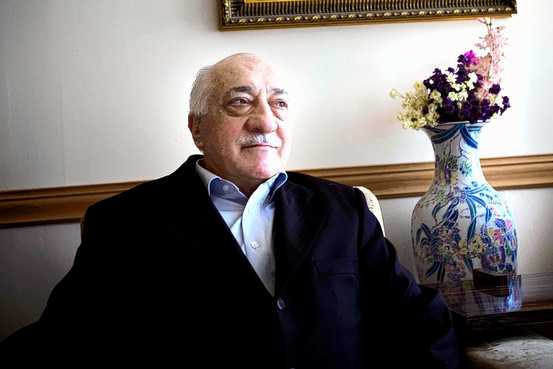
    The Gulen tarikat emerged in Turkey in the 1970s under the charismatic leadership of Fethullah Gülen, a respected imam. While tarikats serve as brotherhoods of solidarity much like orders in the Roman Catholic Church, the Gülen tarikat suggests blending conservative Muslim values with a modern lifestyle. Most Turks have a sinister view of the spiritual message of this tarikat that I do not share. Thanks to missionary and volunteer work, the Gülen tarikat obtained social and political power globally over the decades. It has business lobbying groups and think tanks in Washington and Brussels, owns universities, banks, TV networks and newspapers around the world, and operates schools in which more than 2 million students receive education, many with full scholarships.

    The tarikat gained political power in Turkey in the 1990s through its support of various political parties. In return, it gained appointments to key positions in the police and Education Ministry. Its growing power was checked in 1997 when the Turkish military issued a declaration against the then-ruling Islamist Welfare Party (RP) warning that its policies violated Turkey’s secular Constitution. Ensuing demonstrations and a media campaign brought down that government. Soon after, the Turkish courts filed a case against Gülen, alleging he was trying to take over Turkey by asking his followers to “move in the arteries of the system without anyone noticing your existence until you reach all the power centers.” Gülen left Turkey, settling in the United States.

    When the AKP, established out of the RP’s ashes, came to power in 2002, the Gülen tarikat experienced a revival. It supported the AKP; in return, its members received government contracts and took charge of the police and its domestic intelligence arm. The recent arrests demonstrate the power of the Gülen tarikat: the police wiretapped liberal women, and only later asked the prosecutor to arrest them. They were questioned for days, and released without charges. Their police files, testimonies and details from their private lives were leaked to Gülen tarikat-owned media. These media described the women as members of a terrorist group and cast the CYDD’s president, Türkan Saylan, in a negative light for having been born to a mother of Christian-Swiss origins-a bothersome spin given that the Gülen tarikat’s rhetoric promotes interfaith dialogue.

    Saylan, a 74-year-old cancer patient undergoing chemotherapy, was questioned and many CYDD members have since been released, but the damage to their reputations and their work in secular education is done. The case has become a show trial, helping the AKP and the Gülen tarikat pressure the liberals and tarnish their reputations. On April 26, Turkey’s justice minister said that police intelligence listens to the private conversations of 70,000 people; almost one in every 1,000 Turks lives under police scrutiny today. In the United States, that ratio is one in 137,000.

    The Ergenekon case has become a witch hunt. If you have doubts, call a friend in Turkey and ask for an opinion of the case. Your friend will respond with details of the weather. The last time people were afraid to discuss a public court case in the West was during the McCarthy trials in the U.S. Though it is in accession talks with the European Union, Turkey is devolving into a similar state of fear. Sad as it is, there is a way out of this conundrum if the AKP turns Ergenekon into a case that targets only criminals, and the Gülen tarikat lets go of its control over the Turkish police and truly becomes a spiritual movement.

    Cagaptay, A senior fellow at the Washington Institute for Near East Policy, Is the author of Islam Secularism and Nationalism in Modern Turkey: Who Is a Turk? (2006).

    © 2009

    000000000000000000000000

    TODAYS ZAMAN

    Çağaptay distorts facts over Ergenekon trial in Newsweek article

    Wednesday, 20 May 2009 09:21
    An article that appeared in Newsweek magazine, penned by Soner Çağaptay of the Washington Institute for Near East Policy, was claimed to have been full of errors and misinformation. In a piece titled “Behind Turkey’s Witch Hunt: The Ergenekon case exposes the power of a shadowy Islamic brotherhood that controls the Turkish police,” many allegations raised by Çağaptay proved to be false or misleading.

    Çağaptay strives to diminish the importance of the ongoing Ergenekon trial — a case in which prosecutors allege a clandestine criminal network plotted to create chaos in the country through high-profile killings, thereby inviting a military coup to overthrow the government. The investigation has so far exposed an abundance of guns and ammunition stored in hideouts, along with assassination plots against leading personalities, including Nobel Prize winner Orhan Pamuk.

    Claiming that all those who were arrested and charged are opponents of the current Justice and Development Party (AK Party) government, Çağaptay argues that the government is on a witch hunt similar to that of the Joseph McCarthy-era trials in the US. He fails to note that those who have been charged with crimes during the Ergenekon investigation are naturally the “opponents” of the current government. After all, they are all charged with the crime of seeking to overthrow that government.

    Fact-checking Çağaptay’s allegations

    1. FALSE

    Police investigated liberals.

    1. TRUE

    Police investigated ultranationalists who plotted to kill leading liberals including Nobel laureate Orhan Pamuk.

    2. FALSE

    The Turkish courts filed a case against Gülen.

    2. TRUE

    Yes, the case was filed but later dismissed. The 9th Chamber of the Supreme Court of Appeals unanimously voted to clear Gülen of all accusations against him on the grounds that “there was no certain and credible evidence showing without a reasonable doubt” that Gülen was guilty.

    3. FALSE

    Türkan Saylan, the late chairman of the Support for Modern Life Association (ÇYDD), was interrogated by the police.

    3. TRUE

    She was never arrested and never questioned by the police

    4. FALSE

    Police files, testimonies and details from the private lives of those arrested were leaked to Gülen tarikat-owned media.

    4. TRUE

    As a result of investigative journalism, many media outlets published information regarding the case. The diary of Mustafa Balbay, an ultranationalist columnist who allegedly plotted with military officers to topple the government, was published by liberal newspapers belonging to the Doğan Media Group.

    5. FALSE

    Police listened in on private conversations.

    5. TRUE

    Not exactly. Police can only listen in to phone conversations after obtaining approval from the prosecutor’s office that got the approval from the court in the first place.

    6. FALSE

    The Gülen movement is a tarikat (Islamic order).

    6. TRUE

    No such thing. Turkish courts had dismissed “tarikat” allegations and cleared Mr. Gülen of being a leader of such an order.

    7. FALSE

    Ergenekon is a tool for the AK Party to curb freedoms.

    7. TRUE

    Ergenekon is the first-ever civil trial of coup plotters in Turkey.

    8. FALSE

    Although it is in accession talks with the European Union, Turkey is devolving into a similar state of fear.

    8. TRUE

    EU officials have repeatedly lent its support to the Ergenekon case and asked for thorough investigation into any criminal activity.

    Çağaptay falsely states in his article that the Ergenekon case is against liberals in Turkey. In fact, the very targets of the Ergenekon ultranationalist plotters were liberals themselves, as was evident in the case of assassination plans targeting Pamuk. Some in the case are charged with being responsible for carrying out kidnappings and assassinations of liberal Kurdish intellectuals in southeastern Turkey. The sheer support of the Ergenekon trial by liberal columnists and writers in Turkey shows the case has their full backing.

    The author also describes the Gülen movement as a tarikat, a definition that was rejected by Fethullah Gülen, a respected Muslim scholar, himself as well as in a court of law. Çağaptay said: “The tarikat gained political power in Turkey in the 1990s through its support of various political parties. In return, it gained appointments to key positions in the police and Education Ministry.” An investigation into allegations that the Gülen community was organizing within the Turkish police was terminated without further review in 1992 by the Ankara State Security Court’s (DGM) Chief Prosecutor’s Office.

    It should also be noted that last year the 9th Chamber of the Supreme Court of Appeals unanimously voted to clear Gülen of all accusations against him on the grounds that “there was no certain and credible evidence showing without a reasonable doubt” that Gülen was guilty. The ruling was appealed, but the appeal was dismissed by the Supreme Court of Appeals, the statement said, noting that the acquittal ruling was confirmed beyond doubt as every legal step had been exhausted.

  • CANADA: Ryerson Apologizes for Ataov Event

    CANADA: Ryerson Apologizes for Ataov Event

    Ryerson Apologizes for Ataov Event and Reaffirms its commitment to uphold the Truth
    canada

    Toronto, Ontario; On February 18, 2009, The Department of Sociology at Ryerson University, and the Federation of Canadian Turkish Associations organized an evening lecture on campus titled “Elaborations on Turkish strategies to dealing with issues around Armenian Allegations and beyond”. The lecture was delivered by Professor Turkkaya Ataov, a leading denier of the Armenian Genocide. The lecture was equivalent to Neo-Nazi propaganda presented to deny the Jewish Holocaust. Prof. Ataov trivialized the reality of the Armenian Genocide and presented the usual Turkish Government’s views.

    Ryerson University’s student body was outraged by the fact that such an event had been cosponsored by a department of their university and raised concerns through letters and by signing petitions which included names of approximately 300 Ryerson students.

    After several meetings with department heads and administration, Dr. Sheldon Levy, the president of Ryerson University, in a letter to Sally Sahagian, the president of the Armenian Students’ Association at Ryerson University, apologized to the Ryerson community by stating, “On behalf of Ryerson University, I would like to apologize for the pain and suffering experienced in particular by the members of the Armenian.

    Community as a result of this event” He then assured the student body that the university’s views were in line with that of the Canadian Government, the International Association of Genocide Scholars and the hundreds of historians and experts researching the topic internationally. Dr. Levy stated, “Ryerson University supports Prime Minster Harper’s statement on behalf of all Canadians that the Armenian Genocide is a historical fact, unquestionably part of the historical record with tremendous suffering.”

    Ryerson University’s response indicated that although the university is a space where students can practice their freedom of speech, the university will not become an accomplice to racism and genocide denial. This form of hate propaganda has no place in our academic and scholarly circles.

    The administration of Ryerson University, through its principled stand, has proven to remain true to the role of the university as an institution committed to upholding the truth. The Armenian Students’ Association at Ryerson University together with all its members and the Armenian Community at large would like to thank the Ryerson University administration for identifying genocide denial as a threat to academia and society at large, consequently taking a principled stand against the crime of genocide.

    For more info, please contact Sally Sahagian – [email protected].

    29 May 2009 by Press Office

    In America, there are “equal access”  and “”equal time” laws governing libelous attacks in public.  I am sure similar laws are in the books in Canada, too. The first step should be a firm, informative, fair, polite, but demanding letter, worded by a lawyer (or law firm) specializing in freedom of speech issues in Canada should be sent.  This should be done immediately (within the next several days) to set the stage.

    According to their answers, the next step can be designed accordingly.

    TALDF can help with wording.

    Ergun KIRLIKOVALI

    TURKISH FORUM

    erdalatrek

    Dear David and friends,

    If you were to click on the html “pressoffice” at the bottom of Sally Sahagian’s disgusting “press release” you would see the email address:

    [email protected]

    While Sahagian gives her email address as [email protected], it is obvious that the “press release” is an Armenian Church of Canada product.

    Perhaps TALDF can seize this opportunity to deliver where it will truly count and weigh the genocide-mongers down.

    Regards,
    Erdal

  • German Scholar Exposes

    German Scholar Exposes

    sassun-2

    Turkish Propaganda about Jews

    By Harut Sassounian

    Publisher, The California Courier

    For many years, the Turkish government and its hired propagandists have claimed that Jews have been well treated in Turkey throughout history.

    In recent years, as Turkey came under intense international pressure to acknowledge the Armenian Genocide, Turkish officials decided to present a more positive image of their country by forcing local Jewish leaders to issue public statements claiming that their community has lived in peace and prosperity for hundreds of years.

    Turkey’s Jewish leaders obediently carried out the dictates of the Turkish government in order to assure the safety of their community and to safeguard their own business interests.

    Very little research has been done, however, on the true conditions of the Jewish community in the Ottoman Empire and the Republic of Turkey. German scholar Corry Guttstadt recently filled that gap by publishing a comprehensive study of 520 pages on Turkey’s reprehensible actions during the Holocaust. The book’s title in German is: “Die Turkei, die Juden und der Holocaust” (Turkey, the Jews and the Holocaust). Based on archival materials located in several European countries, she was able to document the tragic fate of Turkish Jewry during the Holocaust.

    In an interview conducted by Sonja Galler and posted on www.Qantara.de, Guttstadt explains why the Jewish community in Turkey dwindled from 150,000 strong during World War I to only 20,000 at the present time.

    “To portray the Ottoman Empire as a ‘multicultural paradise’ is absurd and ahistorical,” Guttstadt says. “As non-Muslims, the Jews were subject to countless constraints. Like the Christians, they had to pay a poll tax and were obliged to behave in a submissive manner towards Muslims.”

    Having witnessed the genocide of the Armenian people, Jews were terrified that they might suffer the same fate. To ensure their safety and survival, Jews did everything possible, including conversion to Islam, to prove that they were loyal Turkish subjects.

    “Most Jews initially regarded themselves as allies of the Kemalist movement and looked to the new Republic with largely positive expectations,” Guttstadt explains. “These hopes were quickly dashed because despite their attempt to adapt and their declarations of loyalty, the Jews quickly became a target for the rigid nationalism of the young Republic. One of the defining policies of the young Republic was the ‘Turkification’ of state, economy, and society,” Guttstadt says. As a result, Jews were “successively driven out of a number of professions and economic sectors. This prompted many Jews to emigrate” from Turkey.

    In the period between the two world wars, there was increasing intolerance in Turkey against Jews and other minorities. According to Guttstadt, “Anti-Semitic tracts like the ‘Protocols of the Learned Elders of Zion’ reached Turkey and were translated into Turkish in the 1930’s. Following a visit to Germany, Cevat Rifat Atilhan, who could be described as the father of Islamic anti-Semitism in Turkey, started publishing the anti-Semitic newspaper ‘Milli Inkilap’ (National Revolution) in Istanbul, which contained anti-Semitic caricatures that had been lifted directly out of the Nazi newspaper, ‘Der Sturmer.’ Both the ‘Protocols of the Learned Elders of Zion’ and ‘Mein Kampf’ have gone through umpteen new editions to this day. Nationalist measures that affected not only Jews, but also Kurds, Armenians, and Greeks, included forced settlement, the so-called ‘wealth tax’ — which led to the confiscation of assets of those who were not in a position to pay the arbitrarily fixed and frequently astronomical sums they were required to pay — and forced labor in camps in eastern Anatolia.”

    Prior to World War II, close to 30,000 Turkish Jews fled to Europe to escape unfair and sometimes brutal treatment at home. Little did they know that an even more tragic fate awaited them. In 1942, Nazi Germany asked Ankara to remove its Jewish citizens from territories occupied by the German Reich, so they would not be rounded up along with the rest of European Jewry. Ankara, however, refused to allow their return by revoking their Turkish citizenship. As a result, several thousand Turkish Jews perished after being dispatched to German concentration camps.

    Guttstadt also exposes the oft-repeated lie that Turkey provided a safe haven to many European Jews during the Holocaust. She states that some Turkish consuls in European countries, who intervened to obtain the release of incarcerated Turkish Jews, did not always do so “for purely humanitarian reasons,” but “to line their pockets.”

    Corry Guttstadt’s revealing book should be translated and published in several major languages in order to expose the Turkish government’s racist and criminally negligent policies vis-à-vis its Jewish citizens during the Holocaust.

  • Erdogan Prioritizes Foreign Policy in State of the Union Address

    Erdogan Prioritizes Foreign Policy in State of the Union Address

    Erdogan Prioritizes Foreign Policy in State of the Union Address

    Publication: Eurasia Daily Monitor Volume: 6 Issue: 104
    June 1, 2009
    By: Saban Kardas
    On May 30 Turkish Prime Minister Recep Tayyip Erdogan delivered his State of the Union address, focusing on Turkey’s enhanced profile in regional diplomacy. Erdogan provided details relating to his trips to Azerbaijan, Russia and Poland, and discussed recent foreign policy initiatives, most importantly Turkey’s role in energy security. Erdogan attempted to boost public confidence in the foreign policy agenda, which he described as “very active, dynamic and intensive,” essentially offering a restatement of the Justice and Development Party (AKP) government’s position on these issues (www.bbm.gov.tr, May 30).

    Erdogan highlighted Ankara’s role in energy policies, which he described as one of the most important issues on the global political agenda. He illustrated how his government had “turned Turkey’s geographic position into an effective foreign policy instrument,’ while arguing that the country’s location enables it to act as an “energy corridor and terminal” between Western markets and the Middle Eastern or Caspian energy producers. However, he noted that if Turkey fails to develop longer term planning, it will be unable to fully capitalize on these opportunities or meet its domestic needs.

    Erdogan’s views on energy geopolitics reflect the growing energy demands of an emerging economy. Although Turkey has initiated various projects to increase its domestic production and invest in alternative energy sources, its domestic energy output accounts for only one third of the country’s needs. Recent Turkish foreign policy initiatives have endeavored to turn this ongoing dependence on imports from a liability into an asset, by capitalizing on Turkey’s position between the suppliers and Western consumers.

    Erdogan maintained that the AKP government had taken important steps toward diversifying suppliers and energy transportation routes. After summarizing several existing and planned oil and gas pipeline projects across Turkish territory, Erdogan added that Turkey had become an integral part of the discussions on ensuring European energy security. He claimed that once these projects are completed, “Turkey will emerge as the fourth largest hub after Norway, Russia and Algeria, in supplying gas to Europe.” He also suggested that the Turkish port of Ceyhan will become an “important energy distribution center and the largest oil sale terminal in the eastern Mediterranean.”

    In that context, Erdogan prioritized the Nabucco project, since it will consolidate Turkey’s role within European energy security. He hoped the construction of the pipeline will begin soon and become operational by 2010: “we will sign the [intergovernmental] agreement in June,” he added. Erdogan’s statements also reflect recent changes in Turkey’s position over the stalled Nabucco project, which raised expectations that the intergovernmental agreement might be concluded in June (EDM, May 15).

    Turkey’s diplomatic initiatives in the South Caucasus were another key feature of Erdogan’s agenda. After noting Turkey’s cooperative policies within the region, he highlighted his trip to Azerbaijan. He underlined the close ties between the two nations by referring to the growing bilateral trade volume, and Turkish investment in Azerbaijan’s economic development.

    Erdogan also stressed Turkey’s continued support for international initiatives to resolve regional issues, most importantly the Karabakh question. He repeated his government’s recent stance on the Azeri-Armenian dispute by maintaining that “Turkey and Azerbaijan will continue to share a common destiny, and walk on the same path” and that Turkey “will protect Azerbaijan’s interests as much as our own interests.” He warned the Turkish and Azeri peoples against those “who work to undermine the friendship and brotherhood between the two countries through false claims” (www.bbm.gov.tr, May 30).

    He was clearly seeking to alleviate domestic concern over the normalization process between Turkey and Armenia. Nationalist forces within Turkey had successfully mobilized public opinion against the AKP government’s overtures toward Armenia. They argued that it had betrayed the interests of Azerbaijan, by separating the Turkish-Armenian normalization from Azeri-Armenian negotiations. The mounting domestic pressure and criticism from Baku forced the government to reduce the pace of Turkish-Armenian rapprochement (EDM, April 29, May 6). Erdogan’s trip to Azerbaijan as well as other recent high level contacts between the countries, has served to reassure Baku (EDM, May 14). Nonetheless, these moves toward Baku added to uncertainty surrounding the future of the Turkish-Armenian rapprochement, and Turkish politicians have recently proven reluctant to comment on the issue.

    He also referred to the recent naval exercises carried out by the Turkish military in the Aegean and Mediterranean. Erdogan stressed the use of high-technology weaponry and said the successful conclusion of the exercises was proof of the country’s power of deterrence in the region. Moreover, he emphasized that the Turkish army not only ensures national defense, but it also makes significant contributions to global security.

    Erdogan’s address provided significant clues concerning Ankara’s strategic vision, which underpins the thinking of the Turkish political elite on foreign affairs. Erdogan repeated the geopolitical argument that Turkey is uniquely located in a strategic position at the intersection of several regions. He maintained that Turkish foreign policy strategies are devised with the aim of turning this position into an asset. Moreover, he reflected on how a constant search for markets and energy supplies to sustain Turkey’s economic development now drives many of the country’s foreign policy initiatives. Equally, he revealed that military power remains an essential component of Turkish foreign policy, despite the government priding itself on its effective use of soft power.

    Erdogan’s use of geopolitical rhetoric also highlighted the shifting priorities of Turkish foreign policy under the AKP government. He said that since a large part of Turkey’s territory is in Asia, that part of the world naturally occupies a vital place in Ankara’s foreign policy agenda. This admission is important, since some analysts describe the reorientation of Turkish foreign policy toward the Middle East and the South Caucasus as an indication of an ideological shift and the emergence of neo-Ottomanism – whereas Erdogan rightly explains it as a geopolitical necessity.

    https://jamestown.org/program/erdogan-prioritizes-foreign-policy-in-state-of-the-union-address/
  • Moderate Islam of Tatarstan Can Be ‘Exported,’ Moscow Scholar Says

    Moderate Islam of Tatarstan Can Be ‘Exported,’ Moscow Scholar Says

    Paul Goble

    Vienna, June 1 – While some Western analysts argue that it is nearly impossible to “export” moderate Islam to other segments of the Muslim community, an increasing number of scholars have begun to focus on those parts of the Muslim world where “moderate” Islam is practiced and where leaders are interested in the spread of this trend.
    Most have focused on Malaysia with its concept of “Islam hadari,” but Ruslan Kurbanov, a senior researcher at Moscow’s Institute of Oriental Studies who earlier worked at the RAND Corporation, argues in a new article posted online this week that the moderate Islam of Tatarstan could prove to be an equally successful “export” (www.islam.ru/pressclub/tema/exportumer/).
    No one should be surprised by this, Kurbanov says, given the commonalities between the two: Both Tatarstan and Malysia “are today among the leaders not only in the economic modernization of traditional Muslim societies but also examples of the achievement by Muslim peoples of high levels of education and integration in a broader and more developed region.”
    The Tatars and the Malaysians are also, he continues, “examples of the most successful models of the combination of traditional Islamic values with the demands of the contemporary world and of the promotion [in their respective societies] of the ideas of moderation, tolerance and openness to the external world.”
    Moreover, both peoples, Kurbanov notes, “came to Islam by a peaceful path in the course of the adoption of the new faith by an aristocratic hierarchy and the soviet Islamization [of the remainder of their societies] ‘from above.’” And both have lived for many centuries in close proximity to “major non-Muslim communities.”
    Not surprisingly, the Muslim leaders of these two societies and in their wake the political leaders of them as well have begun to talk about the kind of Islam their peoples profess as a model for others, even to the point of suggesting this in speeches delivered in Saudi Arabia, the country where Islam began.
    Because Malaysia is an independent country, its political leaders have had a greater opportunity than have those in Tatarstan to promote their ideas more internationally, with that country’s prime minister, Najib Razaq, even telling senior US State Department officials that Malaysian Islam represents “a model” for all other a Muslims.
    But Tatarstan’s version of moderate Islam, Kurbanov insists, deserves attention too as a possible “export commodity” both within the Russian Federation and CIS and more generally, all the more so since an increasing number of Tatar Muslim leaders and political ones as well have been pushing that idea.
    In March of this year, he notes, the Muslim Spiritual Directorate (MSD) of Tatarstan held a roundtable on “The Export of Russian Islam,” a meeting which Kurbanov regrets “did not attract a great deal of attention from the media, although some of the presentations there are beginning to spread through the expert community (www.islamtat.ru/publ/61-1-0-555).
    One reason that this session did not attract more attention at the time, the Moscow scholar suggests, is that Russia’s Muslim leaders have insisted for decades that “traditional” Russian Islam is by its very nature “moderate.” Consequently, many observers likely assumed that the meeting in Kazan did not represent an innovation.
    But, Kurbanov insists, what makes this meeting and the intellectual ferment that produced it something new and important to attend to is that “until recently practically no one advanced the idea that the traditional Russian version of Islam could and should be exported to the rest of the world.”
    The March meeting proposed precisely that, with Rustam Batyr, the deputy head of the Council of the Ulema of the MSD of Tatarstan, saying that “our obligation is to show the entire world just what Russian Islam is and what solutions it offers” to the problems which face the worldwide umma.
    Indeed, Batyr continued, “in our republic has already long been found a model of peaceful cooperation [with people of other faiths] and therefore now, Tatarstan is one of the centers where the future of humanity is being decided,” even if many people elsewhere are not yet aware of that reality.
    According to Kurbanov, the Tatars believe that a major “channel” for exporting their version of Islam consists of the works of the brilliant pleiade of Muslim theologians who formed what is sometimes called the Jadid movement at the end of the tsarist period. But those who seek to promote these writers are limited by the small print runs of their works.
    If that changes or if a new intellectual renaissance begins in Tatarstan, Kurbanov suggests, then the impact of moderate Tatar Islam on the Muslims of the world could quickly become far great than many expect, a development that could justify Batyr’s contention that Kazan is where “the future of humanity” is in fact being decided.

    http://windowoneurasia.blogspot.com/2009/06/window-on-eurasia-moderate-islam-of.html