Month: March 2009

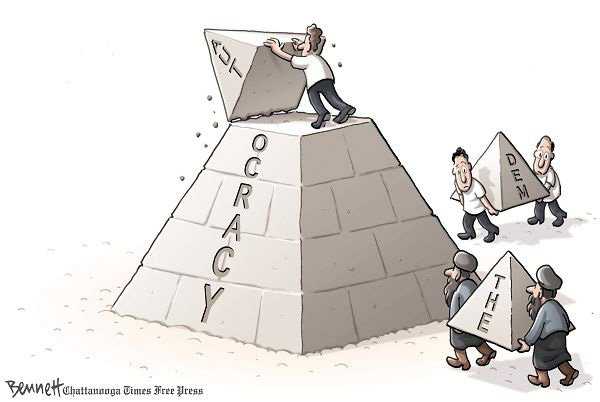
  • Democracy, Islam, and Secularism

    Democracy, Islam, and Secularism

    Turkey, as a Muslim-majority country, is the only member of NATO and on
    candidate member of the European Union. Assertive secularism, multiparty
    democracy, and military interventions are other puzzling aspects of
    Turkish politics. With its rising activism in the Middle East, Caucasus,
    and Central Asia, Turkey has also become an influential actor in world
    politics. This conference aims to present an integrated picture of Turkey
    by bringing together comparative perspectives on its past, present, and
    future, and delving into such issues as the legacy of the Ottoman Empire,
    secularism, religion, democracy, civil-military relations, and the
    European Union membership.

    Contact: Ahmet Kuru
    E-mail: [email protected]

    Date: March 6-7, 2009
    Time: 9:00 am to 5:30 pm
    Location: International Affairs Building 1501, Columbia University

    Co-sponsored by Center for the Study of Democracy, Toleration, and
    Religion; Institute for Religion, Culture, and Public Life; and Middle
    East Institute of Columbia University; and Institute for Turkish Studies

    Friday, March 6

    9.00 – 9.30: Coffee and rolls
    9.30 – 9.45: Welcome: Alfred Stepan
    9.45 – 12.45: From the Ottoman Empire to the Turkish Republic
    Chair: Rashid Khalidi (invited)
    Discussant: Richard Bulliet
    Karen Barkey, “Empire and Religious Diversity: The Ottoman Model in
    Contemporary Perspective”
    Sükrü Hanioglu, “The Historical Roots of Kemalism”
    Nur Yalman, “‘The Three Ways of Politics’ Revisited: Whither the People of
    the ‘Sublime State’?”
    12.45 – 2.30: Lunch
    2.30 – 5.30: Religion, Religious Parties, and Democracy
    Chair: David Cuthell
    Discussant: Mirjam Kunkler
    Alfred Stepan, “Variations of Laïcité: Comparing Turkey, France, and Senegal”
    Stathis Kalyvas, “Does Christian Democratic Experience Travel in the
    non-Christian World?”
    5.30: Reception

    Saturday, March 7

    9.00 – 9.30: Coffee and rolls
    9.30 – 12.30: The AKP Government and the Military
    Chair and discussant: Alfred Stepan
    Ümit Cizre, “Society as the Battleground for Hegemony: Secular Military
    and the AKP”
    Ahmet Kuru, “Politicized Military and the Consolidation of Democracy in
    Turkey”
    12.30 – 2.30: Lunch
    2.30 – 5.30: Politics of the Future: European Union, Constitution, and
    Democratization
    Chair and discussant: Joan Scott
    Joost Lagendijk, “Turkey’s Membership to the European Union: Perceptions
    and Processes”
    Andrew Arato, “Legality and Legitimacy in the Making of a New Turkish
    Constitution”
    Ergun Özbudun, “Turkish Democracy in Constitutional Crisis”

    Short Bios

    Andrew Arato is Dorothy Hirshon Professor of Political and Social Theory
    at the New School for Social Research. He is the author of Civil Society,
    Constitution, and Legitimacy and Constitution Making under Occupation: The
    Politics of Imposed Revolution in Iraq, and co-author of Civil Society and
    Political Theory.

    Karen Barkey is Professor of Sociology at Columbia University. She is the
    author of Empire of Difference: The Ottomans in Comparative Perspective
    and co-editor of After Empire: Multiethnic Societies and Nation-Building,
    the Soviet Union and the Russian, Ottoman, and Habsburg Empires.

    Richard Bulliet is Professor of History at Columbia University. He is the
    author of The Case for Islamo-Christian Civilization, the editor The
    Columbia History of the Twentieth Century, and the co-editor of The
    Encyclopedia of the Modern Middle East.

    Ümit Cizre is Professor of Political Science at Bilkent University,
    Turkey. She is the author of The Politics of the Powerful (in Turkish) and
    the editor of Secular and Islamic Politics in Turkey: The Making of the
    Justice and Development Party and Almanac Turkey 2005: Security Sector and
    Democratic Oversight.

    David Cuthell is the Executive Director of the Institute of Turkish
    Studies in Washington D.C. He also teaches Turkish politics as Visiting
    Adjunct Professor at Columbia University and Georgetown University.

    Nilüfer Göle is Professor of Sociology at Ecoles des Hautes Etudes en
    Sciences Sociales, France. She is the author of The Forbidden Modern:
    Civilization and Veiling and Interpenetrations: Islam and Europe (in
    French).

    Sükrü Hanioglu is Professor and the Chair of Near Eastern Studies at
    Princeton University. He is the author of Brief History of the Late
    Ottoman Empire, Preparation for a Revolution: The Young Turks, 1902-1908,
    and Young Turks in Opposition.

    Stathis Kalyvas is Arnold Wolfers Professor of Political Science and
    Director of the Program on Order, Conflict, and Violence at Yale
    University. He is the author of The Logic of Violence in Civil War and The
    Rise of Christian Democracy in Europe.

    Rashid Khalidi is Edward Said Professor of Arab Studies at Columbia
    University. He is the author of The Iron Cage: The Story of the
    Palestinian Struggle for Statehood and Resurrecting Empire: Western
    Footprints and America’s Perilous Path in the Middle East.

    Mirjam Künkler is Assistant Professor of Near Eastern Studies at Princeton
    University. She is the co-editor of Comparative Study of the Role of
    Religious Institutions in Democratic Transition and Consolidation
    Processes (in German)

    Ahmet Kuru is Postdoctoral Fellow at the Center for the Study of
    Democracy, Toleration, and Religion at Columbia University and Assistant
    Professor of Political Science at San Diego State University. He is the
    author of Secularism and State Policies toward Religion: The United
    States, France, and Turkey.

    Joost Lagendijk is a Dutch politician from Green Left. He is a Member of
    the European Parliament and its Committee on Foreign Affairs. He is also
    the Chairman of the Delegation to the European Union – Turkey Joint
    Parliamentary Committee.

    Ergun Özbudun is Professor of Law at Bilkent University, Turkey. He is the
    author of Contemporary Turkish Politics: Challenges to Democratic
    Consolidation and the co-editor of Atatürk: Founder of a Modern State. He
    recently chaired the academic committee to draft a new constitution for
    Turkey.

    Joan Scott is Harold F. Linder Professor at the School of Social Science
    in the Institute for Advanced Study. She is the author of Only Paradoxes
    to Offer: French Feminists and the Rights of Man, Parité: Sexual Equality
    and the Crisis of French Universalism, and The Politics of the Veil.

    Alfred Stepan, Wallace Sayre Professor of Government, director of Center
    for the Study of Democracy, Toleration, and Religion, and co-director of
    the Institute for Religion, Culture, and Public Life at Columbia
    University. He is the author of Arguing Comparative Politics and the
    co-author of Problems of Democratic Transition and Consolidation.

    Nur Yalman is Professor of Anthropology at Harvard University. He is the
    author of Under the Bo Tree and “Some Observations on Secularism in Islam:
    The Cultural Revolution in Turkey,” Daedalus, and co-author of A Passage
    to Peace: Global Solutions from East and West.

    Link:
  • MONTANA-USA: Military Honors

    MONTANA-USA: Military Honors

    By Stephanie Domurat

    Multimedia

    • Watch The Video

    BILLINGS – A Billings man is honored Sunday for his 50 years of military service.Dewey Hansen received The Tallman Award recognizing his work as an admission liaison for the Air Force Academy. He’s been in this role for 50 years and is one of only two officers to receive this award. Hansen began his military service at the age of 19, serving in World War II and then later retiring from active duty as a Lieutenant Colonel in 1978.

    He continued to serve through advising, recruiting and mentoring young Montana men and women seeking to serve their country. Hansen says he never could have dreamed he’d be honored in such a way, and says he has loved being able to make a difference.

  • Chinese probe crashes into moon

    Chinese probe crashes into moon

    Chinese probe crashes into moon

    The probe was launched in 2007 and mapped the moon’s surface

    A Chinese lunar probe has crashed into the moon in what Beijing has called a controlled collision.

    The Chang’e 1 lunar satellite hit the moon’s surface at 1613 local time (0813 GMT) at the end of a 16-month moon-mapping mission.

    China launched the spacecraft in late October 2007 on a mission to survey the entire surface of the moon.

    China’s ever-more ambitious space programme includes plans for a space station and landing a man on the moon.

    Future missions

    Launched into space on one of China’s Long March 3A rockets, the probe mapped the moon’s surface using stereo radar.

    Chang’e 1 was under the remote control of two stations in Qingda, eastern China, and Kashgar in the north-west of the country, the Xinhua news agency said.

    China became only the third nation – after the Soviet Union and the US – to put a manned spacecraft in orbit in 2003.

    State media said on Sunday China would launch a space module next year and carry out the country’s first space docking.

    “The module, called Tiangong-1, will provide a “safe room” for Chinese astronauts to live and conduct scientific research in zero gravity,” Chinese state media said.

    “Weighing about 8.5 tonnes, Tiangong-1 is able to perform a long-term unattended operation, which will be an essential step toward building a space station,” it added.

  • Poor Richard’s Report

    Poor Richard’s Report

    Poor Richard’s Report

    Over 300,000 readers
    My Mission: God has uniquely designed me to seek, write, and speak the truth as I see it. Preservation of one’s wealth while providing needful income is my primary goal in these unsettled times. I have given the ability to evaluate study, and interpret world and national events and their influence on future of the financial markets. This gift allows me to meet the needs of individual and institution clients. .

    LET’S HAVE FUN !!!
    Recall Congress !!!!

    The stock market gave its first internal sell signal sometime in 1998 when the Lowery Reports selling pressure line crossed above the buying pressure line. This meant the sellers were in control. Since Price to earnings ratio’s were at an all time high and about 24 years since the start of the last major bear market my internal clock set off all kinds of alarms. The external sell signal came on March 10, 2000 when the Clinton Administration went after Microsoft as a red herring to forget Al Gore’s problem of money laundering with the Chinese in his bid for the presidency. Microsoft’s did not contribute to either party so they were a prime candidate. That act was the pin that burst to dot.com bubble and the real start of the major bear market that we are in today. This is when I started selling all big cap stocks for the next 6 years.
    I have now been in this business one way or another for over 50 years. During that time I have read, heard and experienced many challenges. My noggin is a mishmash of facts, figures and clouded forms that only take shape when the right message enters my pea pod brain.
    I have been try to write this letter for a week now, but the write words escaped me because inside I knew I was wrong even though I hated to admit it. That is why I am keeping the title of this letter that you see above.
    The fact is that we are in serious trouble. I spend more time than most reading about the Federal Reserve. I have written in the past that the Chairman and his board can do anything they want to protect or improve our economy.
    Dr Bernanke has a habit of foreshadowing possible future events. One should always take note of his speeches. His most famous one was when he spoke about combating a possible deflating economy. He said that he would fly over the country in a helicopter dropping dollar bills. The press mocking him gave him the nickname “Helicopter Ben”.
    The first clue we were I trouble was when the Congress passed the rebates early in 2008 without much of a debate. Our representatives had been fighting, clawing, spitting and chewing each other to tiny bits. Now they were pals? Then came TARF and BARF for the banks, we had to bail out the big guys. With type of news the dollar should sink and gold go to 2000.
    So President Obama wanted a bailout bill real fast, 800 pages of pork and long term goodies that will cost us about $100 trillion dollars before we are through. I personally felt an outrage that our leaders did even to bother to read it. Seven democratic Congressmen voted against it and 3 Republican Senators voted for it.
    Then I saw a picture of Tim Geithner, our new Secretary of the Treasury. He was being groomed to be the next Chairman of the Federal Reserve. While others got squashed for not paying their taxes , he slid through that political barrier. Why I asked myself. Maybe because we are really in deep trouble and our politicians are scared? They know something we don’t? THEN HIS PICTURES CAME BACK TO HAUNT ME. He never smiles. He has sharp eyes like a falcon seem the pierce the air. The grey squirrels on the ground know the feeling when they spot the silhouette coming at them. His eyes are of fear, incomprehensive astonishment of how bad are system is. As a former President of the all powerful Federal Reserve Bank of NY and the only permanent member of the FOMC (Federal Open Market Committee) as Vice Chairman, his ivory tower office could not see the little bits and pieces crumbling around him. His full blown ideas of how to save our banking system deflated along with our economy. We are in a world wide debt crisis. European banks were leverage more than ours. Each bubble bursting is deflationary because all those excess inventories have to be worked off. The credit cards are the next one- Senator Dodd where are you with an new Usury law? Supported by Lobbyist (Bribers)?
    So in the Panic of 1907 when JP Morgan was the unquestioned leader and closed several banks and merged several others with out a peep from Washington or in New York City, today we face the same from DR Ben. This time we are finding out a little bit at a time. Chinese water torture. That is why President Obama has been bad mouthing the economy instead of trying to prop it up. Is he preparing us for something even worse?
    We won’t have a depression because Dr Bernanke did his doctorate on the great depression and how to avoid making the same mistake. Believe me, every central banker his worth had read it and underlined it. But we all have to change our habits and thinking. Stocks are dead meat. They are a source of cash. Need money? Sell some stock. Debt instruments are now the game. Corporate bonds have first call on a company’s assets. Then preferred stockholders come next. If anything is left over the common stock holders get the crumbs off the table. By the way – there all kinds of studies being promoted that T Bills have outperformed the market over a 20 year period, timing your stock purchase in very important.
    Now my friend; do not despair. Losses in stocks can be carried forward (so far at the printing) so that gains can be offset by losses
    Let me show you. Corporations that are solvent and viable will want to demonstrate this by reducing their debt. They can buy some back in the open market, or they can call the entire debt issue in and retire it. This is an excellent option in a deflationary economy. For us as investors finding those bonds or preferred’s selling below the call price could put us in what Obama calls the rich class. I mean if you are going over $250,000 you might as well go big time.
    Now is the time for all our politicians to back up the President. When the President presents his list of programs to be canned because they are outdated and pure pork and do not really contribute to the economy the Congress must back him up. Those that refuse to cut wasteful projects must be recalled. There might have been better ways, but this the one he chose. Failure to back him could send us down even faster. Consider this war-an economic war. Those who balk are traitors. They are traitors in a time of need. During the next two years if it obvious that some programs are not working then they should be stopped. If they refuse to admit failure then we can boot them all out in two years and rescind these acts. Being a registered Republican, these are not easy words to write, but we are at a defining moment in our history and I feel we must show unity or else we won’t be able to sell any bonds to finance these expenditures.
    By the way, this economy stinks world wide. The consumer is tapped out and if we don’t watch it as a country we will be too. We could be running into a debt brick wall a few years from now. I sure hope not. Cash is King!
    Today I would not own any money market funds except U S Government funds. There are too many funds and you don’t know where the next bankruptcy will come from. There has already been one fund that “broke a dollar”, but that was quickly made up. Cold hard cash is good, because later on you will be able to pick up tasty bargains at tremendous discounts
    I would also look at preferred stocks. They have second call on a corporation’s assets right after the bond holders. You have to be choosy. I prefer AMERCO Pfd A which is the holding company for U-Haul Trailer Company. It is listed on the NYSE and trades just under 20. The yield is just over 10% and 85% is tax free and they quarterly. You have an added protection in that they have a covenant for dividend in arrears. They must make up any dividends in arrears before they can resume regular payments. Here is the kicker. The call price is $25, if you paid 20 or under you stand to make over 30% gain. This is important because I believe any corporations will go all out to reduce their debt burdens. This will instill consumer confidence and support the common stock.
    So those of you who feel beaten down in a mutual fund here is a long term solution to your problem.
    It is important that you look around your own area and check out local companies. As an individual living in the community corporate officers like to brag at parties etc and just by common sense deduction and no inside information you might yourself a solid winner.
    ` Remember – never give up – there is a light at the end of the tunnel – it may be a pen light from here , but the close we get the brighter it shine. They economy will rebound, but the growth will be more subdued and the price to earnings ratio’s will keep contracting until this market is completely over sold and undervalued.
    These are formidable times which require much discussion. My last letter I tried to cover too much at one time so I will write more often , and try to limit my topic.
    Cheerio !!!

    Richard C De Graff
    256 Ashford Road
    RER Eastford Ct 06242
    860-522-7171 Main Office
    800-821-6665 Watts
    860-315-7413 Home/Office
    [email protected]

    This report has been prepared from original sources and data which we believe reliable but we make no representation to its accuracy or completeness. Coburn & Meredith Inc. its subsidiaries and or officers may from time to time acquire, hold, sell a position discussed in this publications, and we may act as principal for our own account or as agent for both the buyer and seller.

  • Secretary Addresses Pakistan, Afghanistan…

    Secretary Addresses Pakistan, Afghanistan…

    By Donna Miles
    American Forces Press Service
    WASHINGTON, March 1, 2009 – As the United States reviews its strategy in Afghanistan, Defense Secretary Robert M. Gates said he’s gratified by Pakistan’s growing recognition of the importance of eliminating extremist safe havens along its border.Speaking on CNBC’s “Meet the Press,” Gates called the situation on the Pakistani side of the volatile border region “worrisome.” He noted that the region has become a haven for Taliban, al-Qaida and other extremist groups that work together to support common goals.

    “As long as they have a safe haven to operate there, it is going to be a problem for us in Afghanistan,” Gates said. “The key here is our being able to cooperate with and enable the Pakistanis to be able to deal with this problem on their own sovereign territory.”

    Gates said his talks with Pakistani leaders during the past week, part of the Obama administration’s review of the U.S. strategy in Afghanistan, left him convinced that Pakistan recognizes the importance of fixing the problem.

    “They clearly now understand that what is going on in that border area is as big a risk to the stability of Pakistan as it is a problem for us in Afghanistan,” he said.

    Gates said the U.S. presence in Afghanistan, along with military and civil support provided by other partner nations, is helping provide stability. This, he said, is preventing terrorists from reclaiming former safe havens in Afghanistan that could be used to plot against the United States and other countries.

    As the United States reviews its Afghanistan strategy, President Barack Obama is promoting broad dialogue and seeking input from not only Afghanistan and Pakistan, but also Europeans and other allies. “We’re bringing in an awful lot of people to get different points of view,” Gates said.

    Gates said the review, which he hopes will be completed in a few weeks, will help establish a way forward. He said it also will help determine whether more than the 17,000 additional troops already authorized will be sent to Afghanistan.

    The secretary addressed a variety of other defense-related issues during today’s Meet the Press broadcast.

    On Iran:

    The U.S. focus on Iraq — now or in the past — hasn’t distracted the past or current administration from “the growing problem with Iran and its nuclear program,” Gates said.

    “I think there has been a continuing focus on, ‘How do you get the Iranians to walk away from a nuclear weapons program?’ Gates said. “They are not close to a stockpile. They are not close to a weapon at this time. And so it is a question of whether you can increase the level of the sanctions and the cost to the Iranians of pursuing that program.”

    At the same time, Gates said it’s necessary to “show them an open door if they want to engage with the Europeans or with us” if they abandon the program.

    The global economic crisis and the drop in oil prices that’s left Iran cash-strapped could actually help the effort, he said. “Our chances of being successful seems to be a lot better at $35 or $40 dollar [a barrel] oil than they were at $140 oil, because there are economic costs to this program,” Gates said.

    On Mexico:

    The United States could help the Mexican government in its crackdown on drug cartels, Gates said.

    The secretary heralded President Felipe Calderón’s initiatives and said the United States could ultimately be in a position to help. Among assets the U.S. military might contribute, he said, are training, reconnaissance and surveillance capabilities and other resources.

    “It clearly is a serious problem,” Gates said.

    On the global economic crisis:

    The economic crisis poses a serious threat to international stability and international cooperation, Gates said.

    “Terrorism is a much more limited and defined threat,” he said. “They are both real. [But] the economic threat clearly affects many, many more people and countries.”

    On Russia:

    Russia represents “a real challenge” as Prime Minister Vladimir Putin asserts Russian’s role as an international player by blocking initiatives it doesn’t support, Gates said.

    But “there is a chance to reset the relationship, because there are a number of areas where we have common interests,” including arms control, he said, reiterating Vice President Joe Biden’s recent comments at a security conference in Munich, Germany.

    “So we will be looking for opportunities to see if we can make some progress with the Russians,” Gates said. “But it has been tough.”

    On serving as defense secretary:

    Gates remained mum on how long he intends to serve as Obama’s defense secretary, saying he has no specific date in mind to leave his post.

    The decision, he said, is “clearly up to the president.”

    But asked if he would remain on the job through the end of Obama’s four-year term, Gates responded: “That would be a challenge.”

    Biographies:
    Robert M. Gates
    Related Articles:
    Gates: Plans on Track for New Transition Force Role in Iraq
  • Garden of Eden

    Garden of Eden

    Do these mysterious stones mark the site of the Garden of Eden?

    By Tom Cox

    Last updated at 9:10 PM on 28th February 2009

    For the old Kurdish shepherd, it was just another burning hot day in the rolling plains of eastern Turkey. Following his flock over the arid hillsides, he passed the single mulberry tree, which the locals regarded as ‘sacred’. The bells on his sheep tinkled in the stillness. Then he spotted something. Crouching down, he brushed away the dust, and exposed a strange, large, oblong stone.

    The man looked left and right: there were similar stone rectangles, peeping from the sands. Calling his dog to heel, the shepherd resolved to inform someone of his finds when he got back to the village. Maybe the stones were mportant.

    They certainly were important. The solitary Kurdish man, on that summer’s day in 1994, had made the greatest archaeological discovery in 50 years. Others would say he’d made the greatest archaeological discovery ever: a site that has revolutionised the way we look at human history, the origin of religion – and perhaps even the truth behind the Garden of Eden.


    The site has been described as ‘extraordinary’ and ‘the most important’ site in the world

    A few weeks after his discovery, news of the shepherd’s find reached museum curators in the ancient city of Sanliurfa, ten miles south-west of the stones.

    They got in touch with the German Archaeological Institute in Istanbul. And so, in late 1994, archaeologist Klaus Schmidt came to the site of Gobekli Tepe (pronounced Go-beckly Tepp-ay) to begin his excavations.

    As he puts it: ‘As soon as I got there and saw the stones, I knew that if I didn’t walk away immediately I would be here for the rest of my life.’


    Remarkable find: A frieze from Gobekli Tepe

    Schmidt stayed. And what he has uncovered is astonishing. Archaeologists worldwide are in rare agreement on the site’s importance. ‘Gobekli Tepe changes everything,’ says Ian Hodder, at Stanford University.

    David Lewis-Williams, professor of archaeology at Witwatersrand University in Johannesburg, says: ‘Gobekli Tepe is the most important archaeological site in the world.’

    Some go even further and say the site and its implications are incredible. As Reading University professor Steve Mithen says: ‘Gobekli Tepe is too extraordinary for my mind to understand.’

    So what is it that has energised and astounded the sober world of academia?

    The site of Gobekli Tepe is simple enough to describe. The oblong stones, unearthed by the shepherd, turned out to be the flat tops of awesome, T-shaped megaliths. Imagine carved and slender versions of the stones of Avebury or Stonehenge.

    Most of these standing stones are inscribed with bizarre and delicate images – mainly of boars and ducks, of hunting and game. Sinuous serpents are another common motif. Some of the megaliths show crayfish or lions.

    The stones seem to represent human forms – some have stylised ‘arms’, which angle down the sides. Functionally, the site appears to be a temple, or ritual site, like the stone circles of Western Europe.

    To date, 45 of these stones have been dug out – they are arranged in circles from five to ten yards across – but there are indications that much more is to come. Geomagnetic surveys imply that there are hundreds more standing stones, just waiting to be excavated.

    So far, so remarkable. If Gobekli Tepe was simply this, it would already be a dazzling site – a Turkish Stonehenge. But several unique factors lift Gobekli Tepe into the archaeological stratosphere – and the realms of the fantastical.


    The Garden of Eden come to life: Is Gobekli Tepe where the story began?

    The first is its staggering age. Carbon-dating shows that the complex is at least 12,000 years old, maybe even 13,000 years old.

    That means it was built around 10,000BC. By comparison, Stonehenge was built in 3,000 BC and the pyramids of Giza in 2,500 BC.

    Gobekli is thus the oldest such site in the world, by a mind-numbing margin. It is so old that it predates settled human life. It is pre-pottery, pre-writing, pre-everything. Gobekli hails from a part of human history that is unimaginably distant, right back in our hunter-gatherer past.

    How did cavemen build something so ambitious? Schmidt speculates that bands of hunters would have gathered sporadically at the site, through the decades of construction, living in animal-skin tents, slaughtering local game for food.

    The many flint arrowheads found around Gobekli support this thesis; they also support the dating of the site.

    This revelation, that Stone Age hunter-gatherers could have built something like Gobekli, is worldchanging, for it shows that the old hunter-gatherer life, in this region of Turkey, was far more advanced than we ever conceived – almost unbelievably sophisticated.


    The shepherd who discovered Gobekli Tepe has ‘changed everything’, said one academic

    It’s as if the gods came down from heaven and built Gobekli for themselves.

    This is where we come to the biblical connection, and my own involvement in the Gobekli Tepe story.

    About three years ago, intrigued by the first scant details of the site, I flew out to Gobekli. It was a long, wearying journey, but more than worth it, not least as it would later provide the backdrop for a new novel I have written.

    Back then, on the day I arrived at the dig, the archaeologists were unearthing mind-blowing artworks. As these sculptures were revealed, I realised that I was among the first people to see them since the end of the Ice Age.

    And that’s when a tantalising possibility arose. Over glasses of black tea, served in tents right next to the megaliths, Klaus Schmidt told me that, in his opinion, this very spot was once the site of the biblical Garden of Eden. More specifically, as he put it: ‘Gobekli Tepe is a temple in Eden.’

    To understand how a respected academic like Schmidt can make such a dizzying claim, you need to know that many scholars view the Eden story as folk-memory, or allegory.

    Seen in this way, the Eden story, in Genesis, tells us of humanity’s innocent and leisured hunter-gatherer past, when we could pluck fruit from the trees, scoop fish from the rivers and spend the rest of our days in pleasure.

    But then we ‘fell’ into the harsher life of farming, with its ceaseless toil and daily grind. And we know primitive farming was harsh, compared to the relative indolence of hunting, because of the archaeological evidence.


    To date, archaeologists have dug 45 stones out of the ruins at Gobekli

    When people make the transition from hunter-gathering to settled agriculture, their skeletons change – they temporarily grow smaller and less healthy as the human body adapts to a diet poorer in protein and a more wearisome lifestyle. Likewise, newly domesticated animals get scrawnier.

    This begs the question, why adopt farming at all? Many theories have been suggested – from tribal competition, to population pressures, to the extinction of wild animal species. But Schmidt believes that the temple of Gobekli reveals another possible cause.

    ‘To build such a place as this, the hunters must have joined together in numbers. After they finished building, they probably congregated for worship. But then they found that they couldn’t feed so many people with regular hunting and gathering.

    ‘So I think they began cultivating the wild grasses on the hills. Religion motivated people to take up farming.’

    The reason such theories have special weight is that the move to farming first happened in this same region. These rolling Anatolian plains were the cradle of agriculture.

    The world’s first farmyard pigs were domesticated at Cayonu, just 60 miles away. Sheep, cattle and goats were also first domesticated in eastern Turkey. Worldwide wheat species descend from einkorn wheat – first cultivated on the hills near Gobekli. Other domestic cereals – such as rye and oats – also started here.


    The stones unearthed by the shepherd turned out to be the flat tops of T-shaped megaliths

    But there was a problem for these early farmers, and it wasn’t just that they had adopted a tougher, if ultimately more productive, lifestyle. They also experienced an ecological crisis. These days the landscape surrounding the eerie stones of Gobekli is arid and barren, but it was not always thus. As the carvings on the stones show – and as archaeological remains reveal – this was once a richly pastoral region.

    There were herds of game, rivers of fish, and flocks of wildfowl; lush green meadows were ringed by woods and wild orchards. About 10,000 years ago, the Kurdish desert was a ‘paradisiacal place’, as Schmidt puts it. So what destroyed the environment? The answer is Man.

    As we began farming, we changed the landscape and the climate. When the trees were chopped down, the soil leached away; all that ploughing and reaping left the land eroded and bare. What was once an agreeable oasis became a land of stress, toil and diminishing returns.

    And so, paradise was lost. Adam the hunter was forced out of his glorious Eden, ‘to till the earth from whence he was taken’ – as the Bible puts it.

    Of course, these theories might be dismissed as speculations. Yet there is plenty of historical evidence to show that the writers of the Bible, when talking of Eden, were, indeed, describing this corner of Kurdish Turkey.


    Archaeologist Klaus Schmidt poses next to some of the carvings at Gebekli

    In the Book of Genesis, it is indicated that Eden is west of Assyria. Sure enough, this is where Gobekli is sited.

    Likewise, biblical Eden is by four rivers, including the Tigris and Euphrates. And Gobekli lies between both of these.

    In ancient Assyrian texts, there is mention of a ‘Beth Eden’ – a house of Eden. This minor kingdom was 50 miles from Gobekli Tepe.

    Another book in the Old Testament talks of ‘the children of Eden which were in Thelasar’, a town in northern Syria, near Gobekli.

    The very word ‘Eden’ comes from the Sumerian for ‘plain’; Gobekli lies on the plains of Harran.

    Thus, when you put it all together, the evidence is persuasive. Gobekli Tepe is, indeed, a ‘temple in Eden’, built by our leisured and fortunate ancestors – people who had time to cultivate art, architecture and complex ritual, before the traumas of agriculture ruined their lifestyle, and devastated their paradise.

    It’s a stunning and seductive idea. Yet it has a sinister epilogue. Because the loss of paradise seems to have had a strange and darkening effect on the human mind.


    Many of Gobekli’s standing stones are inscribed with ‘bizarre and delicate’ images, like this reptile

    A few years ago, archaeologists at nearby Cayonu unearthed a hoard of human skulls. They were found under an altar-like slab, stained with human blood.

    No one is sure, but this may be the earliest evidence for human sacrifice: one of the most inexplicable of human behaviours and one that could have evolved only in the face of terrible societal stress.

    Experts may argue over the evidence at Cayonu. But what no one denies is that human sacrifice took place in this region, spreading to Palestine, Canaan and Israel.

    Archaeological evidence suggests that victims were killed in huge death pits, children were buried alive in jars, others roasted in vast bronze bowls.

    These are almost incomprehensible acts, unless you understand that the people had learned to fear their gods, having been cast out of paradise. So they sought to propitiate the angry heavens.

    This savagery may, indeed, hold the key to one final, bewildering mystery. The astonishing stones and friezes of Gobekli Tepe are preserved intact for a bizarre reason.

    Long ago, the site was deliberately and systematically buried in a feat of labour every bit as remarkable as the stone carvings.


    The stones of Gobekli Tepe are trying to speak to us from across the centuries – a warning we should heed

    Around 8,000 BC, the creators of Gobekli turned on their achievement and entombed their glorious temple under thousands of tons of earth, creating the artificial hills on which that Kurdish shepherd walked in 1994.

    No one knows why Gobekli was buried. Maybe it was interred as a kind of penance: a sacrifice to the angry gods, who had cast the hunters out of paradise. Perhaps it was for shame at the violence and bloodshed that the stone-worship had helped provoke.

    Whatever the answer, the parallels with our own era are stark. As we contemplate a new age of ecological turbulence, maybe the silent, sombre, 12,000-year-old stones of Gobekli Tepe are trying to speak to us, to warn us, as they stare across the first Eden we destroyed.

    • The Genesis Secret by Tom Knox is published by Harper Collins on March 9, priced £6.99. To order a copy (P&P free), call 0845 155 0720.

    Source:  www.dailymail.co.uk, 28th February 2009