| Turkey warns US over recognizing Armenian claims on 1915 incidents |
|
Turkey’s foreign minister has warned Barack Obama’s incoming administration that any U.S. recognition of Armenian claims regarding the 1915 incidents could derail reconciliation efforts between the two neighbors. “It would not be very rational for a third country to take a position on this issue… A wrong step by the United States will harm the process,” the Anatolia news agency quoted Ali Babacan as saying late Friday.
Turkey has “never been closer” to normalizing ties with Armenia, its eastern neighbor, and a breakthrough could be secured in 2009, the minister said, according to the AFP.
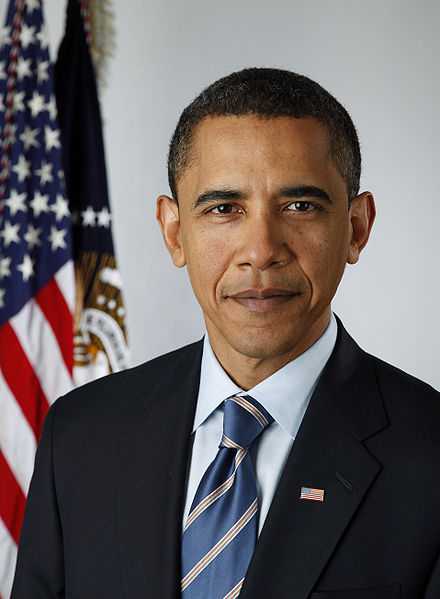
Obama, who takes office Tuesday, pledged to his Armenian-American supporters during his election campaign to recognize the 1915 incidents as “genocide”.
The issue of 1915 incidents is highly sensitive for Armenia as well as Turkey. Around 300,000 Armenians and at least as many Turks, died in civil strife that emerged when Armenians took up arms, backed by Russia, for independence in eastern Anatolia.
However Armenia, with the backing of the diaspora, claims up to 1.5 million of their kin were slaughtered in orchestrated killings in 1915. The issue remains unsolved as Armenia drags its feet in accepting Turkey’s proposal of forming a commission to investigate the claims.
ISSUE DISCUSSED BY TWO COUNTRIES Babacan said the dispute was among the issues that Ankara and Yereven had been discussing since reconciliation efforts gathered steam in September when Turkish President Abdullah Gul paid a landmark visit to Armenia, AFP reported citing Anatolian Agency’s report.
“Turkey and Armenia have never been closer to a plan on normalizing relations,” Anatolia quoted Babacan as saying.
Turkey and Armenia have no diplomatic relations and their border has been closed for more than a decade, as Armenia presses the international community to admit the so-called “genocide” claims instead of accepting Turkey’s call to investigate the allegations, and Armenia’s invasion of 20 percent territory of Azerbaijan.
The fence-mending process, he said, was boosted by similar reconciliation efforts between Armenia and Azerbaijan, a close ally of Turkey.
“The prospect of normalizing relations both between Azerbaijan and Armenia and between Turkey and Armenia in 2009 is not a dream,” he added.
Gul became the first Turkish head of state to visit Armenia when he travelled to Yerevan in September to watch a World Cup qualifying football match between the two countries on the invitation of his Armenian counterpart Serzh Sarkisian. |
Month: January 2009
-
Turkey warns US over recognizing Armenian claims on 1915 incidents
-
Russia Again Denies Arms Supplies To Armenia
Faced with continuing protests from Azerbaijan, Russia on Friday again denied Azerbaijani media claims that it supplied large quantities of military hardware and other weapons to Armenia last year.
An Azerbaijani news website published late last week a scanned copy of what it called a document certifying the transfer of the weapons that belonged to Russian troops stationed in Armenia.
The document, purportedly signed by a deputy commander of Russia’s North Caucasus Military District, contained a long list of armaments allegedly handed over to the Armenian military free of charge. Those included 21 battle tanks, 50 armored vehicles, as well as more than 40 artillery systems and 4,000 automatic rifles along with ammunition for them.
The Russian Defense Ministry denied the report on Wednesday after Baku demanded an explanation from Russia’s ambassador to Azerbaijan. But that did not stop the Azerbaijani Foreign Ministry from expressing “strong protest in connection with the transfer of arms to Armenia” the next day.
“The person whose name was mentioned by mass media did not sign any documents, and no deliveries were carried out,” Russian Foreign Minister Sergey Lavrov insisted at a news conference on Friday. Russian news agencies quoted him as saying that he will reiterate these assurances during his upcoming visit to Baku.
Lavrov noted at the same time that as a member of the Russian-led Collective Security Treaty Organization (CSTO), Armenia is entitled to receiving Russian weapons at cut-down prices. “Armenia is a member of the CSTO and enjoys more privileged terms,” he said. “Our Azerbaijani colleagues are aware of that and have no questions.”
https://www.azatutyun.am/a/1599318.html
-
European Union pays huge money to the organizers of Internet-campaign for apologizing to Armenians in Turkey
Baku-APA. The European Union was a promoter of the Internet-campaign for apologizing to Armenians in Turkey and paid huge money to the organizers of this campaign, the Turkish sources told APA.
Founders of the Helsinki Civil Assembly in Turkey professors Ahmet Insel and Halil Berktay, professor of the Bilgi University Murad Belge, Kurdish national Sherafettin Elchi, Kanal D presenter Mehmet Ali Birand, writer Adalet Agaoglu received 107 thousand 414 euro for each of them, professor Ibrahim Kaboglu – 193 thousand 548.73 euro, journalist Mine Kirikkanat – 70 thousand euro, professor Atilla Yayla – 449 thousand 620.40 euro, communist Ertogrul Kurkchu – 809 thousand 414 euro, “Mazlumder” circle – 81 thousand 735.15 euro, editor of the Armenian “Agos” newspaper Etien Mahchupian – one million 32 thousand 921.35 euro.
For this money they have to provide the Internet-campaign “We apologize to Armenians” and to involve more people in this campaign.
-
Turkey Is Optimistic About Nabucco as Budapest Summit Approaches
Turkey Is Optimistic About Nabucco as Budapest Summit Approaches
Publication: Eurasia Daily Monitor Volume: 6 Issue: 10January 16, 2009By: Saban KardasIn the midst of the gas transit row between Russia and Ukraine and discussions on diversifying the continent’s energy supplies, Turkey is pleased to see an opportunity for itself.
Turkey is seeking a mediating role in the diplomatic standoff between Russia and Ukraine. Following his visit to Moscow, Turkish Energy Minister Hilmi Guler told reporters that Turkey’s talks with the two parties were continuing and it was ready to mediate, if necessary by hosting a meeting in Turkey. Noting that some Balkan countries that were hit by the crisis, such as Bulgaria, were demanding gas from Turkey, he announced that Ankara was holding talks for building alternative supply routes to them. It will be similar to Turkey’s exports to Greece and might help these countries weather future energy interruptions. Guler also was content that the importance of the Nabucco project for diversifying Europe’s energy supplies was appreciated. He told reporters that Turkey was determined to realize this project, and concrete steps to make it operational would be taken soon (Anadolu Ajansi, January 15).
Ahead of the Nabucco summit to be hosted by Hungary this month, it appears that Turkey’s hand has been strengthened. Despite calls for prioritizing energy security following a similar crisis in 2006, the EU has failed to reduce energy dependence, which has raised questions about the effectiveness of the EU’s energy policy (Hurriyet, January 15). The latest Russian-Ukrainian crisis prompted a debate on diversifying both sources and gas transportation routes through alternative pipelines. The EU and Russia now have incentives to support projects that bypass Ukraine. Gazprom’s Nord Stream and South Stream projects, under the Baltic Sea and the Black Sea, respectively, are in progress. Since South Stream is a rival to the Nabucco project and European countries have differing preferences, it will be interesting to observe how pipeline politics develop.
The Nabucco project, originally projected to open in 2013, will carry gas from the Caspian basin, the Middle East, and Egypt to Europe by routes stretching through Turkey, Bulgaria, Romania, and Hungary and terminating at the Baumgarten hub in Austria. The 3,300-km (1,980-mile) project is expected to cost approximately €7.9 billion ($10.5 billion) (www.nabucco-pipeline.com).
Nabucco has gained increasing favor because of efforts to open European access to the resources of the Caspian (EDM, January 6). The Czech Republic, which currently holds the EU’s rotating presidency, is intent on speeding up the preparations for Nabucco. Czech Prime Minister Mirek Topolanek proposed that the EU make the realization of the project a top priority (www.trt.net.tr, January 14). Nonetheless, other EU members such as Italy back South Stream (EDM, June 25, 2007).
One major obstacle to the project has been whether the consortium can secure enough gas to make the project feasible. Turkey, hoping to project itself as a major player in gas markets through Nabucco, has worked hard to find sufficient gas resources. Its efforts to bring Turkmenistan on board did not produce any results in mid-2008 (www.asam.org.tr, May 2, 2008), because of Turkmenistan’s contracts with Russia, and concerns about transporting the gas across the Caspian Sea. A trilateral summit between the presidents of Turkmenistan, Azerbaijan, and Turkey in late November 2008, however, was interpreted as “quiet support” for the Nabucco project (EDM, December 1). Since then, European leaders have also been encouraging Turkmenistan to join the project. Recently it was suggested that the prospects for realizing the Trans-Caspian Gas Pipeline (TCGP) had increased, particularly following the Russian-Ukrainian dispute. Although “the route and means for Turkmenistan’s gas to cross the Caspian Sea has not yet been decided,” it is claimed that the TCGP could be integrated into Nabucco (www.isn.ethz.ch, January 15). Nonetheless, Turkmenistan has yet to commit gas exports to Europe through Nabucco.
Currently, the only supplier that is committed to Nabucco is Azerbaijan. Turkey has been pushing for including Iranian gas in the project, but the diplomatic standoff between Iran and the West over the Iranian nuclear issue raises questions about the likelihood of connecting Iranian Tabriz-Erzurum gas pipeline to Nabucco. Moreover, the reliability of Iran is also unclear, given the problems Turkey has encountered in its imports from Iran in the past. Turkey also hopes to connect gas from Iraq and Egypt to the Nabucco line.
Turkey had even raised the possibility of Russia joining the Nabucco project. During his visit to Moscow in February 2008, Foreign Minister Ali Babacan invited his Russian counterpart to join the project (Turkish Daily News, February 21, 2008; EDM, February 28, 2008). Later, Guler argued that the South Stream and Nabucco projects could be combined (Today’s Zaman, March 21, 2008). Nonetheless, Russian officials continued to scorn Nabucco for being infeasible.
Another concern is whether this ambitious project could be completed, given the global economic crisis. Reinhard Mitschek, Managing Director of Nabucco Gas Pipeline International GmbH, maintained that “the actual situation of the markets is more or less a benefit for projects like Nabucco.” As positive developments, he referred to falling steel prices and the willingness of banks to support long-term infrastructure projects in times of crisis (www.nabucco-pipeline.com, January 9).
Turkey’s demands from other shareholders (Bulgaria, Romania, Hungary, Germany, and Austria), particularly those relating to the pricing mechanism, have been considered another obstacle by experts (EDM, December 12). Speaking after a working meeting in Istanbul on January 13, Mitschek maintained that the parties were close to signing the intergovernmental agreement, emphasizing consensus among countries involved in the construction project about how to “share the benefits and risks of the project equally, each owning a 16.6 percent stake in the project.” Mitschek argued that its flexibility in receiving gas from many sources and being open to different partners and commercial models was what gave Nabucco a competitive advantage over its rivals. He also counted the many benefits of the project to Turkey but said that “we should not mix the two issues. Our consortium is about the transmission of the gas, not about the trading of gas” (Today’s Zaman, Hurriyet Daily News, Milliyet, January 14).
Guler told reporters that Turkey had submitted its own draft of the intergovernmental agreement to its partners and was awaiting their response (Cihan Haber Ajansi, January 15). Nonetheless, Prime Minister Recep Tayyip Erdogan has not confirmed that he will take part in the Budapest summit. Disagreements over Turkey’s demands, as well intra-EU bargaining, are likely to continue until the leaders meet on January 27.
https://jamestown.org/program/turkey-is-optimistic-about-nabucco-as-budapest-summit-approaches/
-
Poor Richard’s Report
Turkey: Attempts To Revive EU Membership Bid
January 16, 2009Turkish Prime Minister Recep Tayyip Erdogan will visit Brussels on Jan. 18 to renew Turkey’s bid for membership in the European Union, EU Observer reported Jan. 16. Ergodan is scheduled to meet with European Union Commission President Jose Manuel Barroso and the European Union’s foreign policy chief, Javier Solana, to discuss Turkey’s membership bid and other regional issues. Turkey’s first EU negotiator, Egemen Bagis, will also travel with Erdogan to Brussels. -
Turkey keen to push reform for EU seat
News & Commentary
Last Updated: January 15. 2009 9:30AM UAE / January 15. 2009 5:30AM GMT
ISTANBUL // Stung by criticism at home and abroad for letting Turkey’s
EU bid languish, the government in Ankara has signalled its
willingness to revitalise its reform agenda by appointing Turkey’s
first minister for EU affairs. But the big question is: Will the new
man be able to usher in an era of democratic change?Egemen Bagis, one of the most influential foreign policy advisers to
Recep Tayyip Erdogan, the prime minister, took over as the new top
negotiator in Turkey’s membership talks with the European Union last
weekend. Up to now, the EU negotiations were part of the portfolio of
Ali Babacan, the foreign minister. Mr Bagis, who is only 38 years old,
was given the title of a state minister and a seat in the cabinet,
thus, in effect, becoming Turkey’s first EU minister.“No one should be in any doubt that we will work with all our strength
to realise these [EU] reforms with a philosophy of `don’t stop, keep
going’,” Mr Bagis said at a ceremony marking the handover of the post
of EU negotiator from Mr Babacan. EU representatives welcomed Mr
Bagis’s appointment. The ambassador of the Czech Republic in Ankara,
Eva Filipi, whose country currently holds the rotating EU presidency,
said the move was “very positive” for Turkey and the EU, according to
the Anatolian news agency.Critics within Turkey and in the EU have accused Mr Erdogan’s
government of “reform fatigue”. Membership negotiations that started
in late 2005 have proceeded slowly, with only ten out of 33
negotiation chapters having been addressed so far. Creating a separate
EU ministry and appointing a heavy-hitter such as Mr Bagis to lead it
is a signal that the government wants to speed things up, observers say.The appointment follows several other symbolic steps taken by the
government recently. The beginning of the year saw the start of
Turkey’s first state-run television channel broadcasting in Kurdish,
and the government also promised to widen rights of the Alevis, a
liberal Muslim minority. In another sign of a renewed EU vigour, Mr
Erdogan, accompanied by Mr Bagis, will visit the European Union
headquarters in Brussels for talks with Jose Manuel Barroso, the EU
commission president, and other top officials on Sunday and Monday,
the first such trip for the prime minister in four years, according to
Turkish press reports. The visit will be Mr Bagis’s first chance to
meet EU officials face to face after taking over his new post.“2009 will be a year that will see new action for Europe,” said Beril
Dedeoglu, a political scientist at Istanbul’s Galatasaray University.
She said the fact that Abdullah Gul, the president, signed a new
reform agenda on New Year’s Eve also pointed towards fresh efforts for
change.The so-called third National Programme that Mr Gul put into force with
his signature calls for hundreds of laws and regulations to be changed
over the next four years in order to bring Turkey closer to the EU.
The package includes judicial reforms, measures to protect free speech
and to strengthen civilian oversight over the military as well as
commitments to secure Turkey’s market economy and to fight corruption.As he works through the National Programme as EU minister, much will
depend on how much political backing Mr Bagis receives from Mr
Erdogan, Hasan Cemal, a columnist, wrote in the Milliyet daily.“If prime minister Erdogan does not show his political support without
leaving any room for doubt, Egemen Bagis will remain in a vacuum in
Ankara as well as in Brussels.”Newspapers reported that two of the reasons Mr Bagis, who has been
known more as an expert on Turkish-US relations than as an EU buff,
was picked as EU minister were his closeness to Mr Erdogan and the
good reputation he enjoys within Turkey’s business community, which
forms a powerful pro-European lobby group in the country.Prof Dedeoglu said that substantive action on the EU front was not
expected before local elections scheduled for March 29, but that the
government would probably act shortly afterwards. Renewed reforms
would strengthen the hand of Turkey’s supporters within the EU, among
them Sweden, the United Kingdom and Spain, Prof Dedeoglu said. “Some
reforms will come about during the Swedish EU presidency” in the
second half of the year.Domestically, Prof Dedeoglu said Mr Erdogan had understood that Turkey
did not benefit from the standstill on the reform path and that his
governing Justice and Development Party, or AKP, could benefit at the
next general elections in two to three years if it started a new
reform process now.But not everyone is convinced. Umit Ozdag, head of the Institute for
Turkey in the 21st Century, a conservative think tank in Ankara, said
the appointment of Mr Bagis and such other recent moves as the
establishment of the Kurdish television station had more to do with
the inner workings of the AKP and the upcoming local elections than
with the EU bid.“Five years ago, the EU was a domestic policy issue in Turkey,” Prof
Ozdag said, adding that there was widespread enthusiasm for the EU
project among Turks at that time. “Now, people don’t believe in the EU
anymore.”Polls show that public support for EU membership slipped dramatically
in Turkey in recent years. Prof Ozdag and other blame “double
standards” of the EU for the erosion of support. Some EU countries
like France have said openly that they oppose Turkish membership, even
though membership talks are proceeding.Prof Ozdag said chances for Turkey to become a full EU member one day
are slim. “No one knows how it will end,” he said about the EU
process. At some point, “one of the sides will say: `Ok, that’s enough’.”