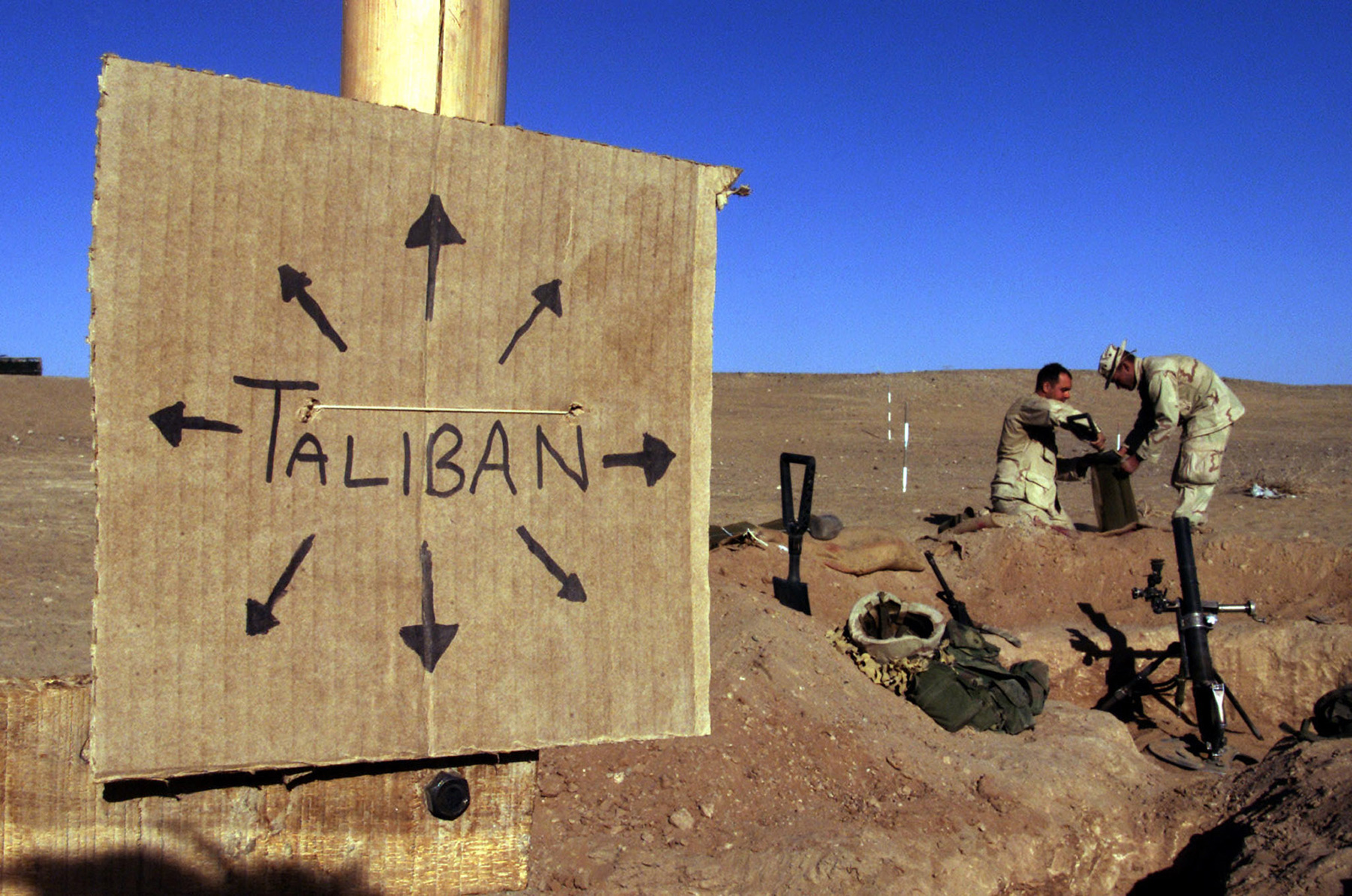
Turkey, deliberately pushed into an “Afghanistan, Lebanon, and Syria Syndrome” by the ruling political forces and their American partners, is increasingly moving away from the fundamental pillars of the secular, laicist Republic and the state doctrine of Mustafa Kemal Atatürk. Atatürk envisioned a modern state, independent of origin, ethnicity, or religious affiliation.
The fact that U.S. support and the courting of Islamists represent a fundamental and massive issue for European security architecture is still not widely understood within the EU.
It is no coincidence that in March 2025, U.S. President Trump appointed Thomas J. Barrack as U.S. Ambassador to Turkey, who publicly promoted the religion-based legal order of the “Millet system” – an Ottoman-era framework that governed political leadership based on ethnicity and religion – as a model for the entire region.
“Divide et impera” – divide and rule – is the guiding principle of U.S. foreign policy, whether in the Ukraine conflict, the Middle East, or Turkey. Henchmen, opportunists, and accomplices of this disastrous imperialist policy are plentiful – in the EU, in Turkey, in the Arab world, and in Latin America. Remote-controlled statesmen and their political cabinets, Islamists in pinstripe suits, or former murderers and terrorists – who are suddenly and transparently declared as respectable politicians and Western interlocutors – lay the groundwork for the sellout of their own countries (while enriching themselves and their corrupt circles), and are the reason why millions are forced to flee.
Who ends up dealing with the refugees and the negative consequences of these developments? The EU and its member states – to varying degrees and with different national implications.
U.S. policy has repeatedly demonstrated – both in the past and present – where its loyalties lie and its willingness to finance and arm Umayyad-Sunni clerical Islamists. This U.S. state doctrine is a root cause of many of the conflicts and wars that are the result of a mix of ignorance and calculated strategy.
Something is brewing on Europe’s doorstep – in Turkey – that will, in the foreseeable future, crystallize into a massive security disaster for us Europeans. A concrete example from Turkey:
Under the guise of peace negotiations orchestrated by U.S. policymakers, discussions have taken place with the ruling AKP, the far-right MHP, the clerical-fascist SP, and the Kurdish terrorist organization PKK. At their core, these negotiations aim to transform Turkey into a federal system, fragmented along ethnic and religious lines.
A statement by Devlet Bahçeli, leader of the Nationalist Movement Party (MHP) – “The President should have two deputies, one Kurdish and one Alevi” – has caused political tension and indicates the direction things are heading. Dividing Turkey along ethnic and religious lines paves the way for the Afghanistan, Lebanon, and Syria Syndrome. This will have serious consequences for Europe’s security structure and our societies.
What happened before the Alevi initiative within the police?
Journalist Tolga Şardan wrote in his T24 column that after Ali Yerlikaya took office as Minister of the Interior, a decree was issued that removed several Alevi provincial police chiefs from their posts.
Regular readers of Büyüteç (“Magnifying Glass”) had already learned about the debate over an “Alevi Initiative” triggered by Bahçeli’s statements on June 20.
Since then, a sense of anxious anticipation has spread within the Alevi community. At a time when the idea of a “terror-free” country was being strongly emphasized, the debate resonated widely within both the AKP and MHP.
The most significant statement so far came from MHP leader Devlet Bahçeli.
Bahçeli’s claim – picked up by journalist İsmail Saymaz – that “one of the vice presidents should be Kurdish and the other Alevi” sparked an unexpected public reaction. Some viewed it as a step toward the “Lebanonization” of the country. Supporters of this view see Bahçeli’s proposal as an official acknowledgment of an ethno-religious division.
In response to the criticism, Bahçeli stated:
“At a time when Turkey is progressing step by step, the idea was considered that one of the vice presidents could be Alevi and the other Kurdish. Associating this with Lebanon is a distortion and deliberate misdirection!”
But beyond the “Lebanon aspect,” the real question remains:
To what extent are appointments in the state apparatus based on merit (loyalty vs. qualification)?
Let’s be honest: If appointments were truly based on merit, Bahçeli’s proposal wouldn’t even be necessary. It wouldn’t matter what worldview, religion, denomination, or ethnic background someone has.
Let me now give a revealing recent example of what has already occurred on this path.
The institution in question – as you might suspect – is the police force.
After the 2023 elections, Ali Yerlikaya took office as Minister of the Interior and issued a sweeping decree replacing many provincial police chiefs appointed by his predecessor. Among them were four Alevis. While some chiefs were simply reassigned, these four Alevis were directly recalled to the ministry (“sidelined”). Yerlikaya’s aim was to replace the heavily criticized personnel associated with his predecessor Süleyman Soylu. He largely succeeded – many of Soylu’s affiliates lost their positions. However, the four Alevi chiefs were not part of Soylu’s inner circle. On the contrary, they were known within the police force for their competence and integrity.
They belonged to the group that the government turned to after the December 17–25, 2013 corruption scandal, asking them: “Help us rid ourselves of the Gülen movement.” These officers were also loyal to Atatürk’s principles. Yet, because they were appointed during Soylu’s tenure, they were wrongly lumped in with his faction. Currently, there is not a single Alevi provincial police chief left.
And it didn’t stop there:
Among the foreign police liaison officers during the Soylu era, there were also three Alevis. After returning to Turkey – along with other attachés – only these three Alevi officers were treated differently and not reassigned to new international posts like their colleagues. They reported their legitimate complaints to senior management.
Eventually, they – along with other “recalled” Alevi officers – were reassigned to the same department, the Inspection Board (Teftiş Kurulu).
Even if the police leadership won’t admit it publicly – this is the reality. One would have hoped that the MHP leadership would have stood up for these police officers – even before the talk of an Alevi initiative. That they would have advocated for appointments based on merit, regardless of denomination or worldview. But the MHP apparently preferred to support officials with questionable pasts – even those under judicial investigation – instead of defending the rights of capable Alevi officers.
After Soylu, Yerlikaya is now also surrounded by MHP-affiliated actors who clearly influence him. So if an Alevi initiative is being discussed and Bahçeli is following developments, then the MHP leadership should lead the way in implementing genuine performance-based fairness (loyalty vs. competence).
Only in this way can positions be assigned to capable individuals, regardless of religious or ethnic background. The same, by the way, applies to the AKP.
Tag: PKK
-
Turkey on the Path to the “Afghanistan, Lebanon, and Syria Syndrome”
-
PKK
What is the PKK ?
The PKK (Kurdish acronym for the “Kurdistan Workers’ Party”), formed in 1978 by Abdullah Öcalan, is the most notorious terror organization in the world. It has been waging a vicious campaign of terror against Turkey since 1984 with the external support of certain states and circles whose aim is to destabilize Turkey.
The PKK was identified as one of the 30 main terrorist organizations in the world by the US Secretary of State in October 1997, and it was also described in the same way in US State Department “Patterns of Global Terrorism” reports.
PKK’s terrorist activities have resulted, to date, in the death of thousands of people, including women, the elderly, children and in many instances even infants. The PKK has also murdered over one hundred school teachers, who became inevitable targets of the terrorists since it was judged that PKK’s subversive views could be most easily imposed on the uneducated and the ignorant. Lists giving the figures of ordinary individuals and public servants, ruthlessly killed or maimed by the PKK terrorists, are in annex.
The PKK has employed murder, intimidation, kidnapping and destruction to achieve its nefarious objectives. It targets ordinary people, because it aims to subjugate the local population in southeastern Turkey into supporting its evil deeds. The PKK has attacked the entire inhabitants of villages in southeast Anatolia. These attacks are also designed to make the region uninhabitable. The PKK destroys schools, sets forests on fire, blows up railways and bridges, plants mines on roads, burns down construction machinery, and demolishes health centers. A list containing the figures of material damage caused by PKK’s terrorist attacks is also in annex.
In response, the authorities trained the villagers to defend themselves and also moved some people to locations where they would be safer. These two measures, intended to protect the local population against terrorism, have been at the center of a misinformation campaign by the PKK and its sympathizers.
The PKK indiscriminately murders the very people on whose behalf it purports to act : Turkish citizens of Kurdish origin. Ironically, the PKK regards Masud Barzani’s Kurdish
PKK Terrorism : Ministry of Foreign Affairs Publication
Democratic Party and Jalal Talabani’s Patriotic Union of Kurdistan, the two main Kurdish groupings in northern Iraq, as its adversaries.
Due to its ability to strike Turkey from Syria and (after the 1991 Gulf War) northern Iraq, the PKK proved for some time a serious threat to law and order and claimed many victims. Following its operations against PKK facilities in northern Iraq Turkey restored law and order throughout the southeastern provinces.
The PKK has been supported and sheltered by some of Turkey’s neighbors, as well as by some others outside the region. Syria and Greece are the principal countries that have been supporting the PKK for years. However, with the signing of Adana memorandum on October 20, 1998, the Syrian connection has been broken. Syrian authorities have promised not to support terrorist activities against Turkey and taken some steps in this direction. Turkey closely monitors Syrian compliance with the Adana agreement. Yet, Greece, a NATO ally, backs the PKK and its affiliates by every means at its disposal. Confessions and testimonies of dozens of PKK militants arrested in Turkey reveal that Greek support to PKK terrorism goes much beyond than what was generally estimated. Most recently, revelations made by the PKK member Fethi Demir and by Şemdin Sakık, PKK’s “second man” captured in northern Iraq, have helped to confirm concretely the continuing Greek support to the PKK. The statement made by Greek Premier Simitis on November 26, 1998, leaves no room for doubt about the position of Greece vis-a-vis the PKK : “the PKK is an organization fighting for the rights of the Kurdish minority and using various means to reach this end.” Can there be a more explicit approval of PKK terrorism? There is of course other evidence and documentation concerning Grek support to PKK terrorism.
The PKK terrorist organization, among others, employs the following methods in the perpetration of its crimes:
a) Indiscriminate terror against the Turkish citizens of Kurdish ethnic origin mainly in southeastern Turkey. Targets included children, women, and the elderly. In some places PKK terrorists have wiped out isolated, dispersed settlements and hamlets. The aim is to force the local population into submission, to make them provide sanctuary.
b) Indiscriminate terror against non-Kurdish population. The purpose is to discredit the state institutions and to cause instability.
c) Terror against selected targets.
· Assassination of well known personalities, judicial, law enforcement and security personnel.
· Assassination of state functionaries that provide services to the local population in southeastern Turkey (civil servants, teachers, health personnel, technical personnel, etc.).
· Assassination of village guardsmen and their families.
· Attacks on and occupation of official missions of Turkey abroad (diplomatic, consular, commercial, tourism, etc.) as well as headquarters or branch offices of semi-official institutions (Turkish Airlines offices, banks, etc.).Attacks and acts of arson against the houses, business facilities, associations and mosques of the Turkish community living in western Europe, mainly in Germany. These acts of terror are mostly carried out through proxies and front organizations that are permitted by the authorities of the host countries to operate in those states.
d) Terror within the ranks of the PKK, against informants and repentant militants. Over the years, Öcalan has ordered the killing of numerous PKK defectors and potential rivals.
In the past decade, the PKK has conducted assassinations, kidnappings and acts of arson in Western Europe against former PKK members and defectors. Assassinations of PKK defectors occurred in Sweden in 1984 and 1985; in Denmark in 1985; in the Netherlands in 1987 and 1989; in Germany in 1986, 1987, and 1988.
e) Wider hit and run tactics against border posts and military patrols.
f) Terrorist attacks against industrial infrastructure, oil facilities, social facilities, and tourist sites with the aim of weakening the Turkish economy and tarnishing its image. As part of these terror acts, the PKK bombed passenger trains, ferryboats, and buses.
Several of these attacks resulted in civilian casualties. In 1993 and 1994 it also staged a series of kidnappings of foreigners in southeastern Turkey to frighten away tourists and to embarrass the Turkish government.
g) The head of the terrorist organization PKK has advocated and ordered the use of suicide bombings against Turkish targets that resulted in the deaths of security personnel and civilians, and injuries to many more.
Obviously, such an enterprise of crime and violence like the PKK requires colossal human and financial resources. As there are no legitimate ways or means to obtain the required resources, PKK’s only option is to resort to illegal and illegitimate methods. Hence, the PKK is heavily engaged in organized crime activities, including extortion, drug trafficking, arms smuggling, human smuggling (illegal immigration), and abduction of children. Such racketeering takes place particularly in western Europe.
The PKK has been carrying out its activities abroad through its front organization ERNK (Kurdish acronym for the “Kurdistan National Liberation Front”), the so-called “Kurdistan Parliament in Exile”, its mouthpiece MED TV, and through other affiliated offices, centers and associations.
Through these front establishments, the PKK organizes and carries out its illegal activities. It also uses them to make its propaganda so as to influence and mislead the public opinion in west European countries for obtaining popular support to its subversive ends.
The abduction of children and youngsters in some European countries by these front organizations deserves special mention. According to police reports and press articles in several west European countries, the PKK recently organized kidnappings of children, of 14-17 years of age, in Varmland/Sweden through the ERNK, and in Celle/Germany through “Kurdish Information Bureaus”, or “Kurdish Culture Centers”. The statements of some of the abducted children, as well as press and police reports reveal that the PKKkidnapped these youngsters, took them to its camps, located in some other west European countries, and forced them into training as terrorist militants. The Turkish authorities spared no effort in drawing the attention of the west European countries to such criminal and illegal activities of the PKK, but unfortunately their calls to prevent these activities usually fell on deaf ears. The complaints of the children’s families, however, attracted the attention of the public and thus created a strong reaction towards what the PKK and its affiliates have in fact been doing for years. The police in Sweden and Germany are now investigating the matter.
Terrorism constitutes today one of the most serious violations of human rights, in particular the fundamental right to life. By murdering thousands of people, the PKK has violated the right to life. Therefore, all the PKK terrorists, including their head Öcalan, must answer in the court of law for their crimes.
All societies threatened by terrorism have the right to take appropriate measures to protect themselves from violence and to eradicate terrorism. Turkey’s fight against the PKK terrorism is of this nature and aims not only to maintain security and to protect its citizens, but also to pave the way for economic and social development in the regions where this is needed most. This fight against terrorism observes democratic principles and the rule of law, with great care being given to respect the rights of innocent civilians.
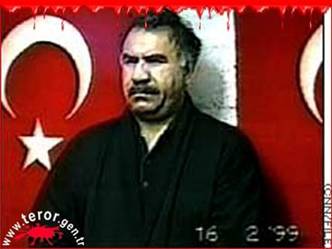
Who is Abdullah Öcalan ?
Abdullah Öcalan was born in the province of Sanliurfa in 1949. He speaks Turkish and has only a poor grasp of some Kurdish dialects. He had a conventional education and his original wish was to be an officer in the Turkish Army. He failed the entrance examination for the military academy. He did, however, gain admission in 1971 to the Ankara University Political Sciences Faculty. There, he joined the underground movements trying to overthrow Turkey’s parliamentary system. He was expelled from the university for non-attendance and his illegal activities.
The cell of terrorists which he controlled soon broke links with other groups. It was known for its use of extreme violence and the “Apocu’s” (Followers of Abdullah Öcalan), as the PKK was called in its early days, had a special trademark: they hacked off the noses of their opponents. In the late 1970’s, Öcalan collaborated closely with the Soviet Union and with Syria which were attempting to create political turmoil in Turkey. In 1980, Öcalan fled to Syria. He began to use Syrian facilities, including camps in the Bekaa Valley, Lebanese territory under Syrian control, to train terrorist groups for crossborder terrorist attacks against targets in Turkey. He started to inject an ethnic dimension to his terrorist activities, though this usually had to be imposed on local populations by violent means, including the kidnapping young men at gun point and then forcing them to undergo indoctrination and join his movement. In August 1984, Öcalan’s terrorist groups began attacking Turkish police stations and similar targets in the southeastern provinces north of the border with Syria and Iraq.
The PKK operates along the familiar lines of traditional communist parties and carries out terrorist activities under the rigid direction of its Central Committee. Both its “political” and “military” wings are controlled directly by Öcalan. As its sole head, Öcalan, has callously masterminded thousands of PKK’s terrorist activities against Turkey and its people. As such, he has been responsible for thousands of deaths, kidnappings, mutilations and attacks on innocent people during his long years as a Professional terrorist and murderer.
In October 1998, Turkey warned Syria that it would take action unless it ceased its support for Öcalan and PKK terrorism. It formally requested the extradition of Öcalan to Turkey. As a result, Öcalan was compelled to leave Syria where he had been given shelter for almost two decades. Furthermore, by an agreement signed between the two countries on October 20, 1998 in Adana/Turkey, the Syrian Government for the first time designated the PKK as a terrorist organization, and pledged not to allow the presence and the activities of the PKK on its territory. Later, Öcalan was forced to leave Moscow, where he had escaped from Syria, following political and diplomatic contacts between Turkey and the Russian Federation.
Öcalan was apprehended in Rome while trying to illegally enter Italy with a false passport on November 12, 1998. As the British Government put it, Öcalan’s arrest was “a significant advance in the international community’s fight against terrorism.”
Öcalan is not only a terrorist but also a common criminal, being sought by the Turkish courts under charges of homicide and incitement to homicide. There is thus a red corner bulletin for him issued by the Interpol. In accordance with a court decision given in 1990, Germany also had an arrest warrant on Öcalan again for homicide and incitement to homicide. All democratic, law-abiding countries as well as international institutions are obligated to take a consistent and firm stance in combating terrorism and bringing terrorists to justice. Under obligations and commitments within the framework of the United Nations, the Council of Europe, the OSCE, the NATO, and the EU, no country or government can provide terrorists with safe-haven or evade its responsibilities in the efforts to eliminate terrorism. Therefore, Öcalan should never be granted political asylum anywhere and he has to be extradited to Turkey to face trial for his crimes against Turkish citizens.
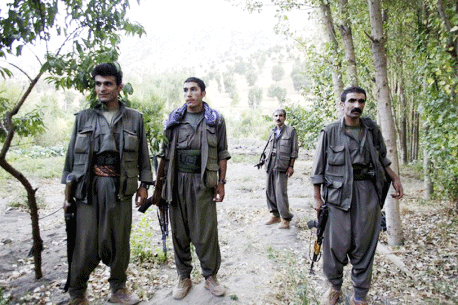
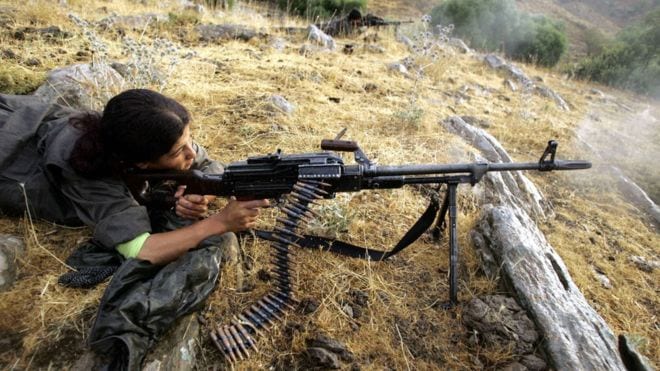
PKK fighters stand near the Qandil mountains near the Iraq-Turkish border in Sulaimaniya, 330 km (205 miles) northeast of Baghdad, September 30, 2010. PKK’s Involvement in Organized Crimes
The PKK engages in organized crimes such as drug trafficking and arms smuggling, extortion, human smuggling, abduction of children and money laundering in an attempt to recruit militants and to obtain financial resources needed to carry out its terrorist activities.
The “Sputnik Operation” conducted in a coordinated fashion in some European countries in September 1996 exposed PKK’s links with organized crime and money laundering activities.
On the other hand, it is known that the PKK, together with other organized crime gangs, is also behind the recent wave of illegal immigration to Italy. PKK’s objective is to create international pressure and antipathy against Turkey.
Moreover, the PKK plays an important role in drug trafficking which constitutes one of the most evil crimes of our age. The British weekly magazine “The Spectator” underlined this fact in its 28 November-5 December 1998 issue by saying that “…According to the British security services sources the PKK is responsible for 40 percent of the heroin sold in the European Union…” .
Drug Trafficking and Terrorist Organizations
All terrorist organizations need to raise funds to sustain their violent activities and resort to illegal means to finance their crimes. Drug trafficking comes at the top of this list of illegal money raising activities, followed by robbery, extortion, kidnapping, blackmailing and arms smuggling.
In recent years, it has become increasingly evident that terrorism and drug trafficking are intertwined. The terms “narco-terrorism” and “narco-terrorists” have started to gain circulation in describing the link between terrorist organizations and narcotics smugglers. This fact is illustrated by certain international documents. The UN Convention Against Illicit Traffic In Narcotic Drugs and Psychotropic Substances (1988) refers to the relationship between illicit drug traffic and other organized criminal activities which undermine the stability, security and legitimacy of sovereign states.
Paragraph 5 of the UN International Narcotics Control Board (INCB)’s 1992 report points out that “illicit cultivation of narcotic plants and illicit trafficking in drugs continue to be a threat to the political, economic and social stability of several countries. Links appear to exist between illicit cultivation and drug trafficking and the activities of subversive organizations in some countries.” The 1993 INCB report draws attention to the organic connections between drug cartels and terrorist organizations, and also to the globalization of drug smuggling. The successive INCB reports point out that these drug cartels concentrate their activities in ethnically and economically troubled regions of the world. It is no coincidence that terrorist organizations thrive in the very same regions. The Vienna Declaration and Program of Action adopted at the World Conference on Human Rights (25 June 1993) stresses that “the acts, methods and practices of terrorism in all its forms and manifestations as well as linkage in some countries to drug trafficking are activities aimed at the destruction of human rights, fundamental freedoms and democracy, threatening territorial integrity, security of states and destabilizing legitimately constituted governments, and the international community should take the necessary steps to enhance cooperation to prevent and combat terrorism.”
The Final Communiqué of the Council of Europe Pompidou Group 2nd Pan-European Ministerial Conference (Strasbourg, 4 February 1994) underlines the fact that “considering the continuous increase in and the spread of drug trafficking incidents, the involvement of violent organizations in such activities constitute a serious threat to the contemporary society” (Art.9), and thus, “it is vital for the security forces to combat terrorism effectively” (Art.l5).
The UN Declaration on Measures to Eliminate International Terrorism adopted at the 49th session of the General Assembly, underlines the concern by the international community at the growing and dangerous links between terrorists groups, drug traffickers and their paramilitary gangs which have resorted to all types of violence, thus endangering the constitutional order of States and violating basic human rights. This Declaration also emphasizes the desirability of closer cooperation and coordination among States in combating crimes closely connected with terrorism, including drug trafficking, unlawful arms trade, money laundering and smuggling of nuclear and other potentially deadly materials.
PKK’s Involvement in Drug Trafficking
The 1992 annual report of the United States Department of State Bureau of International Narcotics and Law Enforcement, entitled “The International Narcotics Control Strategy” (INCS) proposes that the European drug cartel is controlled by PKK members. Likewise, the 1996 INCS report underlines the fact that the terrorist PKK uses heroin production and trafficking to support its acts of terror. The 1998 report, pointing to persistent reports of PKK’s involvement in narcotics trafficking through Turkey, reiterates that the PKK not only uses “taxes” extracted from narcotics traffickers and refiners to finance its operations, but “may be more directly involved in transporting and marketing narcotics in Europe” as well.
A 1995 report prepared by the Drug Enforcement Agency of the US Department of Justice emphasizes that the PKK is engaged in drug trafficking and money laundering activities and is well-established in the production of almost all kinds of opium products and their smuggling. The revenues from these activities, the report continues, are used for purchasing firearms, munitions and other equipment used by the terrorists. The report cites other sources of revenue of the PKK as extortion, robbery and counterfeiting. In “Political Violence and Narco-Trafficking“, a booklet published by the Paris Institute of Criminology in October 1996, PKK’s narcotics network and its functioning are detailed; the amount of narcotics captured by the European security forces are quoted; and the PKK’s role in drug trafficking is thus documented.
The involvement of the PKK in all stages of drug trafficking has been further documented in a conference held by Dr. François Haut of the Paris Institute of Criminology in Brussels on 25 April 1997. It is stated that the PKK is engaged in producing, refining and marketing of drugs and has contacts in numerous countries. The PKK’s “turnover” from drug trafficking is estimated at “millions of US dollars”. Dr. Haut notes that the problem of narcotics trafficking has entered the Parisian suburbs thanks to the PKK, which he thinks is responsible for 10 to 80 percent of the heroin smuggled to Paris. Similarly, a 1996 report prepared by Jean Claude Salomon, François Haut and Jean-Luc Vannier for the Paris Institute of Criminology, utilizing such reliable and impartial sources as the Interpol, British NCIS and the national police agencies of the EU member states, notes that the narcotics route that runs through Turkey to the Balkans and western Europe benefits the “separatist” organizations of Turkish/Kurdish origin and the PKK militants and their intermediaries.
The March 1997 issue of “The Geopolitical Drug Dispatch,” a monthly report prepared by the ” Observatoire Geopolitique Des Drogues” points to the role of the PKK in the smuggling of drugs through the “Balkan route” and emphasizes that the terrorist organization has started using Romania and Moldavia, positioned along this route, as its rearward bases. The report also states that the Turkish traffickers arrested in these countries are of Kurdish origin and thus that many criminal activities attributed to Turkish individuals or groups “are in fact carried on by Kurds, usually with links to the Kurdistan Workers’ Party (PKK).” The report continues to point out that the PKK often hides behind its umbrella organizations, such as the ERNK and business, youth and women’s associations. To illustrate, it is noted in the report that “the ERNK business group in Romania, called the Association of Eastern Businessmen, is an excellent cover for the illicit activities of the PKK which has tight control over the drug deals as the local PKK leader also heads the ERNK.”
Last but not least, the final report of the thirty-third session of the Sub-commission on Illicit Drug Traffic and Related Matters in the Near and Middle East, held under the auspices of the UN International Drug Control Program (UNDCP) in Beirut from 29 June to 3 July 1998, noted that “there were clear linkages between some narco-terrorist organizations, for example, the Kurdistan Workers’ Party (PKK), and other organized transnational criminal groups.“
Turkey’s position astride the “Balkan route” makes it a significant transit point for narcotics. Using this route, the PKK smuggles morphine base and heroin from Iran, Pakistan and Afghanistan into Turkey across Turkey’s eastern borders. Since the late- 1980s, the terrorist organization has, instead of trafficking externally-produced heroin, opted for a more profitable way of producing heroin from non-heroin opiates. To this end, the PKK refines base morphine into heroin in mobile laboratories near Istanbul and in the southeastern parts of Anatolia. The PKK also cultivates opium and cannabis in the Beka valley (Lebanon) and in the isolated regions of southeastern Anatolia and northern Iraq.
Narcotics smuggling therefore constitutes a major part of the PKK’s financial apparatus, alongside extortion, blackmailing, robbery, arms smuggling and illicit labor trafficking. The PKK is actively involved in all phases of narcotics trafficking, from the producing and processing of the drugs to their smuggling and marketing. The revenues gained from illicit drug dealings and marketing are channeled to funding its arms purchases, which is required to sustain its terrorist activities.
PKK’s involvement in narcotics trafficking is thus now well-documented. Below there are some further examples compiled from the reports of the foreign media and foreign or Turkish security authorities which conclusively indicate PKK’s role in drug trafficking.
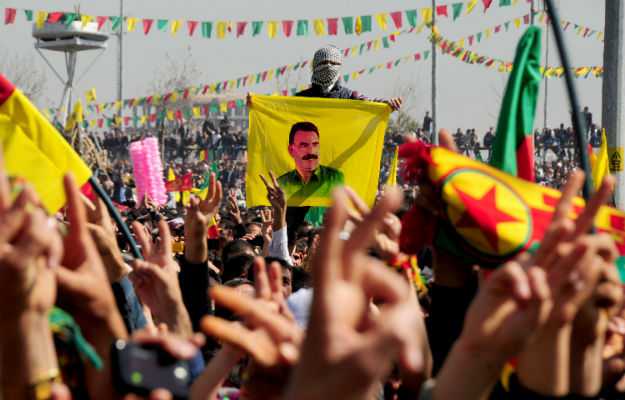
Foreign Press Reports
In January 1992, the Bremen Police arrested a “Kurd” selling drugs. The police found a bunch of keys in his pocket, which belonged to an apartment where “Kurds” lived. Hanging on the walls of the said apartment were posters of the PKK and its leader Abdullah Öcalan. The police also found some clues suggesting that the PKK finances its armed struggle by the heroin trade (SAT-1 TV, 24 Hours, 6 January 1992).
In 1992, a total number of 2,069 drug addicts died in Germany. In the same year, the German police apprehended some children aged 10-12, coming from southeastern Turkey and selling drugs in Hamburg. A child of 8 carrying a firearm was also arrested. All these children confessed that the PKK was using them to sell drugs, since they did not have penal responsibility. The police seized 30 kg. of heroin from a “Kurd” who was said to have transferred DM 150,000 to his partners. The estimated figure the PKK earns from the narcotics trade is more than 56 million DM (VOX TV ; Germany, 12 February 1993).
In 1993, more than 50 PKK members were arrested by the Essen Police of Germany. The Federal Criminal Department in Wiesbaden found out that the PKK was organizing drug trafficking in Germany and the narcotics trade in Hamburg, Bremen, Frankfurt and Essen was under the control of the PKK (German Daily “NRZ,” 30 March 1993). The Hamburg Criminal Police arrested a band of Kurdish drug smugglers on 15 September 1993. 11-year-old children, who were also arrested with the other members of the band, later confessed to the police that the PKK illegally brought them from Turkey to Germany in order to make them sell drugs for the organization (Hamburg Local TV Broadcast, 15 September 1993).
Three years of intensive police investigation by the Slagelse Police and the Narcotics Section of the National Police Force in Denmark resulted in the solution of several armed robberies whose spoils were used to finance narcotics purchases. The police captured a Danish person, who had links with two Turkish narcotics kingpins living in Denmark. During the trial the close relationship between these people and the PKK was proven. The superintendent Niels Bech of the National Police Force expressed that large parts of the profits from the narcotics sales in Denmark have returned to Turkey. In one case DDK 140,000 were sent to Turkey and kilos of heroin was sent to Europe in return (Danish Daily, “Berlingske Tidende,” 31 October 1993).
Two young PKK members (aged 14 and 16) were caught by the police selling drugs at the Trabrennbahn Train Station near Wandsbeck on 26 September 1994 (“Bild-Hamburg” 28 September 1994).
On 5-6 October 1994 the “Bild” reported that narcotics were being distributed from Jork in Alten Land to Northern Germany and that the Kurdish dealers transferred 15 million DM to their collaborators in Turkey.
On 24 October 1994 the German magazine “Focus” wrote that in the last 9 years 315 PKK members were involved in drug trafficking around Europe, 154 of whom were captured in Germany.
Ralf Brottscheller, the Senator of Interior of Bremen, accused the PKK of extortion and organized narcotics smuggling (“Focus,” 18 September 1995). In France, the Aulnay Sous Bois Public Security Units and Paris Bureau of Combating Narcotics Trafficking conducted an operation which was completed after long and careful preparations of 18 months. 30 people involved in narcotics trafficking on behalf of the PKK and the Mafia active in France and Belgium were taken into custody after the operation (French Press, 4 November 1996).
The Belgian Gendarmerie raided a camp in Zutendaal/Genk, in which the PKK militants were being trained, and apprehended 35 people, including children and some internationally wanted criminals (“Arnhemse Courant,” 22 November 1996). The administrators of a facade company helping the PKK’s activities in France were taken into custody in Paris (French Press, 25 February 1997).
The “Observatoire Geopolitique Des Drogues” noted in its monthly report that the biggest heroin seizure in Hungary to date was made on December 12, 1996, aboard a Turkish bus belonging to the Toros Line company. The Turkish traffickers, caught with 42 kg. heroin turned out to be “Kurds.” The report mentions the case of a Romanian citizen who, upon his arrest with 2 kg. heroin by the Turkish police in Edirne in September 1995, admitted that he was running for the PKK drugs in one direction and explosives in the other.
The report also notes that 65 percent of the drugs confiscated by the Romanian customs officers are found on passenger vehicles and that “every time Romanian police make a drug haul at a Turkish company, Kurds are involved” (“The Geopolitical Drug Dispatch”, No. 65, March 1997).
A high level member of the PKK, known as the PKK chief in the Hannover area, was arrested in Berlin. He had been wanted by the German police on charges of arson attacks, and damage to private property. The police found out evidence regarding the PKK’s involvement in illicit labor trafficking (“Berliner Zeitung” 4 April 1997). 20 refugees were arrested in a police raid on a refugee hostel which was discovered to be a PKK base, in Grimma, Bahren. The operation was conducted jointly by the German police and experts from the Federal Criminal Department. The police confiscated various fire arms, thousands of DM and receipts. These immigrants were actively involved in the activities of the PKK and its facade branches (German Press, 4 April 1997). The Bavarian police conducted a series of operations against the PKK militants in refugee camps, arrested 2, and took into custody 17 of them (Statement by Straubing Police Directorate dated 17 June 1997).
The PKK transfers people, weapons and drugs through the FRY (Former Republic of Yugoslavia) and purchases weapons in return (Croatian daily “Vjesnik” August 1997). The “Focus” magazine remarked on 23 March 1998 that members of the PKK invested the money laundered from drug trafficking and extortion in the real estate market in Celle, Germany.
On August 1, 1998, the Croatian and Slovenian security forces jointly confiscated 38 kg. of heroin in a vehicle bound for western Europe. According to the Croatian reports, the shipment of the heroin was realized by Turkish citizens “who are most probably members of the PKK” This is consistent with the statements made by Slovenian security forces who have pointed to a “reasonable suspicion” that a member of the PKK is involved in the smuggling (Croatian and Slovenian press reviews, 6 August 1998).
Four “Kurdish” people were captured with 2.6 kg. heroin, the largest amount of narcotics ever captured in west Norway. It is thought that the four people caught were merely couriers and that the trafficking was carried out by a “Turkish/Kurdish” network (Bergen, 7 August 1998).
“…The PKK has financed its war against Turkey by extortion and the sale of heroin, and according to British security service sources it is responsible for 40 percent of the heroin sold in the European Union…” (British weekly magazine “TheSpectator”, 28 November-5 December 1998 issue).
Reports of Foreign Police and Foreign Officials
In January 1990, a PKK member was arrested in Switzerland for selling drugs on behalf of the PKK. In the same month a 13-year-old person, also linked to the PKK, was captured in the Netherlands and was released as being too young to prosecute. A Turkish citizen of Kurdish origin, apprehended in France on 22 January 1991, confessed that he had been trading drugs in France on behalf of the PKK and that the drugs were transported by trucks or sometimes by tourist vehicles and then distributed to different cities not only in France but in various other countries in Europe as well. After being arrested on 7 March 1991 in France, a “Kurdish” person confessed that the drugs he was selling belonged to the PKK.
Another Turkish citizen of “Kurdish” descent, captured with 48 kg. of heroin in Arnheim in November 1991, was found out to be a PKK member. The German Police reports underline the fact that l,103 kg. of heroin was seized by the police in 1991 and 400 of 735 suspects involved in the drug trading incidents were PKK members. This ratio mounted to 450/735 in 1992 and 300/457 in 1993.
The US Department of State Bureau of International Narcotics Matters expressed in its International Narcotics Control Strategy Report (1992) that the two-thirds of the people involved in drug trafficking incidents in Europe are PKK-oriented.
An active PKK member working as a truck driver, who was known to have stood as a candidate in Bonn in the 1992 elections for the PKK’s so-called National Assembly, was seized in Troisdorf, Germany, while transporting substantial amounts of drugs.
In 1993, the police seized 200 kg. of heroin in London. Further investigation revealed that the drug traders were working for the PKK. A police operation in Offenbach, Germany on 7 January 1993, led to the seizure of 5 kilos of heroin. Among the seven people captured by the police was a person known as the “PKK’s accountant.”
As a consequence of the operations conducted by the German police in Hamburg, Bremen and Bad Bramstad during May-October 1993, 15.7 kg. of heroin was confiscated and 22 people were apprehended, including PKK members and supporters. The criminals turned out to have requested political asylum from the German authorities. 15 Turkish citizens with “Kurdish” descent were arrested in connection with 1.6 kg. heroin seized by the German police in Recklinghausen, Germany, on 27 October 1993. Among those were the participants at pro-PKK demonstrations in Turkey. A message by the German Interpol dated October 26, 1993, pointed out that six Turkish citizens with Kurdish origin were arrested on charges of laundering the proceeds from drug trafficking in the Netherlands, Spain, Italy and Germany. Large sums of cash, thought to be laundered money, were captured by the German police.
Another Turkish citizen of “Kurdish” origin, captured in Caracas, Venezuela on 10 November 1993, while carrying 3.5 kg. of cocaine, confessed that she was a PKK courier.
This incident is said to prove the links of the PKK with the drug cartels even in Latin America.
The NCIS estimated that the 44 percent of 1993 budget of the PKK as 430 million French Francs, came from illicit drug trafficking.
During a six-week campaign initiated by the Stuttgart city police in January 1994, 76 people were apprehended, including some who had been formerly prosecuted in Turkey because of their links with the terrorist organization.
On 17 August 1994 the German Criminal Authority informed the Turkish Security Authorities that a political refugee, resident in Kiel, was engaged in drug trade and money transfer to the PKK.
The US Deputy Secretary of State in charge of narcotics, Ambassador Robert Felbard, answering a question at a press briefing in February 1994 regarding the PKK supervision of drug trafficking in Europe and the United States, stated that the US had quite a bit of information about the PKK’s involvement in the trafficking of heroin into Europe. The Amsterdam police, during an anti-drug operation on 11 December 1994, seized numerous firearms, machine guns, bombs and PKK documents and arrested several PKK militants.
The Bavarian Minister of Interior, Günter Beckstein, referring to the 30 PKK militants captured in Europe during the last two years, stated that the PKK has taken control of the European narcotics market (Turkish daily, “Cumhuriyet,” 31 July 1995). The Director of German Terrorism Research Forum, Rolp Tophoven, has stated that a large majority of the people arrested on charges of narcotics smuggling are of “Kurdish” descent, many of whom confess committing the crime on behalf of the terrorist PKK (Turkish daily, “Yeni Yüzyıl,” 12 November 1995).
Olivier Foll, another expert on international terrorism, noted that the PKK members, when apprehended for illegal possession of narcotics, confess to smuggling drugs for the PKK and exploit the “political” dimension of the issue as an excuse for their crimes. Mr. Foll criticized the “Kurdish” policies of some European statesmen who grant concessions to the PKK (Turkish daily “Yeni Yüzy›l,” 12 November 1995). During the Sputnik operation of September 18, 1996, the Belgian police seized 350 million Belgian Francs that were thought to have been the proceeds from narcotics trafficking. Seven people having ties with the PKK were apprehended in connection with the crime. The Sputnik operation also revealed that the MED-TV, the mouthpiece of the PKK, is involved in PKK’s money laundering activities. The MED-TV representative in Germany was taken into custody as he was unable to explain the source of the 500 million BF, used in financing the station. It was later found that he was using revenues from drug trafficking for financing not only the MED-TV but also the so-called “Kurdistan Parliament in Exile” (KPE). The Belgian police seized many firearms in the KPE building they searched.
In August 1997, the German police conducted a comprehensive operation against the PKK members in Cologne in which six members of the PKK were arrested. After the operation, Cologne police officers issued a statement emphsizing the fact that the PKK is involved in organized crime including extortion in Germany to finance its acts of terrorism.
The Göttingen police of Germany, after a 14-month investigation, managed to penetrate the drug smuggling network with two “Kurdish” informers in May 1998 and found out that the revenues from 40 kg. of heroin marketed were channeled to the PKK.
The KDP (The Kurdistan Democratic Party of Masud Barzani) forces discovered extensive narcotics farms in the Gali Pes Agha region of northern Iraq, captured from the PKK in May 1997.
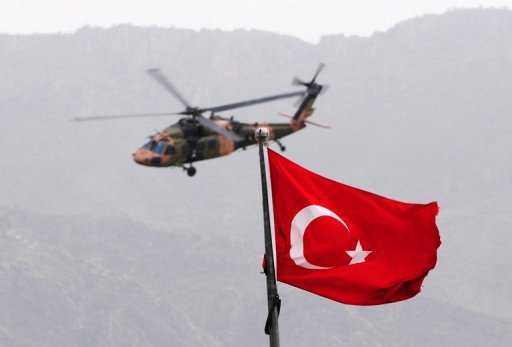
A helicopter of the Turkish army brings back Turkish prisoners over the Habur border crossing, in Sirnak, on the Turkish side, on March 13, 2013 after they were released by the Kurdish Workers’ Party (PKK) in the northern Iraqi city of Dohuk, after being held for two years in northern Iraq, in response to a new peace push by Ankara to end a 29-year-old insurgency in southeast Turkey. Turkish Police Reports
A PKK member, captured by the police with 14.5 kg. of heroin on 1 September 1993, confessed that he was acting on behalf of the PKK abroad, and that he was a drugsmuggler, transferring 30 percent of the proceeds to the terrorist organization. Following the confiscation of 20.3 kg. of heroin in Duisburg, Germany, two PKK supporters were arrested by the German police. This triggered a police investigation in Turkey, which led to the seizure of firearms and munitions in a vehicle owned by the same family in the city of Mersin on 12 May 1993.
A PKK militant of Iranian origin confessed that the terrorist organization has drug production facilities in Iran and that Osman Öcalan (the brother of Abdullah Öcalan and a leading figure of the terrorist organization PKK) is in charge of the production of narcotics which are later marketed mainly in Europe to raise money for the organization. Two PKK militants, arrested with 30 kg. of heroin, expressed that they were aiming to sell the drugs to provide financial contributions to the PKK. The Turkish Security Forces seized 120 kg. of heroin and 40 kg. of hemp seeds (cannabis) in a PKK shelter in southeastern Turkey.
One PKK member, who was put in jail on 3 July 1993 for getting involved in the terrorist acts of the PKK in Hakkari and released on 20 October 1993, was captured with 36 kg. of heroine, 140 kg. of precursors and some other drug-producing material. Another member of the PKK, sentenced to 6 years of imprisonment, confessed that he was in charge of establishing the links between the drug smugglers and the terrorist organization.
During the operations conducted by the Turkish security forces, two people, captured with 48 kg. of hashish, were arrested as they were found out to be involved in narcotrade so as to provide financial support to the PKK.
Another Turkish citizen said to be of “Kurdish-origin”, caught by the police in possession of 117 kilos of hashish in Istanbul, was later found to have participated in the PKK-led attack on the Turkish Consulate General in Frankfurt on March 1l, 1992.
One Turkish citizen of “Kurdish-origin” apprehended in July 1994 confessed that he was involved in drug trafficking to raise money for the PKK. The police, making use of the information he disclosed, were able to arrest some other members of the terrorist organization.
On 1 August 1994 a PKK member, apprehended in Diyarbak›r with 2 kg. of heroin, acknowledged that he was selling drugs for the PKK. He also informed the police that some PKK members were cultivating drugs and gave the names of the places where hemp seeds (cannabis) were grown. In further investigation the police captured 120,000 roots of hemp seeds in a village named Dibek. On 21 August 1994 the Turkish security forces apprehended two people with 150 kg. of hashish and considerable amounts of hemp seeds and hashish growing material. The security forces also captured PKK documents and propaganda material and two machine guns.
Diyarbakır Police, conducting an operation against the PKK on 17 July 1994, apprehended three people with 80 kg. of hashish, PKK documents, a gun and three ERNK seals. These people confessed that the PKK ordered them to sell the drugs and purchase firearms and food supplies for the organization. The said people turned out to have participated in various terror acts such as the rocket attack to and storming of a police residence in Lice on 29 June, the bomb attack on the residence of a judge in Diyarbakır on 16 January 1994, and a bomb attack on a police patrol car.
Seven people captured in the city of Cizre on 23 March 1994 with 398.5 kilos of heroin confessed to smuggling narcotics on behalf of the PKK.
The security forces have had strong evidence suggesting that a network composed of PKK militants is involved in drug trading in Zaho, northern Iraq. The network is known to hand the drugs over to clients either in Zaho or in Turkey. Therefore, it was not very surprising that during the operation by the Turkish Armed Forces in northern Iraq against the PKK, the Turkish army discovered a large farm where the terrorists cultivated hemp (cannabis). The farm was located near the PKK’s Pirvela Camp in the Bahara valley. The Turkish military officers announced that the amount of drugs captured during the operation in northern Iraq reached 4.5 tons.
In a raid on 7 March 1995 on the residence of a person, suspected by the police of having contact with the PKK militants, the Turkish police seized large amounts of drugs, drug precursor chemicals, firearms and ammunitions.
Three of the seven people caught with 21.5 kilos of heroin in Hamburg, Germany, have been found out to have been formerly arrested in Turkey on charges of PKK membership.
The two people caught by the police with 20.6 kilos of narcotics in ‹zmir on August 5, 1996, have been found out to be running an association linked to the PKK in the Netherlands.
Another PKK sympathizer, who was captured with acetic anhydride, a heroin precursor chemical, by the Turkish security forces in the city of Van on March 24, 1998, was found to have been previously arrested for providing logistic support to the PKK. The Turkish security forces have strong evidence that the PKK militants, settled in the Iranian part of our common border, receive commissions from the narcotics smugglers called “taxes or donations.”
The role of the PKK in incidents given above is undeniable, both because of the documents seized by the security forces and the backgrounds of the arrested people. Still, in certain Western countries, the activities of this terrorist organization, are regrettably being tolerated.
After the prohibition of PKK in France and Germany towards the end of 1993, a wave of optimism emerged in Turkish public opinion that the rest of the European countries would follow suit by adopting similar measures. This, however, has not happened to date. Yet, it is clear that the prohibition of the PKK and its front organizations in European countries would also be in the interest of these countries. The PKK is responsible for narcotics trafficking, extortion, robbery, and illicit arms and human smuggling activities, and thus circumvent the rule of law and compromises the security and stability of the countries in which it operates. It is no coincidence that drug trafficking cases predominantly occur in those countries where the organization of the PKK is extensive and tolerated.
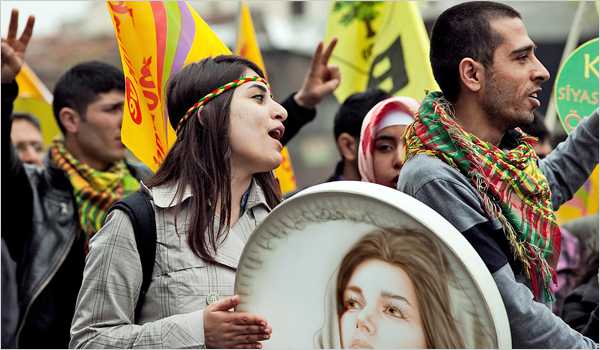
Is There A “Kurdish Question” in Turkey?
As the first melting pot and encounter point of many different civilizations and cultures, present-day Turkey contains a multitude of ethnic, religious and cultural elements. Turkey is proud of its great heritage. This centuries-long shared way of life is perfectly second-nature for the people of Turkey.
Yet, different ethnic identities, including the Kurdish, are acknowledged and accepted in Turkey. The state does not categorize its citizens along ethnic lines nor does it impose an ethnic identity on them. Population censuses in Turkey never count people on the basis of their ethnic origins. But, this does not prevent an individual citizen to identify himself or herself in terms of a specific ethnic category. That is a private affair and ultimately a matter of personal preference. Public expressions and manifestations of ethnic identity are prohibited neither by law nor by social custom. Folklore is rich and colorful and local variations, customs and traditions are protected and supported.
Turkey is a constitutional state governed by the rule of law. Democracy rests on a parliamentary system of government, respect for human rights and on the supremacy of law. Multi-party politics, free elections, a growing tradition of local government mark the democratic way of life in Turkey.
Constitutional citizenship is one of the principles upon which the Turkish state was founded. The Turkish Constitution stipulates that the State and the Nation are indivisible, and that all citizens irrespective of their ethnic, racial or religious origin, are equal before the law.
For historical and cultural reasons, and under stipulations of binding international treaties, the concept of “minority” applies specifically to certain groups of non-Moslem citizens. In fact, the social fabric of Turkey is a unique real life case of the OSCE principle that “not all ethnic, cultural, linguistic or religious differences necessarily lead to the creation of national minorities”. Our citizens of Kurdish ethnic origin are not discriminated against and they feel themselves to be equal members of the society. Many have risen to the highest positions in the Republic. They share the same opportunities and the same destiny as the rest of the population.
Ethnicity is not a factor in the political geography of Turkey. That is, the predominant majority of the Turkish citizens of Kurdish descent live in western Turkey, with the greatest concentration being in Istanbul. Even in eastern and southeastern Turkey, the Turkish citizens of Kurdish ethnic origin do not constitute a majority. The unitar structure of the State reflects the equality and togetherness of different geographic regions of Turkey.
Therefore, it is simply neither understandable nor acceptable for Turkey to discuss “the respect for social, economic and legitimate political aspirations of Kurds” as if the Turkish citizens of Kurdish ethnic descent constitute a different and separate community. They are citizens of a nation that has been sharing for centuries the same values with respect to language, religion, culture and patriotic identity, common history and the will for a mutual future.
It is of cardinal importance to differentiate between a militant organization, which resorts systematically to terrorism as well as all kinds of organized crime, and the phenomenon of Kurdish ethnicity. It is evident that our citizens of Kurdish ethnic origin are law-abiding people. Most of them live in western Turkey, drawn by economic attraction. They are of their own choice integrated into the society and its economic, social and cultural aspects. In Turkey, citizens of all ethnic origins can rise to the highest political positions and ranks such as cabinet ministers and members of parliament. Throughout the centuries, much mixing has taken place through intermarriages. Progress in industrial, cultural and social fields, as well as urbanization, has also contributed to the voluntary and natural process of integration.
The population in southeast Anatolia, like our citizens in other regions of the country, participate fully in the political life of Turkey; they freely make their voices heard in local administrations, in the municipalities, the Parliament, and the central government through elected representatives. It is nothing out of the ordinary for the individuals of different ethnic origins to participate in the political life of the country. Even the most militant circles concede the fact that there are no obstacles to social mobility of individuals from different ethnic origins to any profession or career, whether public or private.
The fundamental rights and freedoms of all Turkish citizens are secured by the relevant provisions of the Constitution. However, those rights have been threatened by the PKK, creating terror among the populace.
None of our citizens of Kurdish ethnic origin, notwithstanding allegations to the contrary, who publicly or politically asserts his/her Kurdish ethnic identity risks harassment or persecution. However, acts or statements made against the “territorial integrity” of Turkey are subject to legal prosecution under the law. If these allegations were true, none of the publications in Kurdish whose contents are full of assertions of Kurdish ethnic identity would have been tolerated by the authorities.
In the same vein, Turkey is often accused of refusing to negotiate with the terrorist organization PKK. These accusations contradict the fundamental rules of international law. Negotiating with a terrorist organization, responsible for thousands of murders, would be tantamount to justifying and encouraging terrorism.
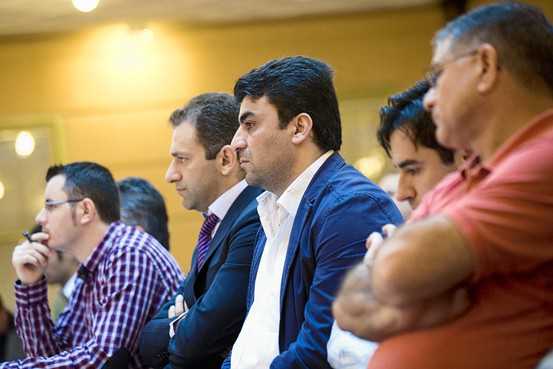
Is the Use of Kurdish Banned in Turkey ?
Contrary to the allegations of some biased quarters, there is no restriction on the use of languages in Turkey. Presently, there are many private radio-TV stations broadcasting and numerous books and journals published both in Turkish and in various dialects of
“Kurdish” throughout the country. It should be mentioned here that “Kurdish” can be hardly depicted as “a single language” linguistically or socially. Many scholars point out the fact that there are many different local languages and dialects used in southeastern Turkey such as Zaza and Kırmanchi which are only as close to each other as French and English. These local languages and dialects are so dissimilar that people living in one village cannot even communicate with others from a neighboring village. As a result, Turkish has become the sole medium of communication in the region. It is ironic that Turkish is also used in PKK’s militant training camps and in the communication between its headquarters and terrorists as their common language.
The official language of the Republic of Turkey is Turkish, but Armenian, Ladino, Greek, the different dialects of “Kurdish”, etc. are spoken freely in daily life. There is only one official language in the country. However, in this respect Turkey does not constitute a unique and exceptional case either in Europe or among other democratic countries.
It should also be underlined that expressions of ethnic identity such as the use of local languages are viewed as private domain matters. Thus, they are not the subject of law and are therefore not regulated by the state. The Turkish language is the language of the Republic of Turkey and is consequently the only formal language of education and instruction. The same is true in most democracies. Though it is possible to help promote them, it is neither realistic nor feasible to make local tongues official languages of the State.
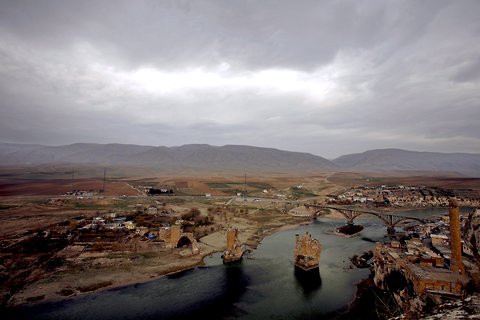
Socio-Economic Development of Southeastern Turkey and the Southeastern Anatolia Project (GAP)
The Southeastern Anatolia Project (GAP), consisting of a complex system of dams, waterworks, irrigation and hydraulic energy network is a colossal investment of Turkey, the biggest regional initiative ever attempted in Turkey. It aims at changing the whole complexion of the arid geography and consequently, the social and economic backwardness of southeastern Anatolia. The Turkish Government has always believed that one of the best tools in the struggle against terrorism is economic development. It is no accident that the region in which the PKK operates is also the least economically developed part of Turkey. The Turkish Government is determined to rectify that.
It is a fact that there are socio-economic regional imbalances in Turkey as in every developing, even some developed countries. Rough geographic and climatic conditions of southeastern Turkey are the main factors in this imbalance. Terrorism and economic backwardness of the region affect all our citizens indiscriminately. Despite many governmental incentives and low taxation policies, the private sector had in the past been reluctant to invest in the region, mainly due to security concerns. Public sector has taken the place of the private sector and many investments have already been realized by the State. “GAP” is the best example of that. Government investment in this region is much higher than the amount of taxes collected there. “GAP” is a gigantic economic step forward which will change the destiny of the region. Agricultural production of Turkey will rise by several folds when this project, which is both energy and irrigation oriented, is completed. Yet, its important impact is not expected only on agricultural production, but also on industry, construction, services, as well as on the Gross Regional Product and employment. When the Project is completed, per capita income will increase three times, and 3.3 million jobs will be created. The Southeastern Anatolia Project constitutes an integrated project which contributes significantly to the realization of national targets for the utilization of development potentials, self-induced economic growth, social stability and enhancement of export possibilities, and at the same time aims at the promotion of the principle of sustainable human development; thus, human development is the core of sustainable development in the “GAP” region. In this context, the “GAP Social Action Plan” consists of the basic policies, targets, strategies and implementation measures for ensuring the social development of the region through a human-centered approach emphasizing sustainability of the development. This people-centered development aims to remove the gap between the project area and the more developed regions in Turkey and to promote equitable development.
This ambitious socio-economic development drive also explains why the PKK has been targeting civilians as well as economic and social projects. PKK’s aim is both to terrorize the local population and to keep the region economically and socially backward so as to recruit more militants into its own ranks. However, this is being reversed as the GAP began to bear its fruits. For example, although the so-called head of the PKK is from ?anl›urfa, there has never been a terrorist act there, because it is an economically powerful settlement. The state of emergency still has to continue in some of the provinces of southeastern Turkey. It is the direct consequence and explicit proof of the PKK terrorism in the region. It is of utmost importance for Turkey to augment the allocation of human and financial resources for the socio-economic development of this region. The precondition to achieve this task is the eradication of the PKK terrorist organization. Eradication of terrorism will not only put an end to the deliberate devastation by terrorists of the underdeveloped regions of Turkey, but also release important resources for developmental activity in those very regions. While terrorism might be viewed as a consequence of certain underlying causes, it is also incontestably true that terrorism is itself the main reason of poverty and underdevelopment of those areas where it is perpetrated.
In sum, our citizens of all ethnic origins -Turkish, Kurdish and others- living together for more than ten centuries in Turkey have created a society of patriotic citizens sharing common values. They established their own nation-state, the Turkish Republic, following the War of Independence. Ethnic descent is not considered a cause of discrimination or privilege just as in all modern nation States on the globe.
SPECIAL BUREAU OF REPUBLIC TURKIYE
-
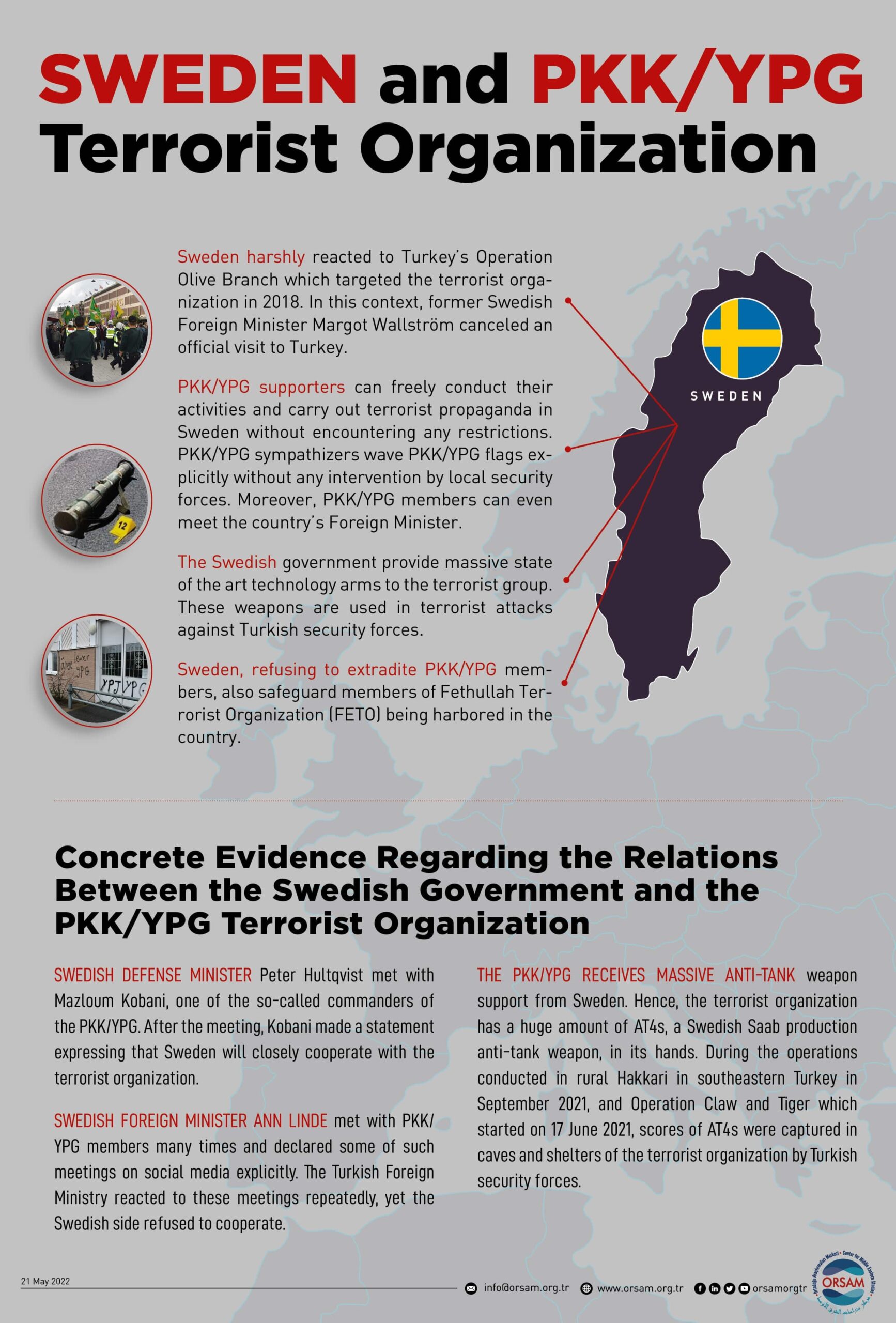
SWEDEN and PKK/YPG Terrorist Organization
Sweden harshly reacted to Turkey’s Operation Olive Branch which targeted the terrorist orga- nization in 2018. In this context, former Swedish Foreign Minister Margot Wallström canceled an official visit to Turkey.
PKK/YPG supporters can freely conduct their activities and carry out terrorist propaganda in Sweden without encountering any restrictions. PKK/YPG sympathizers wave PKK/YPG flags ex- plicitly without any intervention by local security forces. Moreover, PKK/YPG members can even meet the country’s Foreign Minister.
The Swedish government provide massive state of the art technology arms to the terrorist group. These weapons are used in terrorist attacks against Turkish security forces.
Sweden, refusing to extradite PKK/YPG members, also safeguard members of Fethullah Terrorist Organization (FETO) being harbored in the country.
Concrete Evidence Regarding the Relations Between the Swedish Government and the PKK/YPG Terrorist OrganizationConcrete Evidence Regarding the Relations Between the Swedish Government and the PKK/YPG Terrorist Organization
SWEDISH DEFENSE MINISTER Peter Hultqvist met with Mazloum Kobani, one of the so-called commanders of the PKK/YPG. After the meeting, Kobani made a statement expressing that Sweden will closely cooperate with the terrorist organization.
SWEDISH FOREIGN MINISTER ANN LINDE met with PKK/YPG members many times and declared some of such meetings on social media explicitly. The Turkish Foreign Ministry reacted to these meetings repeatedly, yet the Swedish side refused to cooperate.
THE PKK/YPG RECEIVES MASSIVE ANTI-TANK weapon support from Sweden. Hence, the terrorist organization has a huge amount of AT4s, a Swedish Saab production anti-tank weapon, in its hands. During the operations conducted in rural Hakkari in southeastern Turkey in September 2021, and Operation Claw and Tiger which started on 17 June 2021, scores of AT4S were captured in caves and shelters of the terrorist organization by Turkish security forces.
ORSAM
As a region that shares deep-rooted historical, cultural and neighborhood ties with Turkey, the Middle East and North Africa region is going through a process of serious political and social changes. Therefore, it became necessary to follow these complex and dynamic developments as well as to interpret them. The Center for Middle Eastern Studies (ORSAM) was established in January 2009 to inform the general public and the foreign policy community on the Middle East. ORSAM is a nonpartisan and non-profit research center based in Ankara.
ORSAM provides information on Middle Eastern affairs and exposes the Turkish academia and political circles to the perspectives of researchers from the region. ORSAM, by facilitating the visits of Middle Eastern statesmen, bureaucrats, academics, strategists, businessmen, journalists, and NGO representatives to Turkey, seeks to ensure their knowledge and ideas are shared with the Turkish and international community. To that end, ORSAM carries out research on social, economic and political developments in the Middle East and shares these with the public. Striving for a healthier understanding and analysis of international politics and the Middle Eastern affairs, ORSAM produces stimulating and policy-relevant information for the general public and decision-makers.
For that purpose, ORSAM offers projections that suggest alternative perspective on regional issues as well as analyzing regional developments. In order to provide comprehensive and solution-oriented analyses, ORSAM takes advantage of geographical proximity to pressings issues and hands-on research by competent researchers and intellectuals from diverse disciplines. ORSAM has a strong publishing line that transmits meticulous analyses of regional developments and trends to relevant audiences. Our center that is also in the process of re-organization is expanding its cadre and areas of research focuses on publication and teaching activities such as seminars on Middle East affairs and Arabic courses.
-
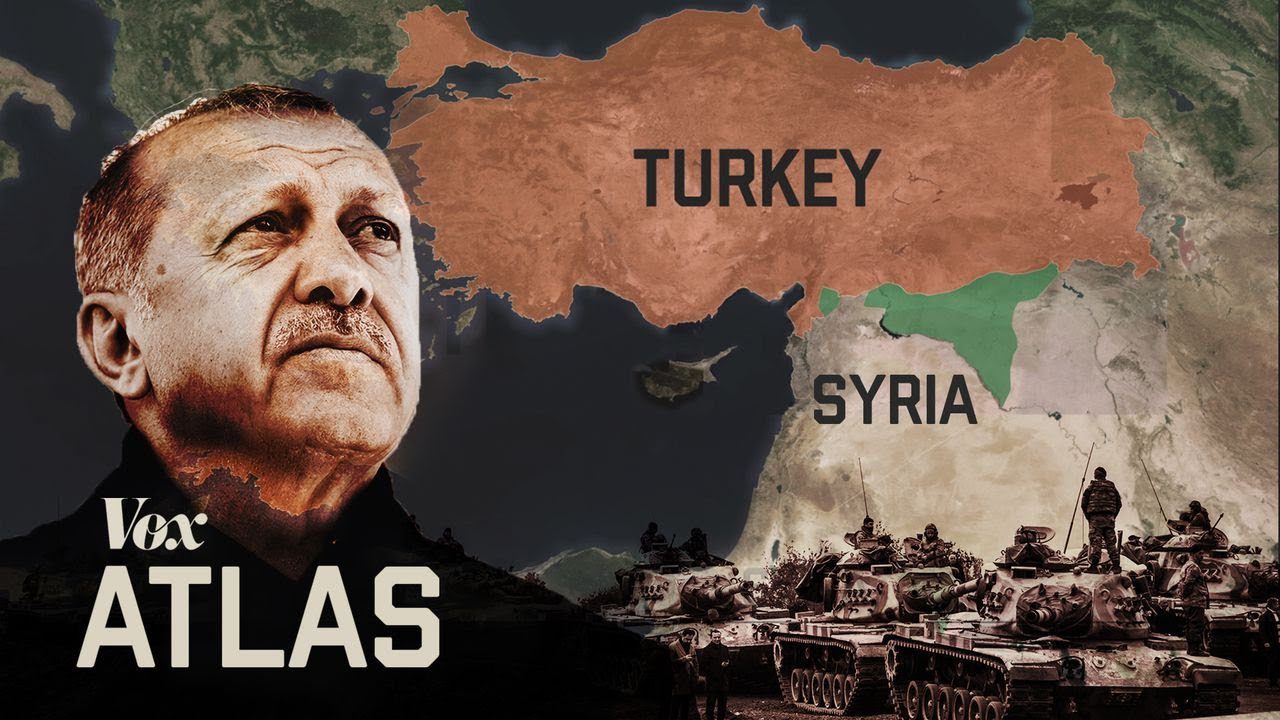
Why Turkey is invading Syria
Türkiye neden Suriye’yi işgal ediyor … and how it’s getting what it wanted.
On Oct. 9, 2019, Turkey launched an attack in northeastern Syria. Turkey made the move shortly after the US announced it would remove some of its troops from the region.
Turkish President Recep Tayyip Erdoğan had his eyes on the region for years. Turkey, he argued, needed a “safe zone” to serve as a buffer against the Syrian War happening just across the border. Yet back home in Turkey, there were other factors at play that accelerated his calls for an invasion that involved Erdoğan’s own political survival.
The move has recalibrated alliances in the Syrian War and added new uncertainty on the future of the region.
To learn more, check out these additional resources:
Vox’s previous reporting on the conflict:
https://www.vox.com/world/2019/10/16/20908262/turkey-syria-kurds-trump-invasion-questions
https://www.vox.com/world/2019/10/23/20928769/trymp-syria-turkey-doctrineThe Institute for the Study of War’s reports on the US withdrawal from Syria:
Vox Atlas demonstrates where conflicts occur on a map and the ways in which foreign policy shapes a region. Watch all the episodes here:
Vox.com is a news website that helps you cut through the noise and understand what’s really driving the events in the headlines. Check out .
Watch our full video catalog:
Follow Vox on Facebook:
Or Twitter: -
Turkey’s Domestically Driven Foreign Policy
As citizens of Turkey head to a crucial vote on April 16 on whether to adopt a new constitution, the country’s leadership is facing multiple challenges on the external front: Syria, Russia, the United States, NATO, and the EU. Typically, each of these challenges is closely linked to Turkey’s tense domestic political situation.
With Operation Euphrates Shield, Turkish armed forces are involved in Syria in a rare expeditionary combat mission. Albeit geographically limited (no troops or armor are more than 19 miles from the Turkish border, meaning all resupply, maintenance, and rescue operations are completed within hours), the mission has already taken a substantial toll on soldiers and equipment.
Marc Pierini
More from this author…
Euphrates Shield is officially designed to fight troops of the self-styled Islamic State and push them away from the Turkish border. This goal has been partly achieved, including through Turkey’s proclaimed capture of the Syrian town of al-Bab on February 24. But the actual aim of the mission is to prevent Syrian Kurdish forces (the People’s Protection Units, or YPG) from reuniting their Kobane district, east of the Euphrates River, with their westernmost district of Afrin, as that would give the Syrian Kurds control of most of the Syrian-Turkish border. Ankara’s narrative is that both branches of the Syrian Kurdish organization—the Democratic Union Party (PYD) and the YPG, its military wing—are mere subsidiaries of the Kurdish separatist movement of Turkey, the Kurdistan Workers’ Party (PKK).
This is where foreign policy blends with domestic politics. To succeed in its current domestic strategy of crushing both the pro-Kurdish political party in Turkey, the Peoples’ Democratic Party (HDP), and the insurgent PKK to win the upcoming referendum, given the Kurds’ opposition to the proposed constitution, the leadership in Ankara needs international support. That implies convincing Russia and Western powers to drop their support for the Syrian Kurds.
But the reality on the international scene is very different. Both Washington and Moscow crucially rely on the YPG to advance on Raqqa, the so-called Syrian capital of the Islamic State. The YPG troops are remarkably effective and have received military supplies and operational support from the United States and other Western countries. They are also supported by Moscow.
More importantly, in the current proxy war against the Islamic State, the YPG forces are by far the most battle ready and the most successful in combat. Retaking Raqqa without the YPG, as Turkey is demanding, is next to impossible. Neither Washington nor Moscow is likely to risk mixing Syrian Kurdish forces with Turkish troops, a recipe for inevitable trouble and possible failure on the ground.
Ankara is replicating its request on the political front and wants to exclude the Syrian Kurds from the international talks on Syria that have just restarted in Geneva. This, again, is almost impossible, as Washington has consistently argued in favor of their involvement for the sake of lasting peace in northern Syria. Ankara is probably betting on a policy reversal by the administration of U.S. President Donald Trump—although, as with other U.S. foreign policy choices, the White House’s next move is anybody’s guess.
In addition, Turkey will face Moscow’s opposition, because Russian President Vladimir Putin clearly stated in September 2015 Russia’s desire to see the Syrian Kurds as one of the pillars of a political settlement. In other words, Ankara faces two major challenges in Syria: a military and a political one.
Yet, Turkey repeatedly boasts about its military operation on Syrian territory and its participation in direct talks on Syria with both Russia and Iran. Turkey has consistently aimed at restoring close cooperation with Russia since a Turkish fighter jet shot down a Russian Sukhoi aircraft in November 2015 and an off-duty Turkish policeman assassinated the Russian ambassador to Turkey in the heart of Ankara in December 2016. This reconciliation has been achieved in part, allowing Turkey to break the diplomatic isolation that followed the extensive repression after the July 2016 failed coup and entertain a proud nationalist narrative internally.
However, seen from abroad, Turkey’s foreign military operation and its diplomatic successes are rather limited and offset by risks taken along the way. In particular, the question arises of whether Ankara has become a pawn in Moscow’s vast chess game aimed at systematically undermining both NATO and the EU, especially in defense and energy.
The Turkish minister of defense declared on February 22 that discussions on the purchase of Russian S400 missiles for Turkey’s antimissile defense were progressing well, which was revealing of the country’s current foreign policy conundrum. If Ankara were to build its entire missile defense architecture around Russian systems, it would associate itself with Moscow and strike two major blows to NATO’s policies: first, by introducing Russian-made systems and accompanying experts into NATO’s second-largest conventional army; and second, by leaving a gaping hole in NATO’s own missile defense shield, to which Turkey has repeatedly committed itself.
One can easily comprehend Ankara’s tactical appetite for such a move, but its strategic implications would be of unfathomable depth, especially if a yes vote in the upcoming referendum gave Turkish President Recep Tayyip Erdoğan almost unlimited powers until 2029.
In comparison with these strategic stakes, Turkey’s relationship with the EU now looks almost benign, although greatly significant on the economic and rule-of-law fronts. With the state of emergency imposed after the failed coup, Turkey’s rule-of-law architecture has been so degraded that no progress on the country’s EU accession talks can realistically be expected. Similarly, steps toward visa liberalization—a mutually desirable objective—are impeded by Turkey’s firm priority to keep its antiterrorism law as it is.
Again, a yes vote in the referendum is likely to result in an almost permanent state of emergency and minimal rule-of-law standards. That is nothing that would worry Moscow much, but it would bring the EU-Turkey relationship to a transactional rather than a strategic level. A modernized EU-Turkey Customs Union is likely to become the only flagship project between Turkey and the EU.
All politics are local: Turkey’s current foreign policy choices are dictated by domestic political imperatives. Ankara’s foreign military operations and postures, as well as a key defense decision and deliberate backtracking on progress toward EU membership, are only parts of an internal power drive. The likely winner: Putin, more than Erdoğan.
-
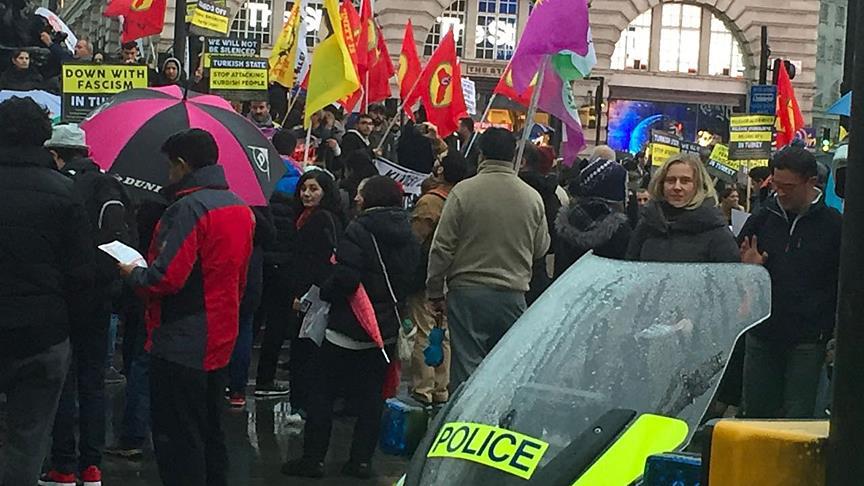
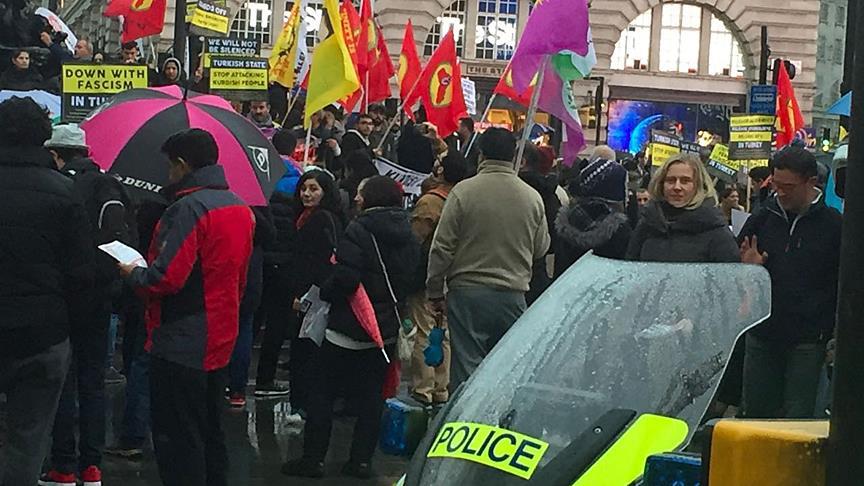
Questions asked of UK police after pro-PKK rallies
Despite laws banning displays of support for ‘proscribed organizations’, London has seen a number of pro-PKK events
By Ahmet Gurhan Kartal
AA
LONDON
The activities of PKK sympathizers in London over the past two weeks is coming under more scrutiny, with questions being asked as to why backers of an illegal group are allowed to gather and mobilize publicly.
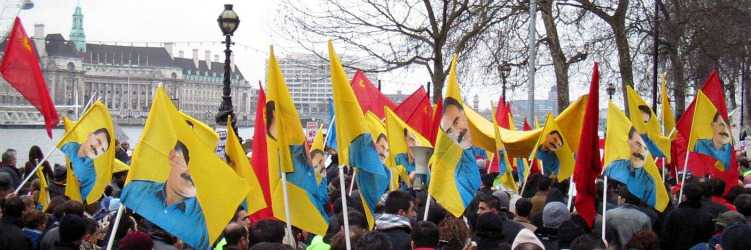
Groups of protestors carrying PKK flags, banners and posters — bearing the insignia of the illegal group or the likeness of its jailed leader Abdullah Ocalan — have been seen recently on the streets of the U.K. capital.
PKK supporters have been observed shouting anti-Turkish slogans and were able to mount propaganda without interference from the authorities, despite laws that regard some of their actions on these marches as criminal offences.
In recent rallies, two young Turkish citizens were attacked, a policeman was injured and some members of the general public were harassed.
The U.K. listed the PKK and various front groups as illegal organizations in March 2001. According to the Home Office, this means all their activities are banned, as is membership of or inviting support for such groups.
The PKK — listed as a terrorist organization by Turkey, the U.S. and EU — resumed its decades-old armed campaign in July last year. Since then, more than 300 civilians and nearly 800 security personnel in Turkey have been martyred. Around 8,000 PKK terrorists have been killed or apprehended.
However, London police have denied turning a blind eye to protests backing an illegal group.
Following a demonstration on Nov. 6 in the city’s Green Lanes area, the Metropolitan Police told Anadolu Agency it would not “allow a protest by a proscribed organization to take place in London”.
In an email, a spokesman added: “On this occasion the demonstrations were spontaneous. Where there is evidence that an individual is committing offences, officers will take action when and where appropriate.”
However, another procession held in central London on Nov. 12 was not spontaneous, having been planned, discussed and organized on a social media page for about a week beforehand.
In a separate email, police told Anadolu Agency the organizers of this procession engaged with the authorities beforehand and the route was altered to avoid Parliament Square.
Proscribed groups
Police on motorbikes opened the way for the group between Parliament Square and Piccadilly Circus via Regents Street.
A police van divided the road into two by using a white cordon until the demonstrators, some of who carried PKK emblems and flags, reached and encircled Piccadilly Circus’s famous Eros statue where they read out statements through a loudspeaker.
However, police described the Nov. 12 protest as a “march by a Kurdish Community Group”.
“This group is not a proscribed organization. The Met would not allow a protest by a proscribed organization to take place in London,” the statement added.
The U.K.’s Home Office says members or supporters of a proscribed organization are banned from showing and displaying articles of the group in public.
Official guidelines state it is a criminal offense to “arrange, manage or assist in arranging or managing a meeting in the knowledge that the meeting is to support or further the activities of a proscribed organization”.
It is also an offense to “wear clothing or carry or display articles in public in such a way or in such circumstances as arouse reasonable suspicion that an individual is a member or supporter of the proscribed organization”.
However, despite the fact that the processions openly displayed PKK flags and posters, police failed to identify them on Nov. 12 or during previous rallies.
Regarding the Nov. 12 demonstration, police said: “This was a peaceful protest and there were no reports of proscribed flags or organizations present… If offenses are committed by those taking part in a protest these offenses are reported and investigated.”
Former U.K. counter-terrorism detective David Videcette said police were unfamiliar with illegal PKK insignia due to a lack of training. He said policing the display of flags was “somewhat difficult in terms of the legality surrounding them here in the U.K.”
‘Lack of training’
He added: “Recently a man was seen wearing an Islamic State flag while standing outside our Parliament building. His son was waving an ISIS flag too.” ISIS is another acronym for Daesh.
“In order to prove that this was illegal, and that the man was a member of a proscribed organization, the police need more evidence than just the fact he is displaying a flag.
“It is true that he could have been arrested and an investigation started to establish this but often police officers are reluctant if there are no other obvious signs, there and then, of membership, other than the flag.”
Videcette told Anadolu Agency that “this is often a lack of training and understanding of the laws in the U.K. — arresting someone for terrorism is a specialist area of policing in the U.K., and few understand the laws surrounding it”.
He said he would “very much doubt that many police officers have any idea what the PKK flag even looks like. This makes dealing with it during any rally difficult.”
The U.K. government, however, is clear. Official Home Office rules state: “PKK/KADEK/KG is primarily a separatist movement that seeks an independent Kurdish state in southeast Turkey. The PKK changed its name to KADEK and then to Kongra Gele Kurdistan, although the PKK acronym is still used by parts of the movement.”
In October 2015, a woman of Kurdish origin was found guilty of PKK-related terrorism after she ran away from her family in an attempt to join the organization and sentenced to 21 months’ imprisonment.
Silhan Ozcelik became the first-ever person to be convicted in the U.K. of terror charges related to the PKK.
Videcette said: “I believe that the police service would and should act if the PKK flag is seen, just like they should have acted on the occasions that the ISIS flag has been seen at rallies.
“Sadly, it is often the case here that action is not taken at the time. In essence this is a training issue for the U.K. police service.”