Tag: Armenians in Turkey

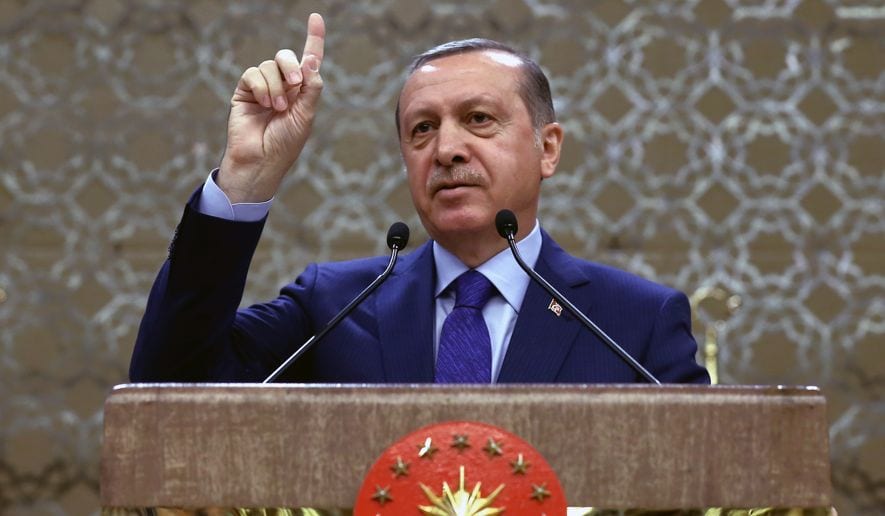
  • Erdogan is Said to be the Descendant Of a Greek Pro-Armenian Anarchist

    Erdogan is Said to be the Descendant Of a Greek Pro-Armenian Anarchist

    Over the years, many articles have appeared in the Turkish press claiming that various high-ranking Turkish officials are of Armenian or Kurdish origin.

    These officials have often vehemently denied the claim, but sometimes have ignored it in order to avoid drawing more attention to it. For example, several years ago, when it was claimed that Pres. Recep Tayyip Erdogan is of Armenian origin, he simply replied: “I regret that they are calling me Armenian.” Given the prevalent racism in Turkey, calling someone an Armenian is considered an insult.

    Former Prime Minister Mesut Yilmaz was reported to be of Armenian origin, as well as Devlet Bahceli, the Chairman of the MHP (Nationalist Movement Party), a radical ultra-nationalist party. I recently found a YouTube video in which Isa Ilyasoglu, who served in Turkey’s National Intelligence Organization (MIT), claimed that Bahceli is of Armenian origin on his mother’s side. Ilyasoglu reported that during the genocide, a 16-year-old Armenian girl was kidnapped and raped by the Governor of Adana. That girl later became the grandmother of Bahceli who, contrary to what is indicated on his I.D. card, is not from Osmaniye, but from Halfeti, a town in the region of Urfa. As a child his family moved to the town of Bahce in Adana, where he acquired his last name, Bahceli.

    It is widely acknowledged that a large percentage of today’s Turks are descendants of Armenians, Greeks or Kurds, many of whom were Islamized and Turkified, particularly during the 1915 Genocide, when young Armenian children were abducted and adopted by Turkish families. Most of these children were too young to remember their ethnic origin. The Turkified and Islamized Armenians are often referred to as “Hidden Armenians.”

    However, over the years, many Turks have come forward stating that they have just discovered their Armenian origin. Some of them have even asked to be baptized in the Armenian Church and reconvert to Christianity.

    In 2018, The Turkish Government unexpectedly launched a website that revealed the ancestry of all Turkish citizens. Within days, millions of Turks rushed to find out their ethnic origin. As a result, the website crashed and shortly thereafter, it was shut down. Subsequently, the website was reinstated with “enhanced privacy measures.” There were several reports of Muslim Turks being shocked upon finding out that they had Armenian blood. One report claimed that an anti-Armenian Turkish fanatic, upon finding out that he was of Armenian origin, committed suicide.

    There is also a large group of Armenians in Turkey, known as Hemshens, who live in the Black Sea region. They were forcefully Islamized. Some of them have retained their Armenian traditions and native Armenian language which has a distinct dialect.

    In the YouTube video I recently found, the Turkish intelligence officer Ilyasoglu made sensational revelations about Turkish President Erdogan’s ethnic origin. I am not sure how true his report is, but given Ilyasoglu’s intelligence background, I could not ignore his claim.

    Ilyasoglu lived in England from 1995 to 1996 and moved to Germany in 2000. In 2005, he ran for the Turkish Parliament, but later withdrew his candidacy. He is currently the Chairman of the Resurrection Party which has the slogan, “one government, one nation, one flag and one religion – Turk.” He now lives in Germany. It is widely known that the Turkish government has many intelligence officers in Germany to spy on millions of Turks who live there, particularly Kurds and Erdogan’s political opponents.

    Erdogan’s I.D. card shows that he was born in Rize which is in the Greek Pontus region of Turkey. Ilyasoglu said in his video that “Erdogan’s father was a Greek man from Pontus. His mother was a Spanish Jew who came to Pontus via Georgia.” Ilyasoglu added: “If Erdogan dares, let him dispute it.”

    “The brother of one of Tayyip (Erdogan’s] grandparents was a Greek priest who, on the coast of the Black Sea, tried to establish the Pontus Greek Republic after the Russian-Turkish war.

    “His grandfather and his brother, who was a priest, were arrested, tried by the ‘Giresun Independence Court,’ sentenced to death in Giresun and hanged.” Ilyasoglu explained that he is from Giresun: “This is written in the memoirs of Judge Ali Kilic.”

    “In fact, Erdogan’s maternal great-grandfather, Tayyoub, was an anarchist, who after entering Turkish villages and committing murders, engaged in looting. Then, during the 1922 Marash Armenian rebellion, with his group, he sided with the Armenians, attacked Turkish soldiers and was killed in the Taurus Mountains.” Ilyasoglu added: “Let Tayyip Erdogan look for his maternal great-grandfather’s remains in the Taurus Mountains. In other words, his mother’s grandfather has no grave.”

    The above cited video is dated October 28, 2023. There are no reports in the Turkish media that Ilyasoglu was criticized or prosecuted for his sensational revelations about Erdogan, even though he has visited Turkey several times. Since the Turkish media is under the total control of Erdogan, no Turkish newspaper would dare to publish anything that may be upsetting to the President. It is not known why the Turkish government has not prosecuted Ilyasoglu for claiming that Erdogan’s forefathers are Greek. The reason could mean either that Ilyasoglu is telling the truth about Erdogan’s ancestry or that the President is reluctant to draw more attention to the claims in the video.

    According to a Turkish proverb, “a spoiled wine becomes bitter vinegar.” This can mean that some Islamized and Turkified Armenians become fervent enemies of Armenians. This is similar to the expression, “more Catholic than the Pope.”

  • Which country do you prefer, Turkey or Azerbaijan, as an Armenian?

    Which country do you prefer, Turkey or Azerbaijan, as an Armenian?

    Artur Aslanyan answers the question on Quora:

    Originally Answered: Which country do you prefer, Turkey or Azerbaijan, as a an Armenian?

    I find it amusing that this question is meant for Armenians and yet Turks and Azerbaijanis are answering it.

    There is no choice really. Hundreds of Armenians travel in and out of Turkey every day (including from Armenia). Nearly no Armenians travel in and out of Azerbaijan. This “voting with feet” should answer the question.

    The Republic of Turkey does not discriminate against Armenians entering and traveling the country. The Republic of Azerbaijan nearly universally denies all Armenians of the world entry. As a result, many Armenians (myself included) travel to Turkey and have fond associations and experiences there, where as such a thing is not possible with Azerbaijan.

  • Famous Turkish people of Armenian origin

    Famous Turkish people of Armenian origin

    Meet Alex Tataryan. He is the singer of this beautiful Turkish song!

    Hayko Cepkin-Turkish rocker of Armenian descent!

    Rober Hatemo-singer

    His legendary Turkish songs

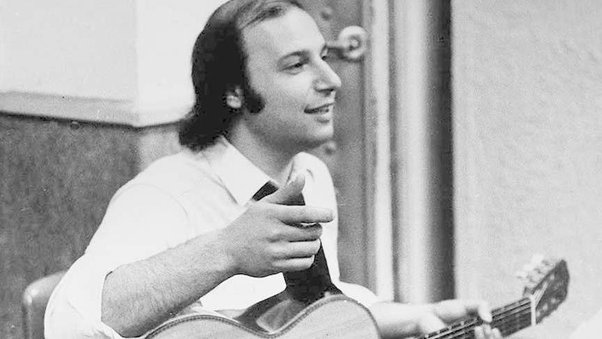
    Onno Tunç-Turkish musician and composer of Armenian origin. The musician behind the Turkish pop music of the 90s. All the hits!

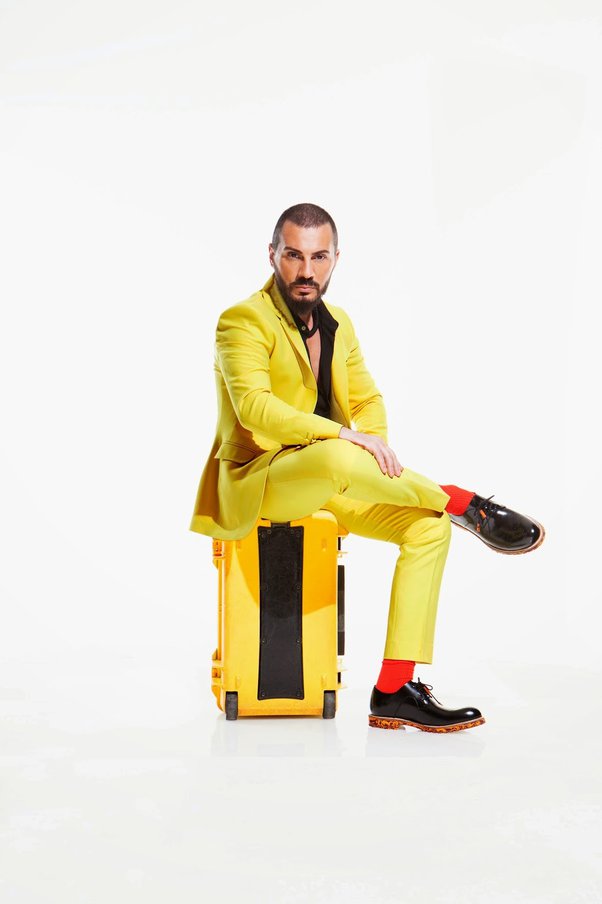
    Arto Dalga – ArmenianTurkish singer known for his spiky speeches and scandals. He is currently in a tabloid program that is a troublemaker of Turkish celebrities, Soylemezsem Olmaz.

    Garo Mafyan-Another musician behind the Turkish pop music of the 90s.

    Dikran Masis, Turkish-Armenian businessman.

  • How is it to be Armenian in Turkey?

    How is it to be Armenian in Turkey?

    It’s definitely an interesting experience.

    The Armenian community of today’s Turkey is tight-knit, and the vast majority of us live in a few upper-middle-class neighborhoods in Istanbul. Being in Istanbul certainly helps our community. People here are used to being surrounded by people of wide variety of backgrounds, so we face less bigotry here than if we lived in a city like Konya or Kayseri where there are almost no Armenians and non-Muslims. We tend to have above-average incomes and live comfortable lifestyles.

    Most Turkish-Armenian express their identity through their religion. The Church really is what keeps our community together and our identity alive. I’d say most Armenians are more religious than the average Turk of the same upper-middle-class background that we are. Most Turkish-Armenians can no longer speak Armenian and are pretty much fully switched over to Turkish. Roughly 18% of the community speaks the language, and those are mostly older people. I’m one of the around 8% of Armenian youth in Turkey who can still speak the language fluently. My parents made my siblings and I learn it, and I’m grateful for it. Armenian has been spoken in Turkey for millennia, and I’m doing my part to keep it alive.

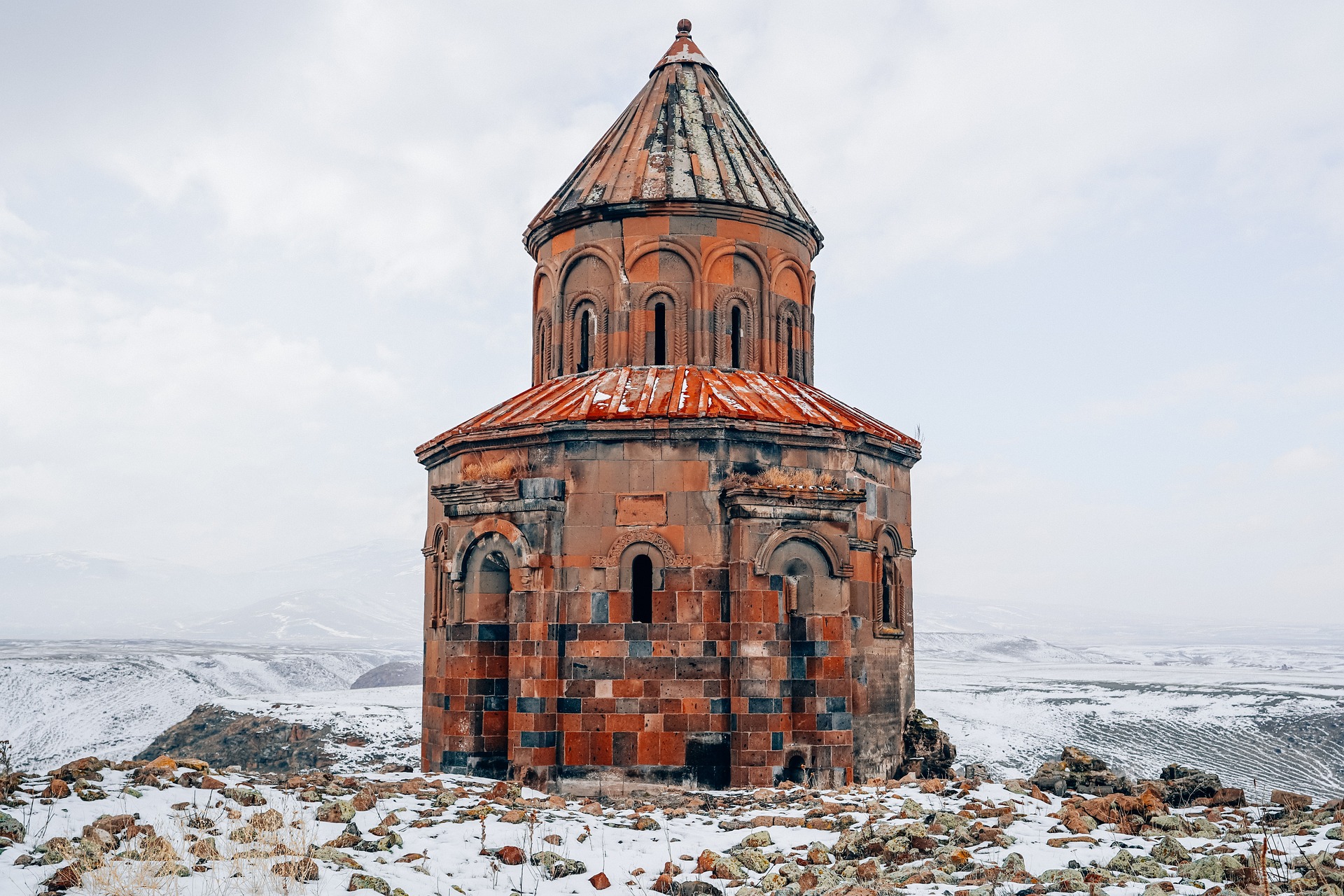
    There is a lot of vitriolic rhetoric against Armenians in Turkey. My church has repeatedly found racist, anti-Armenian graffiti on the church walls. It’s disgusting, and no one ever talks about it. Sometimes I’ll have acquaintances say something very xenophobic about Armenians but they’ll say when they realize that I’m Armenian, “But Ani, you’re not like those other Armenians…” Historically, many Armenians were forced to adopt Turkish surnames including my family, but after that law was repealed, my family reverted back to our traditional family name of Manukyan. My parents are extremely proud of being Armenian, and they wanted their children’s names to go before them, indicating that they are Armenian, so when they had me, they named me Ani, a very common Armenian name that comes from the name of the historic capital of the Armenian Empire. My parents actually took me to Ani over the summer, and I just remember sobbing as I was walking through the ruins of this once grand city. It seemed like the physical embodiment of what happened to the Armenian community of Anatolia, just in ruins, with barely anything left. That’s a potent, emotional symbol for us.

    It’s not all gloom and doom though! There has been more curiosity about Armenian culture and religion from Turks over recent years, and the Armenian community is more than happy to tell them about us. I’ll often get good questions about my faith, language, culture, and traditions, and I just love talking about it. My culture is something I’m proud of. There has also been a greater level of acceptance of us among the Turkish, secular upper-middle-classes. There is no longer as much social isolation for Turkish-Armenians. The Turkish upper-middle-class used to exclude us, and now, we are becoming an accepted part of it, at least in Istanbul. Another good thing about living here is we have a lot more economic opportunity in Turkey than we ever would in Armenia. In Armenia, we would have lower incomes and less available, quality employment.

    It’s really a mixed bag, but I’m optimistic that things will get better for us. The young Armenian people of Turkey are determined to stay here, continue the presence of the Armenian community in Turkey, and do our best with our circumstances.

    Ani Manukyan

  • Greeks, Turks and Armenians

    Greeks, Turks and Armenians

    How do Greeks, Turks and Armenians feel about each other’s countries?

    I feel sad. Deeply sad.

    We could be a great! A united superpower, if we had stood together and haven’t killed each other in hundreds of thousands.

    Yes Ottomans mistreated Armenians, mistreated Greeks but they certainly mistreated Turks too.

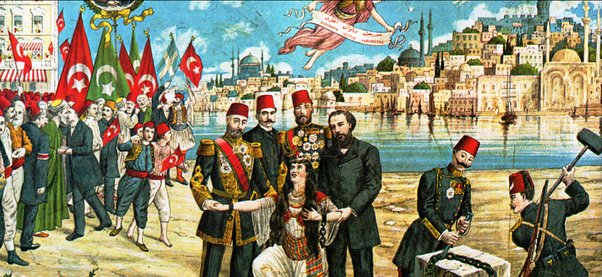
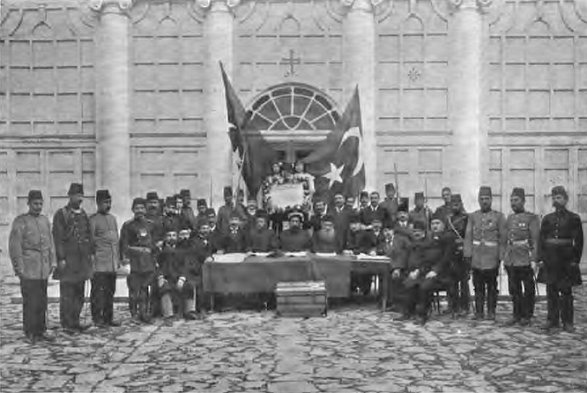
    In the end it was Turkish Kemalists who pulled the rug under the Ottoman Sultanate, It was us who destroyed the caliphate. We finished the work which we all Greeks, Armenians and Turks started together in the first place. I am talking about the Young Turk movement.

    Yes we forced the first constitution together. Here Turkish, Greek and Armenian leaders signing.

    Our great endeavor was hijacked and sabotaged. Minorities sought their own independent small and weak countries. Organizations got corrupted, people sought personal glory. We were led to slaughter each other by the imperialistic powers.

    Even after such brutality, all of us Greek, Armenian and Turk we still miss our collective songs, cuisine, our neighborhood. When outside in a mixed nationality Turks and Greeks always find each other. Its always the Greek guy who laughs when the other stare confused by the lame ass naughty joke the Turk makes.

    Greeks were the great intellectuals and traders, Armenians were the great craftsman and artisans, Turks were the farmers, herders, great soldiers.

    Divide and Conquer was at its best.

    Today we would have none of the worries, State would be much more secular with strong and healthy non-Muslim population. We would have no conflict in the Mediterranean. Caucasian region would be secure. None of the tragedies would have happened.

    Here is a song which the lyrics are adopted by Bülent Ecevit. Here the songs goes like

    Sıla derdine düşünce anlarsın (When you get home sick you understand)
    Yunanlıyla kardeş olduğunu (You are brothers with the Greek)
    Bir rum şarkısı duyunca gör (When you hear a Greek song, You will see )
    Gurbet elde İstanbul çocuğunu (A fellow child of Istanbul, alone in a foreign land)

    Türkçenin ferah gönlünce küfretmişiz (We swore in open hearted Turkish)
    Olmuşuz kanlı bıçaklı (We feuded)
    Yine de bir sevgidir içimizde (But its love that is in our hearts)
    Böyle barış günlerinde saklı (It surfaces in times of peace)

    Bir soyun kanı olmasın varsın (Let a clan not be about blood)
    Damarlarımızda akan kan (The blood that is running through our veins)
    İçimizde şu deli rüzgâr (The crazy wind blows inside)
    Bir havadan (İs of the same air)

    Bu yağmurla cömert (Generous is the rain)
    Bu güneşle sıcak (Warm is the sun)
    Gönlümüzden bahar dolusu kopan (Our hearts full of springs)
    İyilikler kucak kucak (Goodness is aplenty)

    Bu sudan bu tattandır ikimizde de günah (From this water, from this taste is the sin for both of us)
    Bütün içkiler gibi zararı kadar leziz (Tasty as sin, as all the harms of drinks)
    Bir iklimin meyvasından sızdırılmış (Distilled from the same fruit of this climate),
    Bir içkidir kötülüklerimiz (Our evils are one drinks)

    Aramızda bir mavi büyü (A blue magic between us)
    Bir sıcak deniz (A warm and gentle sea)
    Kıyılarında birbirinden güzel (With coasts as beautiful as any)
    İki milletiz (We are two peoples)

    Bizimle dirilecek bir gün (One day together we will resurrect)
    Ege’nin altın çağı (The golden age of the Aegean)
    Yanıp yarının ateşinden (Tomorrow the new fire will burn)
    Eskinin ocağı (The old oven)

    Önce bir kahkaha çalınır kulağına (First you will hear a familiar laughter)
    Sonra rum şiveli türkçeler (They you will hear Turkish in Greek accent)
    O Boğaz’dan söz eder (He or She speaks about the Bosphorus)
    Sen rakıyı hatırlarsın (And you remember the Rakı)

    Yunanlıyla kardeş olduğunu (You remember you are Brothers with the Greek)
    Sıla derdine düşünce anlarsın (When you get homesick)

  • Armenian “Settled History Syndrome”: An affliction that runs deep in the media

    Armenian “Settled History Syndrome”: An affliction that runs deep in the media

    By Ferruh Demirmen

    Anyone who tries to see or instill a measure of balance or open mindedness in the Western media on the question of Armenian “genocide” will soon discover he/she is out of luck. For the phenomenon, which I call the “Settled History Syndrome,” is not only palpable, but also widespread. It runs deep in the media across Europe and America. It is not new, but deserves special recognition under a name of its own – hence the term coined here. It is the product of year-in, year-out incessant propaganda perpetrated by the Armenian lobby on the so-called “Armenian genocide.”

    The syndrome explains how a group of certain historians or scholars, supposedly open minded, gather to discuss Armenian “genocide,” but colleagues who disagree are kept away as misguided renegades.

    It explains why anyone who challenges the Armenian version of history is labeled “Genocide denier,” often citing a self-appointed group called ”The International Association of Genocide Scholars“ as the infallible arbiter.

    It explains how minds are frozen, debate is stifled, and freedom of opinion is trampled upon – truth being the ultimate casualty.

    It explains how money and influence, fed by prejudice, create a cadre of ill-informed politicians and general public. The media, itself thrown into deep freeze, commonly plays the role of the facilitator.

    Turks who want to fight unfounded accusations from the Armenian side must first deal with this mindset affecting the media.

    Examples are myriad. I will first relay an anecdote, then continue with a recent example, both from America. No doubt, what goes on in America also goes on in Europe, with some mutations.

    The PBS Episode

    Time is early 2006. PBS, the national Public Broadcasting Service in America, is planning to air on April 17 a supposed TV documentary called “Armenian Genocide.” The film, directed by Andrew Goldberg and bankrolled by more than 30 largely Armenian foundations in America, will surely be an anti-Turkish diatribe based on distorted history. I and a small group of Turks and Turkish Americans contact the PBS headquarters in Alexandria , Virginia, to protest the screening of a one-sided story. (As it turned out, the film shamelessly started with a macabre scene of human skulls taken from a 1871 painting by a Russian artist. For a fuller account, see F. Demirmen, Turkish Daily News, April 24, 2006). We argued that, if PBS decides to go ahead with the screening, it should also show, as a balancing act, “The Armenian Revolt,” a newly released documentary directed by Marty Callaghan.

    The PBS headquarters did not change its mind. And the screening of “The Armenian Revolt” was out of consideration.

    I then took my case to the affiliate of PBS in Houston Texas, which was also planning to air “Armenian genocide.” Commenting on the film, the channel’s website carried the statement: “The International Association of Genocide Scholars affirms that the number of Armenian deaths at the hands of Ottoman Turks …” It was a reminder to the viewers that the “genocide” was a shut case.

    Nonetheless, I thought I should still try to educate the Houston channel, that what they would be airing was a prejudiced and distorted story. To that end, I contacted the programming director and sent him some archival material. After back-and-forth correspondence, I had my fingers crossed. At the end, the channel didn’t change its plans, but the programming director made an admission, which was revealing. He remarked that until I contacted him, they had assumed that “genocide” was a “settled history.”

    It was a Lilliputian victory. But it showed what the Turkish side is against: a mindset more or less frozen on its track.

    Pasadena Star Episode

    Fast forward 9 years. On January 15, 2015, the Pasadena Star in California published a news article titled: “Ground broken on Pasadena Armenian Genocide Memorial.” It was an announcement that the monument would be completed on April 18, ahead of the “100th anniversary of the Armenian Genocide on April 24.” Pasadena happens to be next door to Los Angeles, a hotbed of Diaspora activism.

    As the Star put it, the monument would take “the form of a 16-foot-tall tripod … with water drops dripping … to represent each of the 1.5 million lives cut short by the Ottoman Turks in the Armenian Genocide of 1915 to 1923.” The droplets would “fall every 21 seconds, so that 1.5 million drops will fall annually.” The tripod would represent “similarly shaped structures which Armenian leaders were hanged from during the Armenian Genocide.” Surrounding the tripod and stonework would be “12 pomegranate trees, representing each of the 12 lost provinces of Armenia.”

    Pictures of Armenian clerics solemnly praying at the ground breaking ceremony and an artist’s rendition of the tripod-shaped monument were included in the news.

    The description and symbolism were chilling; but infused in all was a prejudiced and distorted history. Particularly notable in the article was the absolutist tone in the language. “Genocide” was treated as a fact, with no hint as to its disputable character.

    Considering their mindset, I hesitated contacting the Star to express my disagreement that Armenian “genocide” is a fact. But the invitation at the end of the article, for readers to engage in “insightful conversations,“ was too good to resist. I also thought that, instead of sending a short blog, I should lay out my arguments in a full article so as to enlighten them. I informed the Star of my intention to submit a dissenting view, and proposed that they publish it as a stand-alone contribution by a guest writer. Their initial reaction was encouraging. They asked me to send in my article.

    In the article I took special care to acknowledge Armenian sufferings and losses, but also mentioned sufferings and losses on the Muslim side. I pointed to certain facts, and made corrections to some of the allegations in the article. I also tried to strike a conciliatory note, referring to the calls of Armenian religious leaders in Turkey, and pointed to the poisoning effect such a monument would have on the Armenian-Turkish relations in America. It was an appeal for “peace.” While I did not expect they would agree with my views, my expectations were high that the Star would publish my article – if for no reason than journalistic curiosity and respect for dissenting views.

    The response from the Star was an eye opener:

    “Yes. We don’t print op-eds by Holocaust deniers, nor articles denying the settled history of the Armenian genocide, recognized now by 23 countries and by the vast majority of scholars and historians not in the pay of the Turkish government.”

    So, I was a “Genocide denier,” and Armenian “genocide” was a settled history, the arbiter presumably being the all-knowing International Association of Genocide Scholars. Case shut. Opinions and facts brought forward by others will not change anything.

    The response was the embodiment of a frozen mind. Frozen in time, frozen in space. Here was another example of the “Settled History Syndrome.”