Category: Central Asia

  • Profound Disappointment in Kazakhstan’s Decision to Open an Embassy in Southern Cyprus

    Profound Disappointment in Kazakhstan’s Decision to Open an Embassy in Southern Cyprus

    His Excellency Yerzhan Ashikbayev
    Ambassador of the Republic of Kazakhstan to the United States
    1401 16th St NW
    Washington, DC 20036

    April 4, 2025 

    RE: Profound Disappointment in Kazakhstan’s Decision to Open an Embassy in Southern Cyprus

    Your Excellency Ashikbayev,

    It is with deep disappointment that I write to you regarding Kazakhstan’s recent decision to establish an embassy in Southern Cyprus while wholly disregarding the existence of the Turkish Republic of Northern Cyprus (TRNC). This decision is not merely a diplomatic misstep but an affront to the historical, legal, and moral imperatives that ought to guide Kazakhstan, a proud Turkic nation with deep civilizational and kinship ties to Türkiye and the broader Turkic world.

    As a Turkish-American who has long worked to strengthen bonds between our nations — including being the first to organize and raise the Kazakh flag at New York’s historic Bowling Green December 2021 on the 30th anniversary of Kazakhstan’s independence with then Consulate General Almat Aidarbekov — I cannot help but express my profound dismay at what appears to be a decision driven by financial and geopolitical expediencies rather than a principled stand for justice and historical truth. The fact that Foreign Minister Murat Nurtleu traveled to the island without even acknowledging the Turkish Cypriots or the TRNC is not just an oversight — it is a betrayal. His failure to extend even the most basic diplomatic courtesy to the Turkish Cypriot side is a slap in the face to the very people who have been systematically isolated and ignored despite their unwavering commitment to peace. Even Ray Charles could have seen if he was alive that there are two states on the island; yet Kazakhstan’s actions suggest willful ignorance rather than mere negligence.

    Let me remind Your Excellency that this year marks the 52nd anniversary of the establishment of the TRNC, an entity that exists due to the necessity of protecting Turkish Cypriots from the relentless aggression they faced. The Athens Court of Appeals itself, in its ruling of March 21, 1979, affirmed the legality of Türkiye’s intervention in Cyprus, acknowledging that it was undertaken in accordance with the London-Zurich Agreements. 

    The true instigators of the crisis were the Greek officers and its Greek Cypriot collaborators who orchestrated the 1974 coup — yet today, Kazakhstan chooses to align itself with those who have perpetuated injustice rather than those who have suffered from it.

    History speaks volumes about the intransigence of the Greek Cypriots when it comes to peace. Former Cypriot Foreign Minister Nicos Rolandis has documented no fewer than sixteen peace initiatives between 1948 and 2017 that the Greek Cypriots outright rejected. Most notably, the Annan Plan of 2004, which Turkish Cypriots overwhelmingly supported at a rate of 65%, was rejected by an astounding 76% of Greek Cypriots. Despite this blatant refusal to resolve the issue, it was the Greek Cypriots who were granted entry into the European Union, while Turkish Cypriots were left in diplomatic limbo. This pattern of rejection and obstructionism should have given Kazakhstan pause before choosing to align itself with one side while disregarding the other entirely.  As a leader in the Turkish-American community and as someone who has worked tirelessly to promote Kazakhstan’s visibility and partnerships, I must convey the deep sense of hurt and betrayal that Kazakhstan’s decision has engendered among the 500,000-strong Turkish-American community. It pains us to see a fellow Turkic country disregard historical truth, kinship, and justice. If economic incentives and political pragmatism are to be the sole determinants of Kazakhstan’s foreign policy, then what message does this send about the values upon which the Turkic world stands?

    Your Excellency, the strength of the Turkic world has always rested in its unity, resilience, and shared historical consciousness. The decision to sidestep TRNC in favor of a one-sided engagement with Southern Cyprus is not merely an insult to Turkish Cypriots; it is an affront to all those who believe in fairness, justice, and the preservation of historical truth.

    I urge Kazakhstan to reconsider the implications of its actions and to take meaningful steps to engage with the Turkish Cypriot side. Diplomatic recognition and engagement must be guided by principles of equity and historical justice.

    Respectfully,

    Ibrahim Kurtulus 

    Community Activist

  • Why does Ukraine dissipate its strategic equipment amidst the war?

    Why does Ukraine dissipate its strategic equipment amidst the war?

    Recently, a number of official sources have published the information confirming that the National Security Committee of the Republic of Kazakhstan has purchased a multi-channel VARAN complex from Seven Hills LLP. The VARAN system is mainly known for wiretapping phones, intercepting and jamming any radio signals. Nothing could seem extraordinary at first glance, given the deal value at modest 340K tenge (800 USD).

    However, regardless the most possible scenario that the supply is going to be on a regular basis, it is not the prices that draws attention to the deal, but the sides involved in it. The manufacturer and chief executor of the contract is the Ukrainian company Ualeks (www.ualeks.com) that produces similar equipment for the Security Service and the Ministry of Internal Affairs of Ukraine.

    One may wonder why such important and needed equipment in the war-torn country is being sold abroad, and why do the Ukrainian authorities allow it? Needless to say, that Ukraine has been fighting desperately with almost no resources of its own. The aid from the Western countries that was generous at first months of the special military operation is now very limited, as the United States may no longer support Kyiv due to many other strategic operations it is pursuing in the Middle East.

    Ukraine is better to tight up the belts and concentrate on its national tasks rather than search for blur profit and support by former CIS countries in return of technologies. At the moment, Ukraine needs them more. Unless the country’s government is only interested in getting quick money and short-term profit.

  • Uzbekistan keeps relying on Russia for its military equipment

    Uzbekistan keeps relying on Russia for its military equipment

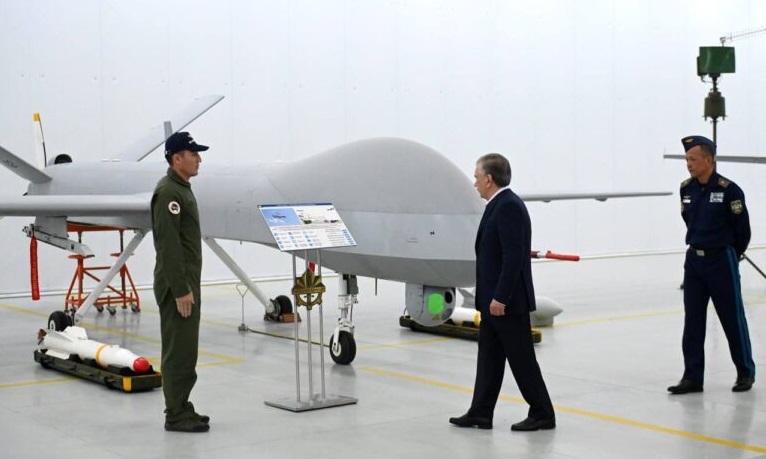
    Over the recent years, Russian and international media have been actively writing about various contracts of Uzbekistan for the purchase of Russian military equipment, some of them are the most modern, and the other part are a legacy of the USSR. The numerous deals indicate Tashkent’s determination to take arms sales talks with Moscow to a higher level. In 2017, Uzbekistan committed to modernizing its armed forces as part of a five-year development strategy. Another factor that may have spurred Uzbekistan’s Defense Ministry recently was the intra-Afghan conference in Qatar, which resulted in the adoption of a nascent peace resolution. Tashkent has a lot at stake in this process, since any withdrawal of Western (particularly American) troops as a result of the resolution will have direct security consequences. Thus, Uzbekistan will take sole responsibility for protecting its border with Afghanistan.

    In addition, in 2019, Uzbekistan purchased 12 Mi-35M military helicopters. These transport helicopters, which can also be used to attack ground targets, have been in production since the 2000s. Besides, Uzbekistan has ordered an unspecified number of BTR-82A armored personnel carriers (APCs), capable of carrying three crew members and seven soldiers. Previously, Tashkent also purchased “several dozen” special-purpose armored vehicles VPK-233136 “Tiger”, capable of transporting up to seven military personnel (according to TASS).

    In addition to modernizing equipment for its ground forces, Uzbekistan plans to enter into contracts for the Air Force and order new fighter jets and a radar system. In particular, Tashkent is negotiating the purchase of Su-30SM multirole fighters, which Russia has deployed in Syria. Uzbekistan has also expressed interest in acquiring Sopka-2 radar systems, which monitor airspace, as well as upgrading the country’s existing military radars to Sopka-2 levels.

    Closer-than-usual military cooperation between Russia and Uzbekistan began with President Shavkat Mirziyoyev’s first trip to Moscow in April 2017 and President Vladimir Putin’s return visit to Tashkent in October 2018. During these meetings, the parties discussed issues of military cooperation and modernization of Uzbekistan’s military equipment using Russian assets; the real details of these conversations are only surfacing now. And, no doubts, Uzbekistan’s recent purchases of Russian weapons, along with ongoing negotiations between the two sides, are directly related to these aforementioned summits.

    A number of factors indicate that Uzbekistan’s efforts to update its military arsenal are related to the dynamically developing situation in Afghanistan. Earlier this year, the Chief of Staff of the Armed Forces of Uzbekistan, Major General Pavel Ergashev, spoke about the movement of “centres of instability” in northern Afghanistan (i.e. areas close to or bordering Uzbekistan), which, in his opinion, threatens stability in Central Asia. The fact that these purchases came after intense peace negotiations in Afghanistan, which were supported by Uzbekistan, is not a mere coincidence. Assuming a subsequent withdrawal of US troops from the theater of operations in the short to medium term, the burden of defending the Afghan-Uzbek border will now fall solely on Tashkent.

    Despite the fact the Turkish drones such as the Bayraktar TB2 have become extremely popular due to their successful deployment in multiple conflicts around the globe and have also popped up in Central Asia, Uzbekistan seems to rely more on the Russian drone system. In August 2021, Uzbek armed forces performed a readiness drill with Russian-made drones in an area near the country’s southern border. The Yug-2021 exercise was held jointly with the Russian army against the backdrop of worsening stability in neighboring Afghanistan.

    Uzbekistan has tried to develop domestic defense capabilities elsewhere too. In October 2021, the State Defense Industry Committee announced it had developed its own remote-controlled heavy machine gun. A month later, the same body said it had begun production of a domestically designed light-armored vehicle called Qalqon (Shield).

    It is much more profitable for Uzbekistan to purchase military equipment from Moscow rather than from NATO for a number of reasons. Firstly, in the current conditions of logistical difficulties, the delivery of military equipment from Russia is much safer and cheaper than from NATO countries. Secondly, given Uzbekistan’s Soviet past, many standards and the language of instructions for Russian equipment are clearer than Western ones. Thirdly, the United States is gradually curtailing its geographic scope of military operations, since it cannot support them financially, and accordingly, supplies of depleted equipment to Uzbekistan will cost more, and their effectiveness is quite low. Finally, Uzbekistan is also aware of the strategic risks of purchasing military equipment from NATO – ultimately this will lead to the deployment of NATO military bases on the country’s territory under the pretext of “maintaining and monitoring” equipment in proper condition, joint exercises, etc.

    Thus, these factors and global changes are motivating Uzbekistan to quickly acquire military equipment from the country where most of its obsolete military equipment originally came from.

  • U.S. Religious Freedom report… compiled by Armenia…

    U.S. Religious Freedom report… compiled by Armenia…

    By Azer HASRET

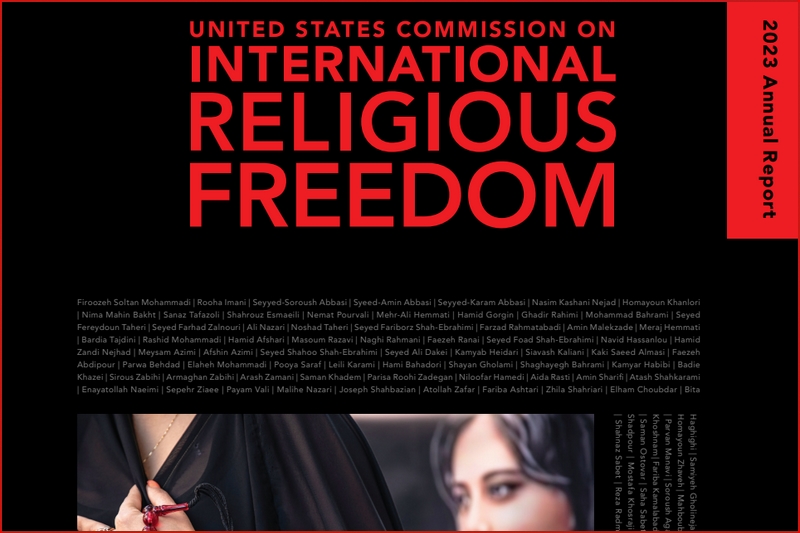
    “The U.S. Commission on International Religious Freedom (USCIRF) is an independent, bipartisan federal government entity established by the U.S. Congress to monitor, analyze, and report on religious freedom abroad.”

    This is stated by the mentioned Commission on its “Annual Report of The U.S. Commission on International Religious Freedom”. This means that the Commission is independent of any outside influence.

    Is it?

    We’ll see…

    Recently The Commission has announced its 2023 report where Azerbaijan among other several Turkic and Muslim countries is accused of “suppressing the religious freedoms”. All Turkic countries – Azerbaijan, Kazakhstan, Uzbekistan, Türkiye and Turkmenistan – except Kyrgyzstan are those which is seen by this very Commission as “a perpetrator of religious freedoms”.

    According to this report’s Azerbaijan chapter (just 2 pages) this country is in a very disturbing position and must be included “on the State Department’s Special Watch List” for violating religious freedoms…

    Now let’s see some citations from the Report:

    1. “This report provides an update on religious freedom conditions in Azerbaijan in 2023. It describes the legislative framework that facilitates the official regulation of religious practice, concerns for religious sites in Nagorno-Karabakh, the ongoing repression of Shi’a Muslim religious activists, and the impact of the government’s refusal to allow conscientious objection.”

    “Concerns for religious sites in Nagorno-Karabakh”. One must think that the Report is overseeing the destruction of more than 60 Mosques in Karabakh during its occupation by Armenia. Yes, even all Mosques in Karabakh and other occupied lands of Azerbaijan were wiped off by Armenia. But no single word about this in the Report!

    Plus, we must add that there is no territorial entity within Azerbaijan called “Nagorno-Karabakh”. Seems the compliers of the Report are using occupant Armenia’s terminology while talking about Azerbaijan…

    While talking about “the ongoing repression of Shi’a Muslim religious activists” The Commission forgets about the realities of our region. Those so-called “repressed Shi’a Muslims”, who are defended by the US Government are mostly the followers of Iranian General Qasem Soleimani. This General was eliminated on Jan 3, 2020, by the US drones in Baghdad, Iraq as a terrorist. And those so-called Shi’a Muslims “repressed by Azerbaijan” are mostly the supporters and followers of this very terrorist! So, the U.S. must decide and rethink if this very country has killed Qasem Soleimani by mistake…

    2. “The law also prohibits non-Azerbaijani citizens from engaging in “religious propaganda” or missionary activity without explicit state permission.”

    What is strange here? Why Azerbaijan must be accused of preventing its citizens from the religious propaganda? People, even foreigners are free to practice their religion. But religious propaganda by foreigners is and must be prevented!

    3. “In May 2023, the chairman of the SCWRA Mubariz Gurbanli explicitly called for Armenian priests to abandon the Dadivank Monastery in the Kalbajar region as he falsely claimed that they had no connection to the site. While a United Nations mission to Nagorno-Karabakh completed in October 2023 reported that it “saw no damage…to cultural or religious structures”, human rights organizations continued to urge the government to ensure protections for religious and cultural sites and rights.”

    I would say that No Comment! But The Commission needs a bit explanation and enlightenment. The Monastery which they claim to be called as “Dadivank” is Khudaveng Monastery and has nothing to do with Armenians. It was built by Albanian Christians and is under state protection of Azerbaijan. But as other religious sites it was occupied by Armenia and then renovated a bit to prove that it is “an ancient Armenian Monastery”. Even the UN mission also stated that no damage “to cultural and religious structures”.

    4. “The government has particularly targeted the unregistered Muslim Unity Movement (Müsəlman Birliyi Hərəkatı) or MUM, a group that has criticized the government’s repressive policies toward religion and whose persecution many human rights defenders believe to be politically motivated.”

    This so-called Muslim Movement is that very organization which supports Qasem Soleimani and Iran’s clerical regime. These people hate the U.S. and other major Western democracies and want to overthrow the government in Azerbaijan… in order to establish a new one which would support such terrorist organizations like HAMAS, Hezbollah…

    5. “The United States should pressure Azerbaijan to address its severe violations of religious freedom and place the country on the State Department’s Special Watch List until the Azerbaijani government amends its 2009 law “On Freedom of Religious Beliefs” in line with international human rights standards and ceases other policies and practices that routinely infringe upon its citizens’ freedom of religion or belief.”

    I’d ask, are you serious? Do you really think that Azerbaijan must be included in this List just only for preventing the country and its people from the so-called religious interference of the terror-sponsor state – Iran? What is the connection between Iran and The U.S. Commission which compiles such reports?

    Maybe there is someone in The Commission who has the ties with Iran or its close allies?

    Yes, there is someone called Danielle Saroyan Ashbahian, who is a Chief of Public Affairs at The Commission. If review her social media accounts, one easily can see that she is an active member of Armenian propaganda against Turks – Azerbaijan and Türkiye! But she must be neutral person, isn’t it?

    This very Danielle worked for the Armenian Assembly of America before joining The Commission dealing with the religious issues throughout the world…

    “Danielle Saroyan Ashbahian is the Chief of Public Affairs at the U.S. Commission on International Religious Freedom, overseeing the Communications and Congressional Relations. Before joining USCIRF, she was the Director of Communications at the Armenian Assembly of America. Prior to that, she was the Layout Editor at the Public Diplomacy Magazine and worked at the Los Angeles Consular Corps. She has had previous experience at the office of former U.S. Congresswoman Janice Hahn, the United Nations Department of Public Information in Armenia, the Lebanese Consulate in Los Angeles, and the San Francisco Ethics Commission” reads The Commission’s web site…

    One more important point: The Commission is trying to support its claims against Azerbaijan siting so-called “Caucasus Heritage Watch”, a pro-Armenian entity launched in 2020 by Armenians, supported by Armenian organizations…

    Just again, No Comment!

    BTW, there is no report on Armenia at all! We’ll remind The Commission that for example the Jewish Synagogue was set to fire in Yerevan in 2023. Or all Muslims are religiously cleansed from Armenia! And Armenia is one of the very few countries of the world denying multiculturalism and having even 98 percent of population of Armenian ethnic background…

  • Foreign NGOs in Kyrgyzstan seek monopoly for perinatal health services in Kyrgyzstan amidst the election campaign

    Foreign NGOs in Kyrgyzstan seek monopoly for perinatal health services in Kyrgyzstan amidst the election campaign

    Photo credit: SUN

    Kyrgyzstan still remains the country with the highest maternal mortality rate. According to WHO, there were 79 deaths per 100 000 live births in 2015. 

    Since then, international organizations based in the country, have been trying to improve this situation. And some of them have even reached positive outcomes. For example, the Deutsche Gesellschaft für Internationale Zusammenarbeit (GIZ) GmbH in Bishkek that has been operating in the country since the 1990s, has implemented a number of social projects, including the training of doctors and nurses, employment promotion and other. Yet, the death rate among new-born babies is still at dangerously high level.

    To improve the situation, in 2019 a delegation of Kyrgyz doctors visited Russia’s Yekaterinburg, where the world-famous enterprise specializing in production and exporting perinatal equipment and innovative incubators is located. The visited has resulted in the launch of a new project named The Regional Obstetric Monitoring.  The system that provides an A-Z support from the first contact with a doctor to controlling the birth process and first months of a newly-born, has proved to be more efficient than the previous projects, designed by European countries.

    However, the next visit to Yekaterinburg aimed at learning and implementing new levels of the system was blocked. The cancellation of the visit was supported by GIZ that referred to efficiency of the German health projects and higher wages for doctors that passed the training.

    Ironically it may seem, the German initiative came just amidst the parliamentary elections campaign that is currently going on in Bishkek. Some experts believe it was done on purpose, to prevent current President Zhaparov’s activity to promote Russian technologies among its supporters that would by no doubts increased the number of his female electorate.

  • USAID increases its presence in Central Asia amid the COVID-19 pandemic to foster its influence

    USAID increases its presence in Central Asia amid the COVID-19 pandemic to foster its influence

    The United States Agency for International Development (USAID) is increasing investments and support of the economy and social sphere in Uzbekistan through various economic, trade, healthcare and social projects. Only for the year of 2019 USAID invested over $10 million in Uzbekistan’s private sector for establishment of new orchards, installation of water saving technologies marketing, and branding to meet international standards. According to the Agency, USAID investment strategy in Uzbekistan involves large-scale and ambitious projects for the next 3-4 years that aim to increase the living standard in the country.

    As part of its global campaign against the COVID-19 pandemic, the USAID in partnership with the Uzbekistan Ministry of Health has identified priority areas to provide support for the needs of Uzbekistan’s citizens, health professionals, and the government.  

    However, nurturing relations with the US may have a negative side effect for Uzbekistan. By tightening economic and political relations with Tashkent, the United States might take advantage of the Uzbekistan’s geopolitical location and its border with Afghanistan and start lobbying its interests in Kabul heating up complicated relations between the two countries.

    Moreover, fostering the Washington’s idea to create a transparent economy in the country and the accountability of the Uzbek state to civil society may cause potential leaks of tax and financial information to the US tax authorities. Considering that the American side relies on the principle of the supremacy of the national law over the international law, this might trigger a threat to the economic security of Uzbekistan and create a ground for pressure on the Uzbekistan authorities by the United States.

    Like in the case with Tajikistan, Uzbekistan, a small country in the Central, could become a perfect potential target for the US so-called democratization policy. Positive social and economic changes integrated by the United States in Uzbekistan are building up a solid ground for lobbying Washington political ambitions in the country. History has already proved the United States could be unreliable business partners. The US-China trade relations scenario is a great example of it: when contradictions arose, the US changed their policy from building partnership into the policy of trade wars.