For several days, the world media has been circulating the news that the Israeli Prime Minister Benjamin Netanyahu has recognized the so-called “Armenian genocide.” It is reported that although Israel has not officially made any decision as a state, Benjamin Netanyahu said in a statement to the media that he recognized this “genocide.” Thus, he went down in history as the first head of state/government of Israel to hold such an opinion.
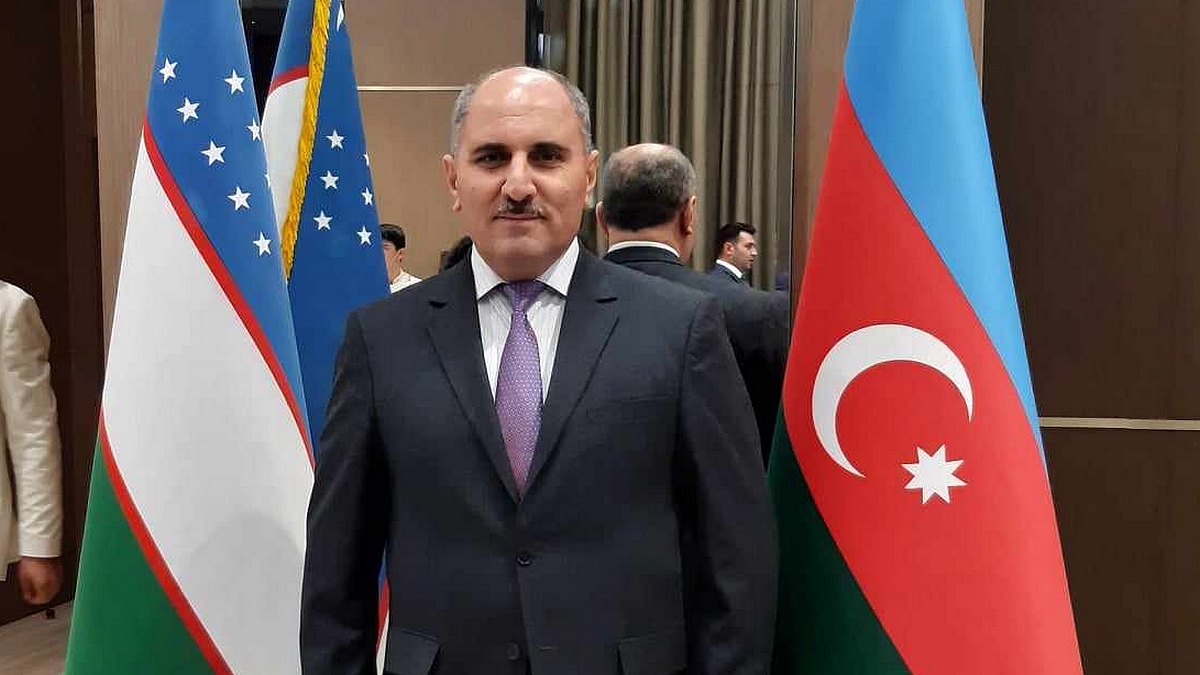
Commenting on the issue, political commentator Azer Hasret said that the Israeli Prime Minister, with whose state Azerbaijan pays great attention to bilateral relations, should not have made this mistake: “Israel is a close country for Azerbaijan. We value this closeness; when necessary, we take steps together with Israel, and we work jointly to serve mutual interests. Of course, at the same time, both states are free to take any action, but this doesn’t mean that the leaders of the Israeli state/government or individual officials can make statements contrary to our interests. Such an irresponsible approach regarding the baseless claim of the Armenian genocide cannot be considered acceptable for Azerbaijan.”
Azer Hasret further noted that “the Israeli Prime Minister may link his approach to the tension with brotherly Türkiye. However, the highest official of the Israeli state, which has close relations with Azerbaijan, should not forget that any step taken against Türkiye, any word spoken, is also against Azerbaijan. In this regard, states that value friendship with us, including Israel, should be careful in such matters. We highly value our relations with Israel and are interested in further developing them. However, if Israeli officials make such mistakes in relation to brotherly Türkiye, this will certainly not be well received in Azerbaijan. Such a situation can seriously damage Israel-Azerbaijani relations.”
The political commentator added that the Israeli prime minister needs to correct his mistake as soon as possible, including eliminating this misbehavior, which upsets Azerbaijan. If this mistake is not corrected, of course, the Azerbaijani public opinion may look for ways to call for a reconsideration of its relationship with Israel.
“A stone thrown at Türkiye was thrown at us. Every word spoken against Türkiye is considered spoken against us, Azerbaijan. Therefore, Benjamin Netanyahu should show his interest in preserving our relations by correcting his mistake as soon as possible,” Azer Hasret emphasized.
Nicole Malliotakis United States House of Representatives 266 Cannon House Office Building Washington, D.C. 20515
Subject: Response to Your Remarks on Cyprus and the Republic of Türkiye
Dear Congresswoman Malliotakis,
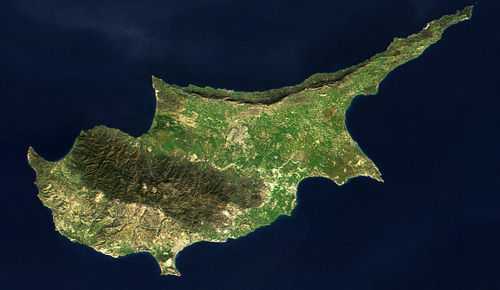
I am writing to express my deep concern and disappointment regarding your recent remarks made during the 51st anniversary commemoration of Türkiye’s 1974 intervention in Cyprus, during which you referred to it as an “illegal occupation.” Your characterization of this complex historical event, along with your continued advocacy for the removal of Turkish troops, reflects a pattern of selective historical narrative that disregards international law, factual accuracy, and the lived experiences of Turkish Cypriots.
As an elected official representing a diverse constituency including a large Turkish American,, and Muslims from across Staten Island and Brooklyn. I urge you to approach such sensitive matters with greater care, integrity, and an appreciation for the full historical context.
Türkiye’s 1974 Intervention: A Legal Action Under the Treaty of Guarantee
Türkiye’s intervention in Cyprus was not an invasion, nor was it illegal. It was carried out under the 1960 Treaty of Guarantee an internationally binding agreement signed by Türkiye, Greece, and the United Kingdom. The treaty grants each guarantor nation the right to intervene unilaterally in Cyprus if the constitutional order or security of either community is under threat.
In July 1974, a Greek-orchestrated coup in Cyprus aimed to annex the island to Greece, violently deposing the legitimate government. Türkiye, in accordance with its treaty rights, intervened to prevent this annexation and to protect the Turkish Cypriot population, which had already endured years of discrimination, political marginalization, and ethnic violence. This intervention was not only lawful but necessary. The Athens Court of Appeals (Decision No. 2658/79, dated March 21, 1979) itself confirmed that it was the coup—not Türkiye’s response—that constituted the illegal action. Also, Archbishop Makarios III, the first President of the Republic of Cyprus, made several significant statements following the events of July 1974. After surviving the coup d’état orchestrated by the Greek military junta and EOKA-B, he fled to London and later addressed the United Nations. he also acknowledged that the coup in Cyprus was a Greek invasion not a Turkish invasion: Here is a key excerpt from Archbishop Makarios’ statement to the United Nations Security Council on July 19, 1974 one day before Türkiye’s intervention:
“It is a paradox, indeed, that the President of Cyprus is addressing the Security Council in his capacity as the head of a state which is a victim of aggression not by a foreign power, but by a country which claims to be a brother nation…”
“What is happening in Cyprus is a clear invasion, through military force, by Greece… The coup was an invasion, and from its first moment it was an act of aggression and occupation.”
This statement is important because Makarios labeled the Greek-led coup as an “invasion,” thereby creating an argument though indirect that Türkiye’s response was not the initial act of aggression, but rather a reaction to Greek Invasion of the Island. The fact of the matter is In terms of the 1960 Treaty of Guarantee, while Makarios did not publicly recognize the Turkish intervention as “legal,” the treaty itself is key to understanding Türkiye’s justification. The Treaty of Guarantee (signed by the United Kingdom, Greece, Türkiye, and Cyprus) gave the guarantor powers the right to intervene unilaterally to restore the constitutional order if it were disrupted.
Archbishop Makarios did explicitly endorse the Turkish intervention, his recognition of the coup as an invasion by Greece lends credence to Türkiye’s legal justification under the Treaty of Guarantee. Thus, the 1974 Turkish operation cannot accurately be labeled as an “invasion”
The Turkish Peace Forces in Northern Cyprus continue to serve a vital function in deterring future violence and safeguarding the security of Turkish Cypriots. Their presence is not a political occupation it is a security imperative based on tragic historical realities.
British Troops in Cyprus: Also a Guarantor Presence, If the presence of Turkish forces is a concern, I would respectfully ask why there is no similar objection to the continued presence of British troops on the island. The United Kingdom, like Türkiye, is a Guarantor Power and maintains sovereign military bases in Cyprus. Are these forces also to be labeled an “occupation,” or is this designation applied selectively for political convenience?
The 2004 Annan Plan: A Missed Opportunity for Peace
In your remarks, you called for reunification. However, in the 2004 United Nations–backed Annan Plan referendum, 65% of Turkish Cypriots voted in favor of reunification, while 85% of Greek Cypriots rejected it. Then–President of the Republic of Cyprus, Tassos Papadopoulos, openly urged Greek Cypriots to vote “No.” Reunification was not blocked by Türkiye or Turkish Cypriots, but by the Greek Cypriot leadership. If peace and unity are the goals, this crucial fact must be part of the conversation.
Recognition of the Republic of Türkiye
It is also concerning that you continue to use the outdated term “Turkey,” rather than the official name “Türkiye,” which has been recognized by the United Nations and many international bodies. Respecting a country’s chosen name is a basic tenet of diplomacy and decency. As a Member of Congress, you have a duty to model such respect in both speech and writing.
The Strategic Importance of U.S.–Türkiye Relations
Türkiye remains one of the United States’ most critical allies in NATO. It possesses the alliance’s second-largest military and serves as a geopolitical bridge to Central Asia, the Caucasus, the Balkans, the Black Sea, and the Middle East. As former U.S. Ambassador Jeff Flake recently reaffirmed the vital role that Türkiye plays in American defense strategy, economic cooperation, and diplomatic outreach. Efforts to weaken U.S.–Türkiye relations do not serve the national interest. Rather, they empower adversaries and compromise regional stability.
A Call for Leadership, Not Division
Congresswoman, it is my hope that you will choose to lead with fairness and inclusivity, rather than division and partisanship. As a representative of all New Yorkers, you have a responsibility to serve your full constituency, including Turkish Americans, Turkish Cypriots, and other minority communities who contribute daily to the richness of our city and our nation.
Your message only justifies and intensifies the hateful feelings that have been instilled in them through childhood; frankly, you are engaging in tactics favored by groups such as the Ku Klux Klan.
You were elected to uphold the principles of truth, justice, and equality—not to amplify the narratives of foreign nationalisms at the expense of American unity and international diplomacy.
History remembers those who choose wisdom over prejudice, truth over propaganda, and peace over provocation. I sincerely hope you will reflect on these matters and approach them in a more balanced, factual, and constructive manner moving forward.
Michael Tannousis Assembly member 11 Maplewood Place Staten Island, NY 10306
July 20, 2025
Subject: Response to Your Remarks on Cyprus and the Republic of Türkiye
Dear Assemblyman Michael Tannousis
I write to express my deep disappointment and concern regarding your recent remarks during the 51st anniversary commemoration of Türkiye’s 1974 intervention in Cyprus, in which you referred to it as an “illegal occupation.” Your characterization of these events overlooks key historical facts, disregards international law, and marginalizes the lived experiences of Turkish Cypriots. As an elected representative of a diverse constituency that includes many Turkish Americans and Muslims across Staten Island and Brooklyn, I urge you to engage with this issue in a manner that reflects historical truth, legal accuracy, and diplomatic fairness.
Türkiye’s 1974 Intervention: A Legal and Necessary Action
Contrary to your statement, Türkiye’s intervention in Cyprus was not an “invasion” nor illegal. It was undertaken in accordance with the 1960 Treaty of Guarantee, a binding international agreement signed by the Republic of Cyprus, Türkiye, Greece, and the United Kingdom. The Treaty clearly permits any of the Guarantor Powers to act unilaterally to restore the constitutional order in Cyprus should it be disrupted. In July 1974, the democratically elected President of Cyprus, Archbishop Makarios III, was overthrown in a Greek-backed coup aimed at unifying the island with Greece. This act of aggression executed by the Greek military junta and the EOKA-B paramilitary group triggered Türkiye’s legal and justified intervention to prevent annexation and protect the Turkish Cypriot population, which had endured years of ethnic violence and political exclusion.
The Athens Court of Appeals (Decision No. 2658/79) concluded that it was indeed the coup—not Türkiye’s military response that was illegal.
Furthermore, Archbishop Makarios himself, in a statement to the United Nations Security Council on July 19, 1974, one day before Türkiye intervened, described the coup as an act of aggression:
“It is a paradox, indeed, that the President of Cyprus is addressing the Security Council in his capacity as the head of a state which is a victim of aggression not by a foreign power, but by a country which claims to be a brother nation… What is happening in Cyprus is a clear invasion, through military force, by Greece… The coup was an invasion, and from its first moment it was an act of aggression and occupation.”
The acknowledgment by Archbishop Makarios then head of state of Cyprus that the 1974 coup was orchestrated by Greece provides significant legal and moral support to Türkiye’s position. His admission affirms that it was the Greek-backed coup, not Türkiye’s response, that constituted an act of aggression. Türkiye’s intervention, therefore, was a lawful and treaty based action taken in response to an imminent threat, not an invasion. This is a fact that could stand up in any impartial international court of law.
Michael, as a legal professional, if you genuinely believe that Türkiye’s intervention qualifies as an “invasion,” I respectfully encourage you to bring your case and any supporting evidence before the International Court of Justice.
If your claims are valid, it would be a landmark victory for the Greek and Greek Cypriot cause, and you may well be honored for your efforts with statues worldwide . In fact, I would be willing to personally underwrite all associated legal expenses for such a case to be presented at the international level. Let the law not selective political rhetoric be the judge.
Turkish Peace Forces: A Security Imperative, Not an Occupation
The continued presence of Turkish Peace Forces in Northern Cyprus is not a political occupation. It is a security necessity grounded in the tragic history of ethnic cleansing and violence against Turkish Cypriots. Their presence has served as a deterrent to further conflict and ensured the safety of an entire community that had once been pushed to the brink of annihilation.
British Military Presence: A Selective Argument , If the presence of foreign troops on Cyprus is a concern, then the longstanding presence of British military forces, including the sovereign bases of Akrotiri and Dhekelia, must also be addressed. The United Kingdom is, like Türkiye, a Guarantor Power. Yet no similar outrage is expressed over British forces. Why is the label “occupation” applied only to Türkiye’s presence and not to the UK’s? This selective rhetoric undermines objectivity and weakens the legitimacy of any call for fairness.
The 2004 Annan Plan: A Missed Opportunity by Greek Cypriots . The 2004 Annan Plan, supported by the United Nations and the international community, was overwhelmingly accepted by 65% of Turkish Cypriots while 85% of Greek Cypriots rejected it. Then President Tassos Papadopoulos publicly urged the Greek Cypriot population to vote “No.” Reunification was not rejected by Türkiye or Turkish Cypriots, but by the very leaders you now align with in rhetoric.
Recognition of “Türkiye” and Respect in Diplomacy
I also noted many times your continued use of the outdated term “Turkey” in official communication. The nation has formally adopted the name “Republic of Türkiye,” which has been recognized by the United Nations and numerous international bodies. Addressing countries by their chosen names is a basic element of diplomatic respect and cultural decency. As a Member of Congress, this should be reflected in both your speech and writing.
Efforts to mischaracterize Türkiye’s actions or alienate its role in Cyprus only serve to embolden adversaries and weaken American influence in the region.
A Call for Leadership Rooted in Truth, Not Division . Micheal, I respectfully urge you to rise above partisan rhetoric and historical revisionism. Your comments risk deepening wounds, empowering ethnic bias, and misinforming the public. As an elected leader, your responsibility is to all New Yorkers including Turkish Americans and Turkish Cypriots who have long contributed to the strength and diversity of this city and this nation. Your message only justifies and intensifies the hateful feelings as you are engaging in tactics favored by groups such as the Ku Klux Klan.
Frankly, the sentiments expressed in your remarks echo the type of hostility and historical distortion often used by hate-based movements. Leadership should build bridges, not justify inherited animosity.
History will remember those who uphold truth over political convenience, diplomacy over hostility, and fairness over propaganda. I sincerely hope you will reflect on the facts presented and engage with this issue more responsibly moving forward.
The tragic events of the First World War, the ebb and flow of the calamities of war in the Eastern Anatolia front, including the relocation and resettlement of some of the Armenian population in specific areas has become a topic construed out of context and abused for political ends to hammer Türkiye and the Turkish people. Retired Ambassador Pulat Y. Tacar has studied this subject extensively from a legal-judicial point of view and has published numerous articles on the subject.
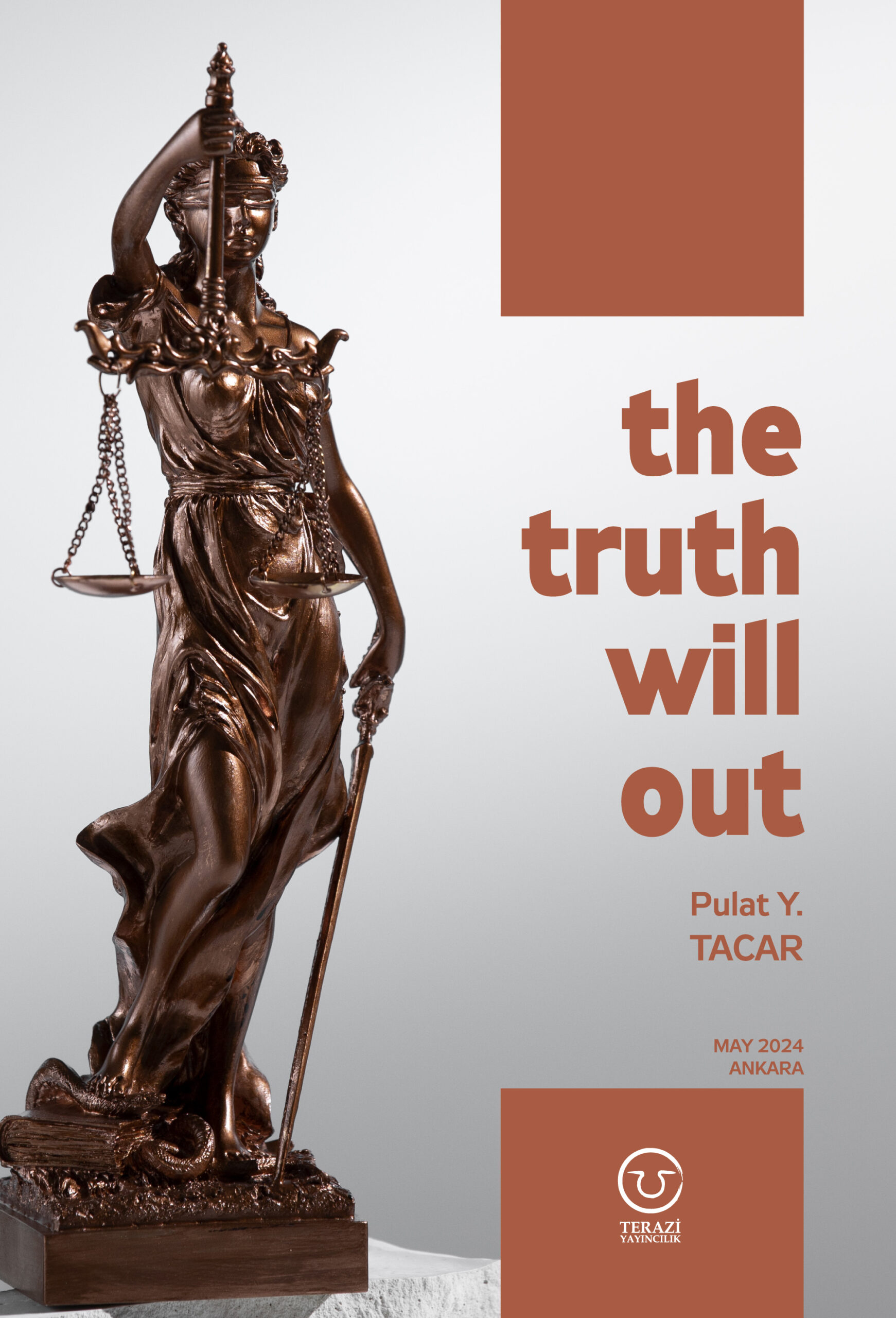
This book, titled “The Truth Will Out,” is a comprehensive compilation of his previously published articles to shed light on one of Türkiye’s foreign policy challenges.
Ambassador Pulat Y. Tacar, a highly seasoned diplomat with a legal background, an emeritus in his career, having countered Armenian allegations and historically distorted narrative against Türkiye and the Turks even at third party inquiries and high-level international platforms, has opted to deal with the allegations from its most vulnerable façade, that of legal, judicial basis.
AVİM has a number of publications on the historical, political, religious aspects of the events of the time. The 44th book published by AVİM and Terazi Publishing, “The Truth Will Out,” is a legalistic reference source that is bound to sustain its validity. As AVİM, we are proud to present this valuable work to readers interested in the subject.
ISSUES TO CONSIDER ON THE 109TH ANNIVERSARY OF THE ARMENIAN REBELLION IN VAN
Historically, the Armenian Revolts in the City of Van played a major role in the implementation of a mandatory Relocation and Resettlement decision taken by the Ottoman Empire against the Armenian minorities. This decision was a direct result of the actions of the mutinous Armenians who rebelled against the Ottoman State and fought on the enemy side against their own country’s army.
Armenians, who had previously rebelled in Van, in 1896, ignited a new rebellion right before World War I. They used the church in Van’s Akdamar Island as a revolutionary committee headquarters, a weapons and munitions depot, and a center for torture and rape of the Muslim women they captured.
Armenians, who received a great deal of political support from the British, Russian and French Consuls, European missionaries in the region and the ABCFM missionaries affiliated with the US, had already begun their preparations for the occupation of Van, way before the onset of WWI.
Before the First World War, Armenian volunteers began gathering in the Cities of Muş, Van and Bitlis to fight against the Ottoman Empire, and (naturally) none of them responded to the mobilization calls of the Ottoman State.
Armenians who were serving under the Ottoman Military deserted their positions along with their issued weapons and crossed into the Russian territory with clear intent to defect into the Russian Army. When the Russian Caucasian Army attacked Eastern Anatolia, Ottoman Armenians were at the forefront, serving as vanguard units to the Russian Army.
Karekin Pastermadjian, who was an MP from Erzurum in the Ottoman Empire’s Congress, personally led the mutinous Ottoman Armenians who defected to Russia. Together, they massacred tens of thousands of Muslims in the City of Van and its surrounding regions.
Following the Russian Army’s crossing of the Turkish border, 33rd Infantry Division stationed in the City of Van moved out of the city to intercept the Russian enemy. Armenian gangs, who wanted to take advantage of the departure of the Ottoman troops out of Van, immediately formed an armed force of 40,000 men. Soon after, they began massacring the Turkish and other Muslim population in the City of Van and its surroundings. The Muslim population of Van ended up having to seek shelter at the Van Castle. Once the rebellion started in Van on April 15, 1915, Armenians first massacred the Gendarmerie Detachment stationed in the city and then the civilian population was next to be massacred.
The uprising and the massacres initiated by the Armenians in the City of Van, which intensified on April 20, 1915, caused the Muslim population to leave the city in panic, and a significant portion of those who fled the city lost their lives en route, due to Armenian attacks, starvation, and disease.
The fact that around 80,000 Muslims left the city in panic and began to flee in the direction of Bitlis in order to escape the great uprising that the Armenians started in the City Center of Van and the subsequent massacres they committed following the Russian Army’s occupation of Van, revealed to the Ottoman Administration that the Armenian revolts could not be prevented using local security measures. Hence, these events undoubtedly constituted the most important reasoning of the mandatory Relocation and Resettlement measure implemented against the Armenians.
Armenians burned down and destroyed all mosques and Muslim neighborhoods in the City of Van. Mutinous Armenians burned alive approximately 80 Turkish soldiers who were receiving in-patient treatment at the Van City Hospital. Captured Muslim women were taken by boat to the Armenian Church located on Van’s Akdamar Island to be raped. Some of these women chose to end their own lives by jumping off the boat into the cold waters of Lake Van, in order to not surrender their chastity. During the one-month period leading up to Russian Army’s complete seizure of the City of Van on May 18, 1915, Armenians under the leadership of the gang leader named “Aram” massacred 22,900 Turks.
Out of the 3,400 Muslim dwellings that existed within the Van Province before the war, were down to three houses standing, after the Armenians set the whole city ablaze and destroyed nearly all Muslim quarters of the city. Also, in the City of Bitlis, all 6,500 houses belonging to Muslims were burned to the ground by the Armenians.
According to the findings of US Historian Prof. Justin McCarthy, the number of Turks massacred in the Van Region was 194,167 people. According to the Ottoman Archival Documents, however, the number of Muslims murdered by Armenians in the Van Province and its subdistricts is 217,132 people. These indisputable archival documents clearly determine the identities of the murderers and their victims one-by-one, while providing explicit details on each massacre event in terms of place, time and how these crimes were committed.
Coming to today, Cities of Diyarbakır and Van are among those Eastern provinces that most intensively support PKK terrorism. The obvious cooperation between Armenians and separatist Kurdish elements that have long been wanting to establish an “independent Kurdistan” within the Turkish territories is clearly intensifying. In this context, many meetings have been held between BDP and HDP Parties and the Armenian Dashnak Party (aka ARF). As a result of these meetings, joint statements have been released such as: “[…] in addition to exploring the possibilities of Armenian-Kurdish cooperation in the lands of Western Armenia and Kurdistan, other areas of cooperation between the two nations have been discussed.”
Following the local municipal elections held on March 31, 2024, in Turkiye, the terrorist actions initiated by DEM Party supporters in these districts gives us the impression that they are preparing the groundwork to secede Turkiye’s Eastern and Southeastern Anatolian regions, ostensibly under the name of “Kurdistan” which, in reality, is bound to become “Western Armenia” later.
The appointment of a certain felon convicted of terrorism to Van’s Mayoral seat despite his earlier statements that “PKK is strong enough to drown us all in their spit”, contrary to the decision of the Diyarbakır High Criminal Court and Article 76 of the Turkish Constitution, clearly indicate the early signs of such a preparation. These developments indicate that the Armenian issue, and the separatist Kurdish political movement with which it is intertwined, are bound to become larger issues, capable of potentially threatening the very survival of the Turkish State.
As the grandchild of a family that had to leave their home behind and migrate westward in Anatolia, in order to flee from the Armenian oppression in Van, I have been following up for many years on how foreign (non-citizen) Armenians have been buying up large acreages of land in and around Van province using locals, while hiding their true identities.
The recent developments clearly indicate that the City of Van, which was once used as the ground zero point of the Armenian massacres against the Turks before the First World War, is now being used as the ground zero point of a secessionist attempt targeting Turkiye.
As a native of Van, I feel great sadness seeing all these things transpire, right before my eyes. In this context, I think it is important that the Turkish State’s intelligence agencies meticulously follow-up on the land purchases of Crypto-Armenians in Van and the contacts of elected local officials with terrorist organizations (such as PKK) so that the State can make the necessary interventions against violations of law when needed, without compromise.
I feel that it is my civic duty to warn the Turkish Statesmen and the patriotic People of Van, who lost 217,132 martyrs in WWI, to be vigilant about another potential Armenian uprising that could be ignited by these Crypto-Armenians based in Van, who hideously hide themselves behind Turkish and Kurdish identities. These people are obviously conspiring to start an uprising any minute, once they receive instructions from the “State of Western Armenia”, which claims to have been established “in exile”. This knock-off state preposterously claims that 19 provinces of Turkiye are Armenian territories, and they surely have the full support of the imperialist states who support them to see Turkiye divided.
The 1915 relocation was a dreadful operation for the Ottoman Armenians. It is undeniable that they suffered a great disaster with many innocent lives lost on their relocation routes.
The Armenian genocide lobby claims that the Ottoman government intentionally “marched Armenians to their deaths”, thus committing the first genocide in history, and that the relocation law was only a pretext for the extinction of Armenians. This allegation of genocide does not ring true. It has no historical evidence or legal framework. To term the events of 1915 as genocidze is to detach genocide from its legal definition and to use it for political or religious purposes.
No one has ever found any dependable documentary evidence to support the claim that the Ottoman government intended to exterminate the Armenians through relocation. On the contrary, there is considerable evidence of attempts to prevent such an outcome, though these were not very successful under the extraordinary conditions of World War I.
The 1915 relocation law introduced by the Ottoman government was a wartime security strategy and operational measure undertaken for reasons of urgent military necessity. The Ottoman Empire was fighting alongside Germany against Britain, France, and Russia. Armenians saw this as an opportunity to establish their own state and they revolted against the Ottoman Empire, of which they were citizens.
In Eastern Anatolia, tens of thousands of Armenians, including those under arms in the Ottoman army, fled to join the Russian Caucasian Army. Serving as scouts and advance units, they supported the Russian invaders. In Southern Anatolia, thousands of Armenian volunteers joined French Legion troops and took part in the occupation of numerous Ottoman provinces.
Those Armenians who stayed behind were also a great threat to the Ottoman war effort and to the lives of the Muslims of Eastern Anatolia. Just before the war, more than 12,000 Armenian males of fighting age had gone to Russia from Eastern Anatolia. There, they were trained in partisan and guerrilla tactics. Immediately after Russia declared war on the Ottoman Empire, they returned to Anatolia. Joining with others who had never left Turkey, as well as Armenian deserters from the Ottoman army, they organized guerrilla activities on both sides of the Ottoman frontier. Henry Morgenthau, the American Ambassador in Istanbul, reported to Washington on 25 May 1915 that nobody estimated the Armenian guerrillas to be “less than 10,000, and 25,000 thousand is probably closer to the truth”.
In the spring of 1915, when the British were at the Dardanelles, the Russians attacking in the east, and another British force apparently advancing on Baghdad, Armenian guerrilla activities had gained momentum all over Anatolia. Military supply and transport routes, and the communication channels of the Ottoman military units were sabotaged. Meanwhile the Armenian militias were attacking helpless Muslim villages in Eastern Anatolia and committing massacres against wholly innocent people. In some localities the entire Muslim population was killed. Armenian guerrillas were supported by Armenian villagers as well as by Armenians in the eastern cities that were home to leaders of their rebellion.
For the Ottoman leaders, the Armenian uprising was the deadliest of all national security threats. On 14 November 1922, the New York Times reported that a total of 200,000 Caucasian and Ottoman Armenian volunteers fought against the Ottoman Empire in World War I. In response, at approximately the same time that the Armenians seized the City of Van, the Ottoman government ordered that the Armenian population residing in or near war zones be relocated to the southern Ottoman provinces, away from the advancing Russian army. Armenians living away from the front, if reported or suspected to be enemy collaborators, were also relocated.
The Ottoman government took numerous measures for the care, protection and feeding of those subjected to deportation. However, under wartime conditions these measures were not fully implemented and unwanted suffering was not prevented. On the way to the south-eastern provinces, those being relocated were sometimes attacked by tribal gangs committing robbery or taking revenge for massacres of Muslims by Armenian bands, in some cases with the connivance of officials. Thousands of Armenians died in these attacks. The loss was multiplied by disease and famine.
In reaction, the Ottoman government investigated the crimes that had been committed. Hearings were held across the eastern provinces, followed by court-martials, at which nearly 1,000 gang members and more than 600 civilian officials or military personnel were sentenced to imprisonment and, in some cases, execution for the attacks on or abuse of the Armenians.
The Ottoman trials of 1915–1917, much before the end of war, unquestionably prove that the Ottoman government did not intend to exterminate Armenians through relocation. The number of Armenians who survived relocation also proves that there was no genocide. The well-known Armenian historian Richard Hovannisian has estimated that about 275,000 Ottoman Armenian refugees survived in post-war Syria, Lebanon, Jordan, Egypt, Iraq, and Iran. More than 100,000 Ottoman Armenians were in France, the United States, and elsewhere. These were survivors who had been completely in the hands of Ottoman soldiers and officials. Had the Ottomans wanted, they could have killed them all. Yet most of the relocated Armenians survived.
Detailing the suffering and losses during the relocation, even though they were not caused by genocide, is undoubtedly a humanitarian matter. However, this should be treated without prejudice and hatred while giving due scholarly attention to history and facts. The historical fact is that during World War I the suffering of Armenians was one of the many disasters that faced all the peoples of the Ottoman Empire. Those who lived in Anatolia, including Turks, Kurds, Armenians, Greeks, and Jews, suffered and made each other suffer.
Muslims were the dominant population in the Ottoman lands during World War I. This does not mean, however, that they were not affected by the devastation of this war. As revealed by the reports of some American missionaries, prior to the relocation ruling, Armenians also committed atrocious massacres in the villages they captured, including Van, which they occupied. In addition to the American archives, Russian, French, British, and German national archives are also full of documents recording the suffering inflicted on Muslims by rebel Armenian gangs both before and after the relocation. Moreover, the Greek occupation after World War I was also a period of extreme suffering for Muslims in Anatolia.
The painful human tragedies of war should be perceived holistically, without any racial and/or religious discrimination. These sufferings should be shared and, when necessary, mourned together. The perception of common suffering can only be realised by understanding the experiences of all Ottoman people, Muslims, and non-Muslims, together.
However, communicating the suffering in Anatolia during World War I faces two important obstacles today. These stem from the discriminatory and prejudiced approaches of those who try to impose the memory of relocation defined as “genocide”. The first obstacle is that the same sensitivity shown towards the suffering of Christians, especially Armenians, is not shown towards Muslims, Turks, and Kurds. The second is that the one-sided Armenian emphasis on such uffering overrides historical and legal facts and is used to support allegations of “genocide”.
“Genocide” is a legal concept. The classification of a historical event or a process as “genocide” can only be based on legal rulings, not personal convictions. In other words, the acknowledgement of suffering cannot change the definition of historical and legal facts.
Furthermore, the Malta Tribunal (1919-1921) which was conducted by the British Attorney General are key to establishing that the alleged Armenian genocide is a farce as it has no historical and judicial basis. The ruling of July 29,1921 corresponds to a “judgement of non-prosecution” which means, “if there is no legal evidence to support the Armenian massacre claims, there is no legal basis to file or bring a lawsuit”. As this ruling constitutes the first step to a court trial, the outcome of the Malta Tribunal is a final judicial decision consistent with the relevant description of 1948 United Nations Genocide Convention. Therefore, absolving the Ottoman Turks that “the “Armenian massacre”, or currently termed “genocide” allegations do not exist.”
This book aims to cleanse the debate on the “Armenian genocide” of prejudice, positioning it on historical and legal facts, and therefore preventing it from becoming a vicious “hate fight”. This is because prejudice nourishes discriminatory approaches. It damages our will to live together.
In order to overcome the prejudice surrounding the Armenian genocide and to be freed from the hatred fuelled by this prejudice, historical and legal facts must replace the “subjective-memory records” about the events of 1915, which have been transformed into some kind of “conscience fetishism”.
Historical and legal facts reveal that life is not black and white, but that there are shades of grey in between. This perspective allows us to see not only that the legitimate reasons for the 1915 relocation do not “justify” Armenian suffering, but also that the suffering inflicted does not eliminate the legitimate reasons for the practice. Historical and legal facts give us the opportunity to meet in this grey zone, which is free from prejudices, is no longer a vicious “hate discourse”, and opens the door to mutual tolerance.
My primary debt in writing this book is to Bilal Şimşir, a valuable researcher and diplomat who brought the events of the British H.M. Attorney General Office’s prosecution in Malta to Turkey’s agenda and opened his personal archives to me. I would also like to thank Jale (Swailes) Özer, President of the ADD (Atatürk Society UK), who provided me with the missing documents from the British archives.
My work on this book was made possible by the support of my wife, Nazime Gürkan, and my family. Without their patience and collaboration, it could not have been completed.