 By Merdan Shakhnazarov
Open Door policy announced by Ashkhabad strongly increased the flow of foreign investors, hoping either to enter new market with their product or to profit from work contracts in formerly closed Turkmenistan. Evidently the power sector attracts the most foreign interest. But experts of oil and gas market often underestimate the risks of their business in Turkmenistan, and after first taste of the local reality give up their plans of conquering the market. Among the factors that influence the decision not to come to Ashkhabad are the following: imperfection of laws, corruption and lawlessness of public servants, financial difficulties, non-disclosure of information about failure of foreign investors on the local market. We shall consider some of these.
Corruption
International nongovernmental organization Transparency International regularly includes Turkmenistan in the list of most corrupted countries. This estimation should be some kind of indicator for foreign investors, wishing to start their business in that central Asian republic.
Evidences of corruption are to be traced not only in the state structure but in all the spheres of life. On one hand it seems to ease the process of getting contracts, while bribery makes communication with paper pushers easier. But it often turns out that businessmen spend a lot of money to establish contact with Turkmenian authorities but finally back at the bottom of the ladder.
In some cases foreign investors who came across with local reality are no more capable of doing business in such conditions. According to a businessmen from UAE, who planned to invest in development of Avaza resort, before he even started his activity he faced severe retaliatory measures of local law-enforcement authorities, who confiscated his immovable property.
At meanwhile the nephew of the President under cover of the name of G. Berdimukhamedov started to squeeze money from the Arabian businessman. These circumstances forced the businessmen to refuse from his plans in that country.
It is difficult for a western businessmen, used to transparent and open business to negotiate with Turkmenian partners, who are vivid representatives of eastern civilization with its contrivances and half-words. There have occurred some cases, when Turkmen representatives of authority agreed to sign a contract with foreign company, but the procedure of signing extended for an indefinite period.
Ashkhabad financial difficulties
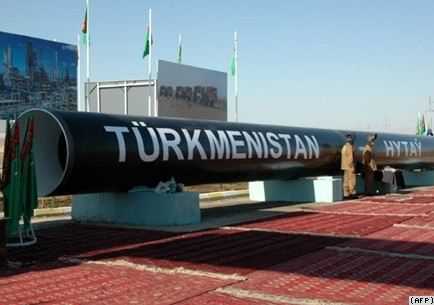
Despite of launching Turkmenistan-China pipeline, expending gas pipeline in Iran, cutting down the volume of gas sales in Russia caused decrease of revenue side of the state budget. In that regard Ashkhabad tries to decrease the budgetary gap, cutting down the expenses for second-term projects, and in some cases putting them on hold at all.
For instance according to one of the employees of “Sekhil”, Turkish company, many of his nationals experience problems with financing in Turkmenistan now. For that reason the project of recreational resort in the resort area Avaza, developed by Sekhil by the order of Turkmenbashy complex of oil refinery plants is at risk.
Some other companies, including Ozaylar and Ichkale experience same problems. Of course the management of Turkish companies is strongly unsatisfied with arrears in payments by Turkmen authorities, for it forces them to carry on the works at their own cost or take credits.
Another indicator of financial difficulties, experienced by Ashkhabad, is borrowing funds from strategic partners. For instance in may of the previous year during his visit to PRC President Berdimukhamedov negotiated a grand from Beijing in the amount of $ 10 Mln.
This amount even though granted on non-repayable basis and without any interest, still has its aim to secure economical preferences and to strengthen PCR’s position on the national market.
Financial difficulties also force Turkmenistan to pay back foreign companies, carrying out important projects in Turkmenistan, by gas supply contracts. For example investments of the Iran Railways into construction of the a section of the railway Kazakhstan-Turkmenistan –Iran is to be repaid by Ashkhabad by supplying liquefied gas for 4 years.
Non-disclosure of information about failures of foreign investors
For foreign business considers the power sector to be the most attractive, it is important to notice, that investment into hydrocarbon field development is not always self-liquidate.
For example in 2002 American ExxonMobil decided to stop works in Turkmenistan and close representative offices in Balkanabad and Ashkhabad. This was due to failed drilling in Garashsyzlyk, one of Turkmenistan’s biggest minefields. American company was operating the «Garashsyzlyk-2» project, the respective production-sharing contract for 25 years was signed in 1998. Low commercial impact of the block forced Americans to cancel the contract halfway in spite of the discontent and pressure of the Turkmenistan party.
It’s also known, that in the beginning of 2000s TPAO, Turkish corporation experienced failure on one of the blocks, it had to scale down its activity and live the country.
Therefore only those foreign companies shall obtain a place in the hot Turkmen sun near gas jets, who are ready to make immense material and moral investments, fight the pressure of the «guardians of law» and to fall on hard times. At the same time they have to be ready to patiently wait for repayments and possibility of inefficient Turkmen field development.