Month: June 2010
-

US: Turkey must show commitment
Photo by: ASSOCIATED PRESS
By ASSOCIATED PRESS 06/26/2010 12:14WASHINGTON — The United States is warning Turkey that it is alienating US supporters and needs to demonstrate its commitment to partnership with the West. The remarks by Philip Gordon, the Obama administration's top diplomat on European affairs, were a rare admonishment of a crucial NATO ally. "We think Turkey remains committed to NATO, Europe and the United States, but that needs to be demonstrated," Gordon told The Associated Press in an interview. "There are people asking questions about it in a way that is new, and that in itself is a bad thing that makes it harder for the United States to support some of the things that Turkey would like to see us support." Gordon cited Turkey's vote against a US-backed United Nations Security Council resolution on new sanctions against Iran and noted Turkish rhetoric after Israel's deadly assault on a Gaza-bound flotilla last month. The Security Council vote came shortly after Turkey and Brazil, to Washington's annoyance, had brokered a nuclear fuel-swap deal with Iran as an effort to delay or avoid new sanctions. Some US lawmakers who have supported Turkey have lashed out and warned of consequences for Ankara since the Security Council vote and the flotilla raid that left eight Turks and one Turkish-American dead. The lawmakers accused Turkey of supporting a flotilla that aimed to undermine Israel's blockade of Gaza and of cozying up to Iran. The raid has led to chilling of ties between Turkey and Israel, countries that have long maintained a strategic alliance in the Middle East. Turkey's ambassador to the United States, Namik Tan, expressed surprise at Gordon's comments. He said Turkey's commitment to NATO remains strong and should not be questioned. "I think this is unfair," he said. Tan said Turkish officials have explained repeatedly to US counterparts that voting against the proposed sanctions was the only credible decision after the Turkish-brokered deal with Iran. Turkey has opposed sanctions as ineffective and damaging to its interests with an important neighbor. It has said that it hopes to maintain channels with Teheran to continue looking for a solution to the standoff over Iran's alleged nuclear arms ambitions. "We couldn't have voted otherwise," Tan said. "We put our own credibility behind this thing." Tan said that Turkish Prime Minister Recep Tayyip Erdogan was expected to discuss these issues with US President Barack Obama on the margins of a summit of world economic powers in Toronto, Canada, on Saturday. Gordon said Turkey's explanations of the UN episode have not been widely understood in Washington. "There is a lot of questioning going on about Turkey's orientation and its ongoing commitment to strategic partnership with the United States," he said. "Turkey, as a NATO ally and a strong partner of the United States, not only didn't abstain but voted no, and I think that Americans haven't understood why." -
The Privileged Slander: Why the Media Laps Up The Anti-Israel Lying Campaign
RubinReports
RubinReports
Honorable journalists and scholars should take note and approach these false stories more skeptically. They should also reexamine their stereotypes and remember that their political views should be kept as much as possible out of their professional work.
Posted: 27 Jun 2010 08:21 AM PDT
Please be subscriber 16,715. Put your email address in the box, upper right-hand of the page.We depend on your contributions. Tax-deductible donation through PayPal or credit card: click Donate button, upper-right hand corner of this page. By check: “American Friends of IDC.” “For GLORIA Center” on memo line. Mail: American Friends of IDC, 116 East 16th St., 11th Floor, NY, NY 10003.
By Barry RubinIsrael is subject daily to scores of false claims and slanders that receive a remarkable amount of credibility in Western media, academic, and intellectual circles even when no proof is offered.
Palestinian groups (including the Gaza and Palestinian Authority regimes), associated local and allied foreign non-government organizations, Western radical and anti-Israel groups, and politically committed journalists are eager to act as propaganda agents making up false stories or transmitting them without serious thought or checking.
Others have simply defined the Palestinians as the “victims” and “underdogs” while Israel is the “villain” and “oppressor.” Yet truth remains truth; academic and journalist standards are supposed to apply.
While regular journalists may ask for an official Israeli reaction to such stories the undermanned government agencies are deluged by hundreds of these stories, and committed to checking out seriously each one. Thus, the Israeli government cannot keep up with the flow of lies.
So the key question is to understand the deliberateness of this anti-Israel propaganda and evaluating the credibility of the sources.
An important aspect of this is to understand that Israel is a decent, democratic country with a free media that is energetic about exploring any alleged wrongdoing and a fair court system that does the same. To demonize Israel into a monstrous, murderous state—which is often done—makes people believe any negative story.
Some of these are big false stories—the alleged killing of Muhammad al-Dura and the supposed Jenin massacre—others are tiny. Some—like the claim Israel was murdering Palestinians to steal their organs– get into the main Western newspapers while others only make it into smaller and non-English ones.
Taken together, this campaign of falsification is creating a big wave not only of anti-Israel sentiment but of antisemitism on a Medieval scale, simply the modern equivalent of claims that the Jews poisoned wells, spread Bubonic Plague, or murdered children to use their blood for Passover matzohs.
Come to think of it even those claims are still in circulation. Indeed, on June 8, the Syrian representative at the UN Human Rights Council (oh, the irony!) claimed in a speech that Israeli children are taught to extoll blood-drinking. No Western delegate attacked the statement.
Here are three actual examples of well-educated Westerners believing such modern legends reported to me recently by colleagues:
–A former classmate, one told me, claimed that the Palestinians are living in death camps, being starved, etc. Asked to provide facts and provided with evidence to the contrary, he could provide no real examples. Finally, he remarked, `The truth is always somewhere in the middle.’”
–Hundreds of American college professors signed a petition claiming that Israel was supposedly about to throw hundreds of thousands of Palestinians out of the West Bank though there was zero evidence of any such intention and, of course, nothing ever happened.
–A British writer of some fame claimed, on the basis of an alleged single conversation with a questionable source, that Israel was preparing gas chambers for the mass murder of Palestinians. When asked if she was really claiming this would happen, she stated that it wasn’t going to happen but only because people like her had sounded the alarm to prevent it.
Here is one example plucked from today’s mail. The Palestinian Authority Health Ministry claimed that Israel was holding up seven oxygen machines intended for the West Bank and the Gaza Strip and paid for by the Norwegian government. It said that a protest was being made to Norway. The story was picked up by several European newspapers. No evidence or specifics—what Israeli agency held them up? What dates? What hospitals were these for?–was provided.
Asked to look into this, an Israeli official did so and pointed out that there were no controls over such imports into the West Bank so there would be no basis for holding up anything. As for the story generally, no applications to import such machines had been filed, there was no record of any such machines arriving, and thus nothing had been held up.
In short, the story is completely false, presuming that the Palestinian Authority health ministry won’t provide documents and specifics. But that isn’t going to happen as it will just be on to the next false story, hoping for a bigger media response.
Having seen so many such stories disproved over the years—as Israel’s credibility, while not perfect, has compared favorably with that of any Western democratic state—one might think a lesson would be learned. But as the great American journalist Eric Severeid remarked many years ago, nothing can protect someone when the media sets out deliberately to misunderstand and report falsely about them.
In addition, they should only repeat, report, or believe stories based on credible identified sources citing specific names, dates, and details. In addition, stories or claims should be internally logical and make sense given known facts. The idea that Israel enjoys killing or injuring Palestinians for fun does not meet that test.
Honorable journalists and scholars should take note and approach these false stories more skeptically. They should also reexamine their stereotypes and remember that their political views should be kept as much as possible out of their professional work.
Not so long ago, the above points would have been taken for granted as the most basic and obvious principles. They need to be relearned.
Barry Rubin is director of the Global Research in International Affairs (GLORIA) Center and editor of the Middle East Review of International Affairs (MERIA) Journal. His latest books are The Israel-Arab Reader (seventh edition), The Long War for Freedom: The Arab Struggle for Democracy in the Middle East (Wiley), and The Truth About Syria (PalgraveMacmillan). His new edited books include Lebanon: Liberation, Conflict and Crisis; Guide to Islamist Movements; Conflict and Insurgency in the Middle East; The West and the Middle East (four volumes); and The Muslim Brotherhood. To read and subscribe to MERIA, GLORIA articles, or to order books. To see or subscribe to his blog, Rubin Reports.
Europe Battles Over Its Future: A Dutch Case Study Posted: 26 Jun 2010 02:39 PM PDT
The following article was published in PajamasMedia here. If you forward or reprint it please give them the link and credit. Please note that they chose a title different from the one I preferred and have put into this text. I include the full article below for your convenience.Please be subscriber 16,708. Put your email address in the box, upper right-hand of the page.
We depend on your contributions. Tax-deductible donation through PayPal or credit card: click Donate button, upper-right hand corner of this page. By check: “American Friends of IDC.” “For GLORIA Center” on memo line. Mail: American Friends of IDC, 116 East 16th St., 11th Floor, NY, NY 10003.
By Barry Rubin
The political situation in Europe today is quite different from the stereotype of a continent hostile to the United States (even if Obama is personally popular) and Israel; appeasement-oriented toward Iran and revolutionary Islamism; and eagerly multicultural and Politically Correct. True, it is more oriented in that direction than North America, but there is a real struggle afoot.
In many countries—notably the Netherlands, Italy, Spain, Germany, and to a slightly lesser extent the United Kingdom and France—the partisan gap between the left and center-right marks a boundary of much greater significance than a decade or two ago. Although each situation is different, the parties of the left tend to be more anti-American and anti-Israel and less alert to the threat of revolutionary Islamism as well as favoring continued large-scale immigration and big-state, big-spending policies.
Take the Netherlands as a case study. After elections last month, the parties of the center-right hold 83 seats while those of the left have 67. Since there are ten parties in parliament, talks to form a coalition government will last for weeks, especially since the two largest have only twenty percent each. In the elections, only three seats changed hands between blocs.
But the big news was the shift within the center-right, the rise of the People’s Party for Freedom (PVV) led by the controversial Geert Wilders, which almost tripled its vote, going from 9 to 24 seats. To his enemies, almost no epithet is too extreme to throw against him. The flamboyant Wilders has been outspoken in opposing immigration and especially that of Muslims, making a sharp critique of political Islamism and sometimes Islam itself.
The power of the Dutch state was turned on Wilders, who is currently on trial for making statements which in America would fall well within Constitutional protection. State television ran documentaries during the election designed to show he was a virtual Nazi.
What is Wilders’ program? First, a sharp limitation on asylum seekers admitted into the country and none from Muslim-majority states. No dual nationality; new mosques; separate Islamic schools; wearing of burqas; or government subsidies for Islamic media. Mosques where violence is propagated will be closed and heavy punishment for female circumcision. For their first ten years in Holland, immigrants receive no social benefits or citizenship. At the end of that period, those with no criminal record will receive full citizenship.
The rise in support for Wilders’ party is in large part a response to serious concern over the domestic situation in the country. Aside from the assassination of a filmmaker by a radical Islamist, there has been a steep increase in crime and social welfare spending. Amsterdam, not long ago the most gay-friendly city in the world, is a place where homosexuals might be attacked in the streets by Muslim immigrant youth, while a recent television program that followed three Jews wearing identifiable garb as such in a stroll around the city showed them being harassed and insulted. Twenty percent of Dutch teachers report that attempts to teach about the Holocaust, in the country of Anne Frank, were rejected or disrupted by immigrant children.
While Muslims still comprise only a bit more than 5 percent of the population, whole areas of Dutch cities have a majority of people who are recent immigrants and whose commitment to assimilation into the country’s norms is questionable. For example, polls show that much of the country’s Muslim population sympathizes with the September 11 attacks. Certainly, they disagree with the Netherlands’ rather libertarian views on women’s rights and homosexuality.
One of the main arguments against mass immigration is that it is incredibly costly to Dutch taxpayers. It is possible to be suspicious of a report commissioned by Wilders showing that the cost is 7.2 billion Euros a year to a country of about 16 million people that means each citizen. But in fact that report was written by the country’s most respected independent think tank and is not that much higher than the government’s own estimate of 6 billion a year.
And here’s where it gets interesting. For while the focus was on Wilders’ VVD, the second biggest winner was the mainstream conservative (in European terminology, liberal) People’s party for Freedom and Democracy (VVD), which went from 22 to 31 seats. The VVD favors lower taxes, smaller government, less government regulation. While Wilders often focuses his criticism on Islam itself, the VVD is quite critical of radical Islamism.
And though the VVD’s positions are less extreme than Wilders, it also favors serious reductions in immigration, the closing of mosques where radical doctrines are preached, and the denial of social welfare payments for immigrants during their first decade in the country. These two parties received one-third of the vote and three Christian parties, from whose voters Wilders and the VVD obtained their increased support have somewhat similar stances.
For instance, here’s what the platform of the Christian Union, the most liberal—in the American sense of that word—of these parties:
”Every Dutchman has the right to assembly, to religion and to express his opinion. But financial support of Dutch political, cultural and religious institutes from demonstrably non-free countries (such as Saudi-Arabia and Iran) is not permitted. It’s allowed to protect a free society from the importation of bondage.” It also supports banning the burqa from public buildings, public transport, and schools.
A similar pattern emerges regarding stances toward Israel. Wilders is an outspoken supporter but the other parties are also sympathetic, though there is an anti-Israel minority in the VVD. The foreign minister, for example, a Christian Democrat, said that Israel was entitled to stop Gaza flotilla ships in international waters, refused to condemn Israel’s actions, and supports tough sanctions on Iran’s nuclear program. While the four non-Wilders center-right parties are more nuanced in their attitude than decades ago, they are certainly not kneejerk anti-Israel in their positions.
Thus, about 55 percent of Dutch voters backed parties that want a real change in key policies.
Why is nothing dramatic likely to happen? Because 45 percent endorsed parties on the left and given the Dutch passion for consensus, the existence of so many parties, and the reluctance of several parties to bring Wilders’ party into government some kind of broad coalition will likely emerge.On the left, the largest party, Labour, led by former Amsterdam mayor Job Cohen, got less than half of the overall vote. It can be described now as the party of the Dutch status quo, that is, continuation of existing policies. Despite being led by a nominal Jew, it is very critical of Israel and totally uncritical of Hamas. The left favors increases in taxes and government regulations.
Outsiders would view this situation of deadlock between two sides with such different visions of Dutch politics and society as a big problem. In contrast, the Dutch believe they thrive on this kind of paradox, finding some compromise to ease them through. Yet can a major crisis be long avoided given the economic and social issues faced by the Netherlands and so many other European states today?
Barry Rubin is director of the Global Research in International Affairs (GLORIA) Center and editor of the Middle East Review of International Affairs (MERIA) Journal. His latest books are The Israel-Arab Reader (seventh edition), The Long War for Freedom: The Arab Struggle for Democracy in the Middle East (Wiley), and The Truth About Syria (PalgraveMacmillan). His new edited books include Lebanon: Liberation, Conflict and Crisis; Guide to Islamist Movements; Conflict and Insurgency in the Middle East; The West and the Middle East (four volumes); and The Muslim Brotherhood. To read and subscribe to MERIA, GLORIA articles, or to order books. To see or subscribe to his blog, Rubin Reports.
-

Turkey’s ’best friend’ in US Senate dead at 92

WASHINGTON – Daily News with wires
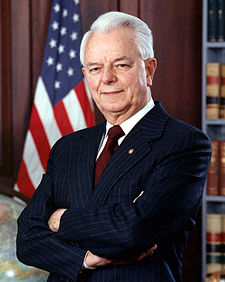
Monday, June 28, 2010Vocal Turkey supporter Sen. Robert Byrd of West Virginia, the longest-serving member of the U.S. Congress, died at the age of 92 after almost six decades in office, U.S. television reported early Monday.
The reports quoted Byrd’s spokesman as saying the senator had died peacefully at approximately 3 a.m. at Inova Fairfax Hospital. No specific cause of death was revealed.
The senator, a Democrat, was admitted to a Washington-area hospital late last week and doctors had described his condition as “seriously ill,” his office said Sunday.
Byrd went to the hospital suffering from what was believed to be heat exhaustion and severe dehydration as a result of the extreme temperatures in Washington, where it reached 37 degrees Celsius over the weekend, his aides said.
Sen. Jay Rockefeller, a fellow West Virginian in the Senate, said it was his “greatest privilege” to serve with Byrd. “I looked up to him, I fought next to him and I am deeply saddened that he is gone,” Rockefeller said.
Armenia filibuster
Byrd had served in Congress since Jan. 3, 1953. In November, he broke the record for congressional service that had been established by Democrat Carl Hayden of Arizona, who served in the House and Senate from 1912 to 1969.
During his long career, Byrd threw his full support behind foreign issues regarding Turkey, leading a successful three-day filibuster in 1990 against a resolution brought by Sen. Bob Dole to recognize Armenian genocide claims.
A filibuster refers to any delaying or obstructive tactics used to prevent a measure from being brought to a vote. The most common form of filibuster occurs when a senator attempts to delay or entirely prevent a vote on a bill by extending the debate on the measure, but other dilatory tactics exist. The rules permit a senator, or a series of senators, to speak for as long as they wish and on any topic they choose, unless “three-fifths of the senators duly chosen and sworn” (usually 60 out of 100 senators) brings debate to a close by invoking cloture.
The Senate refused by a 49-49 vote to break Byrd’s filibuster against Sen. Dole’s resolution.
An enthusiastic supporter of U.S. President Barack Obama’s 2008 White House bid, Byrd had expressed regret for his past membership in the Ku Klux Klan and his participation in the 83-day filibuster to delay the 1964 Civil Rights Act, which outlawed racial segregation. He later apologized for both actions, saying intolerance has no place in America.
Serving first in the House of Representatives and then in the Senate, Byrd is the only person ever elected to nine full Senate terms.
In comportment and style, he often seemed a throwback to the courtly 19th century. He could recite poetry, quote the Bible, discuss the Constitutional Convention and detail the Peloponnesian Wars – and frequently did in Senate debates. Yet there was nothing courtly about his exercise of power.
“Bob is a living encyclopedia, and legislative graveyards are filled with the bones of those who underestimated him,” former House Speaker Jim Wright, a Democrat from Texas, once said in remarks Byrd later displayed in his office.
Democrats’ No. 2
In 1971, Byrd ousted Sen. Edward Kennedy of Massachusetts as the Democrats’ second in command. He was elected majority leader in 1976 and held the post until his party lost control of the Senate four years later. He remained his party’s leader through six years in the minority and then spent another two years as majority leader.
Byrd stepped aside as majority leader in 1989 when Democrats sought a more contemporary spokesman. His consolation prize was the chairmanship of the Appropriations Committee, with control over almost limitless federal spending.
Within two years, he surpassed his five-year goal of making sure more than $1 billion in federal funds was sent back to West Virginia, money used to build highways, bridges, buildings and other facilities, some named after him.
In 2006 vote, Byrd won an unprecedented ninth term in the Senate with 64 percent of the vote, just months after surpassing South Carolinian Strom Thurmond’s record as the congressional body’s longest-serving member.
But Byrd also seemed to slow after the death of Erma, his wife of almost 69 years, in 2006. Frail and wistful, he used two canes to walk and experienced several health scares in recent years, including an extended hospitalization last year that prompted speculation of his looming retirement, which never materialized.
By 2009, aides were bringing him to and from the Senate floor in a wheelchair. In November, he surrendered his chairmanship of the Appropriations Committee.
Byrd’s lodestar was protecting the Constitution; he frequently pulled out a dog-eared copy of it. Unlike other prominent Senate Democrats who voted to authorize the war in Iraq, Byrd stood firm in opposition. “The people are becoming more and more aware that we were hoodwinked, that the leaders of this country misrepresented or exaggerated the necessity for invading Iraq,” he said.
Byrd was an early supporter of the Vietnam War, and his 14-hour, 13-minute filibuster against the 1964 Civil Rights Act remains one of the longest ever. His views gradually moderated, particularly on economic issues. His love of Senate traditions inspired him to write a four-volume history of the chamber.
© 2009 Hurriyet Daily News
URL: www.hurriyetdailynews.com/n.php?n=turkey8217s-8216best-friend8217-in-us-senate-dead-at-92-2010-06-28 -

IQ Test for immigrants
Union Party leaders insist more immigration oversight to Germany and provoke a new Proposal: The domestic policy spokesman for the CDU in Berlin, Peter Trapp, told the Bild newspaper: “We must reach the immigration criteria that define our state in a really useful manner. Criteria must be beyond a good vocational training, competence and the intelligence. I am in favor of intelligence tests for immigrants. This question should not be taboo anymore.
The head of the CSU-Europe Group, Markus Ferber mentioned a single European revision of immigration policy, and referred in this context to the example of Canada: “Canada isas much further and requires a higher immigrant children’s Intelligence quotient than in native children. Humane reasons, such as Family members unification may in time not be the only criterion for immigration. ”
Quick Translation of “Unionspolitiker wollen IQ-Tests für Zuwanderer”
by Erju Ackman -

Siddiqui: Turkish PM sets roadmap for better Israeli relations
By Haroon Siddiqui
Editorial Page
Note: This article has been edited from a previous version.Turkey has not given up its dream of joining the European Union. It
has not become “anti-West.” It does not have any intention of cutting
its longstanding relationship with Israel.That’s what Turkish Prime Minister Recep Tayyip Erdogan told the Star
in an interview yesterday.But he added that relations with Israel will remain strained until
Israel fulfills four conditions:*apologizes for the May 31 commando raid on the Turkish ship that was part of the flotilla taking humanitarian aid to Gaza;
*pays compensation to the families of the nine people killed, eight
Turks and one Turkish-American;*agrees to an international probe, as called for by UN
Secretary-General Ban Ki-moon into the incident (as opposed to an
Israeli inquiry); and*lifts its embargo on the Gaza Strip.
Reminded that Israel has already announced an easing of the embargo,
Erdogan said:“We’ve heard those statements but no steps have been taken. Similar
statements have been made in the past.”He also suggested that Turkey is planning to sue Israel on behalf of
the victims.Erdogan, in Toronto for the G20 summit, was to raise the issue with
Barack Obama at a bilateral meeting last night. He was to augment his
arguments with forensic pictures of and reports on the dead that he is
carrying with him.Turkey, a member of NATO, has long been Israel’s best Muslim ally. But
relations have been strained since the 2008-09 Gaza war, which Erdogan
condemned and reportedly called Israel “the principal threat to peace
in the Middle East.”There was Turkey’s initiative with Brazil for a compromise over the
Iranian nuclear issue, which was rejected by Washington. Turkey voted
against the U.S,-led resolution in the U.N. Security Council on fresh
sanctions on Iran.And following the May 31 incident, Erdogan said that Israel had made
“a historic mistake,” that “Israel risks losing its most important
friend in the region if it does not change its mentality,” and that
“peace and stability will not come to the region as long as the
blockade of Gaza persists.”In the interview yesterday, Erdogan said the Gaza aid flotilla was
organized by non-governmental organizations, was carrying volunteers
from 33 nations, along with humanitarian aid – food, medicine, toys,
construction material, etc.It was attacked “in international waters, 72 miles (….) out of the
territorial waters of Israel. Unfortunately, guns and rifles and
plastic bullets were used.”He said he is familiar with the argument that Israel has a right to
defend itself. “Of course, you can protect your borders against armed
people or against a military enemy, and you can consider such action
in your own national borders.“But you have no right to do that in international waters …
“I interpret this as state terror.”
He said some of the dead had been shot “at close range,” “at point
blank range,” “from the chest up,” “from behind the neck.”If the intent was not to kill, the plastic bullets could have been
fired at below the knee level, he said.When the boats were towed to an Israeli port and the passengers held
in custody, Erdogan said he called Obama, “and thanks to very intense
efforts by the Americans, the people who had been held in prison were
delivered to us within 24 hours.“So I am very grateful to President Obama for his intervention. If it
hadn’t been for this very speedy response on the part of President
Obama, things could have been more problematic.”Erdogan cited United Nations and other reports that Gaza is a
humanitarian disaster, and added that the aid promised at a donors’
conference is yet to be delivered. Destroyed infrastructure remains in
ruins.Is Turkey becoming anti-Israeli?
Not so.
“I want to be very clear. In the Middle East, Turkey is the only
friendly country to Israel, so much so that during the (Ehud) Olmert
government, Turkey helped Israel hold indirect talks with Syria.“We held five rounds, the last one was in my official residence–for
six hours, with Olmert present. We had gotten down to writing words
for some sort of an agreement … That meeting was on a Monday. And we
had decided that we will come back on Friday to complete the work.”That Friday meeting never took place, and on Saturday the “Israeli
bombing of Gaza began.”As that Friday was approaching, the Israelis “weren’t answering our
calls–must have been in preparation of the Gaza bombing. Earlier,
whenever we had called, they’d always call back but this time they
didn’t.”As Turkey pursues closer relations and increased trade with its
neighbours, and is emerging as a strong regional player in the Middle
East, is it turning away from the West?“That would be a very wrong conclusion. Turkey is developing contacts
all over the world. But Turkey has not cut off relations with anyone.
Such a thing is not on the agenda.”How about the European Union – has Turkey given up on it? U.S. Defence
Secretary Robert Gates recently blamed Europe for having “pushed and
pushed” Turkey away. Italian Foreign Minister Franco Frattini agreed, saying, “We Europeans have made a mistake in pushing Turkey eastwards instead of bringing it towards us.”
But Erdogan said Turkey still very much wants to join the EU.“We continue with determination to walk on the European path, despite
the efforts on the part of the European Union to prevent the opening
of some of the chapters that are part of the negotiations process.”[email protected], Jun 27 2010
-

Britain scraps euro preparation plans
Chancellor of the Exchequer George Osborne has scrapped a government unit tasked with preparing for Britain’s hypothetical entry to the eurozone, as he unveiled the government’s first budget.
Osborne reaffirmed his government will not join the eurozone in the next five years and said resources would no longer be wasted on planning for it.
“I can confirm that, as set out in the coalition agreement, this government will not be joining the euro in this parliament,” he said.
“Therefore … I have abolished the Treasury’s euro preparations unit — yes, one does exist — and the official concerned has been redeployed to more productive activities.“
Various Sources, London