Month: March 2010

  • OBAMA WILL AGAIN SPEAK ARMENIAN ON APRIL 24: ARMENIAN EXPERT

    OBAMA WILL AGAIN SPEAK ARMENIAN ON APRIL 24: ARMENIAN EXPERT

    ArmInfo
    2010-03-29 15:01:00

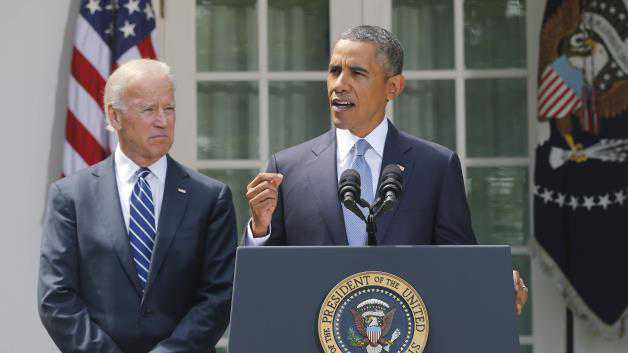
    ArmInfo. US President Barrack Obama is very likely to speak Armenian
    again on April 24 in his traditional speech to the Armenian Diaspora
    on Day of Commemoration of the Armenian Genocide, Ruben Melkonyan,
    turkologist, told media.

    “I think that Obama will voice the term “Mets Yeghern” again. However,
    there is significant difference between the terms “Mets Yeghern” and
    “Genocide”. Unlike the first term, the second one has a juridical
    force. Mets Yeghern has no legal force and is not used in the
    international legal terminology, though both term are of the same
    meaning for Armenians,” he said.

    Genocide of Armenians has been recognized by 44 United States as
    well as by 21 countries, including Canada, Argentina Switzerland,
    Uruguay, Russia, France, Poland, Slovakia, the Netherlands, Greece,
    Vatican, Sweden, Lithuania. The European Parliament passed a resolution
    recognizing the fact of Armenian Genocide in the Ottoman Turkey on
    June 18 1987 and demanded the Council of Europe to exert pressure on
    Turkey in order that country recognizes the Armenian Genocide. Turkey
    still denies the genocide of 1,5 million Armenians in 1915-1923.

  • Desperate Turkish Tactics to Woo  Diaspora on the Eve of April 24

    Desperate Turkish Tactics to Woo Diaspora on the Eve of April 24

    [[email protected]]

    The Turkish government has been receiving a succession of bad news in recent weeks. Its persistent policy of denial of the Armenian Genocide suffered serious setbacks when the Foreign Affairs Committee of the U.S. House of Representatives, the Swedish Parliament, and Catalonia’s regional Parliament in Spain adopted resolutions acknowledging the Armenian Genocide.

    Turkish denialists are terrified by these official acknowledgments on the eve of the 95th anniversary of the Armenian Genocide. They are even more alarmed by the fact that the Parliaments of Bulgaria, Israel, Serbia, Spain, and Great Britain are about to consider similar resolutions in April.

    The Turkish leadership was under the mistaken impression that the Protocols signed with Armenia six months ago would end any further action on the Armenian Genocide by the international community. In fact, Turkey had viewed these Protocols as a last ditch effort to stem the tide of such acknowledgments in the future. Its devious strategy almost worked, as the genocide resolutions in both Spain and the U.S. Congress were adopted by a mere one vote majority. The opponents of these resolutions specifically cited the “reconciliation” between Armenia and Turkey as their reason for voting against them.

    Alarmed by these developments, and distracted by serious internal problems, the Turkish government has initiated, perhaps a little too late, a series of actions, hoping to prevent further defeats on the Armenian Genocide issue.

    These actions range from using harsh, bullying tactics against countries that dare to acknowledge the Armenian Genocide, and a soft approach to mislead the international community into thinking that the Turkish government is being more accommodating towards Armenians.

    Among the Turkish bullying tactics against countries acknowledging the genocide are:

    — Recalling its ambassador;

    — Canceling military contracts; and

    — Boycotting the purchase of consumer goods.

    Last week, Turkish officials added a new twist, threatening to sue the more than 20 countries that have already acknowledged the Armenian Genocide. This is one of the many bluffs Turkish leaders use from time to time to discourage additional countries from acknowledging the Genocide. I truly hope that Turkey would carry out this threat, as it would create worldwide publicity for the mass crimes committed against Armenians. Any fair-minded non-Turkish court would immediately dismiss such a frivolous lawsuit!

    Turkey’s more clever tactics, using soft gloves at the advice of western public relations agents, include:

    — Renovating a couple of historic Armenian churches, while thousands of others are converted to mosques, stables, residences or simply ruined.

    — The “gracious” gesture of allowing religious services to be performed once a year for a limited number of people and limited duration to be determined by Turkish authorities, at the 10th century Holy Cross Armenian Church at Akhtamar Island, on Lake Van. This world famous house of worship is officially designated as a touristic site, not a church!

    — Reviewing the possibility of lifting the ban on children of refugees from Armenia to attend private Armenian schools in Istanbul.

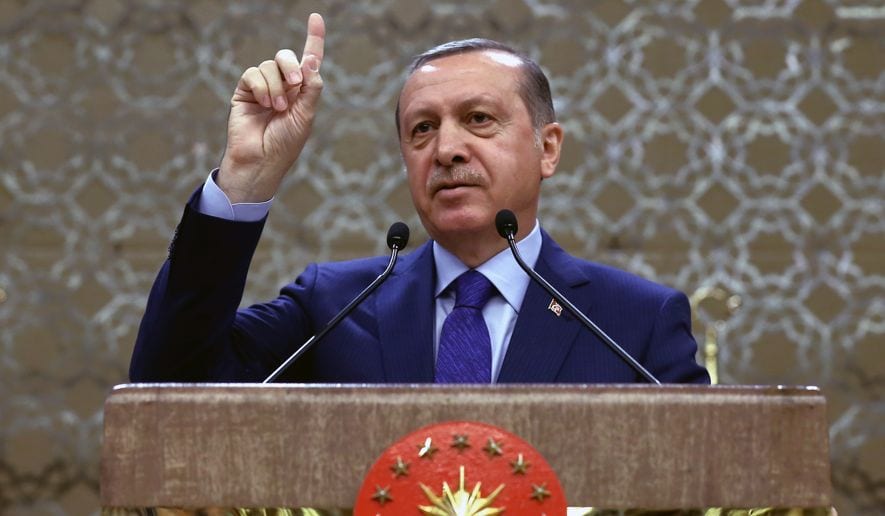
    — A “show” meeting held last week between Prime Minister Erdogan and the head of Istanbul’s Sourp Prgich Armenian hospital, who was wrongly named as the leader of Turkey’s Armenian community. This meeting was more akin to a slave being summoned by his master. Afterwards, Bedros Shirinoglu dutifully told the Turkish media that “1915” was nothing more than a feud between two loving friends, instigated by third parties! He said that his grandfather was among the victims, but so were many Turks! Shirinoglu blamed himself and asked for Erdogan’s forgiveness for the latter’s threat to deport 100,000 Armenian refugees, saying that the inflated figure was his own fault, not the Prime Minister’s.

    — Finally, Foreign Minister Davutoglu came up last week with a new ploy to divide the Armenian Diaspora, after having limited success in his attempt to split the Diaspora from Armenia with the Protocols. Davutoglu announced that the Turkish authorities will initiate “dialog” with “reasonable Diaspora Armenians,” meaning Armenians who do not mind selling out the Armenian Cause for their own ego and personal gain. The Turkish Foreign Minister stated that contacts will be established with Armenian “intellectuals, universities, and civil societies.”

    Clearly, Turkish officials are resorting to all possible means, including the continued exloitation of the defunct Protocols, to discourage additional countries from acknowledging the Armenian Genocide.

    Armenia and the Diaspora must remain vigilant and united, especially in the weeks leading up to the 95th anniversary of the Armenian Genocide, in order not to fall victim to Turkish machinations, inducements and entrapments.

  • MP: Israel’s tentacles will steal the election

    MP: Israel’s tentacles will steal the election

    Pro-Palestinian politician gives ‘election warning’

    By Martin Bright and Robyn Rosen, March 29, 2010

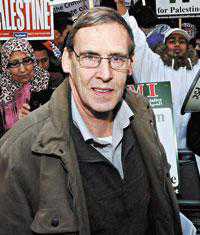
    Martin Linton, chair of Labour Friends of Palestine

    The election campaign took a distinctly unpleasant turn last week as pro-Palestinian MPs suggested the “Israel lobby” would play a behind-the-scenes role in key constituencies.

    Martin Linton, chair of Labour Friends of Palestine, told a meeting at the House of Commons held by the Palestine Solidarity

    Campaign and Friends of al-Aqsa: “There are long tentacles of Israel in this country who are funding election campaigns and putting money into the British political system for their own ends.

    “You must consider over the next few weeks, when you make decisions about how you vote and how you advise constituents to vote, you must make them aware of the attempt by Israelis and by pro-Israelis to influence the election.”

    Mr Linton sits on a tiny 163-vote majority in the London seat of Battersea and is unlikely to survive the election.

    The veteran Jewish anti-Zionist MP Sir Gerald Kaufman suggested wealthy members of the community would play a role similar to that of Tory “non-dom” peer Michael Ashcroft. “Just as Lord Ashcroft owns most of the Conservative Party, right-wing Jewish millionaires own the rest,” he said.

    Community Security Trust spokesman Mark Gardner said: “Anybody who understands antisemitism will recognise just how ugly and objectionable these quotes are, with their imagery of Jewish control and money power. Ask the average voter who had made these comments, and they would most likely answer that it was the BNP, not a pair of Labour MPs.”

    A main concern for the Jewish community will be the threat of the BNP.

    The two key target constituencies for the BNP are Barking, where the party’s leader Nick Griffin will stand against Jewish culture minister Margaret Hodge, and East Renfrewshire in Glasgow, where the Scottish BNP leader Gary Raikes will take on Secretary of State for Scotland, Jim Murphy. East Renfrewshire contains Scotland’s largest Jewish community.

    Where the BNP is strongest, in parts of the north of England and in east London, the Jewish vote itself will make little difference. However, there are a handful of marginal constituencies where the size of the Jewish communities could make all the difference.

    It is very unlikely that Labour can hold on to Margaret Thatcher’s old seat of Finchley and Golders Green, where the incumbent Rudi Vis is standing down and Tory leader of Barnet Council Mike Freer is confident of victory.

    In neighbouring Hendon, Andrew Dismore has been a consistent champion of the concerns of the local Jewish community. But after a series of allegations about his expenses, he faces a tough fight with the Tories’ Matthew Offord and Matthew Harris, secretary of Lib Dem Friends of Israel.

    One of the most intriguing battles will be for the Bury South seat of Middle East minister Ivan Lewis, a former chair of Manchester Jewish Federation. Although Mr Lewis sits on a substantial majority, he faces a formidable opponent in Michelle Wiseman, Chief Executive of Manchester Jewish Care.

    , March 29, 2010

  • Bad things happen when empires fall apart

    Bad things happen when empires fall apart

    Harking back to Armenia in 1915 will only drive modern Turkey into China’s arms

    Norman Stone

    The Times

    March 8, 2010

    The best thing said about the Armenian tragedy was a sermon delivered in the main church in Constantinople in 1894, more than 20 years before it happened. Patriarch Ashikyan had this to say: “We have lived with the Turks for a thousand years, have greatly flourished, are nowhere in this empire in a majority of the population. If the nationalists go on like this [they had started a terrorist campaign] they will ruin the nation.”

    That Patriarch was quite right, and the nationalists shot him (and many other notables who were saying the same thing).

    Now a US Congressional committee has had its say, by voting to recognise as “genocide” the mass killing of Armenians by Turkish forces that began in 1915, during the First World War.

    Is the committee right? When the First World War broke out there were Armenian uprisings and the Patriarch’s fears were realised. The population in much of the territory of today’s Turkey was deported in cruel circumstances that led to much murder and pillage.

    But genocide? No, if by that you mean the sort of thing Hitler did. The Armenian leader was offered a job in the government in October 1914 to sort things out (he refused on the ground that his Turkish was not up to it). The Turks themselves put 1,600 men on trial for what had happened and executed a governor. The British had the run of the Turkish archives for four years after 1918 and failed to find incriminating documents. Armenians in the main cities were not touched. Documents did indeed turn up in 1920, but they turned out to be preposterous forgeries, written on the stationery of a French school.

    You cannot really describe this as genocide. Horrors, of course, happened but these same horrors were visited upon millions of Muslims (and Jews) as the Ottoman Empire receded in the Caucasus and the Balkans. Half of its urban population came from those regions and, in many cases, the disasters of their families occurred at Armenian hands.

    Diasporas jump up and down in the politics of the United States — as an American friend says of them, when they cross the Atlantic, they do not change country, they change planet.

    Braveheart is, for the Scottish me, a dreadful embarrassment. I have to explain to Kurdish taxi drivers that the whole film is wicked tosh that just causes idiots in Edinburgh to paint their faces and to hate the English, whereas there cannot be a single family in Scotland that does not have cousins in England.

    But what will be the effect of the resolution in Turkey? The answer is that it will be entirely counterproductive. Yes, the end of the Ottoman Empire was a terrible time, as the end of empires generally are: take the Punjab in 1947, for instance.

    Disease, starvation and massacre carried off a third of the population of eastern Turkey, regardless of their origin. But of all the states that succeeded the Ottoman Empire, Turkey is by far the most successful; you just have to look at its vital statistics to see as much, starting with male life expectancy which not so long ago was a decade longer than Russia’s.

    Turkey is in the unusual position of doing rather well. She has survived the financial mess, her banks having had a drubbing some years before, and exports are humming. The Turks are not quite used to this, and this shows with the present Government, which (as the Prime Minister’s unfortunate anti-Israeli outburst at Davos a year ago showed) can on occasion be triumphalist.

    This Government has been remarkably successful, not least in getting rid of the preposterous currency inflation that made tourists laugh, but it should not be allowed to forget the bases of Turkey’s emergence: the strength of the Western connection, the link with the IMF, the presence in the West of tens of thousands of Turkish students, many of them very able.

    However, every Turk knows that, during the First World War, horrible things happened, and for Congress to single out the Armenians is regarded in Turkey simply as an insult.

    The Turkish media is full of tales about the resolution, and there has been a great deal of dark muttering about it. There are Turks who agree that the killings amounted to genocide, and there has been an uncomfortable book, Fuat Dundar’s The Code of Modern Turkey, as some of the government at the time did indeed think of ethnic homogeneity (though not the killing of children).

    But the dominant tone is more or less of contempt: who are these people, to orate about events a century ago in a country that most of them could not find on the map? It all joins with resentment at US doings in Iraq, and in the popular mind gets confused with the Swiss vote against minarets or Europe’s ridiculous admission of Greek Cyprus to their Union.

    In practice the Turks are being alienated, and will be encouraged to think that the West is doing another version of the Crusades, that “the only friend of the Turk is the Turk”, and other nationalist nonsense of a similar sort. Nowadays Turkey does not need the Western link as before: trade and investment have been switching towards Russia and Central Asia; the Chinese are quite active in Ankara. Is that what we want to achieve, in a country that is otherwise the best advertisement for the West that anyone could have imagined back in 1950?

    Norman Stone is Professor Emeritus of Modern History at the University of Oxford and head of the Russian-Turkish Institute at Bilkent University, Ankara

    ============================================================

    Norman Stone

    Vikipedi, özgür ansiklopedi

    Git ve: kullan, ara

    Prof. Dr. Norman Stone (d. 1941 Glasgow, İskoçya) Yakınçağ’da Orta ve Doğu Avrupa tarihi konularında uzman İskoç tarihçidir.

    Babasının savaşta ölmesi üzerine Glasgow Academy’ye burslu olarak kabul edildi.[1] 1959-1962 yılları arasında Cambridge’de okuyan Stone, master çalışlmasını 1962-65 yıllarında Viyana ve Budapeşte’de, Orta Avrupa Tarihi üzerine yaptı. 1965’ten itibaren Cambridge’de Rus ve Alman Tarihi okutmanlık yaptıktan sonra Trinity College’de çalıştı. 1984’te Oxford’da Modern Tarih profesörü oldu. 1984-1997 yılları arasıda Oxford Üniversitesi’nde yakınçağ tarihi konusunda profesör olarak ders verdi. Daha sonra Bilkent Üniversitesi’nde görev yaptı. Hala Bilkent Üniversitesi’nde göreve devam etmektedir.

    Norman Stone’un Wolfson Ödülü’ne layık görülen The Eastern Front 1914-1917 (1975) dışınndaki eserleri: “Hitler” (1980), “Europe Transformed 1878-1919” (1983) ve “The Atlantic Revival 1970-1990” sayılabilir. Norman Stone’un bilimsel çalışmalarının odak noktasını, geçmiş ve günümüzdeki Rus-Türk ilişkileri oluşturmaktadır.

    1985’e kadar Britanya basınında sürekli yorumlarda bulundu. Aynı zamanda Frankfurter Allgemeine Zeitung ve The Wall Street Journal gazetelerinde yazdı. 1987-1992 yılları arasında The Sunday Times gazetesinde düzenli köşe yazarı olarak makaleler yazdı. 1987-1990 yılları arasında İngiltere Başbakanı Margaret Thatcher’a dış politika danışmanlığı yaptı.

    Norman Stone; Almanca, Rusça, Macarca, Lehçe, Fransızca ve Türkçe biliyor. Stone,[2] yaşamını Türkiye ile İngiltere arasında geçirmektedir.

    Yayımlanmış eserleri

    • The Eastern Front, 1914-1917 (1975), ISBN 0-340-12874-7
    • Hitler (1980), ISBN 0-340-24980-3
    • Europe Transformed, 1878-1919 (1983), ISBN 0-00-634262-0; 2nd ed. (1999), ISBN 0-631-21507-7
    • Czechoslovakia: Crossroads and Crises, 1918-88 (1989), ISBN 0-333-48507-6
    • The Times Atlas of World History (1989), ISBN 0-7230-0304-1 (ed.)
    • The Other Russia (1990), ISBN 0-571-13574-9, Michael Glenny ile
    • World War One: A Short History (2007), ISBN: 1846140137 Allan Lane

    Referanslar

    1. ^ Millard, Rosie (5 August 2007) Britain’s a terrible bore, that’s why I left, The Times.
    2. ^ Turkish delights, The Times.

    Dış bağlantılar

    • Russia – Getting Too Strong for Germany
  • A NIGHT TIME STORY FROM CALGARY , CANADA

    A NIGHT TIME STORY FROM CALGARY , CANADA

    Armenians: the true story
    Calgary Herald, Canada
    March 28 2010
    By Eduardo Kalaydjian, Calgary Herald March 28, 2010 Re: “It was
    chaos, but not genocide,” Letter, March 23.

    The Armenian genocide is recognized by numerous historians and
    academics, such as the International Association of Genocide Scholars.
    Deniers depend on a handful of historians funded by the Turkish
    government and their interest groups. Historians in Turkey deny the
    genocide for fear of being imprisoned for breaking Turkish law 301
    (Insulting Turkishness)

    .

    Taner Akcam, a Turkish historian, left Turkey in fear of his life for
    claiming there was a genocide. Deniers state the Armenians had to be
    deported because they posed a threat. However, most deported Armenians
    were infants, children, women and old men.

    It is hard to fathom that the Ottoman Empire’s army would feel
    threatened by these people. What country forces its weakest citizens
    to march for hundreds of miles into the desert without food or water
    unless there is an intent to exterminate them?

    Armenian orphans placed in Ottoman orphanages were converted to Islam,
    prevented from speaking Armenian and given Turkish names. Most
    Armenians today are unable to provide you with a family tree beyond
    the genocide of 1915.

    The Armenian-Turkish Protocols and Armenian rapprochement will not be
    harmed by the acceptance of the genocide. Acceptance will bring both
    countries closer and allow them to move forward. Most Armenians want
    acknowledgment of the genocide to come from the Turkish government,
    for that is who is trying to rewrite history and hide behind denial.

    Eduardo Kalaydjian, Calgary
    Director of the Armenian Apostolic Church of Calgary

  • GREEK Churches Slam Israel’s Policy in Jerusalem

    GREEK Churches Slam Israel’s Policy in Jerusalem

    Holy Land Churches Slam Israel’s Policy in Jerusalem

    WAFA – Palestine News Agency
    March 27 2010

    Date : 27/3/2010 Time : 19:44

    JERUSALEM, March 27, 2010 (WAFA)- In a press conference organized in
    Jerusalem this morning by The National Christian Coalition in the Holy
    Land, Representatives of the Greek Orthodox Patriarchate, Latin
    Patriarchate, Armenian Patriarchate, Episcopal Church slammed Israel’s
    policies in Occupied East Jerusalem.

    President of the National Christian Coalition in the Holy Land,
    Dimitri Diliani, assured local Christian popular support of the
    Churches’ position rejecting Israeli unilateral colonial settlement
    building in the Palestinian Territory Occupied in 1967, especially in
    Jerusalem, in addition to the churches condemnation of violations
    committed by the State of Israel against the Palestinian People’s
    national, religious and cultural rights.

    `As we approach Easter Holidays,’ Diliani added, `Israeli
    discrimination appears clearly when we compare the treatment of Jews
    celebrating Passover on one hand, and Christians celebrating Easter on
    the other.’

    Diliani said, `if what Israel practices against Christians is
    practiced anywhere in the world against Jews, that place would be
    boycotted by the International community at once.’ He wondered, ‘Are
    the Holy Land Christians less worthy than other human beings around
    the world?’

    Bishop Aris Shirverian of the Armenian Patriarchate expressed his
    church’s dismay at Israeli policies in Jerusalem, especially during
    the holidays where thousands of pilgrims are prohibited from visiting
    the Church of Holy Sepulcher.

    Father Dr. Peter Madrous of Latin Patriarchate assured that one who
    plants injustice will harvest animosity ‘and that is the reason for
    the Israeli paranoia, Israel has planted injustice for years’. Father
    Madrous stated that Palestinian Christians are peaceful people who
    have the right to practice their religion without Israeli armed
    interference.

    Rev. Zahi Nasser of the Episcopal Church criticized Israeli claims to
    Democracy given reality on the ground. He said that Israeli building
    an Apartheid Wall and violating Palestinian people’s rights directly
    contradict its claims to being a Democracy. Rev. Nasser said that
    Jerusalem is suffering just like Jesus suffered at the hands of his
    capturers.

    Father Issa Misleh, Spokesman for the Greek Orthodox Patriarchate,
    said that his church attempted to negotiate with the Israeli security
    forces over the arrangements for the Holy Week, he added that these
    negotiations faced major inflexibility by Israeli officials who
    insisted on imposing their view of what should be taking place on our
    holiday. Father Misleh rejected the Israelis excuse of security
    saying that all throughout history Christians were not prohibited from
    entering the same facilities under the same circumstances until Israel
    decided that it should down play any Christian character of the holy
    city of Jerusalem. He said that Christian and Muslim Palestinians
    suffer from the same Israeli policies.