Month: September 2009

  • THESE OUTRAGES

    THESE OUTRAGES

    Behold Turkey! The land where the innocent go to jail and the criminals go to parliament. A land wracked by poverty and unemployment, a land whose young people seethe with hopelessness. A land ransacked, divided, destroyed by craven politicians who have pandered to American interests for generations. A nation represented by mannerless embarrassments boundless in their oblivion. Behold all this and weep. Then ask…
    WHY DO WE GENUINE OWNERS OF ATATÜRK’S NATION ACCEPT THESE OUTRAGES?   

    Mustafa Kemal Atatürk

    Cem Ryan, Ph.D. Istanbul, Turkey
  • Turkey will never betray Azerbaijan: Turkish PM

    Turkey will never betray Azerbaijan: Turkish PM

    Turkish Prime Minister Recep Tayyip Erdogan spoke with Trend News in an exclusive interview.

    Trend News: According to the western media reports, Turkey is getting prepared to rebuild diplomatic ties and open borders with Armenia. There is an opinion that if this happens, an important for Baku factor in negotiations over Nagorno-Karabakh conflict will disappear. Does Turkey take this into consideration?

    Recep Tayyip Erdogan: Azerbaijan’s interests are always important for Turkey. We will never betray Azerbaijan. As a head of Turkish government I would like to speak particularly on one issue. In order to rebuild relations with Armenia we expressed our will. The normalization talks between Turkey and Armenia have entered a sensitive phase. The protocols guiding the establishment and development of relations between our countries will be sent to the Turkish Parliament next month for ratification.

    We have reached an important stage with the step we have taken with Switzerland’s mediation and I believe we can send the initialed document to Parliament if we do not face any prejudice and if steps are not taken by thinking just about the internal politics.

    But especially I would like to explain that: Our efforts are not against our brother Azerbaijan. We will not agree on anything what is against the interest of Azerbaijan. We can approach the agreement but it definitely depends on the Nagorno-Karabakh conflict settlement.

    Q: Media reports claim Turkey and Armenia will sign a landmark deal to establish diplomatic ties on October 10. Can you confirm that?

    A: The foreign ministers will come together on October 10, or October 11 and sign the draft document. Foreign ministers Ahmet Davutoglu and Eduard Nalbandian will ink two protocols, the texts of which had been agreed earlier and internationally hailed as a major breakthrough.

    Q: You met on Friday with US President Barack Obama, on the sidelines of the G 20 summit in Pittsburgh. According to some reports Nagorno-Karabakh was discussed at this meeting. Can you give any more details on that meeting?

    A: We discussed problems in the Middle East and Turkey, as well as relations among Turkey, Azerbaijan and Armenia, with Mr. Obama stressing the importance of improved our ties for the region as a whole. I think it would be easier if the OSCE’s Minsk Group – tasked to find a solution to the dispute between Armenia and Azerbaijan over the enclave of Nagorno-Karabakh – took more active measures. The time already has come. The United States as the co-chair of MG must follow its duties. This problem must be solved. I told Mr. Obama that if it is solved that it will turn on the green lights for regional cooperation, including our relationship with Armenia. There was need for dialogue that would bring together regional countries, referring to Turkey’s proposal of a stability and cooperation platform in the Caucasus. Turkey aimed to make the region a basin of peace and wanted to solve Azerbaijan-Armenia, Turkey-Armenia and Russia-Georgia problems through this platform.

    Q: As to regional cooperation, what are your estimations about Nabucco pipeline project, in which Turkey is also participating?
    A: We already past part of the way for this project. Recently we signed a contract with a number of European countries. As part of my trip to New York I also met with the president of Turkmenistan. To realize this project all the participants should show particularly efforts.

    http://www.today.az/news/politics/55962.html

  • AMERICANS: Good old reminders

    AMERICANS: Good old reminders


    At a time when our president and other politicians tend to apologize for our country`s prior actions, here`s a refresher on how some of our former patriots handled negative comments about our country.

    These are good

    JFK’S Secretary of State, Dean Rusk, was in France in the early 60’s when DeGaule decided to pull out of NATO.  DeGaule said he wanted all US military out of France as soon as possible.

    Rusk responded “does that include those who are buried here?

    DeGaule did not respond.

    You could have heard a pin drop

    When in England , at a fairly large conference, Colin Powell was asked by the Archbishop of Canterbury if our plans for Iraq were just an example of empire building by George Bush.

    He answered by saying, ‘Over the years, the United States has sent many of its fine young men and women into great peril to fight for freedom beyond our borders.  The only amount of land we have ever asked for in return is enough to bury those that did not return.’

    You could have heard a pin drop.

    ~~~~~~~~~~~~~~~~~~~~~~~~~~~~~~~~~~

    There was a conference in France where a number of international engineers were taking part, including French and American.  During a break, one of the French engineers came back into the room saying ‘Have you heard the latest dumb stunt Bush has done? He has sent an aircraft carrier to Indonesia to help the tsunami victims.  What does he intended to do, bomb them?’

    A Boeing engineer stood up and replied quietly: ‘Our carriers have three hospitals on board that can treat several hundred people; they are nuclear powered and can supply emergency  electrical power to shore facilities; they have three  cafeterias with the capacity to feed 3,000 people three meals a day, they can produce several thousand gallons of fresh water from sea water each day, and they carry half a dozen helicopters for use in transporting victims and injured to and from their flight deck.  We have eleven such ships; how many does France have?’

    You could have heard a pin drop.

    ~~~~~~~~~~~~~~

    A U.S. Navy Admiral was attending a naval conference that included Admirals from the U.S. , English, Canadian, Australian and French Navies. At a cocktail reception, he found himself standing with a large group of Officers that included personnel from most of those countries. Everyone was chatting away in English as they sipped their drinks but a French admiral suddenly complained that, whereas Europeans learn many languages, Americans learn only English. He then asked, ‘Why is it that we always have to speak English in these conferences rather than speaking French?’

    Without hesitating, the American Admiral replied, ‘Maybe it’s because the Brit’s, Canadians, Aussie’s and Americans arranged it so you wouldn’t have to speak German.’

    You could have heard a pin drop.

    ~~~~~~~~~~~~~~~~~~~~~~~~~~~~~~~~~~

    AND THIS STORY FITS RIGHT IN WITH THE ABOVE…

    Robert Whiting, an elderly gentleman of 83, arrived in Paris by plane. At French Customs, he took a few minutes to locate his passport in his carry on.

    “You have been to France before, monsieur?” the customs officer asked  sarcastically.

    Mr. Whiting admitted that he had been to France previously.

    “Then you should know enough to have your passport ready.”

    The American said, ‘The last time I was here, I didn’t have to show it.”

    “Impossible. Americans always have to show your passports on arrival in France !”

    The American senior gave the Frenchman a long hard  look.  Then he quietly explained, ”Well, when I came ashore at Omaha Beach on D-Day in 1944 to help liberate this country, I couldn’t find a single Frenchmen to show a passport to.”

    You could have heard a pin drop.

    ~~~~~~~~~~~~~~~~~~~~~~~~~~~~

    If you are proud to be an American, pass this on! If not, delete it.

    I am proud to be of this land, AMERICA

  • Don’t Israel’s nuclear weapons count?

    Don’t Israel’s nuclear weapons count?

    yasmin_alibhai_brownYasmin Alibhai-Brown: Don’t Israel’s nuclear weapons count?

    Netanyahu has what he wants to keep up the idea of his plucky, vulnerable little state

    Influential Europeans – including many Muslims – recently debated freedom of expression with the Danish editor who commissioned the cartoons of Prophet Mohammed which led to riots. Held in Berlin, it was a good, at times blazing, debate.

    Freedom of expression, we were given to understand, is one of the valves in Europe’s heart that must remain open to keep our continent alive and healthy. In good faith I exercise that freedom in this column. Let us see if readers and interest groups will support my right to write what follows even if they violently disagree with my observations.

    From past experience I bet many will find that impossibly hard. They will denounce me as an enemy within, a rule-breaker of unspoken rules, bringing up stuff that must be left buried in the name of peace and justice. I see no reason to comply. This week shows us how such doublethink and doublespeak pulls the world towards Armageddon.

    Leaders of the rich nations have turned their fire on Iran, quite rightly. On Friday came news that the Islamic Republic had been building a secret uranium enrichment plant near Qom. Then the junta fired test missiles, to prove that the bearded ones have really big willies. Unlike Iraq under Saddam, there are, in Iran, nuclear developments that could lead to weapons of mass destruction. It is not an immediate but a future danger, say credible intelligence experts and indeed Barack Obama himself.

    Suddenly the president has got uncharacteristically belligerent, instructing Iran to open up all its nuclear facilities for inspection if it wants to avoid “a path that is going to lead us to confrontation”. In May, Obama stood in Washington with the hawkish Benjamin Netanyahu, who we were told was there to seek assurances that there would be no shift from the conventional US position of total and unconditional support for Israel’s policies right or wrong, known and clandestine.

    On Thursday the US, China, Britain, France, Russia and Germany meet in Geneva and, by that time, Iran will be expected to submit to international scrutiny. As a supporter of the now crushed and broken reformers in Iran, I back the ultimatum to the fanatic and bellicose Iranian President, Mahmoud Ahmadinejad. But what about that camel in the room? The one we all see but can’t point out? What about the only power in the Middle East, also fanatic and aggressive, which has a vast stockpile of weapons enough to obliterate the region? Listen people, we need to talk about Israel. And soon. Like now.

    I have been in contact with a young Iranian woman who wore a green scarf and lipstick on the streets of Tehran, whose uncle is currently being tortured in prison there for demonstrating against the results of the election. Somehow she escaped from the country and is in Britain briefly before going on to the US to make a new life. Let us call her M.

    Nobody could hate Ahmadinejad more than M; she hates the whole regime, the treacherous leaders who betrayed the people. When she speaks she often gets asthmatic. But yet, but yet, she finds her passions rising for her country this week because of fears of military strikes by Israel and the manifestly unfair way that Israel is indulged. “I will go back if they attack my country, even if they put me to jail,” M says. “That is my duty. Israel is the enemy of peace and America gives them money to get more arms. I don’t want Iran to have these terrible weapons, but Israel must also be stopped.”

    The big powers are moving tentatively towards global de-nuclearisation, taking small but significant steps to show they do want everyone to pitch in. Obama’s decision to shelve the European defence missile programme shows serious intent, so too Gordon Brown’s announcement that Britain would cut down from four to three its Trident missile-carrying submarines. There was a moment this spring, albeit fleeting, when Rose Gottemoeller, an assistant secretary of state and Washington’s chief nuclear arms negotiator, asked Israel to sign the Nuclear Non-Proliferation Treaty, thus breaking the 40-year-old silence and US complicity in its accumulated, un-inspected arsenal. Her reasonable appeal provoked apoplexy in a nation that assumes special, indeed exceptional, treatment.

    In the 1960s, Israel successfully hid its weapons from US inspectors. In 1986, Israeli nuclear technical assistant Mordechai Vanunu revealed information about the concealed stockpiles and has been punished ever since. Hubristic Israel no longer cares to deny that it has hundreds of atom and hydrogen bombs and devastating biological “tools”. Netanyahu has been warning he will destroy the Iranian sites if his country feels the danger is real. Now he has just what he wanted – another crisis in the Middle East, to keep up the idea of plucky, vulnerable, endangered little Israel.

    Alarmingly, even the liberal Israeli newspaper Ha’aretz is on side. History has made too many Israelis fear all humanity in perpetuity and that fear brings out the worst in that nation. It has predictably rejected the long, sober, unbiased UN report on the last assault on Gaza chaired by Richard Goldstone. He accused Hamas of crimes against Jewish civilians and charged Israel with grave crimes, the breaking of the Geneva convention, punishing and terrorising unarmed civilians.

    I have some images of these victims sent to me by a Jewish pro-Palestinian activist. Children turned to ash, blistered mothers weeping, and on and on. There still is no respite for the hungry and dying in Gaza. If Israel can mete out such treatment and not be called to account, just think what the state feels entitled to do to Iran.

    The Israeli human rights activist Gideon Spiro bravely asks that his country be subject to the same rules as Iran and all others in the Middle East: “Rein in Israel, compel it to accept a regime of nuclear disarmament and oblige it to open all nuclear, biological and chemical facilities and missile sites to international inspection.” The US has leverage because it maintains and funds Israel. If Obama shies away from this, there can be no moral justification to go for Iran or North Korea or any other rogue state. And the leader whose election and dreams gave hope to millions thereby hastens the end of the world.

    [email protected]

    Source:  www.independent.co.uk, 28 September 2009
  • Turkey’s ‘Henry Kissinger’

    Turkey’s ‘Henry Kissinger’

    By Sami Moubayed, Special to Gulf News

    The historian inside me sometimes muscles down the analyst, and I tend to view political players as how history will judge them 10, 20 and 50 years from today.

    Many politicians in today’s world might get front page coverage in daily newspapers, but will receive no more than passing mention in history books either because of no legacy, lack of charisma or minimal achievements when judged by a historian’s yardstick.

    Nobody in the Palestinian Territories, for example, measures up to Yasser Arafat or George Habash. There are no Jamal Abdul Nassers in today’s world, no Anwar Sadats, no King Hussains, no Khomeinis, and even no Ariel Sharons.

    Barack Obama is an exception to the rule and so is Hezbollah chief Hassan Nasrallah – who, whether we love or hate them – have already marched into their nations’ history books, earning the status of living legends. Recep Tayyip Erdogan is another exception, and probably so is newly appointed Foreign Minister Ahmet Davutoglu.

    For years the professor turned politician served as the political mind behind Erdogan’s foreign policy, which he describes as ‘soft power,’ towards the Middle East, Europe, the Balkans and the Caucasus.

    For years Turkey’s foreign policy has been reactive – reacting to regional developments rather than shaping them. Erdogan and Davutoglu changed that when the Justice and Development Party came to power seven years ago, transforming Turkey into an aggressive player – in a positive sense – making its presence felt practically everywhere.

    Over the past few years Turkey has played the mediator between Russia and Georgia, between Israel and the Palestinians during the 2008 war on Gaza, between Israel and Syria, and more recently between Iraq and Syria. It has tried to turn pages in its troubled history with both the Kurds and the Armenians, under the urging of Davutoglu who used his influence to get President Abdullah Gul to make his groundbreaking visit to Armenia in 2008.

    Many believe that the man was the ‘shadow foreign minister’ long before he took the job from his predecessor, Ali Babacan. Pragmatic and Islamic, the man is accredited with the re-birth of neo-Ottomanism, a term used by political scientists to label Erdogan’s strategy to re-establish his country’s influence in former districts of the Ottoman Empire.

    Speaking to the Lebanese weekly Al Kifah Al Arabi this month, Davutoglu challenged the claim, although he is always proud of his Ottoman heritage, preferring, however, to characterise his strategy as a ‘zero-problem policy’ or ‘more friends, fewer enemies’ for Turkey.

    Davutoglu best sums up the change sweeping through his country saying: “Turkey as an international player was previously seen as having strong muscles, a weak stomach, heart problems and fair-to-middling brain power. In other words it had a powerful army but a weak economy, lacked self-confidence and was not good at strategic thinking”. That today, thanks to Erdogan and Davutoglu, is a thing of the past.

    And because of that, seculars and Kemalists are furious with Davutoglu, accusing him of steering Turkey into an Islamic orbit, minimising chances of membership in the EU. Davutoglu strongly rejects that, saying: “Turkey can be European in Europe and eastern in the East, because we are both.”

    He sees absolutely no contradiction in being close to the US, Israel, Syria, Hamas and Iran simultaneously. Semih Idiz, a journalist for the Turkish daily Hurriyet, claims that it is an illusion to think that Turkey can balance a relationship between all players, a-la Erdogan and Davutoglu: writing: “What we have seen over the last one or two years is not strategic depth but total confusion in the minds of all concerned.”

    Those close to the foreign minister and prime minister argue otherwise, claiming that only after reconciling with their Ottoman past – using it to strengthen themselves from within – can the Turks impose themselves on the new world order with ‘self-confidence’.

    During a visit to Istanbul in 2007, I was invited to dinner with Professor Davutoglu nearly two years before becoming his country’s Foreign Minister. We spent the evening discussing the Turkish Republic of Northern Cyprus and the EU’s 2004 decision to make Cyprus a full-fledged member, while Turkey’s membership application has been pending for years. We then shifted to the history of Syrian-Ottoman relations, which Davutoglu claimed, were not as bad as history books, film and television dramas have depicted them to be.

    In recent months, I have watched Davutoglu grace the world stage with a foreign policy that is aggressive and soft, pragmatic and Islamic, earning him a reputation as the ‘Henry Kissinger of Turkey’. He comes across as a shrewd statesman, and a hardcore Turkish nationalist who will undoubtedly receive more than just a passing mention in Turkish history books 10 years from now.

    The years to come will prove if Davutoglu measures up Kissinger in legacy – and not just age.

    Sami Moubayed is editor-in-chief of Forward Magazine in Syria.

    Source: www.gulfnews.com, September 21, 2009

  • Turkish Chief Rabbi Haliva Met with al-Assad

    Turkish Chief Rabbi Haliva Met with al-Assad

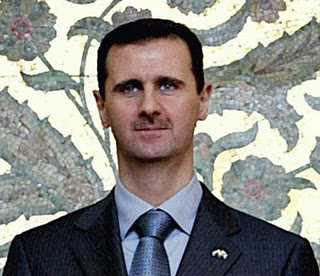
    asadTurkish Rabbi Yitzchak Haliva reportedly met with Syrian leader Bashar al-Assad, Kav HaChadash reports.

    It appears Turkey’s prime minister invited religious leaders from Turkey to join him and al-Assad in Saudi Arabia to mark the end of Ramadan.

    Turkish Prime Minister Recep Tayyip Erdogan explained he wanted local religious leaders to get to know the Syrian leader. Rabbi Haliva met with Assad together with Erdogan. Assad reportedly told the rav there is Jewish community in Syria, resulting in the rabbi replying that he is aware because his community sends them matzos for Pessach. In addition, he plays a vital role in providing “religious services” like schita and bris milah.

    The rabbi reportedly called on the Syrian leader to do everything possible towards advancing peace with Israel to bring an end to the orphans on both sides. The Turkish leader added that he is doing his utmost towards achieving this goal.

    (Yechiel Spira – YWN Israel)

    Source: theyeshivaworld.com, September 24, 2009

    Turkey’s Chief Rabbi Meets Assad for Dinner

    by Nissan Ratzlav-Katz

    (IsraelNN.com) Turkey’s Chief Rabbi (or Hahambasi) Yitzchak Haleva met with Syrian President Bashar Al-Assad at a Ramadan break-fast dinner earlier this month. Rabbi Haleva had what he felt was a heart-to-heart exchange with the dictator.

    The meeting, which included leading Christian and Muslim clerics as well, was called by Turkish Prime Minister Recep Tayyip Erdogan. Also in attendance at the upscale Istanbul hotel were diplomatic representatives from several nations, including Israel.

    When Rabbi Haleva was introduced to Assad, the Syrian leader noted that his country also had a Jewish community. Haleva replied that the Turkish Jewish community provides for the Syrian one certain religious needs, such as kosher food and a mohel, as needed. In an exclusive interview with the Matzav HaRuach weekly Torah publication, Rabbi Haleva said that he informed Assad that his community has been sending wine for Shabbat and matzah for Passover to Damascus Jewish community for many years.

    Assad, the rabbi said, replied that he was aware of the connection between the Turkish Rabbinate and the Jews of Damascus. He further promised that the relationship would continue.

    Rabbi Haleva said that in his brief conversation with Assad, he expressed the hope of the Jewish people in Israel and in the Diaspora for true peace in the Middle East. The rabbi informed Assad that the Jewish people pray for peace during the Rosh HaShanah holiday at this time of year.

    “Enough wars, enough mourning, enough destruction and loss,” Rabbi Haleva said, to which Assad expressed full agreement, according to the rabbi.

    “I felt that he felt my words were from the heart, and I sensed that they entered his heart,” Rabbi Haleva told Matzav HaRuach. “And my prayer is that this year, whose arrival we just celebrated, will be a year of peace between Israel and Syria.”

    According to the Yediot Aharonot news website, Rabbi Haleva described Assad as “nice”. His meeting with Assad was part of his duties as a religious official of Turkey who was invited by his prime minister, he said. “It’s not a political matter, nor did it offend my Zionist principles,” the rabbi was quoted as saying. “I told him we wanted peace and asked him to make peace with Israel.”

    Source: www.israelnationalnews.com, Tishrei 10, 5770 / September 28, ’09