Month: May 2009

  • Independence of Azerbaijan People’s Republic

    Independence of Azerbaijan People’s Republic


    [ 28 May 2009 00:12 ]
    Baku – APA. 91 years have passed since the first democratic was established in the East, APA reports.

    Azerbaijan People’s Republic was declared on May 28, 1918 in Tbilisi by the Azerbaijan National Council headed by Mahammad Amin Rasulzadeh. The Declaration of Independence adopted by the National Council of Azerbaijan said:

    1. Azerbaijani People have a power and Azerbaijan located in the South-Eastern Caucasus is fully legitimate independent country from today;

    2. Form of government in independent Azerbaijan is People’s Republic;

    3. Azerbaijan People’s Republic intends to establish friendly relations with other nations particularly with neighboring nations and states;

    4. Azerbaijan People’s Republic gives equal political and civil rights to its citizens without distinction as to their national identities, faiths, classes and races.

    5. Azerbaijan People’s Republic creates wide opportunities for the free development of all nations living in its territory.

    6. The National Council elected by the people and the Temporary Government, which is responsible before the National Council, will lead Azerbaijan until the Assembly of Founders is established.

    As Rasulzadeh was holding negotiations on Azerbaijan’s independence with the Ottoman Empire in Batumi, deputy chairman of Azerbaijan National Council Hasan bey Agayev chaired the meeting, where the Declaration of Independence was announced. Mustafa Mahmudov was secretary at the meeting. Fatali khan Khoyski, Khalil bey Khasmammadov, Nasib bey Yusifbeyli, Mirhidayet Seyidov, Heybetgulu Mammadbeyov, Nariman bey Narimanbeyli (not Bolshevik Nariman Narimanov – editor), Mehdi bey Hajinski, Alasgar bey Mahmudbeyov, Aslan bey GArdashov, Sultanmajid Ganizadeh, Akbar aga Sheikhulislamov, Mehdi bey Hajibabbabeyov, Mammad Yusif Jafarov, Khudadat bey Melik-Aslanov, Rahim bey Vekilov, Hamid bey Shahtakhtinski, Firudin bey Kocharli, Jemo bey Hajinski, Shefi bey Rustambayov, Khosrov Pasha bey Sultanov, Jefer Akhundov, Mahammad Maharramov, Javad Melik-Yeganov and Haji Molla Salim Akhundzadeh attended the meeting.

    Azerbaijan’s territory was 99908.86 sq m when Azerbaijan People’s Republic was announced. 13983.1 sq m area was accepted as a disputable area, it was planned to solve it during the negotiations with Armenia.

    The first temporary government of Azerbaijan People’s Republic under the leadership of Fatali khan Khoyski was confirmed at that meeting of Azerbaijan National Council. The composition of the first government was as follows:

    Fatali khan Khoyski – chairman of the Council of Ministers and Interior Minister
    Khosrov Pasha bey Sultanov – Defense Minister
    Mammadhasan Hajinski – Foreign Ministers
    Nasib bey Yusifbeyli – Minister of Finance and Enlightenment
    Khalil bey Khasmammadov – Justice Minister
    Mammad Yusif Jafarov – Minister of Trade and Industry
    Akbar aga Sheikhulislamov – Minister of Agriculture and Labor
    Khudadat bey Melik-Aslanov – Minister of Roads and Post-Telegraph
    Jamo bey Hajinski – State inspector

    Azerbaijani government was temporarily based in Gandja, as Baku was under Bolshevik-Dashnak control headed by Stepan Shaumyan.

    On September 15, 1918 after the heavy battles Azerbaijani National Army and Caucasian Islamic Army led by Nuru Pasha liberated Baku from Bolshevik, dashnak and English military units and independent Azerbaijani Government moved to Baku.

    Azerbaijani Parliament was solemnly inaugurated in Haji Zeynalabdin Tagiyev’s school for girls (now the building of Manuscripts Institute named after Fuzuli) at 13.00 on December 7, 1918. Chairman of Azerbaijan National Council Rasulzadeh made a speech of congratulation.

    On the initiative of Musavat faction, Alimardan bey Topchubashov was elected chairman of the parliament, Hasan bey Agayev first deputy chairman of the parliament. Topchubashov was attending the Paris Peace Conference, therefore Hasan bey agayev chaired the parliament. At the first meeting of the parliament Fatali khan Khoyski’s government resigned and decision was made to form a new government. Fatali khan Khoyski led the government again.

    155 meetings of the parliament were held during the period of Azerbaijan People’s Republic. Of ten were held during the period of Azerbaijan National Council (May 27 – November 19, 1918), but 145 were held during the period of Azerbaijani Parliament (December 7, 1918 – April 27, 1920).

    More than 270 draft laws were discussed at the Parliament and about 230 of them were ratified. MPs from 11 factions and groups participated in the development, discussion and ratification of the parliamentary laws. There were 11 commissions at the Parliament of Azerbaijan People’s Republic.

    Azerbaijan People’s Republic gained considerable achievements in its short life. The Republic, which provided women with electoral rights for the first time and restored man-woman equality, did great works in national army building, national currency, establishment of National Bank, democratization, free elections, international relations, official recognition of Azerbaijan’s independence by the international community, economic reforms and other fields.

    Unfortunately, Azerbaijan People’s Republic existed only for 23 months and overthrown by Bolsheviks on April 28, 1920.

    Independence of Azerbaijan People’s Republic was first officially recognized by Ottoman Empire on June 4, 1918.

  • Turkey: IMF Financing Needed By The Fall

    Turkey: IMF Financing Needed By The Fall

    Moody’s Says Workers Rated Some Securities Incorrectly

    May 27, 2009 Moody’s Investors Service said May 27 that Turkey will need to secure a loan deal with the International Monetary Fund (IMF) by this fall, Hurriyet reported. Moody’s said Turkey can go without an IMF financing program through the summer, but pressure on its external deficits will make a loan accord with the IMF necessary. Turkey has been negotiating with the IMF, but an agreement has yet to be made.

    Moody’s Corporation
    7 World Trade Center 250 Greenwich Street New York NY 10007
    Phone: +1 (212) 553-0300

  • UIGUR:  To Protect an Ancient City, China Moves to Raze It

    UIGUR: To Protect an Ancient City, China Moves to Raze It

    Shiho Fukada for The New York Times

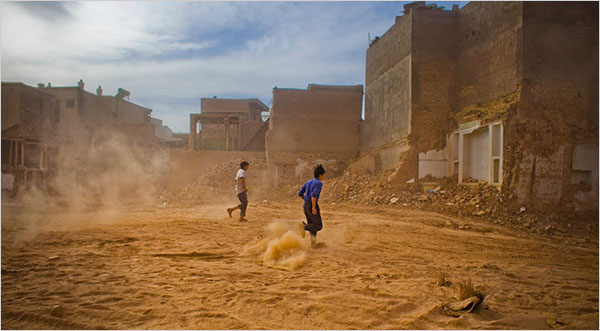
    Preservationists say the demolition of the Old City section of Kashgar, top, is a blow to China’s Islamic and Uighur culture. But work has already begun, center, to raze about 85 percent of the area.

    By MICHAEL WINES Published: May 27, 2009

    KASHGAR, China – A thousand years ago, the northern and southern branches of the Silk Road converged at this oasis town near the western edge of the Taklamakan Desert. Traders from Delhi and Samarkand, wearied by frigid treks through the world’s most daunting mountain ranges, unloaded their pack horses here and sold saffron and lutes along the city’s cramped streets. Chinese traders, their camels laden with silk and porcelain, did the same.

    Skip to next paragraph

    Multimedia

    A City, and People, at a CrossroadsAudio Slide Show

    A City, and People, at a Crossroads

    Enlarge This Image Shiho Fukada for The New York Times

    Preservationists say the demolition of the Old City section of Kashgar is a blow to China’s Islamic and Uighur culture.

    The traders are now joined by tourists exploring the donkey-cart alleys and mud-and-straw buildings once window-shopped, then sacked, by Tamerlane and Genghis Khan.

    Now, Kashgar is about to be sacked again.

    Nine hundred families already have been moved from Kashgar’s Old City, “the best-preserved example of a traditional Islamic city to be found anywhere in central Asia,” as the architect and historian George Michell wrote in the 2008 book “Kashgar: Oasis City on China’s Old Silk Road.”

    Over the next few years, city officials say, they will demolish at least 85 percent of this warren of picturesque, if run-down homes and shops. Many of its 13,000 families, Muslims from a Turkic ethnic group called the Uighurs (pronounced WEE-gurs), will be moved.

    In its place will rise a new Old City, a mix of midrise apartments, plazas, alleys widened into avenues and reproductions of ancient Islamic architecture “to preserve the Uighur culture,” Kashgar’s vice mayor, Xu Jianrong, said in a phone interview.

    Demolition is deemed an urgent necessity because an earthquake could strike at any time, collapsing centuries-old buildings and killing thousands. “The entire Kashgar area is in a special area in danger of earthquakes,” Mr. Xu said. “I ask you: What country’s government would not protect its citizens from the dangers of natural disaster?”

    Critics fret about a different disaster.

    “From a cultural and historical perspective, this plan of theirs is stupid,” said Wu Lili, the managing director of the Beijing Cultural Protection Center, a nongovernmental group devoted to historic preservation. “From the perspective of the locals, it’s cruel.”

    Urban reconstruction during China’s long boom has razed many old city centers, including most of the ancient alleyways and courtyard homes of the capital, Beijing.

    Kashgar, though, is not a typical Chinese city. Chinese security officials consider it a breeding ground for a small but resilient movement of Uighur separatists who Beijing claims have ties to international jihadis. So redevelopment of this ancient center of Islamic culture comes with a tinge of forced conformity.

    Chinese officials have offered somewhat befuddling explanations for their plans. Mr. Xu calls Kashgar “a prime example of rich cultural history and at the same time a major tourism city in China.” Yet the demolition plan would reduce to rubble Kashgar’s principal tourist attraction, a magnet for many of the million-plus people who visit each year.

    China supports an international plan to designate major Silk Road landmarks as United Nations World Heritage sites – a powerful draw for tourists, and a powerful incentive for governments to preserve historical areas.

    But Kashgar is missing from China’s list of proposed sites. One foreign official who refused to be identified for fear of damaging relations with Beijing said the Old City project had unusually strong backing high in the government.

    The project, said to cost $440 million, began abruptly this year, soon after China’s central government said it would spend $584 billion on public works to combat the global financial crisis.

    It would complete a piecemeal dismantling of old Kashgar that began decades ago. The city wall, a 25-foot-thick earthen berm nearly 35 feet high, has largely been torn down. In the 1980s, the city paved the surrounding moat to create a ring highway. Then it opened a main street through the old town center.

    Still, much of the Old City remains as it was and has always been. From atop 40 vest-pocket mosques, muezzins still cast calls to prayer down the narrow lanes: no loudspeakers here. Hundreds of artisans still hammer copper pots, carve wood, hone scimitars and hawk everything from fresh-baked flatbread to dried toads to Islamic prayer hats.

    And tens of thousands of Uighurs still live here behind hand-carved poplar doors, many in tumbledown rentals, others in two-story homes that vault over the alleys and open on courtyards filled with roses and cloth banners.

    The city says the Uighur residents have been consulted at every step of planning. Residents mostly say they are summoned to meetings at which eviction timetables and compensation sums are announced.

    Although the city offers the displaced residents the opportunity to build new homes on the sites of their old ones, some also complain that the proposed compensation does not pay for the cost of rebuilding.

    “My family built this house 500 years ago,” said a beefy 56-year-old man with a white crew cut, who called himself Hajji, as his wife served tea inside their two-story Old City house. “It was made of mud. It’s been improved over the years, but there has been no change to the rooms.”

    In Uighur style, the home has few furnishings. Tapestries hang from the walls, and carpets cover the floors and raised areas used for sleeping and entertaining. The winter room has a pot-bellied coal stove; the garage has been converted into a shop from which the family sells sweets and trinkets. Nine rooms downstairs, and seven up, the home has sprawled over the centuries into a mansion by Kashgar standards.

    But Hajji and his wife lost their life’s savings caring for a sick child, and the city’s payment to demolish their home will not cover rebuilding it. Their option is to move to a distant apartment, which will force them to close their shop, their only source of income.

    The New York Times

    Multimedia

    A City, and People, at a CrossroadsAudio Slide Show

    A City, and People, at a Crossroads

    Enlarge This Image Shiho Fukada for The New York Times

    Mahire, 19, left, eating lunch at the 500-year-old home of her in-laws in Kashgar, China. The building is scheduled to be demolished as part of a government plan to guard against earthquake damage.

    Enlarge This Image Shiho Fukada for The New York Times

    As part of the reconstruction of Kashgar, China will move many of its 13,000 families, Muslims from a Turkic ethnic group called the Uighurs.

    “The house belongs to us,” said Hajji’s wife, who refused to give her name. “In this kind of house, many, many generations can live, one by one. But if we move to an apartment, every 50 or 70 years, that apartment is torn down again.

    “This is the biggest problem in our lives. How can our children inherit an apartment?”

    Building inspectors have deemed most of the oldest homes unsafe, including all mud-and-straw structures, the earliest form of construction. They will be leveled and, in many cases, rebuilt in an earthquake-resistant Uighur style, the city promises.

    But three of the Old City’s seven sectors are judged unfit for Uighur architecture and will be rebuilt with decidedly generic apartment buildings. Two thousand other homes will be razed to build public plazas and schools. Poor residents, who live in the smallest homes, already are being permanently moved to boxy, concrete public housing on Kashgar’s outskirts.

    What will remain of old Kashgar is unclear. Mr. Xu said that “important buildings and areas of the Old City have already been included in the country’s special preservation list” and would not be disturbed.

    No archaeologists monitor the razings, he said, because the government already knows everything about old Kashgar.

    Kashgar officials do have good reason to worry about earthquakes. Last October, a 6.8 magnitude quake struck barely 100 miles away. In 1902, an 8.0-magnitude quake, one of the 20th century’s biggest, killed 667 residents.

    Some residents say they also prefer a more modern environment. The thousand-year-old design that gives the Old City its charm often precludes basics like garbage pickup, sewers and fire hydrants.

    In Mr. Xu’s view, demolition will give the Uighurs a better life and spare them from disaster in one fell swoop.

    All that said, there is a certain aura of forcible eviction about the demolition, an urgency that fear of earthquakes does not completely explain. The city is offering cash bonuses to residents who move out early – about $30 for those who vacate within 20 days; $15 if they move in a month. Homes are razed as soon as they become empty, giving some alleys a gap-tooth look.

    On Kashgar television, a nightly 15-minute infomercial hawks the project like ginsu knives, mixing dire statistics on seismic activity with scenes of happy Uighurs dancing in front of their new concrete apartments.

    “Never has such a great event, such a major event happened to Kashgar,” the announcer intones. He boasts that the new buildings “will be difficult to match in the world” and that citizens will “completely experience the care and warmth of the party” toward the Uighur ethnic minority.

    The infomercial also notes that Communist Party officials from Kashgar to Beijing are so edgy over the prospect of an earthquake “that it is disturbing their rest.”

  • The BNP is facing an inquiry

    The BNP is facing an inquiry

    Mystery of the BNP’s general election war chest

    The British National Party is facing an inquiry into its funding after its leader, Nick Griffin, paid a £5,000 political donation into his personal bank account without declaring it.

    The party’s finances came under scrutiny yesterday after it declared donations with the Electoral Commission of £21,132 for the first quarter of this year. No donations were declared between March and December last year. It has pledged to spend £500,000 campaigning for next week’s European and local elections alone.

    Under Electoral Commission rules, donations in excess of £5,000 to political parties and in excess of £1,000 given to party members to be used for political activity must be declared.

    Mr Griffin’s handling of the gift raises questions about BNP efforts to provide anonymity to its supporters.

    The BNP has fielded 450 candidates for the local elections and 66 for the European Parliament — at least one for every constituency in the United Kingdom, bar Northern Ireland. The candidates have been backed by a party machine that says it is providing 29 million leaflets and has acquired 50,000 random mobile phone numbers to lobby with text messages.

    In its 2007 audited accounts, the party listed a total income of £611,274, including £198,023 from donations. It spent £661,856, leaving it with a deficit of £50,582. Mr Griffin said that nearly £70,000 of income was not included because some records were missing after an internal dispute.

    The party has yet to file last year’s accounts but Mr Griffin told The Times that the bulk of the funds for this year’s campaign had been raised from “ordinary Britons” who made small donations.

    Mr Griffin admitted that he had paid a £5,000 donation that appeared to be from a political supporter into his own bank account and then transferred the money to a sympathetic political organisation without alerting the authorities.

    He said that he did so because the donor, an elderly North London woman who is a member of the BNP, wished to remain anonymous. He said that he gave the money in February to the nationalist trade union Solidarity, which has strong BNP links, because he believed that it would have had to be declared if he had given the donation to the party. He said that there was “no need” to declare it as the donor had asked him to put the money to “best use”. The commission will review the donation to Mr Griffin after a complaint from the anti-fascist organisation Searchlight.

    Details of the transaction emerged as David Cameron, the Tory leader, mounted the most savage attack to date on the BNP by a major political leader. “They dress up in a suit and knock on your door in a nice way but they are still Nazi thugs,” he said.

    Meanwhile, bowing to public pressure, Mr Griffin said that he would not attend a summer garden party hosted by the Queen, after anti-racism campaigners claimed that his presence would embarrass the monarchy.

    Times Online

  • Movement of Persons between Member States

    Movement of Persons between Member States

    PRESS RELEASE

    The existence of an agreement called “The European Agreement on Regulations governing the Movement of Persons between Member States of the Council of Europe” which was opened for signature by Council of Europe member states on 13 December 1957 has been revealed. The aim of the Agreement is to enable the nationals of States Parties to enter or leave the territory of another Party by all frontiers on presentation of one of the documents listed in the appendix to the Agreement. The facilities accorded are only available for visits of not more than three months’ duration.
    However, this free movement of persons may be restricted by each State Party under certain circumstances. For example, The Benelux (Belgium, Luxembourg, The Netherlands), France, and Germany applied this restrictions effectively against Turkey during the early 1980s. This practice is still being maintained with a few exceptions.
    Spain and Italy are among those countries who have signed the Agreement. However, these two countries have never issued any official objection against the free entrance or leave of Turkish nationals. Spain and Italy have not officially informed the related authorities that they imposed restrictions for Turkish nationals. The same situation is also valid for Greece. Therefore, Turkish nationals are free to enter these three countries without any visa requirement. According to the Article 307 of the European Community Agreement, the European Community Law has the superiority even if any conflict arises in the implementation of the Schengen Agreements. Requiring visas from Turkish nationals in these countries means the violation of the Agreement signed in 1957.

    The lack of required domestic and international publicity by the Turkish diplomacy about the rights and responsibilities of Turkish nationals underlined in the Agreement is a puzzling situation.

    Read more in Turkish : https://www.turkishnews.com/tr/content/2009/05/28/aciklayici-bilgiler-vizesiz-avrupa/

  • Anti-immigrant and Europhobic – far right parties ride populist wave

    Anti-immigrant and Europhobic – far right parties ride populist wave

    • Ian Traynor
    • Wednesday 27 May 2009
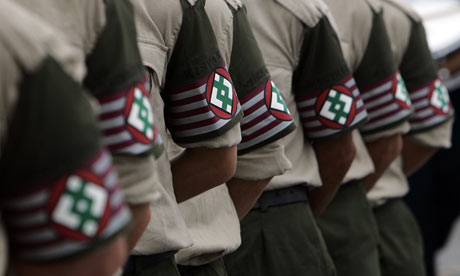
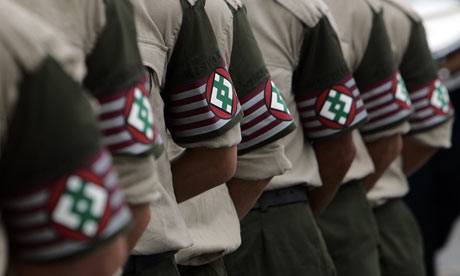
    Members of Jobbik, a Hungarian far-right party

    Members of Jobbik, a far-right Hungarian party which has been using Auschwitz slogans in its attempt to pick up votes. Photograph: Karoly Arvai/Reuters

    In Europe’s biggest port, where nearly half the population of 600,000 is of immigrant origin, Geert Wilders appears to be knocking on an open door.

    The platinum-blond, Islam-baiting populist is soaring in opinion surveys in the Netherlands, hammering the anti-immigration message to double his ratings this year to the point where his Freedom party is challenging to be the strongest in the country, according to a leading weekly tracking poll.

    Wilders’ acolytes are also poised to enter the European parliament for the first time after elections for the EU’s sole democratically elected institution, covering 375 million people across 27 countries, take place next week.

    “He’s a clown, crazy,” said Aarjen Heida, a Rotterdam banker, of the ­iconoclast banned from Britain for “hate speech” and facing trial in the Netherlands. “But he’s dangerous. A lot of people will vote for him. People are unhappy with the way things are going here and often that has to do with foreigners.”

    Hans Oole, a retired Rotterdam food engineer, insisted he would not vote for Wilders next week. “I don’t like the way he says things. But sometimes he’s right. Most Dutch people are really afraid of Islam and it is coming all over.”

    According to city statistics, ethnic Dutch residents will be a minority in Rotterdam within a few years. At present just over one third of children under 14 are ethnically Dutch. Wilders, who likens Islam to fascism and the Qur’an to Mein Kampf, exploits such figures to argue that the Netherlands is being swamped by immigration. He also hates the EU, pledging to try to abolish the European parliament when his party ­colleagues take their seats in July. He hopes to win five of the 25 Dutch seats.

    Wilders’ success represents, in part, a souring of traditional Dutch enthusiasm for the EU. It also appears symptomatic of a broader insurrectionary mood across Europe that is expected to favour extremists, mavericks and populists in the voting taking place over four days from next Thursday. Overt racism and the calculated use of Nazi language are featuring in what is otherwise a lacklustre campaign.

    In Austria, the hard-right Freedom party of Heinz-Christian Strache, tipped to take up to 20% of the vote, is pandering openly to antisemitism. “A veto of Turkey and Israel joining the EU,” declare the party posters despite the fact that Israel, unlike Turkey, is not negotiating to join.

    Last week in the Czech Republic, state television broadcast a campaign slot from the small, fascist National party calling the large Roma community “parasites” and echoing Nazi formulation of the Holocaust policy from 1942 by demanding “a final solution of the Gypsy question”.

    The party is not expected to get into the European parliament, but in ­Hungary the far-right Jobbik, which boasts black-shirted paramilitaries and maintains relations with the British National party, has been using Auschwitz slogans and running a lurid anti-Gypsy campaign.

    It, like the BNP, could make an electoral breakthrough and win a seat in the parliament which is sited alternately and at great cost in Strasbourg and Brussels.

    If the far right is making inroads, the hard left, too, may benefit from the disenchantment with mainstream parties, notably in two of the core EU countries, Germany and France.

    The new anti-capitalist party of a postman Trotskyist, Olivier Besancenot, is predicted to win around 10% of the vote in France, while the New Left in Germany – former East German communists allied with West German social democratic defectors – could do likewise. Both parties’ gains will hurt the mainstream social democrats.

    The chances of the Europhobic extremists entering the parliament are strengthened by the wretched turnout expected next week.

    “The low turnout means that those who do vote have very strong opinions. That will bring in more extremist politicians,” said Sara Hagemann, a Danish analyst at the European Policy Centre in Brussels. “You’ll see a lot of protest voters in Europe and a lot of apathy towards political elites.”

    The lack of interest in the election, or protesting by abstaining, could spell a crisis of legitimacy for the parliament and of credibility for the EU more broadly.

    It is virtually certain that voters will stay away in record numbers, making participation the lowest since voting for the parliament started 30 years ago.

    A Eurobarometer poll predicts a turnout of 34%, more than 10 points down on 2004, but that may prove to be optimistic since the pollsters have consistently overestimated participation rates.

    A poll-tracking study being run by the London School of Economics and ­Trinity College Dublin predicts a turnout of around 30%, meaning that more than two out of three voters across the EU will boycott the ballot.

    “The risk of abstention is that it allows Eurosceptics and extremists to take over our debate and our future,” José Manuel Barroso, the European commission president, warned recently.

    Mobilising voters is made more difficult by the fact that the election does not decide a government, nor are the 736 MEPs elected able to initiate European laws, reinforcing the popular notion that the parliament is a remote, irrelevant talking shop.

    In fact, voter turnout is in inverse proportion to the parliament’s growing powers. Turnout has fallen in each of the seven elections since 1979, while every treaty reshaping the way the EU is run has increased the parliament’s clout. It now has a say in shaping around 75% of European law.

    From next year, if the Lisbon treaty is implemented following a second referendum in Ireland in October, it will be empowered to “co-decide” almost all European laws, making the parliament one of the big winners of the Lisbon streamlining reforms.

    In what already looks like a doomed attempt to combat indifference and drum up interest in the ballot, the parliament itself – as opposed to the competing parties – has hired a German PR firm and spent some €18m (£15.6m) of European taxpayers’ money trying to sell the election.

    “Come on! It’s just a few minutes, maybe you can combine [voting] with a walk in the park or a drink in a cafe. Not much effort to tell Europe what you want,” pleads the parliament propaganda.

    It is falling on closed ears. The lavish spending only compounds the ­parliament’s problems, reinforcing the conviction that MEPs are either wasting taxpayers’ money or pocketing it.

    With around 9,000 candidates running for the 736 seats and with each national ballot turning on the idiosyncrasies of 27 vastly different countries, variations in voting behaviour will be marked.

    In Germany, for example, the poll will be analysed closely for what it portends for the general election in September, Europe’s most important political contest this year.

    In France, it is likely to be seen as a referendum on two years of President Nicolas Sarkozy, while in Italy, the election will be scrutinised to see if Silvio Berlusconi’s marital breakdown is damaging his popularity.

    Despite the national variations, trans-national trends are discernible as voters look like venting their anger on incumbents because of the economic crisis, and growing unemployment.

    The French, Italian, and Polish governments may be the big exceptions to this trend. But Euroscepticism, previously a British and, to a lesser extent, a Scandinavian characteristic, is spreading even into the historical heartland of the EU, such as the Netherlands.

    “The Dutch have become very cantankerous. It’s very sad,” said a senior EU official. “They’ve gone from being the most pro-European country to one of the most anti-European.”

    While Wilders pledges to destroy the EU “from within”, the hard-left Socialist party’s pitch is for “more Netherlands, less Brussels”. And among the centrist parties in government in the Netherlands, there is little positive being said about Brussels or the EU. “Even among the non-extreme parties, scepticism has crept in,” said Hagemann.

    Leading this new movement of Eurosceptics and seeking to establish it as a more powerful transnational political force in Europe are David Cameron’s Conservatives, who are pledged to end two decades of alliance with the mainstream European centre-right (the European People’s party) and form a new caucus of European Conservatives.

    The entry of several dozen extremists and populists will make the parliament a more raucous, bad-tempered place, but will not substantively affect the balance of power between Christian Democrats, social democrats and liberals.

    But Cameron’s move should have more impact. He has been helped by the entry of central European countries in 2004. He will depend on rightwingers from Poland and the Czech Republic and a few other countries to set up the new grouping, which will signify the biggest change in the new five-year parliament.

    The LSE-Trinity College study predicts more than 60 seats from up to nine countries for the new Conservative caucus, making it the fourth biggest in the parliament. It will be loud in its condemnation of the Lisbon treaty and will campaign for the “repatriation” of powers from Brussels to national capitals.

    “We will be very united in limiting European power,” said Konrad Szymanski, a Polish MEP from the rightwing Law and Justice party which will supply the second biggest bloc of MEPs after the British.

    The election will usher in a busy few months at the top of European politics – Barroso’s expected renomination as head of a new commission a fortnight later at a European summit; a German election; an Irish referendum; and probably a contest for the two plum posts of first European president and foreign minister.

    But the low turnout and predicted gains for anti-Europeans will get this burst of high-powered politicking off to a bad start.

    Source: www.guardian.co.uk, 27 May 2009