Month: January 2009

  • Poor Richard’s Report

    Poor Richard’s Report

    Geopolitical Diary: The World’s Pivot
    January 30, 2009Turkish Prime Minister Recep Tayyip Erdogan created a stir at the World Economic Forum in Davos, Switzerland, on Thursday with a lengthy condemnation of Israel’s recent actions in the Gaza Strip.

    Erdogan’s speech was clearly prepared beforehand — read directly from papers he was holding — so this was no off-the-cuff comment that could be written off. And sitting right next to the Turkish prime minister the whole time was none other than Israeli President Shimon Peres. After Peres delivered a counterpoint, Erdogan went on what detractors would probably label a rant, which ended with a brief argument with the moderator about time limits before he abruptly walked off the stage, having said, “I do not think I will return to Davos.”

    Back in Turkey, the response was mixed: Some were surprised by their leader’s actions, and some were thrilled to see him lambaste both Israel and the European elites at Davos. Indeed, it is a matter for debate both within and outside Turkey just where Erdogan and his Justice and Development Party are taking Turkish policy in the near future. There are those who see his bold criticisms of Israel as a clear bid to seize a leadership position for Islamic sentiment throughout the Middle East. Others see Turkey asserting itself in order to counter, or perhaps collaborate with, a resurgent Russia. Still others see Turkey pushing to join, or perhaps utterly reject, the European Union. The one thing that is clear is that Turkey is moving more assertively than it has in decades.

    It has been almost 90 years since the world has seen Turkey as a place that projects any power on its own. Since the fall of the Ottoman Empire, the Turks have been extremely insular, dabbling only rarely in events beyond their borders. Granted, Turkey was a key participant in the NATO alliance during the Cold War, given that it shared borders with the Middle East, Iran, the Soviet bloc (Bulgaria) and the Soviet Union itself. It has been a long time, however, since Turkey pursued an activist foreign policy — and most of the world has forgotten just what that means.

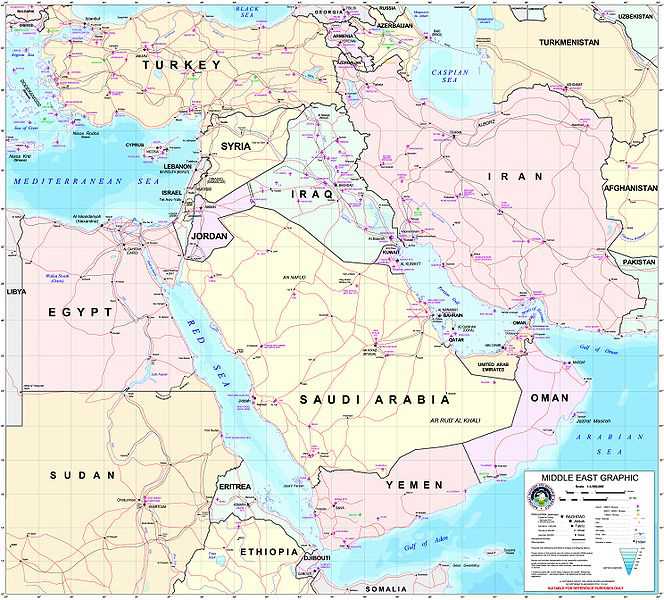
    Turkey occupies on some of the most valuable real estate in the world. The Anatolian plateau is high and easily defensible, and as a peninsula it also supports a thriving maritime culture. Both are excellent assets for growing a successful state. But Turkey’s most important feature is its critical location. It sits astride the land routes connecting Europe, the former Soviet Union and the Middle East — not to mention the straits connecting the Black Sea and the Mediterranean. It is the only country in the world that is positioned to project influence readily into all of these regions.

    A deeper look reveals that the territory that comprises modern-day Turkey has been at or near the center of the human story for thousands of years. It was the home of the Hittite empire some 3,300 years ago, and afterward its Aegean coast was part of Classical Greece. Not only was Anatolia a key component of the Roman Empire, but Byzantium — based in what is now Istanbul — was Rome’s immediate political, cultural, religious and economic successor. That entity in turn was succeeded by the Ottomans, who crafted what was at the time the world’s greatest empire — which almost unilaterally enabled humanity to emerge from the Dark Ages, even at times conquering a good portion of what would eventually become Western civilization. For about half of the past two millennia, Anatolia has commanded the world’s most powerful economic and military forces.

    The bottom line is this: Any time in human history that the Anatolian Peninsula has not been a leading force in geopolitics has been an aberration. The land that links Europe to the Eurasian steppe to the mountains of Asia to the Mediterranean basin and the deserts of Arabia is geographically destined to play a major role on the global stage. If the world has a pivot, it lies in Turkey.

    And although the direction of its movement remains up for debate, Turkey — after more than 90 years of quiescence — is moving again.

    Tell Stratfor What You Think

    Terms of Use | Privacy Policy | Contact Us
    © Copyright 2009 Stratfor. All rights reserved.

  • DAVOS & ERDOGAN IB DEPKA FILES

    DAVOS & ERDOGAN IB DEPKA FILES

    Summary of DEBKAfile’s Exclusive Articles in Week Ending Jan. 28, 2009
    Gaza ceasefire too fragile to acclaim end of warfare
    DEBKAfile Exclusive Analysis
    24 Jan.: Israeli leaders insist the IDF left Hamas seriously crippled – which is undeniable; but the second half of the proposition that Hamas had “lost its appetite for striking Israel targets for a very long time” – is over-optimistic, give the considerations listed here:

    1. Hamas is in no state to reach a clear decision because its leadership is divided on this very issue.
    The Gazan faction headed by prime minister Ismail Haniya would accept Egypt’s proposals for shelving armed warfare for now and healing the quarrel the Palestinian Authority chairman, Mahmoud Abbas, whereas Hamas’ Damascus faction led by Khaled Meshaal rejects any terms but the unconditional reopening of Gaza’s crossing and an end to its blockade.

    2. Jerusalem is beholden to Cairo as the first major Arab power to support a battle with an Arab force, and was thus bound to respect its wishes to teach Hamas – and Iran – a harsh lesson but stop short of finally crushing the Palestinian extremists.

    3. Until last week, Egypt enjoyed solid Saudi backing. But then, at the Arab League summit in Kuwait on Jan. 19, the Saudi king changed face and decided to appease the Iran-led radical Arab camp.

    4. American and Egypt mechanisms to staunch Hamas’ access to smuggled Iranian and Syrian arms are still tentative.

    This and the divisions in the Arab world have encouraged Tehran to persist in rearming Hamas and the Hamas-Damascus faction to maintain its intransigent posture, a contest which crackles with inflammatory potential.


    Egypt cracks the whip for Hamas in long-term truce talks
    DEBKAfile Exclusive Report
    25 Jan.: Egyptian intelligence minster Gen. Omar Suleiman gave Hamas no leeway when its delegation began long-term truce talks for Gaza in Cairo Sunday, Jan. 25. Accept our terms, he said or take your chances on a new Israel government after the Feb. 10 general election.

    Here are the conditions Cairo put before the Palestinian Islamist organization:

    1. Hamas must pledge to halt all smuggling into the Gaza Strip, including arms.

    2. and 3. It must accept a long-term truce for Gaza and a half-kilometer off limits zone behind the border…

    4. Hamas would have no access to the Gaza crossing facilities.

    5. The verbal abuse of Egypt must stop forthwith.

    Suleiman made it clear that financial aid for rebuilding the Gaza Strip was contingent on Hamas burying the hatchet with Mahmoud Abbas and accepting a power-sharing deal with his Palestinian Authority.


    Iranian arms ship intercepted by US warship has sealed double holds
    DEBKAfile Exclusive Report
    25 Jan.: The Iranian ship boarded by a US Navy Coast Guard team on the Red Sea last week before it could smuggle arms to Hamas is now disclosed by DEBKAfile’s military sources to have tried to trick the searchers by enclosing its rocket cargo in secret compartments behind layers of steel.

    The Iranian freighter Nochegorsk was intercepted in the Bab al-Mandeb Straits last week by the new US Combined Task Force 151. The Americans decided not to give the Israeli Navy a chance to seize the vessel and tow it to Eilat for fear of a Tehran ultimatum to Jerusalem sparking Iranian attacks on Israeli naval craft patrolling the Gulf of Aden and Red Sea.

    Iran maintains two warships in those waters as well as a military presence in the Eritrean port of Assab.
    The US and Egyptian governments are in a fix. To break the Iranian ship’s holds open and expose the rockets destined for Hamas, the facilities of a sizeable port are needed. It would have to be Egyptian because the other coastal nations – Eritrea, Sudan and Somalia – are hostile or controlled by pirates.
    And the US and Egypt are hesitant about precipitating a full-blown armed confrontation with Iran. The new Barack Obama administration is rather set on smoothing tiesTehran through diplomatic engagement.

    The option of towing it to a Persian Gulf port would be opposed by the Gulf emirates hosting US bases.
    Moreover, Tehran would be close enough to mount a naval commando operation to scuttle the ship before it was searched. Therefore, the US government is expected to let the Iranian arms ship sail through the Suez Canal out to the Mediterranean for lack of other options.


    Two Guantanamo inmates on al Qaeda video25 Jan.: The two men reaffirmed their dedication to jihad on a video posted in an al Qaeda website shortly after President Barack Obama signed a directive to close the Guantanamo Bay prison camp in Cuba within a year. One was a Saudi identified as Saeed Shihri, one of al Qaeda’s top leaders in Yemen.

    DEBKAfile adds: He was transferred to Saudi Arabia in 2007. Against a pledge not to revert to terrorism, Shahri won a big Saudi grant for his “rehabilitation.” He did indeed build a big house and take a wife, but on the quiet resumed his affiliation with al Qaeda.

    The second man on the video, Abu al-Hareth Muhammed al-Oufi, is an al Qaeda field commander. Another 245 prisoners await their release in the camp. According to the US Defense Department, as many as 61 former Guantanamo Bay detainees, about 11 percent of 520 inmates transferred or released so far, have rejoined al Qaeda’s active ranks.


    Hamas wartime rockets missed US anti-Iranian missile radar near Beersheba
    DEBKA-Net-Weekly Exclusive
    26 Jan.: Following orders from Tehran, the Palestinian Hamas used the cover of the 22-day Gaza conflict to aim rockets at the American Forward-Based X-band Transportable (FBX-T) anti-missile radar system lodged at Israel’s big Nevatim air base east of Beersheba, DEBKA-Net-Weekly disclosed lat week.

    Destruction of the FBX-T, which was installed last November to intercept incoming Iranian Shehab-3 ballistic missiles, would have crowned Hamas’ offensive with success. But they missed.

    Cont. Next Column


    Our military sources reveal that the American X-band radar, which can track the path of any missile fired in the Middle East, worked hard during Operation Cast Lead, feeding the Israeli command with accurate advance information on the missiles and rockets aimed from Gaza at southern Israel and their trajectories.

    It also tracked the rockets fired twice at Nahariya and Kiryat Shemona from Lebanon and kept watch for possible missile action from Syria and Iran.
    But the American radar facility at Nevatim also kept Washington abreast of Israel’s aerial, naval and missile activity in the course of the conflict.


    Major Israeli reprisal pending for Palestinian roadside bomb which killed Israeli soldier 27 Jan.: An Israeli soldier was killed and three others injured, one seriously, Tuesday, Jan. 27, by a large roadside bomb detonated from Gaza against a routine Israeli military patrol near the Kissufim crossing.

    Eight hours later, an Israeli air strike killed a Hamas operative involved in the attack riding a motorbike near Khan Younis. Defense minister Ehud Barak warned Israel would respond to the Palestinians’ unacceptable breach of the ceasefire.

    Our sources say Hamas initiated the clash for the benefit of US president Barack Obama’s Middle East envoy George Mitchell the day before he arrives for his first visit to the region. The time-lag between the Palestinian attack and Israel’s response exposes Jerusalem’s commitment to consult with Washington and Cairo before taking further action in Gaza. The understandings with the US, reached by Israel’s war troika, the prime minister, defense minister and foreign minister Tzipi Livni, are proving now too ungainly and unclear to fit the realities of Gaza. They tie Israel down for launching the necessary response for stamping hard on Hamas’ war initiatives.

    Hamas is determined to belie Israel’s claim of restored deterrence strength from Operation Cast Lead and assertion that Hamas would need a very long time to revert to violence.


    US military chief confirms interception of Gaza-bound Iranian arms ship28 Jan.: Chairman of the US Joint Chiefs of Staff Adm, Mike Mullen said Jan. 28 the US Navy had intercepted a Cypriot-flagged ship in the Red Sea last week and searched it with the captain’s permission for Iranian arms bound for the Gaza Strip.

    The Iranian arms ship on its way to the Gaza Strip for Hamas was first revealed exclusively by DEBKAfile on Jan. 20 and tracked further on Jan. 23 and Jan. 25.

    The Navy had done all it could do legally but was not authorized to seize the weapons,” said Mullen, adding he would like authority to act in such cases.

    DEBKAfile’s military sources disclose that it is bound for Latakia, where it will dock alongside the Russian guided missile destroyer Admiral Chabanenko.

    In the Suez Canal, the Iranian vessel’s captain called Tehran for instructions and was told to proceed to this Syrian port. Upon entering the Mediterranean on Jan. 26, the Iranian ship was blocked by Israel missile ships from access to the shores of Gaza.


    Israeli air force bombs Philadelphi corridor in three waves 28 Jan.: Israeli towns and communities within rocket and missile range of the Gaza Strip were once again on tense alert after the Israeli air force struck the Philadelphi corridor border tunnels before dawn Wednesday, Jan. 28. Punishment was promised Hamas after a large roadside bomb blew up an Israel border patrol jeep outside Gaza early Tuesday, killing one Israel soldier and injuring three, one seriously, one week into the Gaza ceasefire.

    Several smuggling tunnels caved in under the aerial bombardment. Barack Obama’s Middle East envoy George Mitchell may find himself landing Wednesday in the middle of another Gaza war.


    Two Qassam missiles aimed at Sderot early Thursday shatter ceasefire 29 Jan.: Israeli air raids struck a Hamas target in Khan Younes, inflicting at least 10 Palestinian casualties Thursday, Jan. 29, after two missiles were aimed at Sderot from Gaza early Thursday, Jan. 29.

    Overnight, the Israeli Air force struck a missile workshop in the southern Gaza town of Rafah.
    DEBKAfile’s military circles report that in the 48 hours since a roadside bomb from Gaza killed an Israeli soldier and injured three, Hamas has reverted to its tit-for-tat cycle in an effort to demonstrate who makes the rules.

    I n expectation of a major Gaza flare-up, defense minister Ehud Barak canceled his trip this week to Washington for talks with US defense secretary Robert Gates. Wednesday, as Barack Obama’s Middle East envoy George Mitchell met with Israeli leaders in Jerusalem, Hamas fired two Qassam missiles and several mortar rounds into southern Israel for the first time since the 22-day conflict was halted by ceasefires.

    In Damascus, meanwhile Hamas and other radical Palestinian leaders rejected Cairo’s plan for a long-term truce, demanding the reopening of all the Gaza crossings first.

    But Hamas’ rejection has taken Cairo’s diplomatic initiative back to square one. The Egyptians believe that a good military hiding by Israel will bring the Palestinian Islamist extremists back to the negotiation table in a more reasonable frame of mind.


    Turkish premier storms out of Davos after run-in with Israeli president

    29 Jan.: At the World Economic Forum in Davos, Turkish prime minister Recep Tayyip Erdogan Thursday, Jan. 29, reproached Israeli president Shimon Peres over the Gaza offensive, saying “You kill people,” continuing the abuse he has leveled against Israel in recent weeks.

    Israeli president Shimon Peres said, raising his voice, Israel’s 22-day offensive was launched in reaction to eight years of rocket fire. Turning to Erdogan, who had said Israel had made Gaza an “open air prison,” Peres asked: “Why did they fire rockets? There was no siege against Gaza. There was never a day of starvation in Gaza.”

    The former Norwegian prime minister, Khell Magne Bondevik, said he had never seen Shimon Peres so passionate. I think he felt Israel was being attacked by so many in the international community. He felt isolated.”


  • New Resist of Turkish Outlook

    New Resist of Turkish Outlook

    After the Belfour Declaration Turkey shared a new strong hand on Middle East.

    Turkish Prime Minister R. Tayyip Erdogan told Peres that “you must feel guilty to be so strong in your words,” referring to the president having raised his voice loudly during his address.

    For first time a man told about Israeli realities : “You killed babies and women. God says that “don’t kill” in Torah.”

    It is original access to share Middle Eastern fortune as referring to massacre mind of Shimon Peres, Ariel Sharon and other Israeli person in charge who are originally military base. “You have prime ministers who had said they felt quite happy when they entered in Palestine on tanks.”

    Today Menahem Begin and Ariel Sharon can not see new balances which are made by Muslim Turkey. Israel must understand that Muslim people can create riots if Turkey wants. Also they know Ottoman resist against to Jewish invasion on Middle East. New Hava Nagila sing will appear for Muslims as happiness in region.

    Turkey’s historical feelings will keep situations among Muslim nations.

    In 1901 the Jewish representatives of Ottoman parliament went to Sultan Abdulhamid the II and offered to pay tremendous amount of money to keep the Islamic State for Palestine. Sultan Abdulhamid the II replied:


    I am not going to give one inch of Palestine to the jews as Palestine is not mine give but it belongs to the Ummah and Ummah have shed blood to defend this land but if one day the Islamic State falls apart then you can have Palestine for free but as long as I am alive I would rather have my flesh be cut up then cut out Palestine from the Muslim land I will not allow any carving up while we are alive!

    Turkey says to stop Israeli massacre and invasion today with its empire heritage.

    The premier then walked out saying Peres had spoken for more than twice as long as he was given.Also Turkey understand that western world will not give right to speak for Turkey.  Peres received 25 minutes, Erdogan 12.

    Western world created a cold diplomatical, academical feelings. And their demands are about opposition of other’s interest.

    Today Greeks are defending their Cyprus massacres, but they sued Atilla Olgac because of war actions. But Greek side don’t talk about Israeli slaughter.

    We will see new political attacks by big powers about just and unjust states.

    Mehmet Fatih ÖZTARSU

  • LEVON MELIK-SHAHNAZARYAN: “KARABAKH CONFLICT WILL EITHER BE SETTLED BY FORCE OR REMAIN FROZEN FOR A LONG TIME”

    LEVON MELIK-SHAHNAZARYAN: “KARABAKH CONFLICT WILL EITHER BE SETTLED BY FORCE OR REMAIN FROZEN FOR A LONG TIME”

    30 January 2009, Resource : Today Az

    “The Karabakh conflict cannot be settled at the negotiation table”, said political scientist Levon Melik-Shahnazaryan, commenting on the results of the meeting of the Armenian and Azerbaijani Presidents.

    “Sargsyan and Aliyev’s meeting was formal and nothing new was said during it. No changes are expected in the positions of the Armenian and Azerbaijani parties on the Karabakh issue”, said the political scientist.

    He considers that problems at the negotiation table can be settled in case there are contañt points, while Karabakh issue lacks them.

    “The positions of Armenia and Azerbaijan fully contradict to each others”, noted Melik-Shahnazaryan.

    According to the political scientist, the conflict will be settled either by force, when Azerbaijan will be the initiator, or remain frozen for a long time.

    He also added that Armenia should strive to get maximal benefit from the quo status around Karabakh problem, developing economically.

  • Hamas official declare victory in Gaza rallies

    Hamas official declare victory in Gaza rallies


    A Turkish flag is seen as Palestinians attend a rally in support of Hamas in Gaza city, Friday Jan. 30, 2009. Turkish prime minister Tayyip Erdogan is winning praise from Gazans after his public spat with Israeli President Shimon Peres over Israel’s Gaza offensive. (AP Photo/Hatem Moussa) (Hatem Moussa – AP)

    Pictures of Turkish prime minister Recep Tayyip Erdogan are seen during a rally in support of Hamas in Gaza city, Friday, Jan. 30, 2009. Erdogan is winning praise from Gazans after his public spat with Israeli President Shimon Peres over Israel’s Gaza offensive. (AP Photo/Hatem Moussa) (Hatem Moussa – AP)

    By BEN HUBBARD
    The Associated Press
    Friday, January 30, 2009; 1:30 PM

    GAZA CITY, Gaza Strip — More than 5,000 Hamas supporters rallied in Gaza on Friday, as a leader of the Islamic militant group emerged from hiding to declare victory in the 23-day Israeli offensive that devastated much of the Palestinian territory.

    Hamas lawmaker Khalil al-Hayeh appeared in public for the first time since the war’s start on Dec. 27 and remained defiant despite Hamas’ heavy losses.

    “We thank God when we see our houses bombed and our institutions destroyed, but our people say yes to the resistance and yes to martyrdom for the sake of God,” al-Hayeh said, standing in front of the damaged Palestinian parliament building. “We say proudly that Gaza has won the war, the resistance has won the war, and Hamas has won the war.”

    if ( show_doubleclick_ad && ( adTemplate & INLINE_ARTICLE_AD ) == INLINE_ARTICLE_AD && inlineAdGraf ){placeAd(‘ARTICLE’,commercialNode,20,’inline=y;’,true) ;}
    Israeli launched its offensive to stop eight years of near-daily militant rocket fire from Gaza at southern Israeli towns. Nearly 1,300 Palestinians were killed in the fighting, about half of them civilians, according to the Palestinian Center for Human Rights. Thirteen Israelis were also killed, three of them civilians.

    The aerial and ground offensive ended with a tentative cease-fire on Jan. 18. Hamas has since resumed its rocket fire toward Israel.

    On Friday, the crowd waved red and white Turkish flags next to green Hamas banners. Al-Hayeh called Turkish Prime Minister Recip Tayyip Erdogan “a hero” for criticizing Israel over the Gaza offensive during a panel discussion Thursday at the World Economic Forum in Davos, Switzerland.

    Erdogan stalked off the stage after telling Israeli President Shimon Peres: “You kill people.”

    Demonstrators burned and stomped on posters of Peres and other Israeli leaders and held up placards with Erdogan’s picture on them.

    Al-Hayeh repeated previous declarations that Hamas would not agree to a long-term cease-fire with Israel that does not include lifting the 18-month blockade on the tiny, impoverished seaside strip and opening its border crossings with Israel.

    In London, a European Union spokesman, John Clancy, said Israeli restrictions on humanitarian aid flows into Gaza are “unacceptable” and must be lifted. He said about 120 supply trucks are currently entering Gaza each day, compared to about 500 in 2007.

    Clancy said the EU had asked Israel to allow its aid workers to be fast-tracked into the territory. It currently takes about five days for a worker to get into Gaza, and the EU wants to shorten that to 48 hours.

    Al-Hayeh also said Hamas would only release captured Israeli soldier Gilad Schalit in exchange for Hamas members imprisoned in Israel.

  • on Davos forum spat: some personal thoughts

    on Davos forum spat: some personal thoughts

    FromJavid Huseynov [[email protected]]

    on Davos forum spat: some personal thoughts

    I think the position taken by Turkey in this conflict was strategically right. Although the implementation of strategy wasn’t worked out well in terms of PR, it’s actually beneficial for Israel. Why?

    Turkey is truly becoming a leader of the Muslim world, and instead of being an alien bystander, once more taking in hands the moral authority once held by Ottomans. It’s a well calculated policy, and Turkey is already influencing not only the politics but also the hearts and minds of all Muslims (sufficient to say that entire MidEast lives watching Turkish soap operas and television nowadays). Being the leading major secular democratic Muslim nation, NATO member with EU aspirations, Turkey has an excellent chance to become a respected Muslim superpower and a party to deal with in all matters pertaining to Islamic world… and it already is now.

    Shimon Perez, being a brilliant veteran politician and a Nobel Peace prize winner knows this very well, which is why he called Erdogan further to say he was sorry about what happened. Because it is in Israel’s and US best interest to work with democratic secular Turkey on all Muslim issues, instead of doing so with a divided, mostly corrupt and radical Arab statehoods. It’s better for Israel to have Turkey as a representative of Islamic world than irrational Ahmadinejad who threatens to erase Israel. And this position taken by Turkey will actually seriously weaken Iran’s influence in the Muslim Middle East but such policy requires getting the hearts of Muslim folk first, which is precisely what Turkey is doing.

    But, Erdogan was not the right person to deliver this Turkish message. His behavior was unprofessional, his speech delivered in Turkish instead of English was far weaker and irritating than that of Shimon Perez. This shows that Erdogan is an excellent strategist but a horrible diplomat. Doing so in perpetration by an Armenian-American host was not appropriate. I am not sure who arranged for David Ignatius to be the host of this panel, and perhaps, Erdogan was unaware of it, but a positive side is that even as a host of a major global forum, a person of diaspora Armenian descent was unable to hold off his biases and let Erdogan finish his talk.

    Regards,
    Javid