Month: October 2008

  • Great document to keep for future as reference…

    Great document to keep for future as reference…

    Meltemb <[email protected]>

    DO NOT VOTE FOLLOWING PERSONS ON NOVEMBER 4

    You all should keep this document, to see on which reps you should work on in the future in your respective states..

    Support our friends running for the House of Representatives

    The Armenian Reporter and the U.S.-Armenia Public Affairs Committee (USAPAC) jointly urge Armenian-Americans to support our friends running for the House of Representatives. Last week, we focused on the California delegation. This week we consider the rest of the nation.

    In our endorsements, as always we have given special consideration to members of the Congressional Caucus on Armenian Issues. We have considered candidates’ interest in and support of Armenian-American issues, including co-sponsorship and support of H. Res. 106, which affirms the U.S. record on the Armenian Genocide. We have also noted where members have taken additional steps to support the Armenian-American agenda in Congress.

    In several cases, we urge Armenian-Americans to oppose members who have opposed or withdrawn their support of House Resolution 106. The House Foreign Affairs Committee adopted the resolution in October 2007 over the very strong opposition of the Bush administration and the Turkish lobby. That led to an even more intense effort to kill the resolution on the floor of the full House. The administration and the Turkish lobby mobilized their resources across the country, making the fight for the resolution a top story for most news organizations for a few days.

    This was a seminal matter. Members of Congress were being asked by the administration and a foreign state to suppress a proud chapter of American history – the efforts of the State Department, Ambassador Henry Morgenthau, and U.S. consuls in the Ottoman provinces in 1915-17 to save the Armenians, and the broad response of the American people to appeals for help. Why? Because an American ally, Turkey, was blackmailing the United States:  If the resolution was adopted, the Turkish prime minister wrote ominously in the Wall Street Journal for October 19, 2007, Turkey, would take action that would “not be in the interests of either the U.S. or Turkey.”

    We could not and cannot accept that the appropriate U.S. response to such a threat would be to coddle the Turkish government.

    On Election Day, November 4, let the Armenian-American voice be heard loud and clear at the polls.

    (See the print version of this editorial in pdf form=

    We support

    Alabama

    Artur Davis (D.), a co-sponsor of the Armenian Genocide resolution.

    American Samoa

    Eni F. H. Faleomavaega (D.), a member of the House Foreign Affairs Committee, voted in favor of the Armenian Genocide resolution.

    Arizona

    Ed Pastor (D.), a co-sponsor of the Armenian Genocide resolution.

    Gabrielle Giffords (D.), a member of the House Foreign Affairs Committee, voted in favor of the Armenian Genocide resolution.

    Raul Grijalva (D.), a member of the House Caucus on Armenian Issues and co-sponsor of the Armenian Genocide resolution.

    Colorado

    Diana DeGette (D.), a co-sponsor of the Armenian Genocide resolution.

    Ed Perlmutter (D.), a member of the House Caucus on Armenian Issues and co-sponsor of the Armenian Genocide resolution.

    John Salazar (D.), a co-sponsor of the Armenian Genocide resolution.

    Marilyn Musgrave (R.), a member of the House Caucus on Armenian Issues and co-sponsor of the Armenian Genocide resolution.

    Connecticut

    Chris Murphy (D.), a co-sponsor of the Armenian Genocide resolution.

    Chris Shays (R.), a member of the House Caucus on Armenian Issues and co-sponsor of the Armenian Genocide resolution.

    Joe Courtney (D.), a co-sponsor of the Armenian Genocide resolution.

    John Larson (D.), a member of the House Caucus on Armenian Issues and co-sponsor of the Armenian Genocide resolution.

    Rosa DeLauro (D.), a member of the House Caucus on Armenian Issues and co-sponsor of the Armenian Genocide resolution.

    District of Columbia

    Eleonor Holmes Norton (D.), a member of the House Caucus on Armenian Issues and co-sponsor of the Armenian Genocide resolution.

    Florida

    Gus Bilirakis (R.), a member of the House Foreign Affairs Committee, voted in favor of the Armenian Genocide resolution. A member of the House Caucus on Armenian Issues, he spoke at the September 2008 Capitol Hill Karabakh event

    Kendrick Meek (D.), a co-sponsor of the Armenian Genocide resolution.

    Lincoln Diaz-Balart (R.), a member of the House Caucus on Armenian Issues and co-sponsor of the Armenian Genocide resolution.

    Mario Diaz-Balart (R.), a co-sponsor of the Armenian Genocide resolution.

    Ron Klein (D.), a member of the House Foreign Affairs Committee, voted in favor of the Armenian Genocide resolution.

    Georgia

    Jack Kingston (R.), a co-sponsor of the Armenian Genocide resolution.

    Jim Marshall (D.), a co-sponsor of the Armenian Genocide resolution.

    John Barrow (D.), a co-sponsor of the Armenian Genocide resolution.

    John Lewis (D.), a co-sponsor of the Armenian Genocide resolution.

    Guam

    Madeleine Bordallo (D.), a co-sponsor of the Armenian Genocide resolution.

    Hawaii

    Mazie Hirono (D.), a co-sponsor of the Armenian Genocide resolution.

    Neil Abercrombie (D.), a co-sponsor of the Armenian Genocide resolution.

    Illinois

    Bobby Rush (D.), a member of the House Caucus on Armenian Issues and co-sponsor of the Armenian Genocide resolution.

    Dan Lipinski (D.), a member of the House Caucus on Armenian Issues and co-sponsor of the Armenian Genocide resolution.

    Danny Davis (D.), a member of the House Caucus on Armenian Issues and co-sponsor of the Armenian Genocide resolution.

    Donald Manzullo (R.), a member of the House Foreign Affairs Committee, voted in favor of the Armenian Genocide resolution.

    Janice Schakowsky (D.), a member of the House Caucus on Armenian Issues and co-sponsor of the Armenian Genocide resolution.

    Jerry Costello (D.), a member of the House Caucus on Armenian Issues and co-sponsor of the Armenian Genocide resolution.

    Jesse Jackson (D.), a member of the House Caucus on Armenian Issues and co-sponsor of the Armenian Genocide resolution.

    Luis Gutierrez (D.), a member of the House Caucus on Armenian Issues and co-sponsor of the Armenian Genocide resolution.

    Mark Kirk (R.), a member of the House Caucus on Armenian Issues and co-sponsor of the Armenian Genocide resolution. He supported Rep. Knollenberg’s July 2008 amendment to eliminate a $3.9 million allocation of military aid to Azerbaijan.)

    Melissa Bean (D.), a co-sponsor of the Armenian Genocide resolution.

    Peter Roskam (R.), a member of the House Caucus on Armenian Issues and co-sponsor of the Armenian Genocide resolution.

    Phil Hare (D.), a co-sponsor of the Armenian Genocide resolution.

    Indiana

    Mark Souder (R.), a member of the House Caucus on Armenian Issues and co-sponsor of the Armenian Genocide resolution.

    Peter Visclosky (D.), a member of the House Caucus on Armenian Issues and co-sponsor of the Armenian Genocide resolution.

    Iowa

    Bruce Braley (D.), a member of the House Caucus on Armenian Issues and co-sponsor of the Armenian Genocide resolution.

    Kentucky

    John Yarmuth (D.), a co-sponsor of the Armenian Genocide resolution.

    Louisiana

    Charlie Melancon (D.), a co-sponsor of the Armenian Genocide resolution.

    Maine

    Michael Michaud (D.), a co-sponsor of the Armenian Genocide resolution.

    Maryland

    Steny Hoyer of Maryland

    The House majority leader, Mr. Hoyer stood firmly for the Armenian Genocide resolution in the face of vitriolic attacks jointly orchestrated last October by the Bush administration and the Turkish lobby.

    Chris Van Hollen of Maryland

    Mr. Van Hollen is one of the members of the House Democratic leadership who stood on principle and rejected pressure to forsake the Armenian Genocide resolution last October.

    John Sarbanes (D.), a member of the House Caucus on Armenian Issues and co-sponsor of the Armenian Genocide resolution.

    Massachusetts

    Barney Frank of Massachusetts

    A member of the House Democratic leadership, Mr. Frank spoke at the September 2008 Capitol Hill Karabakh event and co-signed a letter asking for extra aid to Armenia in the wake of the war in Georgia.

    Ed Markey (D.), a member of the House Caucus on Armenian Issues and co-sponsor of the Armenian Genocide resolution. Mr. Markey co-signed a letter asking for extra aid to Armenia in the wake of the war in Georgia.

    James McGovern (D.), a member of the House Caucus on Armenian Issues and co-sponsor of the Armenian Genocide resolution. Mr. McGovern attended the 2008 Congressional commemoration of the Genocide and co-signed a letter asking for extra aid to Armenia in the wake of the war in Georgia.

    John Olver (D.), a member of the House Caucus on Armenian Issues and co-sponsor of the Armenian Genocide resolution.

    John Tierney (D.), a member of the House Caucus on Armenian Issues and co-sponsor of the Armenian Genocide resolution.

    Michael Capuano (D.), a member of the House Caucus on Armenian Issues and co-sponsor of the Armenian Genocide resolution.

    Niki Tsongas (D.), a co-sponsor of the Armenian Genocide resolution.

    Richard Neal (D.), a member of the House Caucus on Armenian Issues and co-sponsor of the Armenian Genocide resolution.

    Steve Lynch (D.), a member of the House Caucus on Armenian Issues and co-sponsor of the Armenian Genocide resolution. Mr. Lynch co-signed a letter asking for extra aid to Armenia in the wake of the war in Georgia.

    William Delahunt (D.), a member of the House Foreign Affairs Committee, voted in favor of the Armenian Genocide resolution. He is a member of the House Caucus on Armenian Issues.

    Michigan

    Joe Knollenberg of Michigan

    A co-chair of the House Caucus on Armenian Issues – in a competitive race – Mr. Knollenberg, a Republican, has tirelessly led efforts to move the Armenian-American agenda forward in Congress. This summer he fought to eliminate a $3.9 million allocation of military aid to Azerbaijan. (He had heralded his intentions in an article for the Armenian Reporter, “Enough is enough, Azerbaijan,” June 21, p. 22.)

    Thaddeus McCotter of Michigan

    The chair of the GOP Policy Committee, Mr. McCotter co-signed a letter asking for extra aid to Armenia in the wake of the war in Georgia.

    Candice Miller (R.), a member of the House Caucus on Armenian Issues and co-sponsor of the Armenian Genocide resolution.

    Dale Kildee (D.), a member of the House Caucus on Armenian Issues and co-sponsor of the Armenian Genocide resolution.

    Dave Camp (R.), a member of the House Caucus on Armenian Issues and co-sponsor of the Armenian Genocide resolution.

    John Conyers (D.), a member of the House Caucus on Armenian Issues and co-sponsor of the Armenian Genocide resolution.

    Mike Rogers (R.), a member of the House Caucus on Armenian Issues and co-sponsor of the Armenian Genocide resolution.

    Sander Levin (D.), a member of the House Caucus on Armenian Issues and co-sponsor of the Armenian Genocide resolution.

    Tim Walberg (R.), a member of the House Caucus on Armenian Issues and co-sponsor of the Armenian Genocide resolution.

    Minnesota

    Tim Walz of Minnesota

    A leader among first-term members of Congress, Mr. Walz, a Democrat, has been an outspoken supporter of the Armenian-American agenda. He spoke at the September 2008 Capitol Hill Karabakh event.

    Ashwin Madia of Minnesota

    Mr. Madia, a Democrat, is running for an open seat. In meetings with Armenian-Americans, he has spoken clearly of his support for Armenian-American issues.

    Betty McCollum (D.), a member of the House Caucus on Armenian Issues and co-sponsor of the Armenian Genocide resolution. Ms. McCollum attended the 2008 Congressional commemoration of the Genocide.

    Collin Peterson (D.), a member of the House Caucus on Armenian Issues and co-sponsor of the Armenian Genocide resolution. Mr. Peterson co-signed a letter asking for extra aid to Armenia in the wake of the war in Georgia.

    Keith Ellison (D.), a co-sponsor of the Armenian Genocide resolution.

    Michele Bachmann (R.), a member of the House Caucus on Armenian Issues and co-sponsor of the Armenian Genocide resolution.

    Mississippi

    Bennie Tompson (D.), a co-sponsor of the Armenian Genocide resolution.

    Missouri

    Emanuel Cleaver (D.), a co-sponsor of the Armenian Genocide resolution.

    Wm. Lacy Clay (D.), a co-sponsor of the Armenian Genocide resolution.

    North Carolina

    G.K. Butterfield (D.), a co-sponsor of the Armenian Genocide resolution.

    Melvin Watt (D.), a co-sponsor of the Armenian Genocide resolution.

    Nevada

    Shelley Berkley of Nevada

    Ms. Berkley, a supporter of the Armenian Genocide resolution, spoke at the September 2008 Capitol Hill Karabakh event. She is a Democrat.

    Jon Porter (R.), a member of the House Caucus on Armenian Issues and co-sponsor of the Armenian Genocide resolution.
    We oppose

    Arizona

    Jeff Flake (R.), a member of the House Foreign Affairs Committee, he voted against the Armenian Genocide resolution in October 2007 and was publicly dismissive of Armenian-American concerns during the debate.

    Florida

    Illeana Ros-Lehtinen (R.), Ranking Member of the House Foreign Affairs Committee – and of the House Caucus on Armenian Issues — she voted against the Armenian Genocide resolution in October 2007.

    Robert Wexler (D.), co-chair of the Turkish Caucus and an outspoken opponent of Armenian-American concerns. A member of the House Foreign Affairs Committee, he voted against the Armenian Genocide resolution in October 2007.

    Illinois

    Rahm Emanuel (D.) worked against the Armenian Genocide resolution in October 2007.

    Indiana

    Dan Burton (R.), an outspoken opponent of Armenian-American concerns. A member of the House Foreign Affairs Committee, he voted against the Armenian Genocide resolution in October 2007.

    Kentucky

    Ed Whitfield (R.) worked against the Armenian Genocide resolution in October 2007. He is a co-chair of the Turkish Caucus.

    Missouri

    Russ Carnahan (D.), a member of the House Foreign Affairs Committee, he voted against the Armenian Genocide resolution in October 2007. He was a co-sponsor of the resolution but withdrew his co-sponsorship.

    North Carolina

    Virginia Foxx (R.) worked against the Armenian Genocide resolution in October 2007. She is active in the Azerbaijani and Turkish caucuses.

    New York

    Gregory Meeks (D.), a member of the House Foreign Affairs Committee – and of the House Caucus on Armenian Issues, he voted against the Armenian Genocide resolution in October 2007.

    Puerto Rico

    Luis Fortuno (R.), a member of the House Foreign Affairs Committee – and of the House Caucus on Armenian Issues – he voted against the Armenian Genocide resolution in October 2007 – after a call from President Bush. He was a co-sponsor of the resolution but withdrew his co-sponsorship.

    Pennsylvania

    Bill Shuster (R.) worked against the Armenian Genocide resolution in October 2007. He is co-chair of the Azerbaijani Caucus.

    John Murtha (D.), a member of the Democratic leadership, broke with Speaker Pelosi and Majority Leader Hoyer on the issue of the Armenian Genocide resolution; he co-organized a press conference against the resolution.

    Tennessee

    Steve Cohen (D.) worked against the Armenian Genocide resolution in October 2007. He co-organized a press conference against the resolution.

    Texas

    Kay Granger (R.) worked against the Armenian Genocide resolution in October 2007. She is a co-chair of the Turkish Caucus.

    Ruben Hinojosa (D.) a member of the House Foreign Affairs Committee – and a co-sponsor of the Armenian Genocide resolution — he voted against the resolution in October 2007.

    Solomon Ortiz (D.) worked against the Armenian Genocide resolution in October 2007. He is a co-chair of the Azerbaijani Caucus.

    Ted Poe (R.), a member of the House Foreign Affairs Committee, he voted against the Armenian Genocide resolution in October 2007. He is an outspoken opponent of Armenian-American concerns.

    Washington

    Adam Smith (D.), a member of the House Foreign Affairs Committee – and of the House Caucus on Armenian Issues — he voted against the Armenian Genocide resolution in October 2007.
    A word of thanks

    We also take this opportunity to thank the following members of Congress for their service:

    Martin Meehan (D.-Mass.), who retired in 2007, was an active member of the House Caucus for Armenian Issues.

    Mike Ferguson (D.-N,J.), who is retiring, was a co-sponsor of the Armenian Genocide resolution.

    Michael McNulty (D.-N.Y.), who is retiring, spoke on the record in February 2008 in support of the independence of Karabakh and co-signed a letter asking for extra aid to Armenia in the wake of the war in Georgia.

    Tom Allen (D.-Maine), a member of the House Caucus for Armenian Issues, is running for the Senate.

    Al Wynn (D.-Md.), who is retiring, co-sponsored the Armenian Genocide resolution.

    Ray LaHood (Ill.), who is retiring, co-sponsored the Armenian Genocide resolution.

    Jerry Weller (R.-Ill.), who is retiring, is a member of the House Caucus on Armenian Issues and co-sponsored the Armenian Genocide resolution.

    Stephanie Tubbs Jones (D.-Ohio), who died on August 20, was a member of the House Caucus on Armenian Issues and co-sponsored the Armenian Genocide resolution.

    Mark Udall (D.-Colo.), is running for the Senate and received our endorsement on October 11.

    Tom Udall (D,-N.M.), co-sponsored the Armenian Genocide resolution and is running for the Senate.

    Rick Renzi (R.-Ariz.), who is retiring, co-sponsored the Armenian Genocide resolution.
  • Oil for Soil: A Grand Bargain on Iraq and the Kurds

    Oil for Soil: A Grand Bargain on Iraq and the Kurds

    Kirkuk/Brussels, 28 October 2008: Rising acrimony over disputed territories will undermine still fragile progress in Iraq unless a package deal is reached over oil, revenue sharing, federalism and the constitution.

    Oil for Soil: Toward a Grand Bargain on Iraq and the Kurds,* the latest report from the International Crisis Group, offers a bold proposal for resolving the long-festering conflict over Kirkuk and other disputed territories that threatens to disrupt Iraq’s relative peace.

    “In its ethnically-driven intensity and its ability to drag in regional players such as Turkey and Iran, the Kirkuk issue can have a devastating impact on efforts to rebuild a fragmented state”, says Joost Hiltermann, Crisis Group’s Middle East Deputy Program Director. “This conflict potentially matches or even exceeds the Sunni-Shiite divide that spawned the 2005-2007 sectarian war”.

    Despite some progress, Iraq’s legislative agenda is bogged down primarily by a dispute over territories claimed by the Kurds as historically belonging to them territories that contain as much as 13 per cent of Iraq’s proven oil reserves. Stymied in their quest to incorporate these territories into the Kurdistan region by constitutional means, due mainly to the suspicions of Iraq’s Arab majority that their real goal is independence, Kurdish leaders have signalled their intent to hold politics in Baghdad hostage. At the same time, the Iraqi government’s growing military assertiveness is challenging the Kurds’ de facto control over the territories.

    The current piecemeal approach should be discarded in favour of a grand bargain involving all core issues: Kirkuk and other disputed territories, revenue-sharing and the hydrocarbons law, as well as federalism and constitutional revisions. A sober assessment of all sides’ core requirements suggests a possible package deal around an “oil-for-soil” trade-off: in exchange for at least deferring their exclusive claim on Kirkuk for a decade, the Kurds would obtain demarcation and security guarantees for their internal boundary with the rest of Iraq, as well as the right to manage and profit from their own mineral wealth.

    This package demands painful concessions from all sides, which they are unlikely to make without strong international involvement. The UN mission (UNAMI) will need stronger backing from the U.S. and its allies. Washington should make it a priority to steer politicians toward the grand bargain, while securing it through political, financial and diplomatic support.

    “There is little time to waste. As U.S. forces are set to draw down, Washington’s leverage will diminish, as will chances for a workable deal”, warns Robert Malley, Crisis Group’s Middle East & North Africa Program Director. “The likeliest alternative is a new outbreak of violent strife over unsettled claims in a fragmented polity governed by chaos and fear”.


    Contacts: Andrew Stroehlein (Brussels) +32 (0) 2 541 1635
    Kimberly Abbott (Washington) +1 202 785 1601

    To contact Crisis Group media please click here
    *Read the full Crisis Group report on our website: http://www.crisisgroup.org
  • Fractures in Iraq City as Kurds and Baghdad Vie

    Fractures in Iraq City as Kurds and Baghdad Vie

    Joao Silva for The New York Times

    Iraqi soldiers in their room, at a base of a primarily Kurdish unit of the Iraqi Army in the Zuhoor neighborhood of eastern Mosul. More Photos >

    Published: October 27, 2008
    MOSUL, Iraq — A new Iraqi military offensive is under way in this still violent northern city, but the worry is not only the insurgents who remain strong here. American commanders are increasingly concerned that Mosul could degenerate into a larger battleground over the fragile Iraqi state itself.

    Skip to next paragraph

    Multimedia

    Slide Show

    Escalating Conflict in Mosul

    Related

    Rejection of Oil Law and Move to Create Tribal Councils Add to Tensions With Kurds (October 28, 2008)

    Times Topics: Iraq

    Enlarge This Image
    Joao Silva for The New York Times

    An American soldier passing a guard post at an Iraqi Army base on the west side of Mosul. More Photos »

    The problems are old but risk spilling out violently here and now. The central government in Baghdad has sent troops to quell the insurgency here, while also aiming at what it sees as a central obstacle to both nationhood and its own power: the semiautonomous Kurdish region in the north and the Kurds’ larger ambitions to expand areas under their control.

    The Shiite-led government of Prime Minister Nuri Kamal al-Maliki is squeezing out Kurdish units of the Iraqi Army from Mosul, sending the national police and army from Baghdad and trying to forge alliances with Sunni Arab hard-liners in the province, who have deep-seated feuds with the Kurdistan Regional Government led by Massoud Barzani.

    The Kurds are resisting, underscoring yet again the depth of ethnic and sectarian divisions here and the difficulty of creating a united Iraq even when overall violence is down. Tension has risen to the point that last week American commanders held a series of emergency meetings with the Iraqi government and Kurdish officials, seeking to head off violence essentially between factions of the Iraqi government.

    “It’s the perfect storm against the old festering background,” warned Brig. Gen. Raymond A. Thomas III, who oversees Nineveh and Kirkuk Provinces and the Kurdish region.

    Worry is so high that the American military has already settled on a policy that may set a precedent, as the United States slowly withdraws to allow Iraqis to settle their own problems. If the Kurds and Iraqi government forces fight, the American military will “step aside,” General Thomas said, rather than “have United States servicemen get killed trying to play peacemaker.”

    The competing agendas of the Kurds and central government have nearly provoked violence before, but each side eventually grasped the risks. That may be the case now. At the moment, the Americans are hoping to refocus each side on fighting the insurgency rather than each other.

    But the tensions underline that achieving basic security is only the first step toward deeper progress in Iraq — and that much remains, bitterly, unresolved.

    Mosul falls outside the borders of the Kurdish region, but Mr. Barzani’s Kurdistan Democratic Party came to control the provincial government after Sunni Arabs boycotted the provincial elections in 2005. The Kurds say, however, that they will not abandon the city until they reclaim five areas in Nineveh Province, putting them on a political collision course with the central government.

    Tense personal relations between Mr. Maliki and Mr. Barzani worsened, officials on all sides say, after a standoff in September between the Iraqi Army and the Kurdish security forces, the pesh merga, in eastern Diyala Province. American forces helped contain that confrontation.

    More broadly, the two men do not see eye to eye on issues as fundamental as the sharing of oil resources, the resolution of disputed internal borders and the shape of the Iraqi nation. The Kurds want a loose federation, while Mr. Maliki, playing on nationalist sentiments, is increasingly pushing for a strong central government.

    Relations have deteriorated to the point that the Kurdish leadership has described Mr. Maliki as a new Saddam Hussein, recalling how Mr. Hussein ruthlessly crushed the Kurds in the 1980s. The borders of Iraqi Kurdistan were established as an internationally enforced security zone in 1991.

    Testing Loyalties

    In this latest offensive against insurgents, Mr. Maliki has been pushing to lessen Kurdish military influence here, and that is testing loyalties at a delicate time.

    Mr. Maliki sent nearly 3,000 national policemen from Baghdad to Mosul to prop up the local force. The officers, almost all Shiites and Sunni Arabs, will be in charge of the overwhelmingly Sunni Arab west side of the city.

    Predominantly Kurdish units of the army stationed in Nineveh are slowly being replaced by the mainly Sunni Arab and Shiite contingents.

    The Defense Ministry also recently appointed Maj. Gen. Abdullah Abdul-Karim, Mr. Maliki’s brother-in-law, as the new commander of the Second Division on Mosul’s east side. Mr. Barzani, sensing a plot to purge the Iraqi Army in the north of its Kurdish leadership, personally intervened recently to freeze a ministerial order to transfer 34 Kurdish officers, said Col. Hajji Abdullah, a battalion commander in the Second Division.

    “If the Arabs do not change now, things will get worse and I see confrontation,” Colonel Abdullah said.

    In the turmoil, he and another officer in the division, Brig. Gen. Nadheer Issam, say their loyalties are first and foremost to Kurdistan.

    “If I were made to choose, I would not even think for a second — I would leave the army,” General Issam said. “We have sacrificed too much fighting the Baathists,” he added, referring to Mr. Hussein’s political party.

    Skip to next paragraph

    Enlarge This Image
    Joao Silva for The New York Times

    An Iraqi Army captain interrogating an Arab whose father is being held as a suspected insurgent. More Photos >

    Multimedia

    Slide Show

    Escalating Conflict in Mosul

    Related

    Rejection of Oil Law and Move to Create Tribal Councils Add to Tensions With Kurds (October 28, 2008)

    Times Topics: Iraq

    The United States has relied on Kurds from the very beginning in Mosul. Ignoring longtime enmities between the city and Mr. Barzani’s party, American Special Forces units accompanied pesh merga fighters beholden to the party when they took Mosul in April 2003. The United States drafted more pesh merga units into the city in 2004 and 2005 when the whole provincial government and the police force collapsed at the hands of insurgents.

    Although many of the pesh merga units in Nineveh were merged into the national army, an estimated 5,000 men remained from an elite Kurdistan corps in the province’s north. All these actions have stoked anger in Mosul toward Americans and Kurds.

    Karam Qusay, who works in the Zuhoor neighborhood of Mosul, said he wanted the city to be free of the Kurdish military presence, both in the army and outside of it.

    “We wish they would leave,” he said. “We despise them.”

    Mosul’s allegiance to Mr. Hussein was so staunch that the city was known as the “regime’s pillow.” Now Mr. Maliki appears to be trying to win over the city by playing on grievances toward the Kurds.

    “The government wants to extend its authority, and this clashes with the will and ambitions of the Kurds,” said Maj. Ali Naji, a Sunni Arab in one of the army units sent recently from Baghdad. “I predict fighting between Iraqi forces and the pesh merga.”

    Sami al-Askari, one of Mr. Maliki’s senior advisers, said he hoped that talks between his boss and Mr. Barzani would head off any such confrontation.

    But he made the government’s position clear: that the presence of Kurdish forces outside of the national army and beyond the borders of Kurdistan was “unlawful.” And he said the refusal of Kurdish officers in the Iraqi Army to obey their transfer orders from Nineveh was a “mutiny that must be severely punished.”

    The repercussions of a face-off between Baghdad and the Kurds in Mosul, Iraq’s second largest city, would be far more serious than the recent tensions in eastern Diyala.

    Tenuous Security

    Nineveh, wedged between Iraqi Kurdistan and Syria and close to Turkey, remains a focal point for a number of Sunni insurgent groups linked to Al Qaeda in Mesopotamia, the homegrown terrorist group that American officials say is led by foreigners, and to the Baath Party. Both are fighting the Americans, Mr. Maliki’s government and the Kurds.

    Despite numerous offensives by American and Iraqi forces since the start of the year, security remains tenuous at best. This was underscored this month when 2,270 Christian families, according to the Human Rights Ministry, fled Mosul after a number of killings and other attacks against Christians.

    The overall level of violence has dropped in Mosul to 9 or 10 attacks a day from an average of 40 a day a year ago.

    Yet killings continue, and fear is palpable. Judges are so intimidated or corrupt that the Iraqi government has flown in judges from Baghdad. Their main job is to issue arrest warrants for wanted suspects.

    People other than Christians are also being attacked. A senior provincial official was killed as he left a mosque last month. Even a man who makes tea in the provincial building was recently killed in what is probably the most secure part of the city, said an American official working with local authorities.

    In his push to subdue Mosul and marginalize the Kurds, Mr. Maliki is trying to curry favor with disaffected Sunnis. Last week he sent his deputy, Rafie al-Issawi, a Sunni, here with promises of a reconstruction and investment initiative that would be coordinated this time by respected Sunnis from Mosul.

    More significant, Mr. Maliki is courting former army officers and tribal leaders like Sheik Abdullah al-Humaidi, who leads the powerful Shammar tribe in western Nineveh. All are strong nationalists who believe that Kurds must be confined to the borders of Kurdistan drawn after the Persian Gulf war in 1991.

    General Thomas said Mr. Maliki was promoting Riad al-Chakerji, a Sunni Arab who is a former army general, as the next governor of Nineveh. Mr. Chakerji acts as an adviser to a committee set up to carry out the central government’s new economic initiatives for Mosul.

    Skip to next paragraph

    Multimedia

    Slide Show

    Escalating Conflict in Mosul

    Related

    Rejection of Oil Law and Move to Create Tribal Councils Add to Tensions With Kurds (October 28, 2008)

    Times Topics: Iraq

    “The central government must be very strong, especially now,” Mr. Chakerji said.

    Mr. Chakerji, Sheik Humaidi and people like Hassan al-Luhaibi, a former Iraqi Army commander who led the invasion of Kuwait in 1990, have all joined a new political coalition known as Al Hadba, which will run in the coming provincial elections.

    The coalition is led by Atheel al-Nujaifi, a prominent businessman who owns a ranch in Mosul that once supplied purebred Arabian horses to Mr. Hussein’s sons, Uday and Qusay.

    A Call to Keep a Promise

    Mr. Nujaifi said the United States military ignored the province’s enmity toward Mr. Barzani and turned itself into a party to the conflict when it relied on pesh merga forces upon arriving in Mosul.

    He said that for Mr. Maliki to assert his authority in Mosul he must first make good on his promise to drive out Kurdish forces.

    “Many insurgent groups will become law-abiding after that,” Mr. Nujaifi said.

    Mr. Nujaifi and his brother Osama, a member of Parliament in Baghdad, blame the Kurds for instigating a campaign against the Christians in Mosul to deflect the central government’s pressure.

    One Kurdish leader called the accusations “ludicrous,” and the United States military said it was most likely the work of militants linked to Al Qaeda in Mesopotamia.

    But a group of Christian leaders who met with General Thomas last week in the town of Qosh, outside Mosul, blamed the struggle between the central government and Kurdistan for the plight of their people. Sweeping out both sides, they said, may be the only way to restore calm and trust.

    “You have done a great job removing Saddam’s regime,” the Rev. Bashar Warda told the general. “Continue with removing this regime, and start over again.”

  • Turkey celebrates 85th anniversary of Republic Day

    Turkey celebrates 85th anniversary of Republic Day

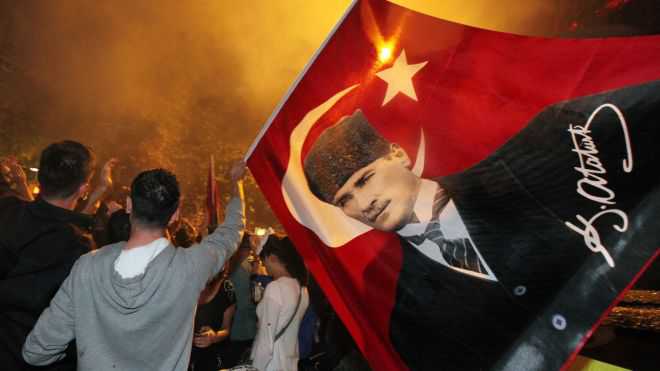
    The 85th anniversary of the foundation of the Turkish Republic is being celebrated all across the country with various activities on Wednesday.

    Republic Day’s first ceremony took place in Anitkabir, Ataturk’s Mausoleum, in the Turkish capital of Ankara. 

    State officials led by Turkish President Abdullah Gul placed a wreath on mausoleum, observed a minute of silence and sang Turkish National Anthem. 

    “Great Ataturk, we are celebrating the 85th foundation anniversary of our Republic proudly. We promise to further glorify the Republic –you commended us– on the path you set; and further develop it over the contemporary civilizations you have marked. Rest in peace,” Gul wrote to Anitkabir special notebook. 

    Parliament Speaker Koksal Toptan, Prime Minister Recep Tayyip Erdogan, Constitutional Court President Hasim Kilic, Chief of General Staff Gen. Ilker Basbug, Republican People’s Party (CHP) Chairman Deniz Baykal, members of Council of Ministers, other political party leaders, military and civilian authorities also participated in the ceremony. 

    After the ceremony in Anitkabir, President Gul received congratulations at Turkish Parliament. 

    There will be glamorous activities with strong visual themes in Istanbul, while more official government ceremonies are being held in Ankara. 

    In Istanbul, the night sky will be lit up with fireworks, while the Bosporus Bridge and the Maiden Tower will be decorated with colorful lights and laser shows have been prepared. 

    Turkey became a republic on October 29, 1923. This formally declared the dissolution of Ottoman Empire; and Turkish State became a republic under the leadership of Mustafa Kemal Ataturk. Republic Day is celebrated across Turkey every year with formal ceremonies.

  • Archive – In Celebration Of Our Turkishness At The Threshold Of A New Millennium

    Archive – In Celebration Of Our Turkishness At The Threshold Of A New Millennium

    by Mahmut Esat OZAN
    [email protected]

    WHO WAS A ROMAN? WHO WAS AN OTTOMAN? WHO IS A TURK?

    Before answering these questions above, let us pose another one, “What are the similarities existing among the old citizens of the Roman and Ottoman Empires and the contemporary inhabitants of modern Turkey?” Well, here’s the answer: We must acknowledge and accept the fact that all three of them have the same social make-up. In the framework pertaining to the societal composition of the Roman and Ottoman Empires, one does not notice any racial, ethnic, or even religious alienations caused by prejudices injurious to the running of a society.

    In the Roman populace, as well as in the Ottoman one, every citizen was known as either a Roman, or an Ottoman. The same has been true for those living within the confines of the new Turkish nation created by its founder Mustafa Kemal Ataturk. In Turkey, every citizen, regardless of his or her ethnic, religious, and political background, is known and referred to as a Turk, no hyphens are necessary.

    Not so long ago, in Miami, Florida, a political asylum case involving a young Turkish citizen, reached the Immigration and Naturalization Department’s desk. What I am relating now is the true account of events which took place.

    In the past I was offered work in which I could be of help in interpreting in various court cases involving Turkish nationals. The young man in our story was a Turkish citizen of Kurdish extraction. He reluctantly fled his homeland, his birthplace, leaving his family, his girl friend and others behind. His adventures, spanning half of the globe were in search of a safe haven. His words are revealed here with the condition that his real identity is kept secret. Hasan Volkan is not his real name, of course.

    Hasan had been fighting for his life in order to escape those who were pursuing him relentlessly to punish him because he had repeatedly refused to kill for the dreaded PKK. While being interviewed by the US agents of the I N S(Immigration and Naturalization Service), he kept on saying he left Turkey because he was not interested in jeopardizing his life for a cause that was alien to his beliefs. He thought that staying in Turkey would bring about his early demise.

    In order not to burden the reader with the whole account of Hasan’s plight, which I related in an earlier essay, I would like to reveal here that, after three years of hiding in the USA, he is now back in Turkey and has rejoined his family and his girl friend. The last I heard from him is that he was about to get married.

    While I was helping him with the INS, he had made some interesting statements. One in particular was very meaningful. Here’s what Hasan told the INS attorney in Turkish:

    “In Turkey today we have a mosaic of all kinds of ethnic people representing many different backgrounds. We have Kurds, like myself, we have Laz people, we have Pomaks, Bosnaks(Bosnians), Albanians, we have Cerkez, we have Tatars, Cecens(Chechnians), we have Ajems(Iranians), Assirians, Arabs, Armenians, and Greeks. We even have Gypsies During the years before the PKK, these people all called themselves Turks and used to live in harmony in each other’s company, complementing one another in their own way, living in peace in a country my dear mother referred to as Gulistan(land ofroses). Hasan was referring to Turkey and he was saying, “no one was considered a step child there. He further told the INS interviewer that the only thing separating one person from another was his financial status in life. He said his family was in the home furnishings business, and it was known as a “well-to-do” family.

    On The Threshold Of A New Millennium

    The 20th Century is almost over. The year 1999 will be the very last span of time before humanity will embark into a new millennium. It is anybody’s guess how posterity will record these turbulent past hundred years.

    I wonder how historians will judge this century in the next millennium. It began with the dream of universal peace, but saw two tragic world wars, the birth of the atomic bomb, a ‘Police Action’ in Korea, and a costly ‘Vietnam experience’, plus a hundred smaller wars, and now it is coming to an end despite the ravages of dreaded terrorism, with a renewed hope for international harmony.

    Over-Population? It’s Everybody’s Baby

    The above heading actually comes from a bumper sticker I remember seeing some twenty years ago. But the words it contains are much more persuasive today than they were in the Seventies. Nevertheless, all levity aside, the world’s population in 1900 was a mere l.5 billion, a figure almost matching the number of inhabitants living in Communist China today. In that year, 1900, one of the greatest military minds and one of the greatest emancipators who ever lived, Mustafa Kemal, was a 19 year old young man. The world at large was yet to discover his genius. All Turks know this as a factual certainty, that if it weren’t for Kemal, who later on became ATATURK, the father of his nation, there would be no one today who would be addressed as a Turk, and no one would be left to elucidate the pride exhibited in the significance of the world “TURK.”

    We Emerged with Our Heads High

    I remember clearly the 10th anniversary of the Republic of Turkey. The whole country was singing, including us, the students in the Ortakoy preparatory section of Galatasaray, on the shores of the Bosphorus, the memorable words of a catchy tune “CIKTIK ACIK ALINLA,” the stirring musical composition of the day. This patriotic song was saying proudly that in a short 10 years Turks had created 15 million young people of “all ages.”

    During one of those days, on a warm spring afternoon, we were able to view our dear President, Gazi Mustafa Kemal Pasha, (three years before he was given the name of ATATURK) riding in a convertible limousine, sitting next to the Duke of Windsor, the future Edward VIII, the King of England.

    It seems that after all those years, and despite what seems to be an unsurmountable prejudice piled up against them coming from all corners of the globe and overlooking the drawbacks, real and contrived, Turks are still able to celebrate what is proudly known as ‘TURKISHNESS.’ Once again, going back to what we were discussing earlier, we see that there was no need for nobility in the Ottoman Empire. Any Muslim, even one who converted from Christianity, had the chance to rise all the way to become a VEZIR. The world would witness this type of opportunity in the USA centuries later.

    Ever since Alparslan, the Seljuk Turk military leader’s victory over the Eastern Roman Emperor Romanus VI in 107l, the way up the ladder of success began in the military. If an ordinary citizen wanted to get somewhere in the power system, he had to attend a military school.

    Many great men in Turkish history began their illustrious lives in this fashion. A May, 1996 article of mine in this newspaper, “TURKS’ LOVE AFFAIR WITH THEIR MILITARY’” is a good indication of this complex relationship between the public and their military institutions.

    Unlike other societies, in the Turkish one it was the Military that sided with the common people. It still is the Military that extricates the country straying from the course designated for Turks by their great leader, Kemal Ataturk.

    Someone in the soldierly stature of NAPOLEON BONAPARTE had once made a statement which illustrates what the concept of “military” meant to the Turks. They were invincible then, they may still be counted on the premise today. In 1799, after he returned to France from his inconclusive Egyptian campaign in the Ottoman lands, he related anecdotes about an encounter he had in the city of Acra, where after a long siege of the area, he chose to retreat before the Turkish forces. Napoleon’s words were, “Gentlemen, my conclusion is that Turks can be killed, but never vanquished.”

    Testimonials Which Keep Us Turks Going

    Recently, a letter writer said the following in an English language publication, “…I’ve been in Turkey 8 months, and I intend to spend the rest of my life somewhere in your country”…You have made me feel most welcome…I am proud to be living here, and I am so pleased that I chose Turkey rather than Saudi Arabia, Kuwait, or France.” I’m not able to decipher why the letter writer mentioned two of the most backward lands in the same sentence with France, but I appreciate his admiration for Turkey. There was another person with similar laudatory words for Turkey and the Turks. This one was not just a regular letter-writer, his name was Charles VII, the King of Sweden, who wrote the following letter to his sister Ulrique-Eleanore in 1772:
    “I was going to be a prisoner in Poltava(Russian territory at that time); that would have been my death. I was saved on the shores of the Bugh River. Then the danger became more imminent…again I was saved. But today I am a prisoner of the Turks. What fire, steel, and floods were not able to do, the Turks did. I don’t have chains on my feet. I am not in jail, either. I am free, free to do whatever I like. But still I am a prisoner – a prisoner of affection, of generosity, of nobility, of courtesy. The Turks have tied me with this diamond chain. Oh! If you knew how sweet it is to live as a free slave with people so affectionate, so noble, and so gentle!”

    Who Is A Turk, Anyway? Ask Any Turkish Citizen!

    If you listen to the rancorous, vindictive and vengeful words of Lloyd George, the fallen one-time Prime Minister of a dying British Empire, you will be amazd to hear how uncivilized a so-called ‘gentleman’ could be. He and his First Lord of the Admiralty, Winston Churchill, by his side, suffered collectively one of the worst military defeats at the hands of Mustafa Kemal and his legendary defenders of Gallipoli in 1914. Here are the ugly words the British Prime Minister Lloyd George uttered when he was about to launch the invasion of that disastrous Dardanelles campaign:

    “The Turks are a human cancer, a creeping agony in the flesh of the lands they misgovern, rotting every fiber of life…I am glad that the Turk is to be called to a final account for his long record of infamy against humanity.”

    Well, George, listen to the words of another observer, only this time, a more objective and much more civilized one than yourself. His name is David Hotham. He is a 1975 TIMES correspondent, who writes the following about Turks in his book simply called TURKEY. He might as well be referring indirectly to our TURKISHNESS when he says:

    “The Turk is unusually full of contradictions. Not only has he East and West in him, European and Asian, but an intense pride combined with an acute inferiority complex; a deep xenophobia with an overwhelming friendliness and hospitality to strangers; a profound need for flattery with an absolute disregard for what anybody thinks of him.”

    These last few lines of an honest observer such as Mr. Hotham indicate that TURKS are, indeed, cut fom a different cloth. In the case of the British Empire, the colonial masters were all “stiff upper-lipped” British, the epitomy of class consciousness, condescendence and conceit. They were, conversely, the opposite of Turks, the descendents of tolerant, democratically imbued, down-to-earth people, who never interfered with the social, religious freedoms of the subjects they conquered. For them magnanimity was not an outlandish dictionary word. They lived it in the past and they are still living it today. They loved their conquering heroes then, they still revere them today. Turkey is a place where the word ‘military’ has been an inspiring solace for them, whereas the same word has been branding fear in the hearts of others.