Month: October 2008

  • Kirkuk needs a surge, report says

    Kirkuk needs a surge, report says

    WASHINGTON, Oct. 30 (UPI) — An organic effort along the lines of the Anbar counterinsurgency strategy is needed to calm the security situation in Iraq’s province of Kirkuk, a study says.

    A study published Thursday by the Washington Institute for Near East Policy says Kirkuk has not felt the benefits of the counterinsurgency strategy employed in Anbar and central Iraq in early 2007.

    The level of violence in Kirkuk remains static, with only a 29 percent drop in deadly attacks since 2007, compared to a 91 percent decline in Baghdad. Taken on a per capita basis, however, the number of attacks in the city of Kirkuk is double that in Baghdad, the report says.

    The durability of the Sunni-led insurgency in the north suggests a failure to employ the strategy of forming multi-ethnic security forces in the region. Unlike the south, northern security forces are predominately Kurdish-led, leaving many of the forces from Baghdad viewed with disdain.

    Furthermore, with U.S. forces dropping below the U.N.- and NATO-recommended ratio of one soldier to 50 civilians ahead of an anticipated 2009 redeployment, a final but temporary U.S. troop surge may be needed in Kirkuk.

    The region is one of Iraq’s most economically viable, leaving Kirkuk as one of the last places left for U.S.-led forces to have a positive influence on security matters.

  • Destruction of Turkish Outpost by PKK Leads to Counterterrorism Reforms

    Destruction of Turkish Outpost by PKK Leads to Counterterrorism Reforms

    10/30/2008 – By Emrullah Uslu (from Terrorism Focus, October 30) – The PKK’s October 3 attack on the Aktutun military outpost sparked a controversy over whether Turkish counterterrorism strategy is on the right track. In its three decades old battle against the PKK, the Aktutun attack marked the first time the Turkish Armed Forces (Turk Silahli Kuvvetleri – TSK) was strongly criticized by mainstream media outlets. Two major factors played a role in the surprisingly harsh criticism. First, despite the fact that the PKK has organized four attacks on Aktutun outposts in the last year, the military failed to successfully defend its outpost, with 17 soldiers losing their lives. Second, the TSK failed to manage the sequence of events after the attack.

    Soon after the fatal attack, the Turkish press reported that Turkish military intelligence was aware of PKK intentions to attack Aktutun a month before it happened. Liberal daily Taraf published an intelligence report showing that the intelligence service detected and reported the details of the planning process. Along with the military intelligence reports, Taraf also published the three images from American satellite intelligence, which showed the preparation process of the attack (Taraf, October 14).

    The second source of criticism was the TSK’s failure to inform the public about what actually happened at Aktutun. On October 4, the PKK’s attack was posted on the TSK webpage, which announced 15 soldiers were killed and two were missing while 23 PKK fighters were killed in the clash (tsk.mil.tr., October 4). It turned out the PKK’s reported losses were inaccurate – only nine PKK bodies were found on the scene (cnnturk, October 5).

    On October 5, the Deputy Chief of the Turkish General Staff informed the media that the TSK had planned a year ago to move five military outposts to geographically secure places to avoid such an attack. Because of financial shortages the posts haven’t been moved yet (Hurriyet, October 5). This information sparked a controversy over whether the government provides sufficient financial support to the military (Hurriyet, October 6). Even soccer fan clubs became involved in criticizing the government by offering financial help to build a better military outpost (antu.com, October 8). The Finance Ministry responded by releasing a statement denying allegations the military was not financially supported. On the contrary, the Finance Ministry stated that “the Military in 2007 did not use 250 millions Turkish Lira from its budget and returned it back to the treasury” (Aksam Gazetesi, October 9).

    In addition, an anonymous source told mainstream daily Hurriyet that since Turkey’s land operation in northern Iraq last February, America had stopped sharing its satellite intelligence (Hurriyet, October 6) This disinformation attempt by Turkish sources was immediately rejected by the U.S. embassy in Ankara. An embassy spokesperson told Hurriyet: “There is no such termination on the intelligence sharing program with Turkey. It continues as it should be” (Hurriyet, October 7). A further explanation claimed the terrorists who attacked the Aktutun outposts did not come from PKK bases in northern Iraq, but from Turkish territory. Because American satellite intelligence devices are not programmed to monitor PKK movements in Turkish territory, the gathering of 300 PKK fighters could not be detected (Hurriyet, October 13).

    While the TSK has been trying to cover its failure through the release of selected information to pro-state media outlets, Taraf reported that the commander of the Air Force, General Aydogan Babaoglu, was playing golf in Antalya while the soldiers in Aktutun were fighting in their posts. Even worse was the fact he was one of the last people to hear what happened in Aktutun, some 24 hours after the clash ended. As the press noted, some of the dead soldiers had already been buried before Babaoglu was informed of the attack (Taraf, October 7). The TSK released a press statement to deny the allegations raised by Taraf, though the statement confirmed that General Babaoglu was in fact not informed of the attack until his golf game ended on Saturday, October 5 (tsk.mil.tr, October 8).

    The revelations prompted an angry response from the Chief of the Turkish General Staff, General Ilker Basbug, who held a press conference to denounce the publication of classified information; “Those who present the actions of the separatist terrorist organization [a euphemism for the PKK] as successful acts are responsible for the blood that has been shed and will be shed… This is my last word: I invite everyone to be careful and to stand in the right place” (Today’s Zaman, October 14). While almost all mainstream Turkish media was critical of at least the format and the tone of General Basbug and his apparent threats against the media, he received unexpected support for his statements from Prime Minister Erdogan, who joined Basbug in criticizing Turkey’s news organizations; “There is no room in this fight [against terror] for weakness or hesitation. Nobody should dare to show our government or security forces as weak” (Taraf, October 17; Turkish Daily News, October 17). Erdogan’s comments were met with a sarcastic response in some parts of the Turkish media, to which the Prime Minister replied; “Some people in the media are trying to provoke us. Where this is coming from is the question that we have the right to ask” (Turkish Daily News, October 18).

    The TSK insisted that the aerial photos published by Taraf were in fact from Kandil (125 kilometers away from Aktutun) and Kerintepe (20 kilometers away). A publication ban was imposed on further reproduction of the images on the grounds that it might jeopardize the investigation into who leaked the photos to the press (Bianet, October 17; Turkish Daily News, October 18).

    Taraf’s reporting opened the door for the mainstream media to question what went wrong at Aktutun. Even well known Kemalist intellectuals, who almost always support the TSK, began questioning whether Turkish counterterrorism policies work (Radikal, October 7; Sabah, October 8). Kemalist Republican Peoples Party (Cumhuriyet Halk Partisi -CHP) leader Deniz Baykal blamed the military’s failure on the ruling Justice and Development Party (Adalet ve Kalkınma Partisi – AKP); “There were almost no terrorist actions or attacks [before the AKP took power in 2002]. Terrorism has significantly risen since 2002. The government has either been unable to understand the term ‘terrorism’ or it has chosen not to understand it. It has not grasped the significance of the fight against terrorism” (Aksam, October 8; Today’s Zaman, October 8).

    Such questioning led the TSK and the government to take a series of new steps. First, the TSK, for the first time in its counterterrorism history, openly invited counterterrorism experts to give their opinion (Vatan, October 8). In a counterterrorism meeting between military generals and the government, the generals requested extended powers and the creation of an institution to better coordinate the fight against terrorism (Radikal, October 10) Another significant development is the decision of the Turkish National Police (TNP) to send seven thousand men of its Special Forces units to the ethnic-Kurdish region of southeastern Turkey. During the 1990s the Police Special Forces were a leading element in the fight against the PKK, but during the February 28, 1997 political crisis between the Turkish military and the civilian government, the generals put pressure on the government to withdraw police forces from the region (Yeni Safak, October 10).

    On October 15 the government released its plan to reorganize government institutions in Ankara to better coordinate counter-terrorism efforts (Today’s Zaman, October 15). Furthermore, in the National Security Council (Milli Guvenlik Kurulu -MGK) meeting the government’s plan to reorganize the bureaucracy in Ankara to better coordinate state institutions in the fight against the terrorism was approved (Vatan, October 21).

    The new plan calls for the military to relinquish control for domestic security to the civilian Interior Ministry and its police and gendarmerie units (the latter are now under the effective, if not official, control of the TSK). The government is planning to coordinate all the state institutions to concentrate their efforts on counterterrorism problems by addressing the economic, social and educational aspects of terrorism. It was also announced that the Chief of Staff will be briefing government cabinet members about counterterrorism efforts. This marks the first time in three decades that the Chief of General Staff will brief civilian cabinet members. Prime Minister Erdogan revealed the “briefing will be about the details of the counterterrorism efforts to see what the government can do to coordinate counter-terrorism efforts for today and the future” (Anadolu Ajansi, October 24; Hurriyet, October 28). One consequence of the transfer of responsibility for counterterrorism efforts is the civilian government will now be accountable when there is a failure such as Aktutun.

    After two stormy weeks for the Turkish military, politicians and media, what seemed evident was that most of Taraf’s initial reporting was accurate. Indeed, despite the fact that the TSK received intelligence from various sources, it failed to prevent the PKK from attacking. Making matters worse, the TSK also failed to handle the aftermath of the Aktutun attack, harming its image in the process. By supporting General Basbug, Prime Minister Erdogan has lost his credibility in the eyes of Turkish Kurds and faced protests in his last visit to the predominantly Kurdish city of Diyarbakir, where Erdogan’s AKP was expecting to be successful in next March’s regional elections (see Eurasia Daily Monitor, October 24).

    On the positive side, however, there is now a clear effort to reorganize the state bureaucracy to better address the terrorism problem and, most importantly, the civilian government will finally be actively involved. Turkish diplomacy is at work and new channels of communications are being established with the Kurdistan Regional Government in northern Iraq to uproot PKK bases from in its territory. Following the disaster at Aktutun, it appears the civilian government and the military are finally on the same page in Turkey’s war on terrorism.

  • Commission hails Turkey’s role in regional stability

    Commission hails Turkey’s role in regional stability

    ELITSA VUCHEVA

    Today @ 09:15 CET

    EUOBSERVER / BRUSSELS – Turkey’s role as promoter of regional stability has improved in the last year, Brussels says in a draft report on Turkey and the western Balkans’ progress towards the EU, while stressing that Ankara still has a lot to do in a number of areas before being judged fit to join the EU club.

    “Turkey has played a constructive role in its neighbourhood,” Brussels says (Photo: EUobserver.com)

    “Turkey has played a constructive role in its neighbourhood and the wider Middle East through active diplomacy,” reads the draft of the annual report seen by EUobserver.

    “Following the crisis in Georgia, [Turkey] proposed a Caucasus Stability and Co-operation Platform to promote dialogue between the countries of that region. [Turkish] President Gul paid a visit to Yerevan, the first visit ever of a Turkish president since the independence of Armenia. Turkey undertook efforts as a mediator between Israel and Syria and conducted a dialogue with Iran on the nuclear issue,” the draft report goes on.

    Ankara has itself been stressing its role in maintaining regional stability and has been multiplying initiatives in that respect lately – including setting up the Caucasus Platform in the aftermath of the Russia-Georgia conflict.

    It says the platform’s objective is to establish regional conflict resolution mechanisms and broader economic co-operation among the five countries involved – Turkey, Russia, Georgia, Azerbaijan and Armenia.

    The EU has always insisted that good neighbourly relations are an important pre-condition for any EU hopeful.

    Additionally, “the development in the southern Caucasus also highlighted Turkey’s strategic significance for the EU energy security, particularly by diversifying supply routes, and underlined the importance of closer energy co-operation between Turkey and the EU,” the commission says.

    Nabucco – the EU-backed planned natural gas pipeline designed to reduce energy dependency on Russia by transporting natural gas from Turkey to Austria, via Bulgaria, Romania and Hungary – “is a key element for this,” Brussels underlines.

    Same problems remain

    Turkey has been an official candidate to join the EU since 1999 and opened accession negotiations with the bloc in 2005.

    But besides the progress noted, the commission says Ankara still has a lot to do in many areas in order to be ready for EU membership.

    Notably, “there has been no progress towards normalisation of bilateral relations with the Republic of Cyprus. Turkey has not fully implemented the Additional Protocol to the Association Agreement and has not removed all obstacles to free movement of goods, including restrictions on direct transport links with Cyprus.”

    In 2005 Ankara signed a protocol to extend its customs union with the EU to the 10 states that joined the bloc in 2004 – but still refuses to open its ports to Cypriot ships. Several negotiations chapters with the EU remain suspended because of this.

    Turkey does not recognise the Greek government in the southern part of the divided island, while at the same time is the only country to recognise its northern Turkish section.

    Earlier this year, commission President Barroso called the issue “the main obstacle for significant progress in Turkey’s accession process.”

    In addition, reads the report, the country has still a lot to do to fight corruption and organised crime. It has made “no progress on alignment with European standards” as regards minority rights and it needs to push administrative and political reforms further.

    “Full civilian supervisory functions and parliamentary oversight of defence expenditures need to be ensured. Senior members of the armed forces have continued to make statements on issues going beyond their remit,” Brussels also says. The central role of the military in Turkish society is often raised as a concern by the EU executive.

    The final version of the report will be presented by the commission on 5 November.

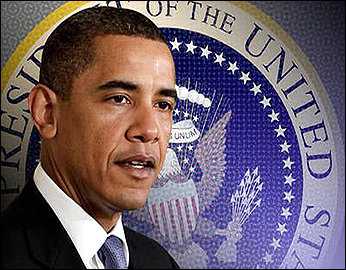
  • OBAMA: kürdistan’ı TÜRKİYE’YE KURDURACAĞIM / Read Obama’s plans for Turkiye

    OBAMA: kürdistan’ı TÜRKİYE’YE KURDURACAĞIM / Read Obama’s plans for Turkiye

    OBAMA: kürdistan’ı TÜRKİYE’YE KURDURACAĞIM
    Obama, Kürdistan’ı Türkiye’ye kurdurtacak
    ABD’de Demokrat Parti’nin başkan adayı Barack Obama’nın seçim bildirgesinde, “şimdiki Cumhuriyetçi Başkan George Bush’un yanlış Irak müdahalesi yüzünden, bölücü PKK terörünün arttığı ve Obama’nın, başkan seçildiği takdirde Türk-Amerikan stratejik ortaklığının onarılması için çalışacağı” bildirildi. Obama’nın internet sitesinde yayımlanan ve bütün önemli iç, dış ve ekonomi politikalarını kapsayan bildirgesinin Avrupa ile ilişkiler bölümünde Türkiye’den, “Türkiye ile stratejik ortaklığın restore edilmesi” başlığı altında bahsedildi. Kuzey Irak’ta bir Kürt devletinin kurulması için üstü örtülü olarak Türkiye’nin de destek vermesini isteyen Obama, bildirgede şunları söyledi: “Türk ve Iraklı Kürt liderlerin bir araya getirilmesi ve PKK tehdidiyle uğraşılmasını, Türkiye’nin toprak bütünlüğünün güvence altına alınmasını ve Irak’ın kuzeyinde çok ihtiyaç duyulan Türk yatırımlarının ve buradaki Kürtlerle ticaretin kolaylaştırılmasını öngören kapsamlı bir anlaşma için görüşülmesi yönünde bir diplomatik çabaya önderlik edeceğim.”
    Türk-Amerikan ilişkileri
    Türk-Amerikan ilişkilerine geniş yer verilen bildirgede şöyle devam edildi: “Barack Obama ve Joe Biden, Türkiye’de demokrasi, insan hakları ve ifade özgürlüğünün ilerletilmesini ve Türkiye’nin AB’ye katılma çabalarını destekleyecek. Obama ve Biden  istikrarlı, demokratik, yüzünü Batı’ya çevirmiş bir Türkiye ile yakın bir ilişkinin, ABD’nin ulusal çıkarı için önemli olduğuna inanıyor. Bu ilişki, özellikle, bölücü PKK’nın Türkiye’ye yönelttiği terörist tehdidin yeniden canlanmasına yardım eden, Bush yönetiminin yanlış yönlendirilmiş ve yanlış idare edilmiş Irak müdahalesi yüzünden, son yıllarda derin şekilde gerginleşti.  (A.A)
    24/10/2008  01:38

    __._,_.___

  • PLEASE, TEACH THE CHILDREN WELL!

    PLEASE, TEACH THE CHILDREN WELL!

    To: [email protected]

    Dear Michelle Collins,

    Please allow me to formulate my op-ed under the following headings in order to provide you with a thoughtful rebuttal to your article ” Turkey Decries Toronto School Board Genocide Course” (Embassy, cANADA, August 27th, 2008.)

    GREEK-ARMENIAN COLLUSION AGAINST TURKEY:

    The accounts of Turkish-Armenian history provided by a Greek-Canadian (Liberal MP, Jim Karygiannis) and an Armenian-Canadian (ANC Exec. Dir., Aris Babikian) in your article are so typically distorted, that they can hardly be considered as much more than “settling of an old score” via “political lynching”. It is quite in keeping with the Greek-Armenian collusion during the ill-fated invasion and destruction of Izmir by Greek army (1919) which, in turn, ignited the Turkish Independence War (1919-1922.) This anti-Turkish Greek-Armenian complicity was re-established in 1974 after the failed attempt by the Greek-Cypriots to ethnically cleanse Cyprus of its Turkish-Cypriot population which triggered a military intervention by one of the three guarantors, Turkey. What we see in Toronto today is just another link in that anti-Turkish Greek-Armenian-collusion chain.

    GENOCIDE CHARGES UNFOUNDED:

    Babikian’s version of history is so “Diaspora” that one can easily write a 500-page book on it, effortlessly. I don’t have time to write it, so I’ll try to make my response as manageable as possible. While some amongst us may be forgiven for taking the ceaseless Armenian propaganda at face value, merely because they are repeated so often, it is difficult and painful for us, Turks, most of whom are themselves the descendants of Turkish survivors of the yet mostly untold, readily dismissed out of bias, or ignored massacres of Turks during the Balkan Wars of 1912-13, the World War I of 1914-18, and the Turkish Independence War of 1919-1922. Collectively termed, “seferberlik” (meaning “the mobilization” in Turkish,) those endless war years of 1912-1922 rained death and destruction on Turkish people. The Ottoman Empire was under vicious attacks from all corners and Armenians shamelessly sided with the invading enemy armies when not violently revolting. Those countless, nameless, faceless Turkish victims, doing nothing more than defending their home like any citizen anywhere in the world would do, are killed again today with those politically motivated and baseless charges of Armenian genocide.

    GENOCIDE CLAIMS IGNORE “THE SIX T’S” OF THE TURKISH-ARMENIAN CONFLICT:

    Allegations of Armenian genocide are racist and dishonest history. They are racist because they imply that Turkish or Muslim dead are not important, only Armenian or Christian dead are. This racist approach ignores the immense Turkish suffering: about 3 million dead during the WWI; around half a million of them at the hands of Armenian nationalists. By ignoring the suffering of one side completely, any war, including the American civil war, may be made to look like a genocide. And the allegations of Armenian genocide are dishonest because they deliberately dismiss “The Six T’s” of the Turkish-Armenian conflict:

    1) Tumult (as in many violent Armenian armed uprisings between 1882 and 1920)

    2) Terrorism (by Armenian nationalists and militias from 1882-1920 perpetrated on non-combatant Muslim civilians, mostly Muslim women and children, and elderly men)

    3) Treason (Armenians joining the invading enemy armies and killing their Muslim neighbors and other fellow citizens, including the Ottoman-Jews)

    4) Territorial demands (where Armenians were a minority, not a majority)

    5) Turkish suffering and losses (i.e. those caused only by the Armenian nationalists)

    6) Tereset (Temporary Resettlement) triggered by the first five T’s above and amply documented as such; not to be equated to the Armenian misrepresentations as genocide.)

    Armenians, thus, effectively put an end to their millennium of relatively peaceful and harmonious co-habitation in Anatolia with Muslims by killing their Muslim/Turkish neighbors and openly joining the invading enemy. Western diplomats and Christian missionaries were behind all of the “6 T’s” listed above.

    TURKISH VIEWS CENSORED ACROSS THE EDITORIAL BOARDS DUE TO A “CONSENSUS OF BIAS”

    Excluding responsible opposing views in covering any controversial issue is a form of censorship which violates the notion of freedom of speech. Decent people everywhere have a responsibility to ensure that the public is given a fair chance to hear all sides of a controversy such as the Turkish-Armenian conflict. “Partisan accounts” of history should not be taught children as “settled history” . We must all strive to “teach the children well.” Fairness, honesty, and truth are all that I ask.

    HERE IS THE BIG PICTURE:

    MILLENNIUM:

    Turks and Armenians—and other Muslims and Christians— enjoyed a reasonably harmonious co-habitation in Anatolia for a millennium (that’s a thousand years!) under that “crescent” that the Greek-Armenian conspiracy loves to demonize.

    THE LOYAL NATION:

    Turks liked and trusted the Armenian subjects of the Ottoman Empire so much that Turks called the Armenians “Millet-i Sadika” (the loyal nation.) Armenians enjoyed high standards of living in the Ottoman Empire mostly engaging in trade, construction, arts, and more, while Muslims did most of the heavy lifting of the empire such as agriculture, soldiery, administration. (It is interesting to note that some Armenian propagandists use this as a proof of inequity, however, when the Armenians were given the right to soldiery after 1908, the Armenians invented ways to get out of that civic duty (see the letter by Armenians sent to the Lausanne Conference in 1923 asking for the right to be free from soldiery to be bestowed upon the Armenian community.)

    PROSPERITY & STABILITY:

    The above picture, i.e. with all its shortcomings and/or defects, was still the nearest thing to perfection, given the state of humanity through the middle ages around the world, especially in Europe with wars, conquests, colonization, slavery, mass killings, mass deportations, crusaders, inquisitions, holocausts, pogroms, and more. Compared to all this mayhem in Europe in the last millennium, the Ottoman Empire with its unique “ millet system”, was so peaceful and orderly that it could be considered the USA or Canada of Europe at the time. Armenians were one of the major beneficiaries of this centuries-long stability.

    ARMENIAN REBELLIONS, TERRORISM, TREASON, TERRITORIAL DEMANDS:

    All that started changing for the Turkish-Armenian relations after 1878 Berlin Peace Conference. Russia started claiming special protector’s right over the Ottoman-Armenian community with an keen eye towards capturing Istanbul and the straits (Bosporus & Dardanelles) to extend the Russian imperial reach into warm waters of the Mediterranean. Britain and France were not exactly innocent bystanders as they were eyeing other parts of the Ottoman Empire for themselves. The U.S. Protestant missionaries, headquartered in Boston, with their many educational and medical facilities dotting Anatolia used as convenient cover for their missionary activities, focused their attention on the Armenian community once they realized that proselytization of Muslims, Jews, or Greeks were nearly impossible. The Boston missionaries started dividing and polarizing not only the communities of the Ottoman Empire but also the Ottoman-Armenian community itself. The missionary sermons were incendiary, pitting Armenians against Turks, Muslims against Christians, and even Protestants against the Gregorians and Catholic. Thus, these religious men abused the traditional hospitality of Turks by organizing a hate-filled resistance among the Armenians against the Turkish rule, causing untold miseries on all sides… These men of god, thus, caused much spilling of innocent blood in the name of god. In that sense, the Protestant missionaries may well be considered the guiltiest party of them all, followed by Tsarist Russia, Imperial Britain, Colonialist France, and Western media (The New York Times, for example, topping the list in biased coverage by publishing 145 anti-Turkish articles in 1915 alone with an incredible “ZERO” Turkish rebuttals allowed!)

    ARMENIANS REVOLUTIONARY ORGANIZATIONS LAUNCHED A BLOODY CAMPAIGN:

    The Armenians started creating revolutionary organizations: “Ermenakan” in Van, Turkey (1882), “Hunchack” in Geneva, Switzerland (1887), Dashnaksutiun in Tbilisi, Georgia (1890) and many others of many sizes and locations. Almost without exception, they were all bent on armed resistance against the Turkish rule. The Armenians used propaganda, agitation, terror, rebellions, and supreme treason, in that order, from 1882 to 1915, when finally some of the Armenians (not all) were sent on a Tereset (Temporary Resettlement). Tereset was a justified military measure because the Armenian bands would conduct violent raids on the unprotected Muslim villages, frustrate the Ottoman military supply lines, and even harass the rear of the Ottoman Army during a time of war. No country (including the U.S. and Canada) would tolerate this kind of wide open rebellion, pandemic treason, and omnipresent terror to be put into action by any community, large or small, at a time of war the least of all.

    ARMENIAN NATIONALISTS USE CIVILIANS AS “HUMAN SHIELDS” AFTER DEVASTATING ATTACKS ON MUSLIMS:

    The Armenian bands would launch their bomb and gun attacks during the night and then hide in ordinary homes during the day, turning Armenian women and children to little more than human shields for their murderous and treasonous acts. Those who cry out today “Why did the Turks force some helpless Armenian women and children to move?” should re-phrase their questions and first ask the nationalist Armenian leaders “Why did you use the non-combatant Armenian women and children as your cover before and human shields after your dastardly acts of terror against the Muslims?”

    DO DIASPORA STORIES PROVE GENOCIDE?

    What most coverage in the media describe are personal tragedies experienced by Armenians. Note that corresponding personal tragedies on the Turkish side, such as mine, are neither reported nor investigated, nor even wondered at all, in the Western media. While it is not this writer’s intention to minimize the Armenian suffering, it must be questioned as to how it can be considered as “separate” from the Muslim suffering in the same area, same era, and under same conditions, when there was a terrible world war was going on that engulfed the Christian and Muslim communities producing an irregular warfare. How is my Turkish grandparents’ suffering caused by Ottoman-Christians any less than Armenians’ suffering caused by Armenian rebellions, terrorism, treason, territorial demands, and Tereset? How is Turkish suffering any less painful than Armenian suffering? How are Turkish dead belittled and ignored while Armenian dead are exaggerated and glorified? I am sure Armenians lived through some or most of those personal horror stories s often told in the media (though definitely not all of them.) But they pale in comparison to what we, Turks, had to endure at hands of the likes of those Armenian terrorists, rebels, traitors, backstabbers, and murderers. My personal family story is much more tragic than most Armenians’, if anyone cares to know about it, please read the following essay of mine as it is too painful to write it here again:

    TURKISH LAST NAMES : HONEST STORY TELLERS

    PERSONAL TRAGEDIES BY THEMSELVES DO NOT MAKE IT A GENOCIDE:

    Not all killings, not all sufferings fall automatically under the classification “genocide”. The U.N. 1948 definition is crystal clear: there must be an intention to destroy all or part of a community. Without intention, a murder is just that, a murder, and penal code can amply deal with that. The Armenians or their sympathizers have never proven Turkish intent to annihilate Armenians. In fact, History shows that just the contrary is true:

    a) a millennium of peaceful co-habitation between Turks and Armenians;

    b) endowment of Ottoman-Armenians with a “ loyal nation” status;

    c) highest posts for Armenians in all walks of Ottoman life (the parliament, politics, diplomacy, military, trade, business, art…);

    d) all of the above followed by, unfortunately, an intense period of organized Armenian terror, rebellions, treason, and territorial demands, and more…

    e) triggering a temporary military, wartime safety measure of moving only those Armenians who posed a serious threat to Ottoman Empire’s war effort;

    f) Note that Armenians of Istanbul, Izmir, Edirne, Aleppo and other places were not moved, as they were not considered a threat;

    g) Armenians in the armed services, doctors, and most inner city people were also kept out of the Tereset (Temporary resettlement) order;

    h) detailed steps were described in countless official orders—too many to be dismissed casually—on how to move the community safely and orderly and claim the properties back on their return (contrary to common misperception, many did return!)

    There is more, much more, but I already wrote most of them at www.turkla.com. I don’t want to re-write them here. You are welcome to check it out yourself.

    ETHOCIDE:

    Frustrated by the persistently biased coverage of the Turkish-Armenian civil war during WWI and the ensuing censorship of Turkish views in American media, I have coined a new term back in 2003—my humble gift to the English language and a thoughtful and long overdue supplement to Rafael Lemkin’s definition of genocide: “ethocide”.

    A brief definition of ethocide is “extermination of ethics by systematic and malicious mass-deception in exchange for political, economical, social, religious, and other favors and benefits.”

    The civil war that had been raging up to 1915 and the Tereset it inevitably resulted in was no genocide, but what the Armenians and their sympathizers did in misrepresenting it ever since is clearly ethocide.

    I urge . therefore, an end to the ethocidal coverage of the Turkish-Armenian conflict in the Western media and academia.

    LAST WORD:

    It was a wartime tragedy, engineered, provoked, and waged by Armenians, with support from Russia, England, France, the U.S., and Western media; but not genocide.

    Please, teach the children well!

    Ergun KIRLIKOVALI
    Son of Turkish survivors from both maternal and paternal sides
  • MEET TURKISH-AMERICANS

    MEET TURKISH-AMERICANS

    President Clinton received a standing ovation from the Turkish Parliament after his address there to the Turkish nation on November 15, 1999, where he praised Turkey for more than half a century of friendship with the United States.

    More than half a century?

    I knew that. Remember the Korean War and the fearless Turkish Brigade there? In fact, did not President Harry Truman sign Distinguished Unit Citation on July 11, 1951 for the Turkish Brigade’s acts of heroism which read: “The Turkish Brigade, a member of the United Nations Forces in Korea is cited for exceptionally outstanding performance of duty in combat in the area of Kumyangjang-ni, Korea, from 25 to 27 January 1951.” ?

    “…whatever the relationship between (Turkey and the United States) is at any one time, the most important thing about the relationship is the relationship between the two peoples…” were the starting remarks by the U.S. Ambassador Edelman at the opening ceremony of “100 Years Of Turkish-American Friendship” photo exhibition at The National Library, Ankara, Turkey, on April 04, 2005.

    100 years?

    And yet, how many in America today could point to the location of Turkey on a world map?

    “… Thirty-two years ago when President Eisenhower visited Turkey, he was greeted by a roaring crowd and thousands hailed him in the streets, cheering not merely America but also our shared values and ideals. One sign in particular touched him. It read: ‘Welcome to your second home.’ And today I already feel as President Eisenhower did, that Turkey is a second home. And I say that not merely because of your famed hospitality but because of these common ideals and interests. Turkish-American friendship reaches back as far as the late 18th century…” articulated the 41st President, George H. W. Bush, at the arrival ceremony in Ankara, Turkey, on July 20th, 1991.

    The late 18th century?

    Who knew?

    Of course, Turkey was called the Ottoman Empire in those days. Whatever the polity, Turks and Americans did forge remarkably close ties through trade and commerce, military cooperation, immigration, education, science, medicine, music, and more.

    Both the U.S. and Turkey were blessed with great leaders, Washington and Ataturk, who fought against impossible odds, long, protracted wars of liberation.

    Both military victories were followed by sweeping reforms based on a shared vision of nation building, democracy, rule of law, liberty, modernization, free enterprise, and pursuit of happiness.

    Both founders succeeded in their tasks and both leaders are still revered very much today.

    Both countries are engaged in the same global war against terrorism and are close strategic partners.

    The US boasts the leading economy in the world today while Turkey is, remarkably, the 16th largest economy and growing at a dizzying pace.

    Of course the U.S. is the sole super power today and Turkey is increasingly a global player with its power base located in the epi-center of that tri-continental segment of the world map encompassing the Balkans, the Caucasus, and the Middle East where the “Neo-Silk-Route” to Turkic Central Asia and China as well as all important energy transportation lines (oil and gas) supplying Europe from Azerbaijan, Kazakhstan, Iran, and Iraq crisscross.

    “… America is honored to call Turkey an ally and a friend… Many Americans trace their heritage to Turkey, and Turks have contributed greatly to our national life — including, most recently, a lot of baskets for the Detroit Pistons from Mehmet Okur. I know you’re proud that this son of your country helped to win an NBA championship, and America is proud of him as well…” pronounced the son Bush, our 43rd president, during his speech in Istanbul, Turkey, on June 29, 2004.

    I am one of those Americans who traces his heritage directly to Turkey. There are close to 50,000 of us in Southern California and about half a million, coast to coast.

    If you are an NBA fan, for example, then you already know Mehmet Okur (Utah Jazz) and Hido Turkoglu (Orlando Magic). If music is your cup of tea, then you probably have heard of Ahmet Ertegun (deceased,) of the Atlantic Records company who gave us the Rolling Stones, Led Zeppelin, Ray Charles, and other such music icons. If you are into medicine, you probably remember Doctor Mehmet Oz, the world renown heart surgeon, weight loss and healthy living guru.

    But if you are like the most of us, leading normal lives, working hard, raising kids, paying taxes and mortgages, then you probably don’t know much about us, Turkish Americans. We may be around you, in fact, working with you, but you may not know us, as we are mostly integrated, if you like, if not perhaps assimilated.

    We will speak English (most in the first generation with accent) and most of us will have shortened, Americanized names imposed on us by our loving American friends (Thus, Coskun becomes Josh; Selahattin turns into Sel; Ercument morphs into Eric; Can reads John; Gul translates into Rose; and so on.)

    We mostly subscribe to Muslim faith but few of us, if any, can keep up with the tenets or rituals of Islam (praying five times a day, for example) due to lack of time, facilities, or other reasons. Religion does not play a commanding role in our lives as most may innocently expect or some may prejudicially believe, but we respect all the faiths all the same. Some humorously put Soccer as being the most important driving force in our lives, not without justification. (A few fans are already planning, for example, to charter one or more jets from LAX to Johannesburg, South Africa, in June 2010, to take hundreds of Turkish-Americans from Southern California to cheer the Turkish National Soccer Team, if of course, Turkey makes it through the qualification rounds to the FIFA World Cup Finals. If not, well, turn on the ESPN and pass the beer and chips, thank you.)

    Turkish-Americans do have annual balls, spring/summer picnics, secular weekend schools for K-6 kids, and most of us travel to Turkey every other year, if not annually. We miss the people and food in Turkey (Have you ever eaten a “karniyarik”, seasoned minced meat and vegetable stuffed eggplants baked in an oven? “Fingerlicking” is an understatement to describe this most unique taste!..)

    We came here during the 1950s, 60s, 70s, 80s, and 90s and most of us are professionals, with at least one degree, some with more. We are mostly busy raising our second generation, American-born generation of Turkish-Americans, if you like. There were immigration in late 19th and early 20th Centuries, but most of those returned home to Turkey after they retired; couldn’t bear the homesickness any longer, I guess. We are, however, here to stay. This is our home. We are going nowhere.

    By the way, it does bother us a great deal when people judge us, our culture or history, our motherland, without bothering to check their “assumptions” and “facts” with us.

    It frustrates us a great deal to be stereotype-cast in the media into roles totally alien to us.

    It even angers us when outrageous lies about our history and our heritage are circulated and/or taken at face value. We are Americans. We would not do to others what we would not like done to us.

    So, please, next time you hear a terrible story or an outrageous claim defaming our history or culture, be fair and inquire about the other side of the story. Talk to us.

    We are not hard to find. A simple internet search will pour out hundreds of Turkish-American websites, associations, names, and leads into your living room or office. Fairness is all I ask.

    We love you all!